



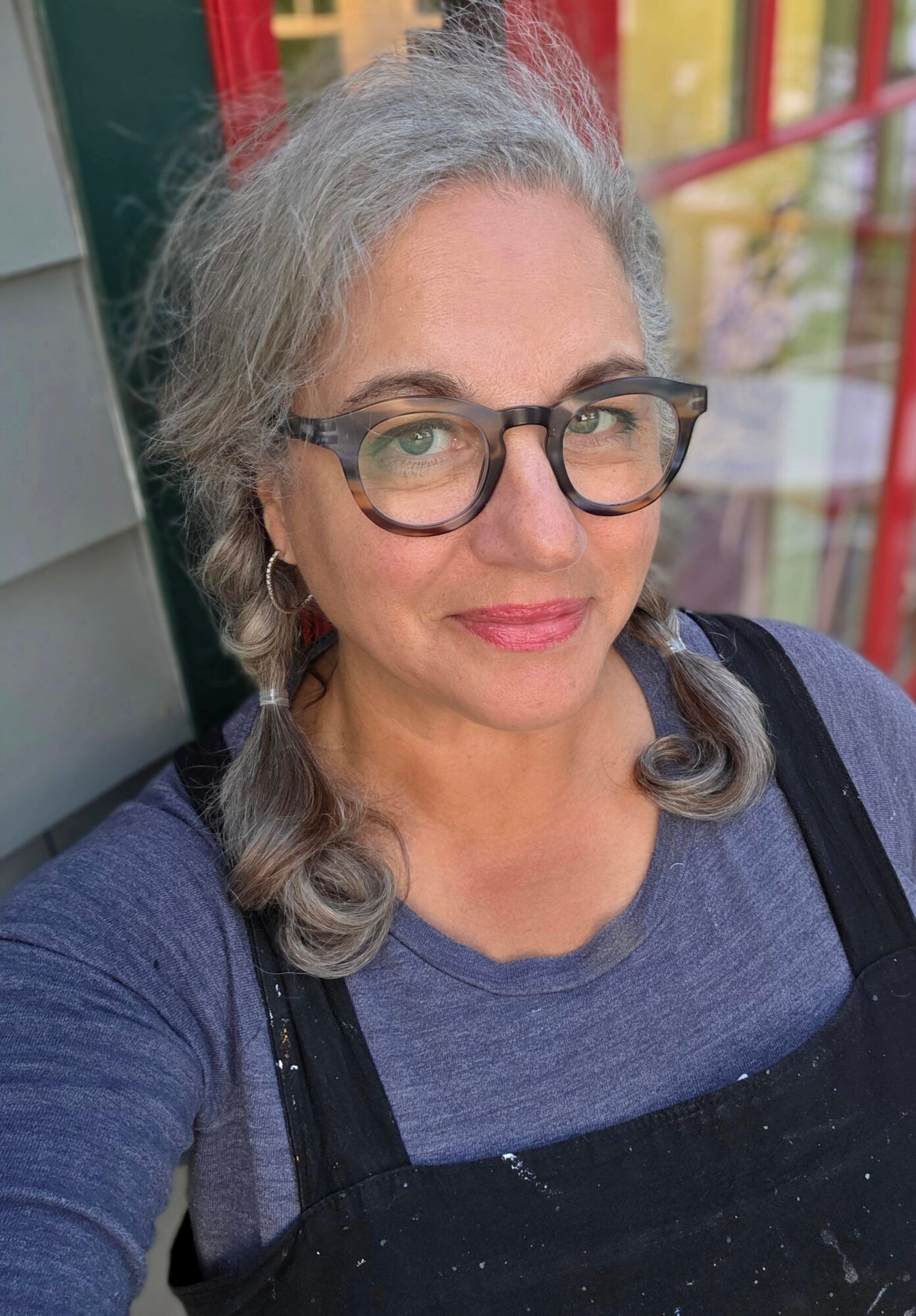
Today we’d like to introduce you to Cheryl.
Hi Cheryl, so excited to have you on the platform. So before we get into questions about your work-life, maybe you can bring our readers up to speed on your story and how you got to where you are today?
I was raised in a family that valued the creative process. That family also valued fiscal discipline. Painters, fiber artists, photographers, sculptors go back four generations on both sides of the family. Most had professional careers, and they didn’t fully indulge their creative sides and fuel their passion projects until they retired. That’s what was modeled for me.
Creatively, my start was at the piano. I taught myself how to read music when I was four. I started classical training when I turned seven. I competed in New England through high school, and I fully credit this for instilling discipline, fine motor skills, problem solving, and perseverance in me. I took up photography as a teenager, and that’s what formed my understanding of composition. These abilities are essential to my painting practice.
Creativity was always important to me, as was financial security. Professionally, I worked in sales and marketing in a variety of industries: hospitality, gourmet food, wine, art, travel, and ultimately commercial construction. That last one may seem like a stretch, but for 12 years, I was surrounded by people who literally made something out of nothing and thrived at the intersection at “What if” and “Why not?” In all of these roles, I applied what my parents taught me: live below my means, set money aside, pay the bills, and have some fun along the way. My father was able to retire at an early age, and that was my aim, too.
I balanced my full-time jobs by taking assorted art classes like dichroic glass and drawing or by having creative side hustles. I had a stationery line that was based on my photography, for example. Living a layered life allowed me to offset pressures of demanding positions with enriching activities that were taken for fun and exploration.
I was curious about painting. In 2020, I picked up a brush for the first time. I got eight in-person lessons in before everything shut down for the pandemic – and a lot of good things tumbled out onto the canvas from the get go. Habits and work discipline I developed with piano practice facilitated my time at the easel. Composition theories apply to photography and painting in the same way. I knew how to paint in terms of collections because that’s what I did when I built my line of notecards.
I started landing commissions and booking exhibitions within the first year of painting. In 2022, I retired from construction to pursue painting full-time.
Coming late to the art game has been a tremendous blessing for several reasons. First, many of my professional peers in 2020 were in design, construction, or commercial real estate. These were visually-oriented people who were stuck at home, staring at their walls, and they had disposable income to send my way. My first large commission was 48″x48″. If I were fresh out of school, I’m not sure I would have had the same sort of fiscal support from my colleagues.
Second, I brought over 30 years of business experience to my art practice. I mention this because a lot of running a professional art business does NOT involve art-making. Mornings are for painting, but afternoons are for everything else. Framing and photographing finished work. Updating inventories and the website. Drafting newsletters and responding to calls for entry into exhibitions. Following up on commission inquiries, tracking down gallery payouts, thanking facilitators for help with installations.
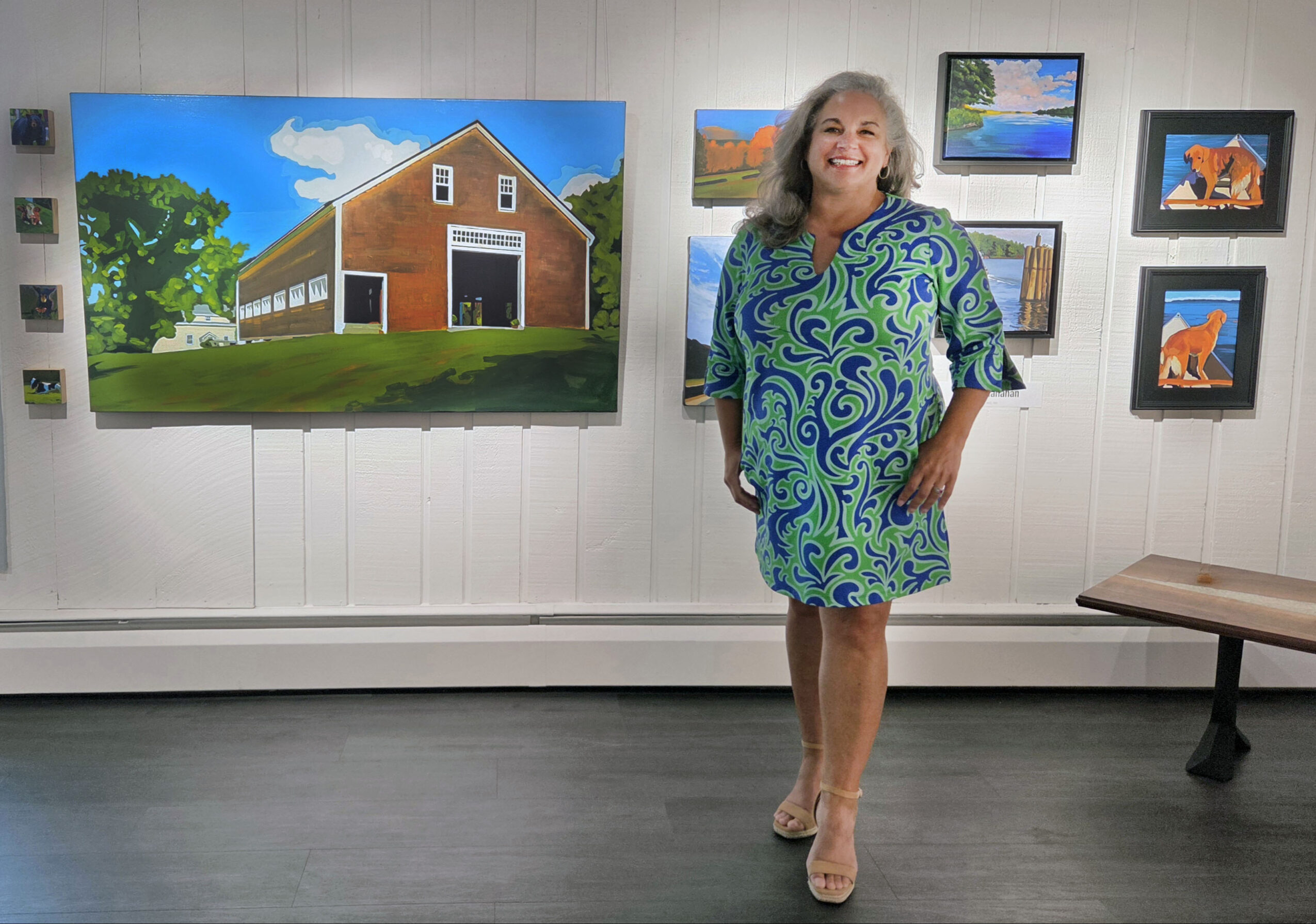
I’m currently represented by two galleries, and this past year I got more serious about getting back in the stationery game. Yesterday, I installed a solo exhibition in Richmond, and my work is going to be in two group shows in New Hampshire next month. A lot of good things are going on inside and out of my studio.
Can you talk to us a bit about the challenges and lessons you’ve learned along the way. Looking back would you say it’s been easy or smooth in retrospect?
A couple come to mind.
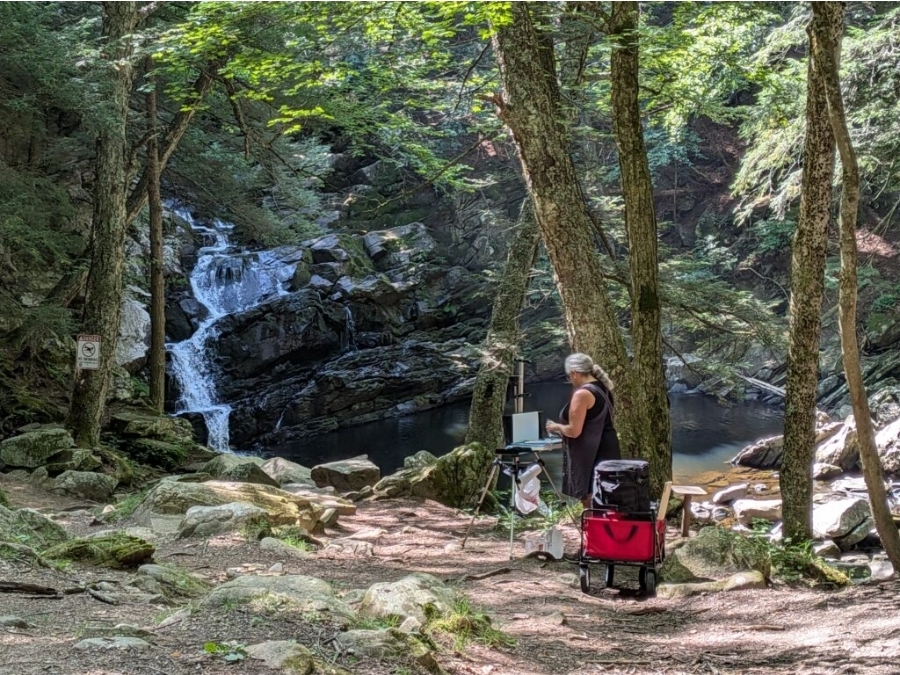
For starters, developing a fundamental understanding of materials was a big one. I paint mostly with acrylics, which are pretty forgiving. They dry quickly, which allows me to layer over anything that needs to go in a different direction or color. But: acrylics dry quickly, and there are times that I need them to stay wet or “open” say for blending. It was a learning curve figuring out which tools, like wet palettes, and materials, like slow-drying medium would help me achieve my aims.
And then there are so many substrate options: am I painting on canvas? stretched canvas? composite panels? aluminum panels? There was a lot of trial and error to find what I preferred.
Developing my eye was another one. I paint representationally, but in the end, I’m painting abstractions: nothing but lines and shapes, and I’m painting some darker and others lighter so you comprehend what you’re looking at. An applicable turn of phrase is “Paint what you see, not what you know.” In the beginning, it often took me longer to reach the sweet spot of “Desire” and “Ability.”
Knowing when to stop was another lesson. That means a couple things. One: understanding when a painting is finished. Sometimes, there is a temptation to go back into a work to tune up a section or two or three…and a painting can easily go from finished (even though you didn’t acknowledge it) to overworked. Second: it means I remember to take it easy on my hands. I seldom have marathon painting sessions any longer. My golden creative window is typically 2-3 hours a day. Anything beyond that, I’m not necessarily doing my best work, and I’m in jeopardy of pushing my joints too far. A few years ago, I was golfing, curling, AND painting. There was too much pressure on my right hand, and I couldn’t fully articulate my thumb for a few months because of inflammation in the joint. I learned that I have to pace myself accordingly if I’m going to play the long game well.
Can you tell our readers more about what you do and what you think sets you apart from others?
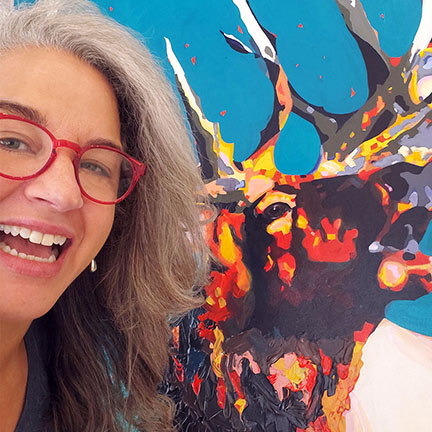
I’m a visual artist who is probably best known for my boldly-colored wildlife paintings.
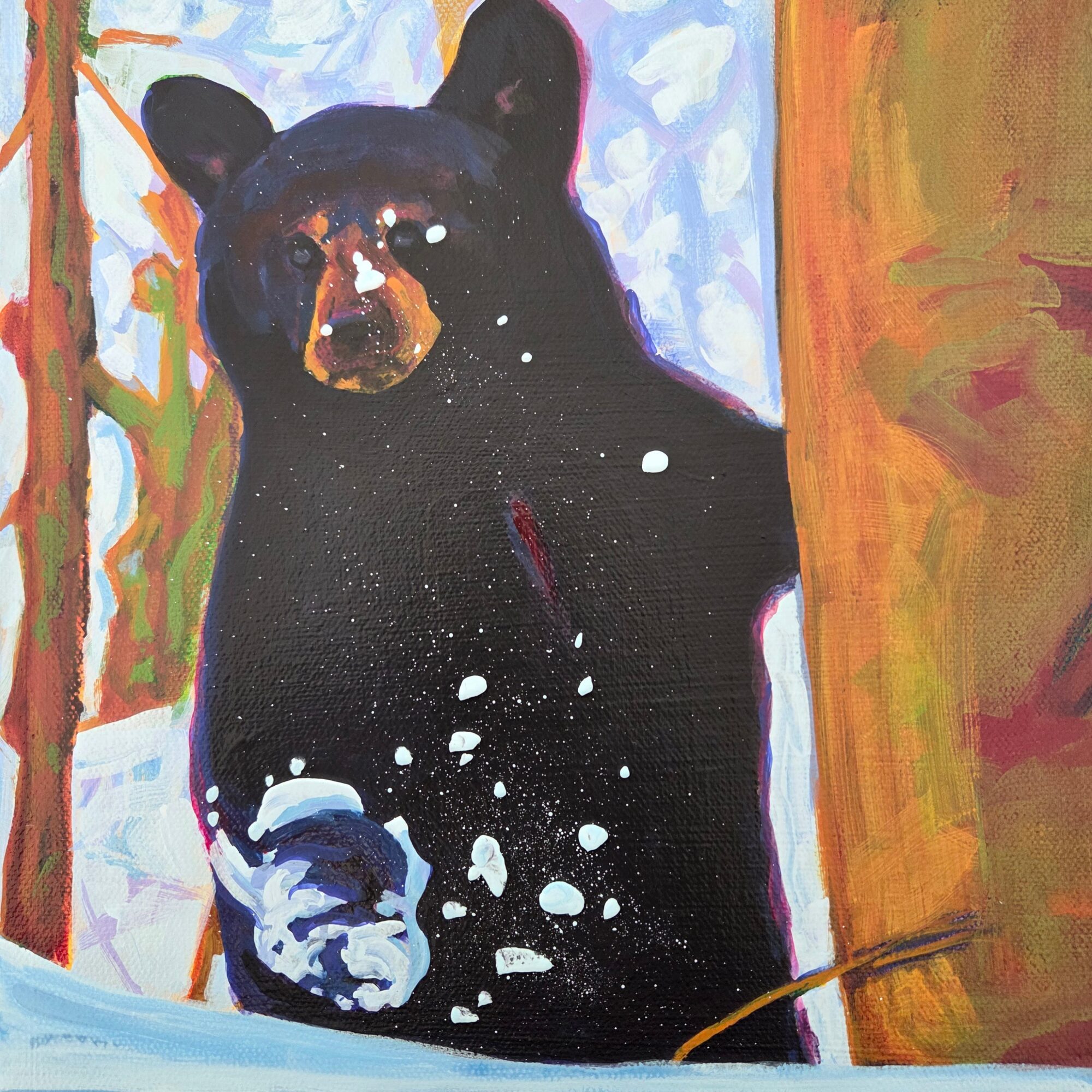
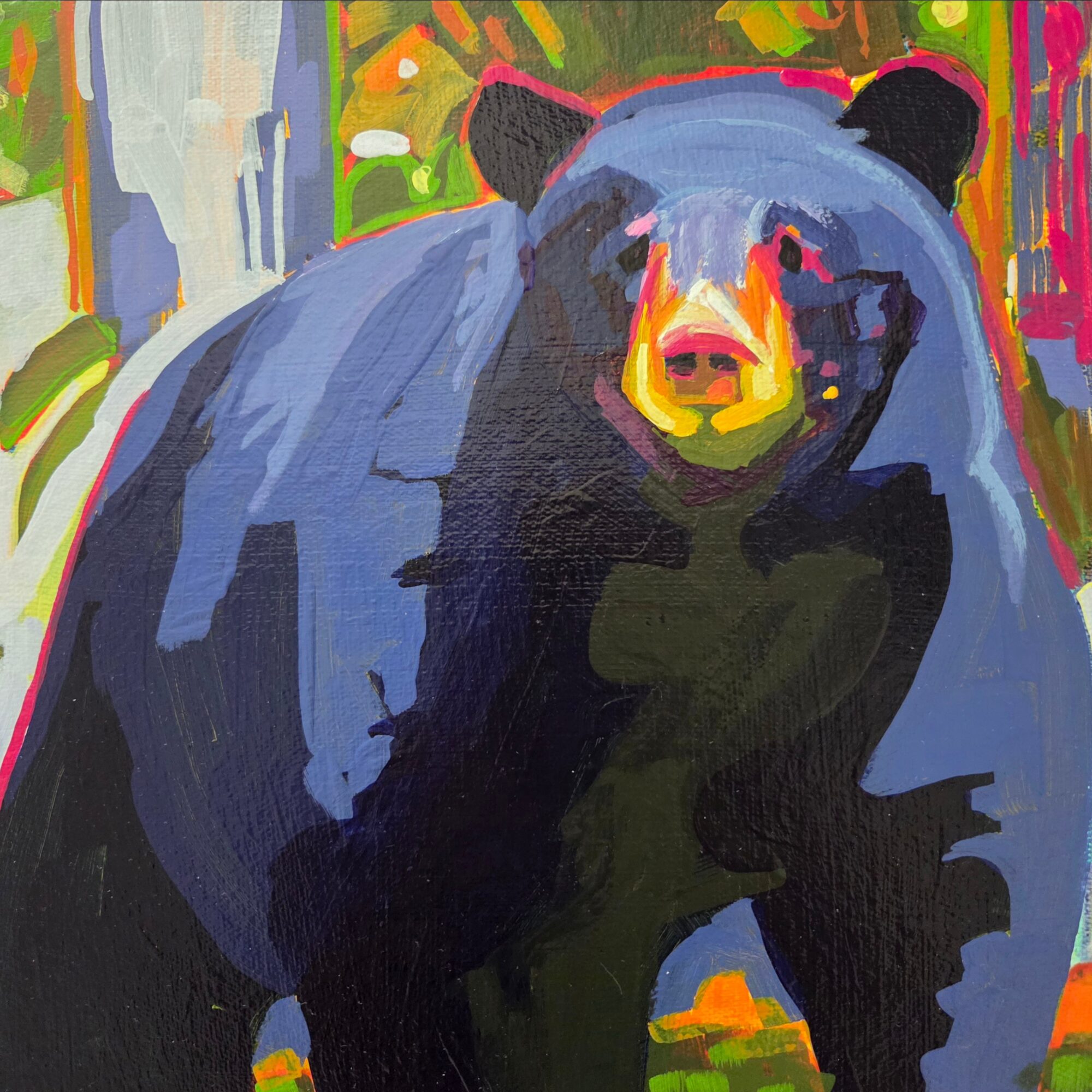
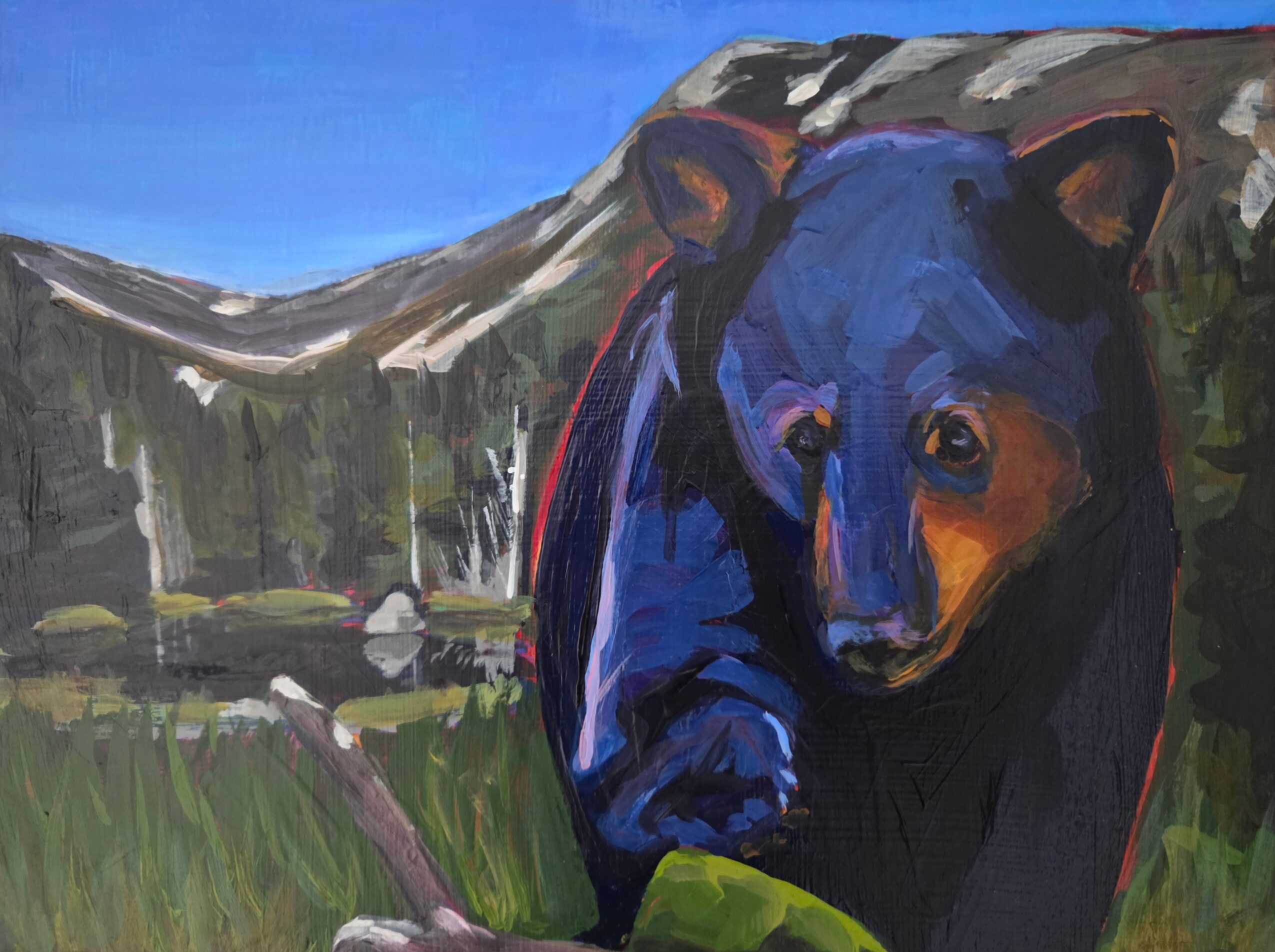
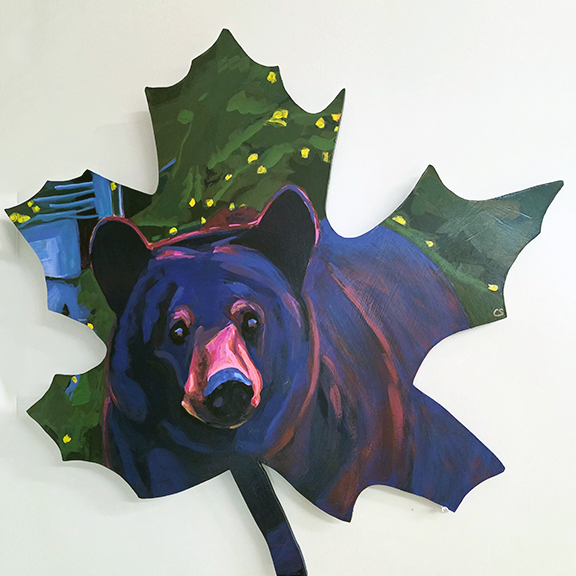
I’m obsessed with playing with color relativity and applying color theory to my work, so some people recognize my work solely by the colors. I build up my painting surfaces with several layers of colors, often with opposites of what I want you to see. If I want a cool blue sky, I’ll start by layering in a warm orange, for example. In the end, that makes the primary color blue appear more blue to your eye. Orange is made up of red and yellow, the other two primary colors. That’s what helps make the blue work harder. I spend a lot of the year in New Hampshire, and I paint a lot of “blurple” bears. Instead of using blacks and browns to depict our growing black bear population, I use a range of intense blues and purples to breathe life into them. Pops of orange or yellow or hot pink near those blurples add visual interest.
Others say that my work stands out with my use of bold brush strokes. That has taken me years to develop, and I am certain it will evolve as my practice deepens. I start with a larger brush in hand than necessary. That helps me block in big shapes and patterns so I don’t get lost in the sauce of details. I also let some of the underpainting break through and I’m not overly concerned with blending everything together. The broken color allows your eye to do the mixing, and it’s a way for you to “stop the scroll,” so to speak and hang around to enjoy looking at the painting a little longer.
I’m extremely grateful that the Kilham Bear Center in New Hampshire gives me permission to use their photos as the basis of many of my bear paintings. KBC is a non-profit that rescues and rehabilitates orphaned, injured, and abandoned black bear cubs from all over New England. Whenever I sell a painting with a KBC bear in it, I donate 10% of the sales proceeds directly to the center so they can continue their mission. They currently have 22 bears denning this winter. Those animals typically get released when they’re 18 months old, strong enough for them to fend for themselves in the wild. I’m happy to help KBC succeed with this program.
Before we go, is there anything else you can share with us?
We are here to create.
A lot of good can flow into your life when you carve out time to make something…..just for you. It doesn’t have to be seen by anyone other than you.
You don’t need much to start. Short on time? set a timer for 15 minutes. Short on money? start with a piece of paper and a mechanical pencil, or a couple brushes and a set of watercolors. Short on direction? find tutorials on YouTube or find a daily drawing or doodle challenge on Instagram.
An art practice – no matter how private or public it is – will pull you into the present moment. It will build your ability to concentrate better. It will teach you a lot about problem-solving and perseverance. It is something YOU can control in what often feels like an uncontrollable world. It’s self-care – just for you.
Allow yourself to have fun. Allow yourself to make bad art. In fact, that’s an essential component of learning how to make good art. We don’t sit a child down at a piano bench and expect them to play a concerto out of the gate. So, don’t get discouraged if Mona Lisa doesn’t come out of the other end of your brush when you start. She might, but it’s more than OK if she doesn’t.
Contact Info:
- Website: https://www.cherylshanahan.com/
- Instagram: https://www.instagram.com/artbycherylshanahan/
- LinkedIn: https://www.linkedin.com/in/cherylshanahan/