




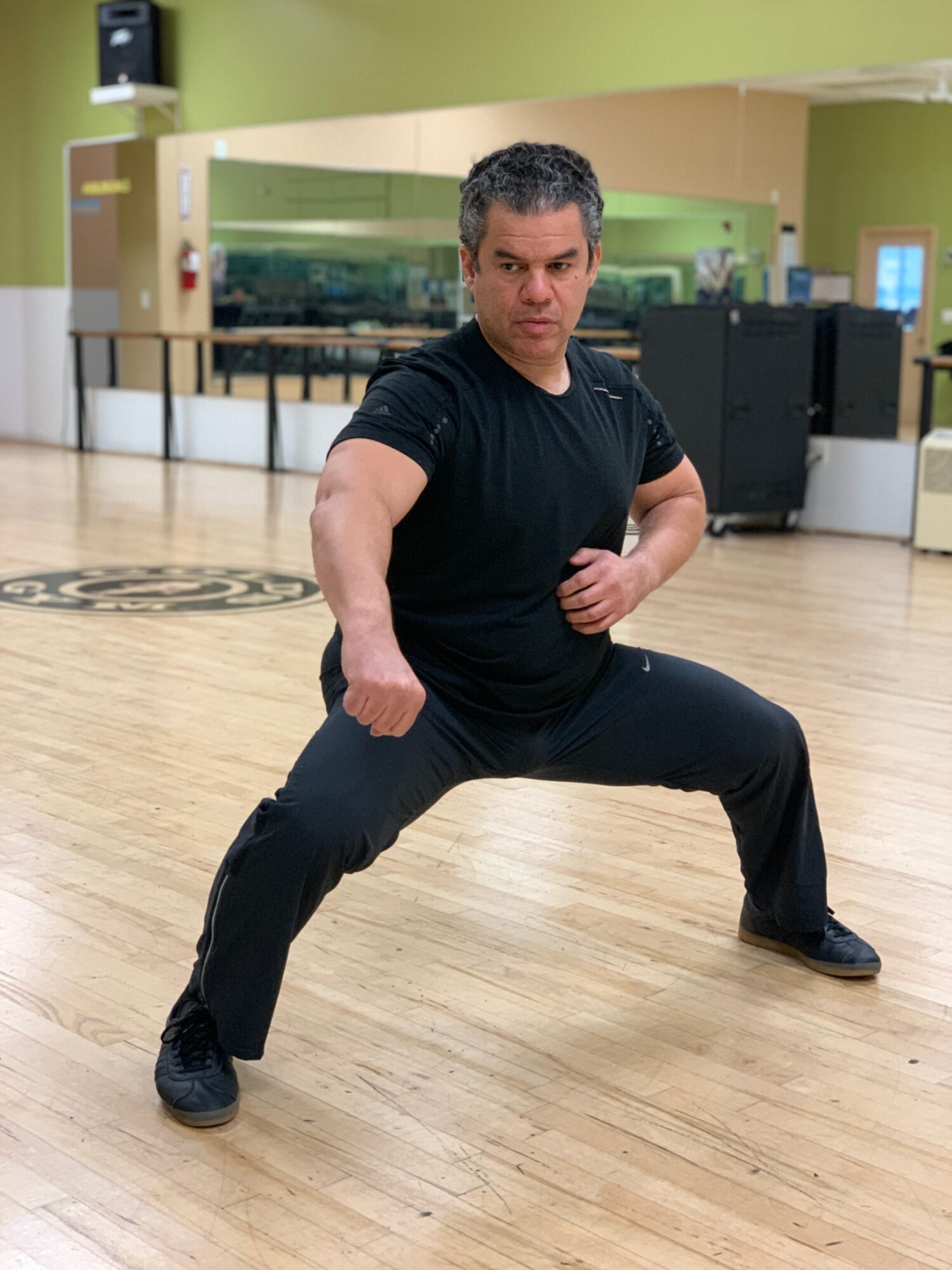
Today we’d like to introduce you to Stephan Berwick.
Hi Stephan, so excited to have you on the platform. So before we get into questions about your work-life, maybe you can bring our readers up to speed on your story and how you got to where you are today?
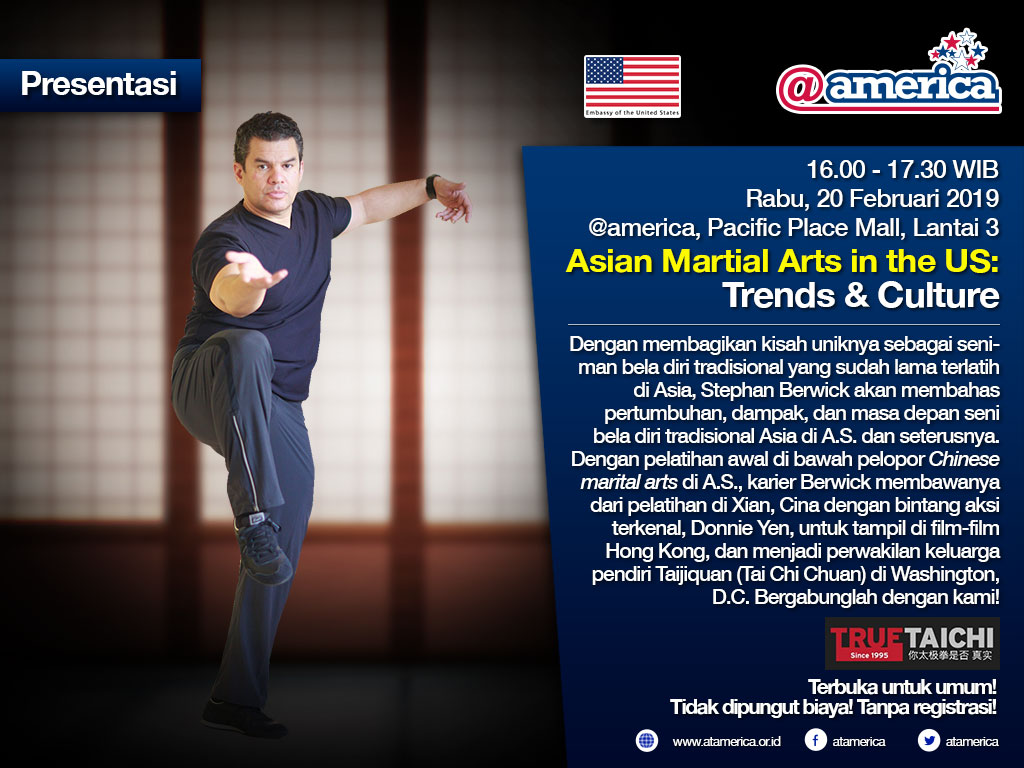
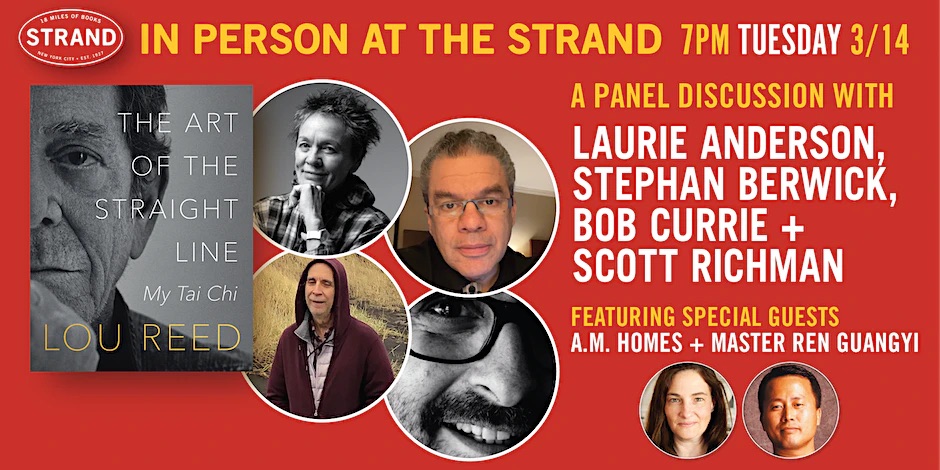
As a Chinese style martial arts expert, researcher, and teacher, I consider myself a martial culturalist, I was hosted by the U.S. Embassy in Indonesia, to present a public diplomacy lecture on “Asian Martial Arts in the United States: Trends and Culture”. I also wrote and narrated the Tai Chi performances of the NY Lincoln Center for the Performing Arts’ Lou Reed festivals and co-produced ‘The Art of the Straight Line’, a book about Reed’s love and dedication to Tai Chi, with music executive Scott Richman, writer Bob Currie, and Reed’s wife, the artist Laurie Anderson. Most recently, I presented a Tai Chi lecture with words, movement, and music as part of a unique concert Anderson gave at the Smithsonian Hirshhorn Museum of Modern Art.
(The below is drawn and updated from a two-part biography first published online by Different Truths.)
————————————————
I was in elementary school when the first of the Hong Kong martial arts movies appeared in the United States. It was called ‘Five Fingers of Death’. The protagonist in the film had a special technique where he trained his hands in an ancient toughening regimen called “Iron Palm”. I remembered how everything changed from then on. Soon after, Bruce Lee became a superstar which fueled so many, including me, to become martial artists.
Just a year before, the pioneering U.S. television show, ‘Kung Fu’ debuted. It followed the journey of a bi-racial Shaolin Buddhist warrior monk who traveled through the American west of the 1800s. (It was based on an idea Bruce Lee proposed in Hollywood before he returned to Hong Kong to become a star. His original idea was recently made into the much loved HBO series,’Warrior’.) ‘Kung Fu’ was required viewing for my family. My father made sure we all watched, because of the show’s life lessons and humble heroism. We loved it at home.
My father saw through the hype that emerged back then about marital arts. He searched out teachers for me. But what he did first, was gave me books to read. The books were the best of the few English works by the top Western scholars on Asian martial arts at the time – Robert Smith and Donn Draeger. Their book, ‘Asian Fighting Arts’ was crucial. It put me on the right path, educating me on martial arts from East to South Asia.
Most of my friends did martial arts, having fun sparring and imitating what we saw in movies. That was my passion, my play. And under my father’s guidance, (who even made training equipment for me I kept to this day), my course was set.
After a few years training in Japanese Karate, my father found an amateur practitioner from Taiwan, with training in North China style martial art. He taught me privately in the back of his beer and soda store in Queens, New York (NY). From him I got my first close-up view of authentic Chinese martial arts.
Then in 1980, the Beijing Wushu (“war arts”) martial arts team, embarked on a historic global tour. When I first saw them in NY as a teen, I was speechless at their skill and style. My vision of what a martial artist must be was set.
Two experiences in high school planted the seeds for my later vision of the art. I was awarded an international leadership training scholarship for teenage boys at Camp Rising Sun. There I created and staged a martial arts-based dance and music performance featuring boys from around the world. It was performed at night outdoors, at a rural location with the performers emerging in and out of a forest surrounding an open field. The music was played by a single conga drummer from Egypt and the performance was only torch-lit.
The following year, I was an exchange student in Japan, where I performed traditional Chinese martial art at public venues when Chinese marital arts were not widely practiced there. When I returned from Japan I began picking-up other martial styles on my own. Better quality schools were emerging, so I decided to attend college in a city with good teachers.
I chose Boston University to join one of the best martial arts schools in the country at the time, the Chinese Wushu Research Institute, headed by the pioneering Bow Sim Mark. She was the first person in the U.S. to teach martial art as trained in contemporary Mainland China.
I spent so much time at her school I dropped out of college, walking away from a full scholarship. All I wanted to do was train. I took security jobs at night to train during the day. My dad was torn about it because he championed my doing martial arts. When I dropped out of school to follow my vision, we hardly spoke for a year. Still, I knew for the future I had to practice hard while young.
At Bow’s school, I learned traditional martial arts as well the contemporary wushu that mesmerized me a few years before. One reason I wanted to train at her school was because I saw her son, Donnie Yen, (Asia’s top action film star), win a national tournament at NY’s Madison Square Garden. Donnie was the first American to train full-time in China with the Beijing Wushu Team, which also produced the film star, Jet Li. He won the NY tournament dressed in the contemporary athletic garb preferred by China’s national marital arts teams. That was so ‘cool’ to me.
I was at the school for just under a year when Donnie returned to Boston from Hong Kong. His second film, ‘Mismatched Couples’ was the first Breakdance film made in Asia. But the film didn’t do well at the box office, so he returned to the States. About a week after his return, he came to the school and saw me alone practicing jump spinning kicks. Without introducing himself, he asked how long I’ve been at the school. He said, “I’ve never seen anyone at my mom’s school kick like you.” We instantly bonded.
We trained and did practically everything together. I learned a lot from him, especially much of what he learned in China. We were weight-lifting, boxing, kicking – doing all kinds of martial arts training, including weaponry. He later organized a team of the best of the younger students at his mom’s school to perform throughout Boston.
But he wanted to return to Hong Kong to resume his film career. Donnie insisted I go with him. He said that some film directors there wanted to find foreign martial artists to play more urbane villains with genuine martial arts skills. The director he was connected to was the famous, Yuen Wo-ping, of Jackie Chan’s first hit film and the action director of the ‘Matrix’ films.
When Donnie made it clear to me it was Yuen, I said,”Okay, maybe.” I just wanted to train and improve my martial arts. But I knew I had to do something more with all that training. So Donnie took action photos of me in the picturesque South End of Boston and sent them to Yuen. He told me,”Just remember I took these pictures. No one else can take pictures like these.” It was hard to believe I would ever be in martial arts films.
I spent a month training full-time with one of Bow’s early students, Richard Cesario, (among the small number of Americans who trained in China after Donnie). Bow then urged me and Donnie to go to China together for intensive training. He felt that if he were to do that again, it would be to learn the rarely seen, Chinese 2-Hand Long Sword. He was also interested in training with China’s most decorated wushu champion, Zhao Changjun, renowned for his explosive, classical technique. His coach was Bai Wenxiang, one of the first traditional martial artists who transitioned to contemporary wushu and was a master of the 2-Hand Long Sword. They headed the national team of Xi’an, the ancient capital of China.
Donnie’s parents set it up for us. From 1987-88, we were the first Americans to train at the Sha’anxi Athletic Technical Institute in Xi’an, which had a particular specialty in martial arts. We lived and trained there full-time, graduating as certified instructors.
We then traveled with Zhao to Beijing to train and confer with the national team assembled to compete in the Asian Games that featured wushu for the first time. We stayed in Beijing for a month, spending close time with China’s most elite, young martial artists of the era. We spent much time with Li Xia, the female champion who inspired my later study of classical straight sword.
Donnie wanted to get back to Hong Kong, because Yuen was planning a contemporary film in the style of the 1980’s TV show, ‘Miami Vice’. Called ’Tiger Cage’, it would be Donnie’s comeback film. He insisted Yuen would be interested in me for a role. We departed to Hong Kong and stayed at his uncle’s home outside the city. We were skinny, ragged, and exhausted after our life as martial artists in the China of that time.
At his uncle’s we rested, ate nourishing food, and cleaned-up. We then met with Yuen, who liked the pictures Donnie took of me and was interested. He asked me to demonstrate precisely targeted high kicks with both legs to see if I could perform on film as Donnie captured by photos.
But I told Donnie, “I really need to get back home. I need to finish college. I promised my parents.” He said, ”If you go back, just be ready, because Yuen may send you a contract.” I returned home and sure enough, they sent me a plane ticket and contract with one of Hong Kong’s well-established studios back then, D&B Films. It was the studio that made Michelle Yeoh a star. I returned to Hong Kong, (with an early Bow student, Michael Woods and later, joined by another of our Boston training brothers, John Salvitti), to work two years as a martial arts film actor.
In Hong Kong I was promoted in the press as “Vicious Legs” and “Poison Kick” due to my kicking skill. But after three films I returned home after the Tiananmen Massacre, which shocked Hong Kong to a standstill. My older sister, Donna, who was a well-known, film costume designer, suggested I could get film or other performance work in NY. I wasn’t feeling that. I only wanted to continue developing my martial art. That’s all. I was also intent on finishing college.
But from her spreading the word, I was contacted by the late musician, Fred Ho. I didn’t know much about him. I only remembered his name as a community leader in Boston. He was a powerful character – a U.S. Marine, Harvard graduate, and a highly regarded baritone sax player who was a disciple of the preeminent African American jazz musician, Archie Shepp. He was also an essayist and an influential social justice activist. When I met him he was writing operas, combining Chinese and African American stories and culture. He was influenced by David Henry Hwang’s ‘The Dance and the Railroad’, (a stage musical about early Chinese Americans starring John Lone), which my father took me to see years before.
Upon meeting him, the first thing he asked was, ”You were on Bow Sim Mark’s performance team?” I answered, “Yes I was.” He said, “I know about you in movies, but tell me about her performance work.” I asked, “Did you actually follow her?” He said, “Yes! She showed me I can combine my music with martial arts to tell authentic cultural stories.”
Bow’s expression of her martial art was beyond fighting or exercise. She was a traditional martial arts master who combined her art with music in a distinct way. Yet she never realized how much of an influence she had. Bow gave Ho the confidence to create operas that told American history through African American music and Chinese martial arts.
Ho asked, “Would you like to work with me? I’m about to launch readings and single-act stagings, but I need the right kind of martial arts choreography.” Of course I said yes. We created the first staging of his “Warrior Sisters” opera at NY City College’s Aaron Davis Hall. It featured the Asian American performance group, ‘Slant’, (led by Perry Yung, now a star of HBO’s ‘Warrior’), Ho’s ‘Afro Asian Music Ensemble’, and me as the martial art choreographer.
After working on that early production, he obtained funding to do bigger shows. I finished my undergraduate degree and assured my parents I’d go to graduate school to study international affairs. I was even more energized to do pursue international studies after my work with Ho.
Before working with Ho, I heard through the NY Chinese martial arts network that a new practitioner was in town. He was teaching the mother form of Tai Chi, (Chen style), and was trained by Tai Chi’s creators, the Chen family of north China. I discovered from a promotional flyer my future wife noticed at her workplace, that it was Ren Guangyi. The time was right. I was ready to follow Bow’s advice from years before, to focus on the “internal” martial arts, like Tai Chi, after building a foundation in the “external” disciplines.
My father and I went to meet Ren. I immediately enrolled in his first group. I saw him as a very professional, intense, and highly polished martial artist. That was rare to see in the U.S. Tai Chi scene back then. I quickly became one of his most ardent students devoted to his intense training.
Even during grad school back in Boston, where I studied advanced global affairs at the Fletcher School, I returned to NY for monthly training sessions with Ren. Upon graduation, I returned to NY for a year of daily training with him. Those intense sessions were early morning at Flushing Park in the Chinatown part of Queens, NY.
I moved to Northern Viriginia to work as a federal government, international affairs officer and started to teach, largely due to Ren’s insistence. Within a year, I brought him to the DC area for annual seminars for a decade. I then underwent especially deep training from the top-ranked master, Chen Xiaowang. I continued after my first visit to the Chen village in North China with Ren in 2000.
That visit was seminal because of the primary research I did there, which had never been done by a westerner. I interviewed top practitioners in the village. From that research, I wrote the first English articles that profiled the next generation of Chen family masters. One article was the first profile of Chen Xiaoxing in the Western press. With Ren’s help, I began to organize seminars for Chen family masters, for almost fifteen years, which had a big impact on my growth and place in the art.
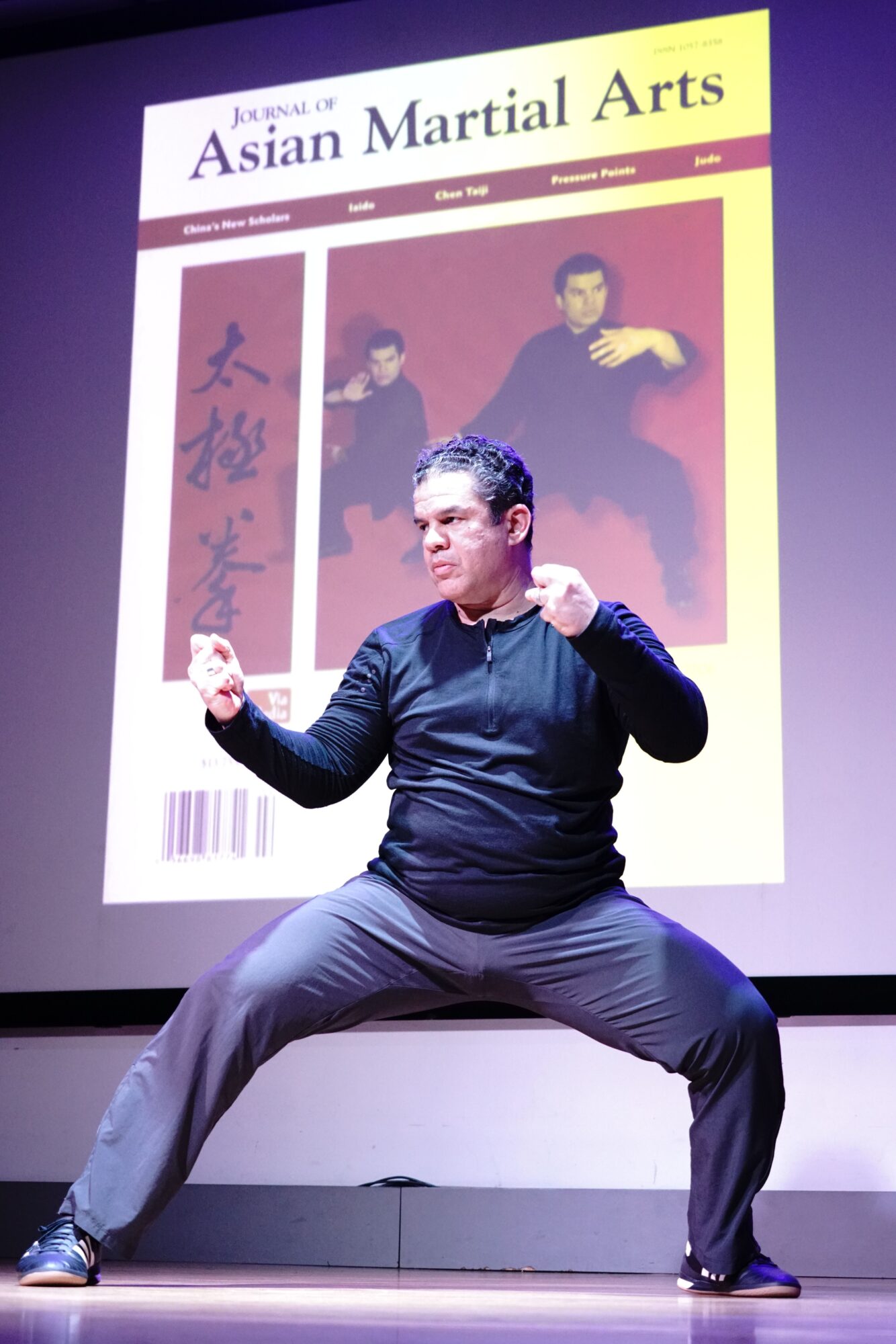
In 2006, I was profiled in the academic ‘Journal of Asian Martial Arts’ (JAMA). I had already been featured many times in the martial arts and local Washington, DC press. But the JAMA profile was a landmark. I was the sole westerner to represent Chen Tai Chi on a JAMA cover.. Chen Xiaoxing then designated my group, (‘True Tai Chi’), as one of the few Chen Family Branch Schools outside China.
My work grew, including research, writing, and organizing quarterly seminars. The seminars also included some with my and Donnie’s teacher, Bai Wenxiang, with whom I was featured in ‘Inside Kung Fu’ magazine.
The first of my own seminars were organized by my best friend since high school, the martial artist, Henry Hsiang. I also conducted seminars in Seattle and Jakarta, organized by my friend and student, Larry Frost. Jose Figueroa, my training brother from Ren’s first group, organized seminars in Minneapolis. And Bill Helm of San Diego’s Taoist Sanctuary, hosted my teaching in California.
With public service in my blood, I spent a few years teaching Tai Chi to the U.S. diplomatic corp. It was part of the U.S. Foreign Service National Training Center’s “Resiliency” program. I then began teaching Tai Chi to under-supported communities.
I served as the content advisor and lead narrator of the documentary film, ‘Urban Dragons’, which told how Chinese martial arts benefits black and brown men. With mentoring from my student, Joe Youche, a leader in community math education, I developed ‘Stand and Step’. The non-profit organization developed Tai Chi programs for at-risk youth in Arlington, VA. I went on to lead a long-running Tai Chi program for low-income, under-represented adults as part of the AmeriHealth, community health education initiative.
From this work, the Washington, DC Mayor’s Office of Asian and Pacific Islander Affairs asked me to lead a Tai Chi program in the city’s historic Chinatown to revive its crumbling central park and get the elderly back outdoors. The success of the program led to a nearly decade-long community program. From this, I presented Tai Chi to various government entities in DC, including leading a large-scale Tai Chi session for the Mayor’s city-wide, leadership council and a presentation to hundreds at the Smithsonian Sackler museum.
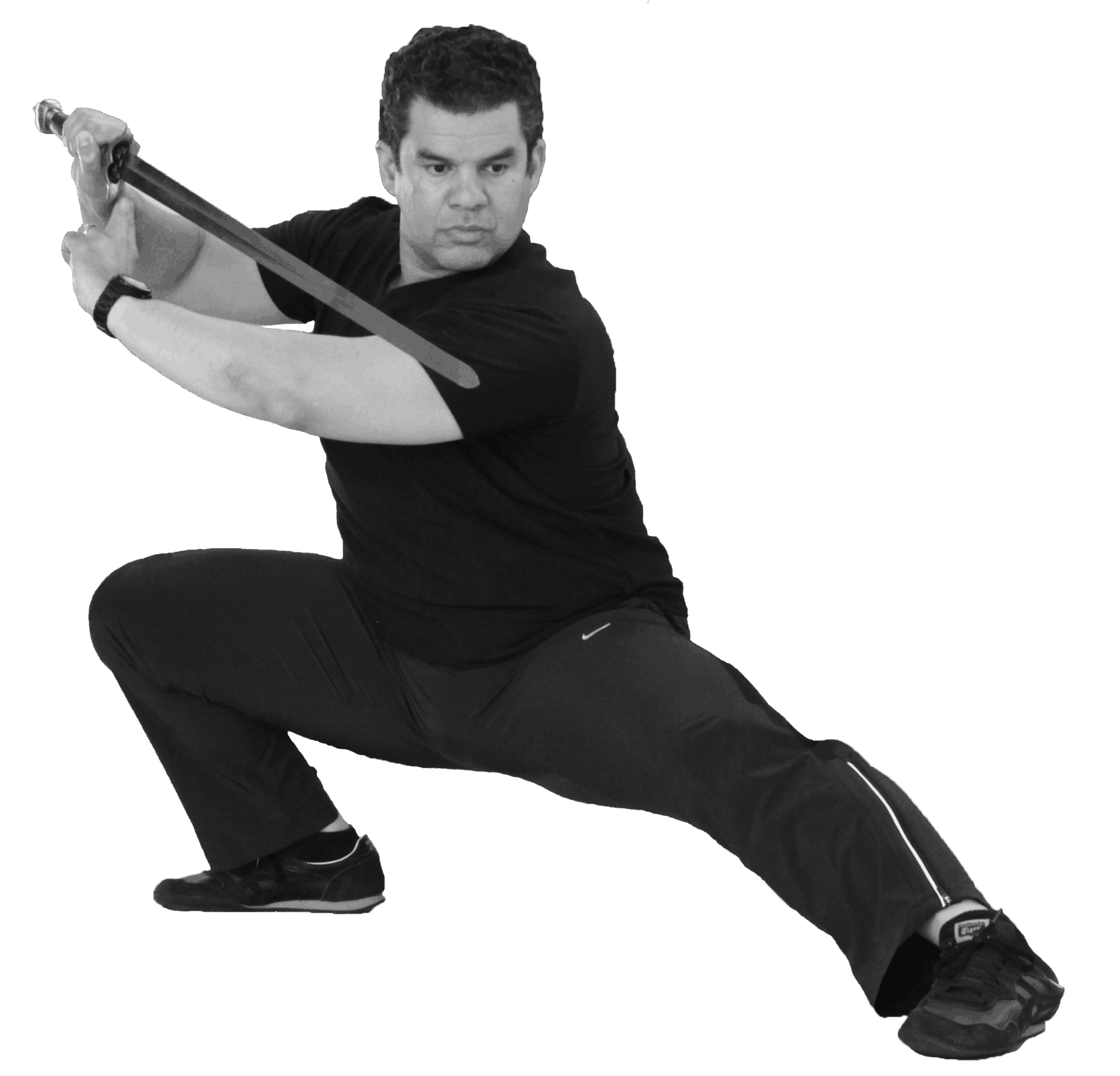
My writing included co-authoring three books on Chen Tai Chi – one utilizing the photography of Ren’s student, the performance artist, Martin von Haselberg. Of the over three dozen articles I published, they include the first martial arts profiles of David Bowie’s music producer, Tony Visconti, and the media CEO and venture capitalist, Jon Miller. I co-produced the first detailed English translations of the Chen family scholar, Chen Xin’s 1933 manual with my student and Chinese linguist, Dan Butler. The article featured Chen Xiaowang’s first ever commentary on his ancestor’s book. I wrote the first English piece on Qingping Sword, (the last surviving Chinese sword system), which I study under the senior ranked Qingping instructor in the U.S, Hon Lee, who is also one of my first Chen Tai Chi students.
In 2003, Ren and I were invited to a national martial arts event in California, where I first met the late rock music legend, Lou Reed. He had just begun studying under Ren. We connected immediately. He so enjoyed talking about his little-known, long passion for martial arts. From then on Ren insisted we do something together.
From our first meeting, Lou spoke passionately about “Meditation on Violence”, a 1948 film by the avant garde film maker, Maya Deren. I’d heard of the film, but didn’t know who Deren was. It was a mystery to us. Lou thought there was something other-worldly about the black and white film. It featured the Chinese-American stage and film actor, Chao-Li Chi, who decades later, played one of the older characters in the famous 1980’s American martial arts fantasy film, ‘Big Trouble in Little China’. I had no idea he was a skilled martial artist, because he was from a time when Chinese martial arts were kept quiet within their community. The film is likely the first known instance of a traditional Chinese martial art employed as modern performance art in the west.
During this period, I wrote a paper on the history of martial arts as performance art. So Ren pushed hard for me to come up with an idea for a film. With Lou’s love for the Deren piece, he was open to doing something together. I wrote the concept of an idea I had years before, which I presented to him. He said, “Yeah, I get this. I think there’s something here. We can do something.”
Lou gave me the extraordinary permission to use any of his music! A short time later, with Jose Figueroa as producer, we made the film, ’Final Weapon’. It starred Ren, Michael Woods, and featured an appearance by Lou. The film accomplished what we set out to do. ‘Final Weapon’ captured the power and magic of Tai Chi as the martial art it was intended to be.
The film producer, martial artist, and chief curator of NY’s Museum of the Moving Image, Warrington Hudlin, organized an early screening and discussion about ‘Final Weapon’. Fred Ho attended, where we had the great honor to introduce him to Lou. The film went on to screen, with a discussion, at the film-maker and critic, Jonas Mekas’ Anthology Film Archive in NY.
At the Anthology event, Lou discussed the Deren film and how important it was to him and his fascination with Chinese martial arts. ‘Final Weapon’ gave Lou the same feeling he got from ‘Meditation on Violence’. He described how pleased he was with my musical direction of the film, which I handled with great care. He told me, “You gave my music a home in ‘Final Weapon’.” I knew Lou would occasionally say things to encourage talent he believed in, but I was spellbound hearing that. He often asked me, “Steph, did you ever produce music before? It’s amazing what you did with my music!” I said, “I just believe I know good music. I know you.” Of course I knew Ren, the art, and Chinese martial culture deeply. And with my film background, there was indeed the potential to create something new and arresting.
Making ‘Final Weapon’ was an effort of pure passion. It was one of those prescient opportunities in life that unite like-minded souls to create something new. I expressed to Lou that what was inside me, we brought out visually. He responded, “It’s from your words to life.” Even Mekas assured me, “You captured something special in this film. Don’t stop.” Those were precious things for me to hear, because it’s rare to be acknowledged by such luminaries. These are among the few deep confirmations I’ve ever received in life – that when I have the urge to create something new from these magical old arts, I can.
Would you say it’s been a smooth road, and if not what are some of the biggest challenges you’ve faced along the way?
My first struggle on this road was sacrifice. I dropped out of college, leaving a full scholarship, to pursue martial arts seriously. While I did eventually complete my education with distinction, including graduate school, it was tough surviving as a traditional artist. But since high school, I knew one thing – if I had any chance of mastery in a physical art, it had to start from youth. That decision to commit to it early on still pays dividends.
Thanks – so what else should our readers know about your work and what you’re currently focused on?
As a classical martial artist, I work hard to promote and share the traditional standards and values of ancient Chinese martial arts. That adherence fortifies my reputation as a uniquely trained professional, widely recognized for my authentic, traditional skills and unique scholarship in the field. From that basis, I find myself working as a trusted wellness advisor able to leverage my unique expertise across all facets of martial arts to the physical and mental health needs we all desire.
To that, I apply my expertise in Tai Chi to fields that don’t normally use Tai Chi. For example, I co-led an intensive, executive training weekend for the French multinational energy company, ENGIE. I employed a unique Tai Chi protocol I developed to build teamwork and problem solving skills for their director and VP level leadership.
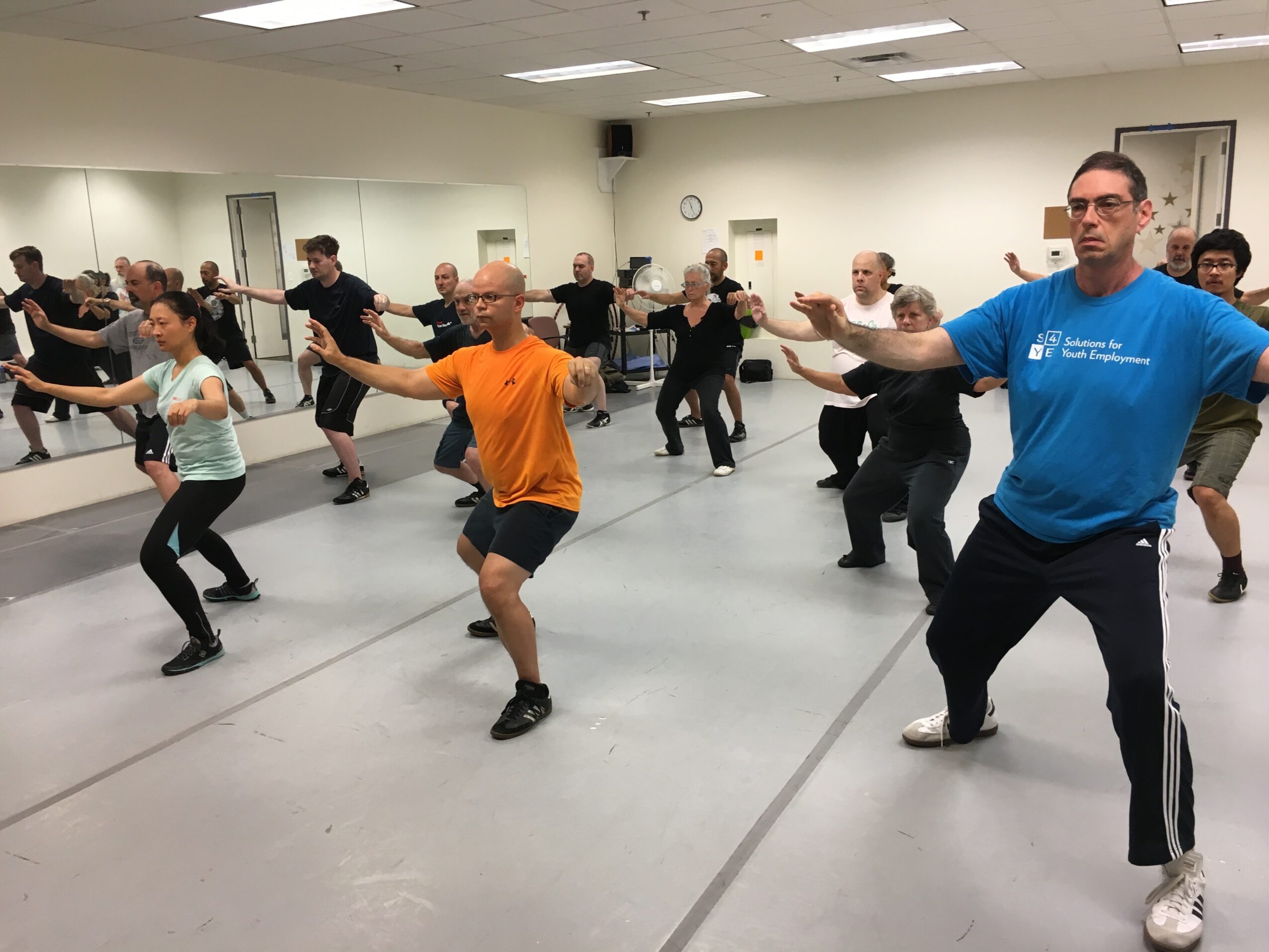
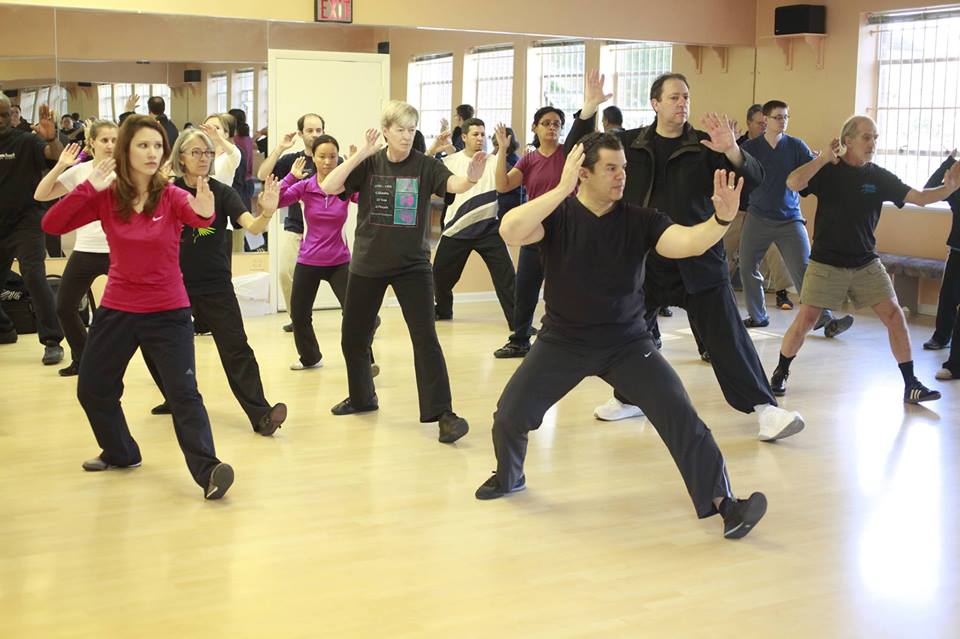
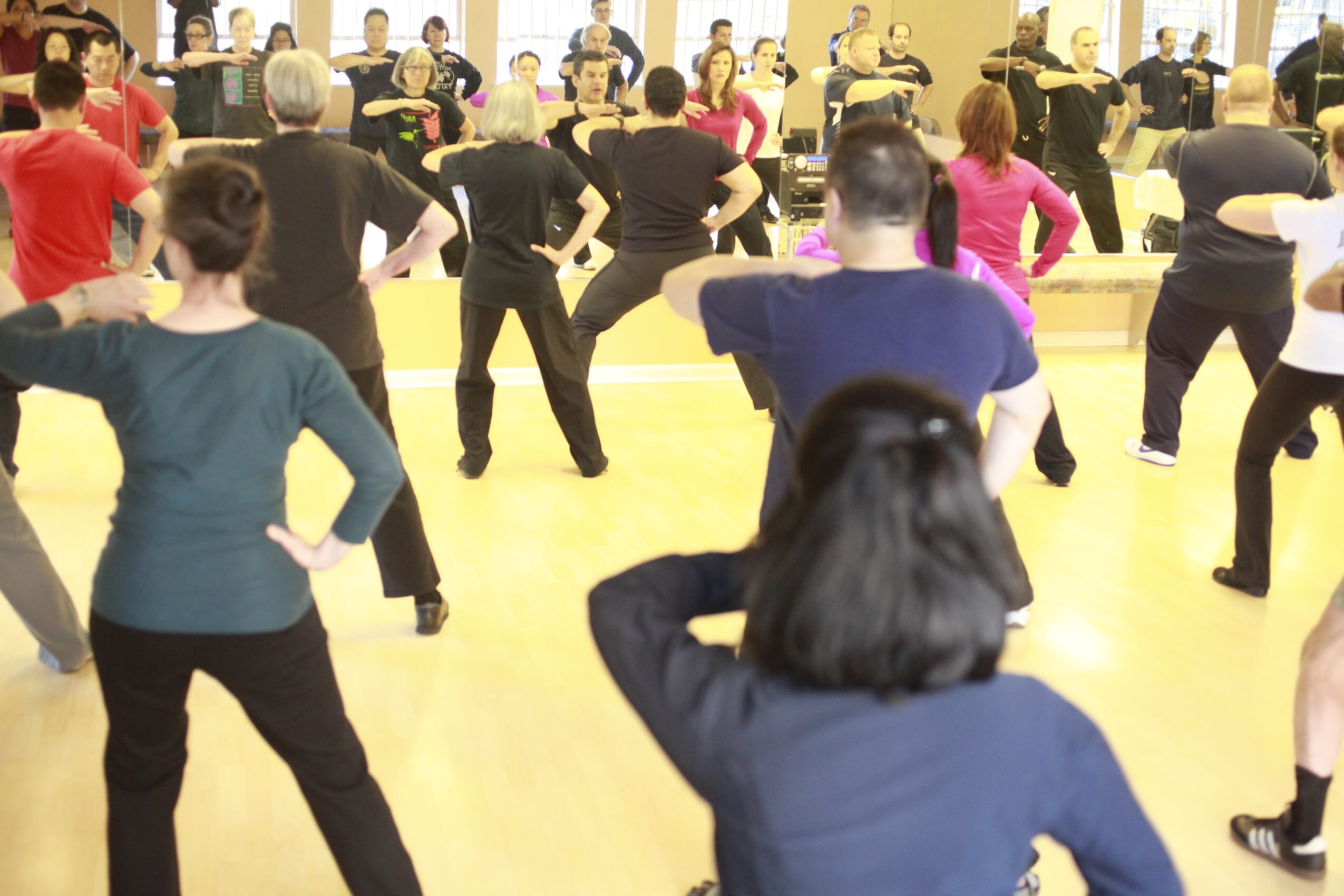
But what I’m most proud of is my group. The students I attract and nourish represent a cross-section of what makes the DC area so special. Its wonderful for me to have a long-term, supportive, and passionate group of highly educated and professionally successful men and women, who are down-to-earth, warm, diverse, urbane, and simply fun.
What would you say have been one of the most important lessons you’ve learned?
The most important lesson I’ve learned is that dedication to an art form opens doors to areas far beyond the arts. At my first day in graduate school for international affairs at the famous, Tufts University Fletcher School, the dean’s welcome speech to the new students called out the accomplishments of some of the new class. He concluded with, “For the first time in our history, we have a student who was actually a martial arts film star in Hong Kong!” I still marvel at how much people are inspired by my success and dedication to traditional Chinese martial arts. No matter where I share my expertise or background, it is my being a martial artist that everyone wants to talk about.
Contact Info:
- Website: https://www.truetaichi.com
- Instagram: https://www.instagram.com/truetaichi/
- Facebook: https://www.facebook.com/truetaichi/
- LinkedIn: https://www.linkedin.com/in/stephan-berwick-4873918/
- Youtube: https://www.youtube.com/user/videochen
- Yelp: https://www.yelp.com/biz/true-tai-chi-washington-3
- Other: https://www.tiktok.com/@truetaichi