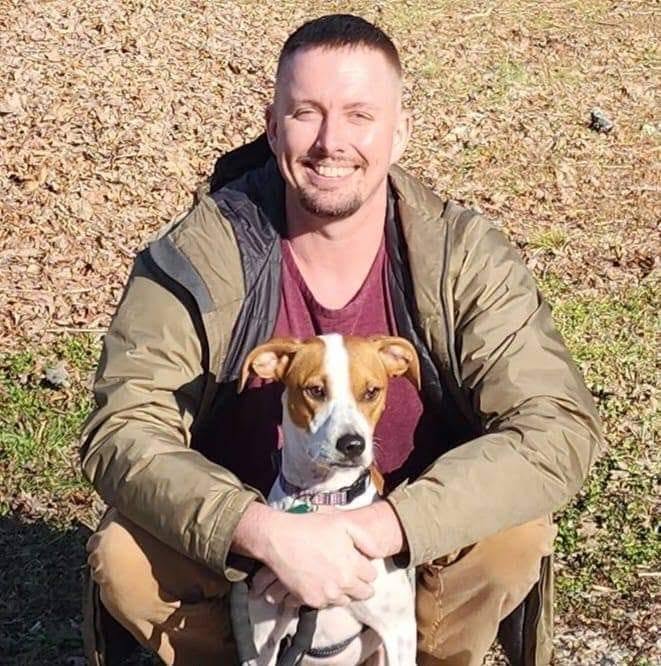





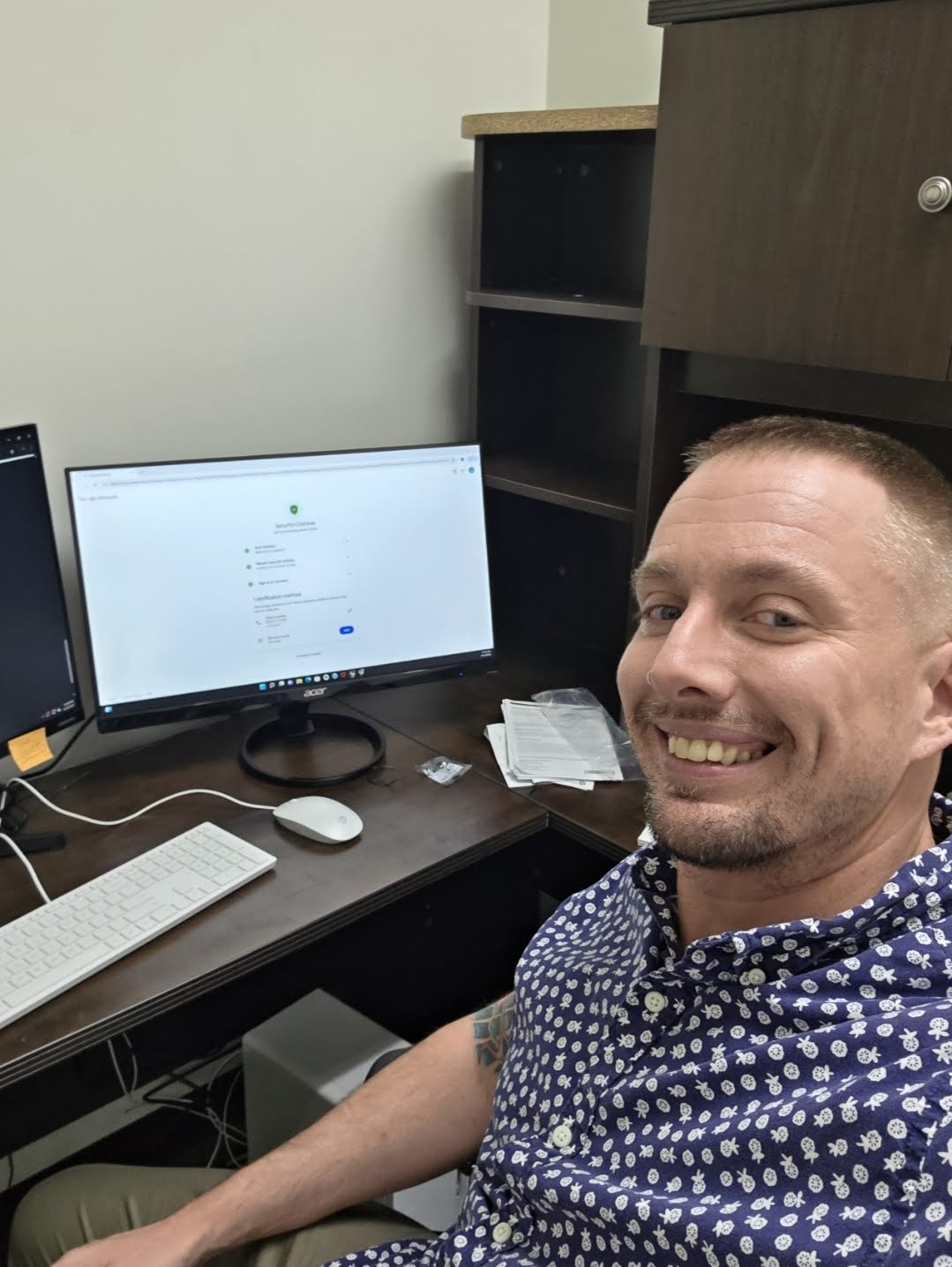
Today we’d like to introduce you to Jake Chaney.
Hi Jake, we’d love for you to start by introducing yourself.
I didn’t come to web design through a design school or an agency. I came to it through data.
I spent seven years at Amazon, starting in operations and working my way into business analysis. That’s where I learned to live in SQL and Excel, and where I figured out that I was happiest when I was building tools that made other people’s jobs easier. From there I went to Deltek as a Senior Research Analyst on GovWin IQ, covering state and local government procurement. Three years of reading RFPs and tracking how public agencies actually buy things teaches you a lot about how organizations make decisions, and about how often a good vendor loses simply because nobody could find them.
In 2025 I took an IT project management role at Hayes Microbial, an accredited environmental testing lab in Midlothian, where I still run their lab software and data projects today. Around the same time I started Chaney Advisory Group for data and automation consulting on the side, and I started building websites for people who needed them. The first one was pro bono, for a recovery house here in Richmond. They left a five-star review, a masonry contractor hired me next, and I realized I had a business.
That became RVA Digital Works. The thing I kept seeing was that most small businesses in the Richmond area either had no website, or had one that nobody, including the search engines and now the AI assistants, could actually find. So instead of guessing, I did what an analyst does: I pulled every active business registration in Richmond, Henrico, Chesterfield, and Hanover, audited a random sample, and published the numbers. About a third of customer-facing businesses here have no website at all. That data, and the tools I built to gather it, are what set the business apart. I’m not selling pretty pages. I’m selling the ability to be found, backed by evidence.
Today I run RVA Digital Works alongside my day job, working directly with local contractors, service businesses, and organizations that need a real digital presence without agency pricing. Every client gets my cell number. That’s the model, and it’s the same one I’d want if I were on the other side of the table.
Would you say it’s been a smooth road, and if not what are some of the biggest challenges you’ve faced along the way?
No, and I’d be suspicious of anyone who says it was.
The first struggle is the obvious one: I’m building this alongside a full-time job. Every hour RVA Digital Works gets is an evening or a weekend, and there’s a real ceiling on what one person can take on. That became concrete this summer when I looked hard at a three-year website management RFP for a regional services board. Two sites, a 99.9% uptime guarantee, one-hour critical response around the clock, a five-person team requirement. It was exactly the kind of work I want to be doing, and I had to pass on it, because I’d have been promising a bench I don’t have. Learning to say no to work you’re capable of doing, because you can’t yet deliver it the way it deserves, is its own kind of hard.
The second is that winning clients is not the same as being good at the work. I can build a site. Getting a masonry contractor or a medical equipment company to trust a one-man shop with real money is a different skill, and I’ve lost quotes I thought were fair. I sent a fixed-price proposal on a twelve-page site to a brand-new business this year and got turned down flat. That stung, but it pushed me to rethink how I find people in the first place. I’ve gone from cold email, to building my own lead-finding tools from state business registrations, to direct mail aimed at owners who registered their own companies. Some of that worked. Some of it was me solving an interesting data problem instead of a sales problem, and I’ve had to be honest with myself about the difference.
The third is that when you build your own tools, you eat your own mistakes. My lead finder once scored a tax school as a top prospect for having no website. They had a website. My first attempt at an AI visibility index came back with 345 “businesses,” most of which were section headings and licensing acronyms the models had mentioned. I lost a chunk of cloud credits to a billing setup I misunderstood. None of it was fatal, but every one of those cost a night I didn’t have to spare, and each one forced me to add a guardrail so it couldn’t happen again.
What’s kept me going is that the underlying thing is still true. Most small businesses here are hard to find, and the ones I’ve helped have gotten real results. The road hasn’t been smooth, but it’s been in the right direction.
As you know, we’re big fans of RVA Digital Works LLC. For our readers who might not be as familiar what can you tell them about the brand?
RVA Digital Works is a web design and local search business for Richmond-area small businesses. I build websites, I get them found on Google and increasingly in AI assistants, and I do it for contractors, service businesses, and small organizations that need a real digital presence without agency pricing or agency runaround.
What I specialize in is the “found” part. Anyone can sell you a website. The question is whether a homeowner in Chesterfield who asks Google or ChatGPT for a roofer ends up looking at you or at the guy down the street. That’s a search and structure problem, not a design problem, and it’s where my background as a data analyst actually matters. Every site I build ships with the technical plumbing most local sites are missing: proper schema markup, mobile and speed done right, a Google Business Profile that matches, and the newer signals AI models use to decide who to recommend.
What sets me apart is that I don’t guess about any of this. This year I pulled every active business registration in Richmond, Henrico, Chesterfield, and Hanover, audited a random sample of them, and published the results at data.rvadigitalworks.com. About a third of customer-facing businesses in the metro have no website at all. Of the ones that do, roughly four in ten have no structured data, and most have never had anyone look at whether AI search can read them. I also run a monthly Richmond AI Visibility Index that tracks which local contractors the major AI models actually name when someone asks. As far as I know, nobody else is publishing metro-level numbers like that. Every recommendation I make to a client traces back to something I measured.
I’ve also built my own tools rather than renting someone else’s: a free SEO and AI-readiness checker anyone can run on their site at tools.rvadigitalworks.com, and the prospecting and buyer-intent systems I use behind the scenes. That matters to clients because it means I understand what’s under the hood, and I’m not marking up a subscription.
What I’m proudest of, brand-wise, is how I work with people. Fixed prices with no surprises. You own everything, the domain, the site, the accounts, from day one. A written scope that says what’s included and what isn’t. And you get my cell number, not a ticket queue. My first client was a recovery house I built for free, and the review they left is still the one I’d point to first.
If there’s one thing I’d want readers to know, it’s that being invisible online is fixable, and it’s usually cheaper to fix than they think. If you run a business in the Richmond area and you’re not sure where you stand, run your site through the free checker or just reach out. I’ll tell you honestly what I see, even if the answer is that you don’t need me yet.
In terms of your work and the industry, what are some of the changes you are expecting to see over the next five to ten years?
The biggest shift is already underway: search is turning into an answer instead of a list. For twenty years, the game was ranking on page one of Google. Over the next five to ten, more and more people will ask an AI assistant “who’s a good plumber near me?” and get three names and a recommendation, not ten blue links. That changes everything about what a website is for. It’s no longer a brochure people browse. It’s a source that machines read, weigh, and either cite or ignore. Businesses that are structured and clear to a model will get named. The rest will simply not exist in that conversation, and the owner won’t even know it happened.
That’s why I think the industry splits. On one side, building a basic website becomes nearly free. The AI site builders are already good enough for a five-page brochure, and they’ll get better. A lot of agencies whose real product was “we know how to use WordPress” will not survive that. On the other side, the work that actually moves the needle gets more technical and more measurable: structured data, entity consistency across the web, reputation signals, being cited by the sources the models trust. That’s where the value is going, and it looks a lot more like data work than design work. I’m comfortable with that, because it’s where I came from.
Second, I think “trust me” stops being an acceptable sales pitch. Small business owners have been burned by SEO vendors for two decades, and AI makes the bad actors cheaper and louder. The firms that win will be the ones that can show their work: here’s your visibility before, here’s it after, here’s the data. That’s the bet I’m making with the published Richmond research and the visibility index. Local, verifiable numbers are going to be worth more than any amount of marketing copy.
Third, and this is the part that keeps me up at night in a good way, I think local businesses are about to become more important as sources, not less. AI models need something real to point to. A masonry contractor with a clear site, consistent reviews, and honest project write-ups is exactly what those systems want to cite. The small guy has a chance here that he didn’t have against national brands in the old ad-auction world, if someone helps him get set up correctly.
Finally, I expect the tooling to keep collapsing in cost, which cuts both ways. The things I built this year, a lead finder, a buyer-intent tracker, a metro-wide audit pipeline, would have taken a team a few years ago. That means a one-person shop can punch well above its weight, but it also means the moat has to be knowledge and data, not software. I’d rather be the person who knows what the Richmond numbers actually are than the person with the nicest dashboard.
Contact Info:
- Website: https://rvadigitalworks.com
- Instagram: https://www.instagram.com/rvadigitalworks/
- Facebook: https://www.facebook.com/rvadigitalworks/
- LinkedIn: https://www.linkedin.com/company/rva-digital-works/
- Yelp: https://www.yelp.com/biz/rva-digital-works-midlothian