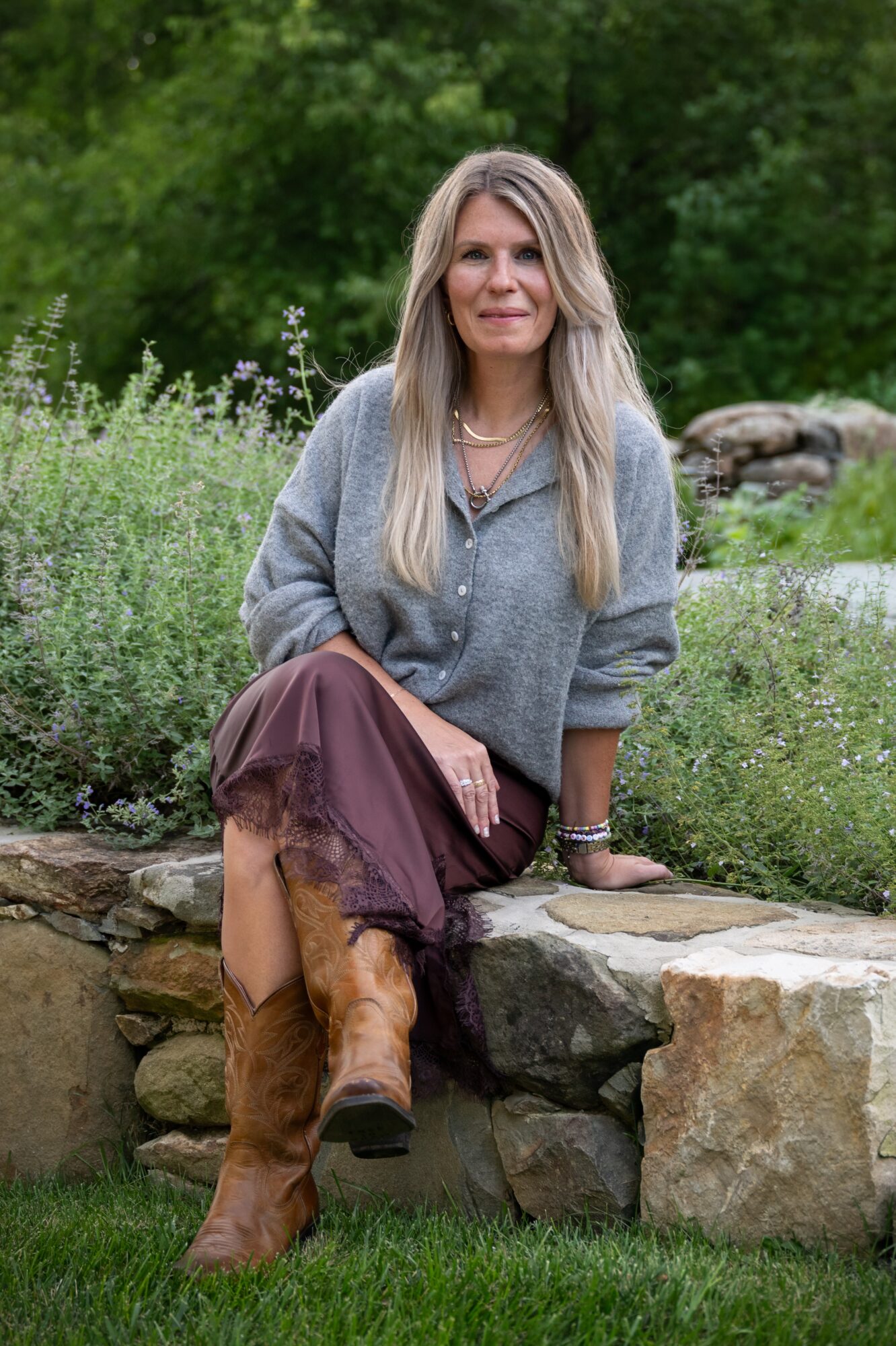




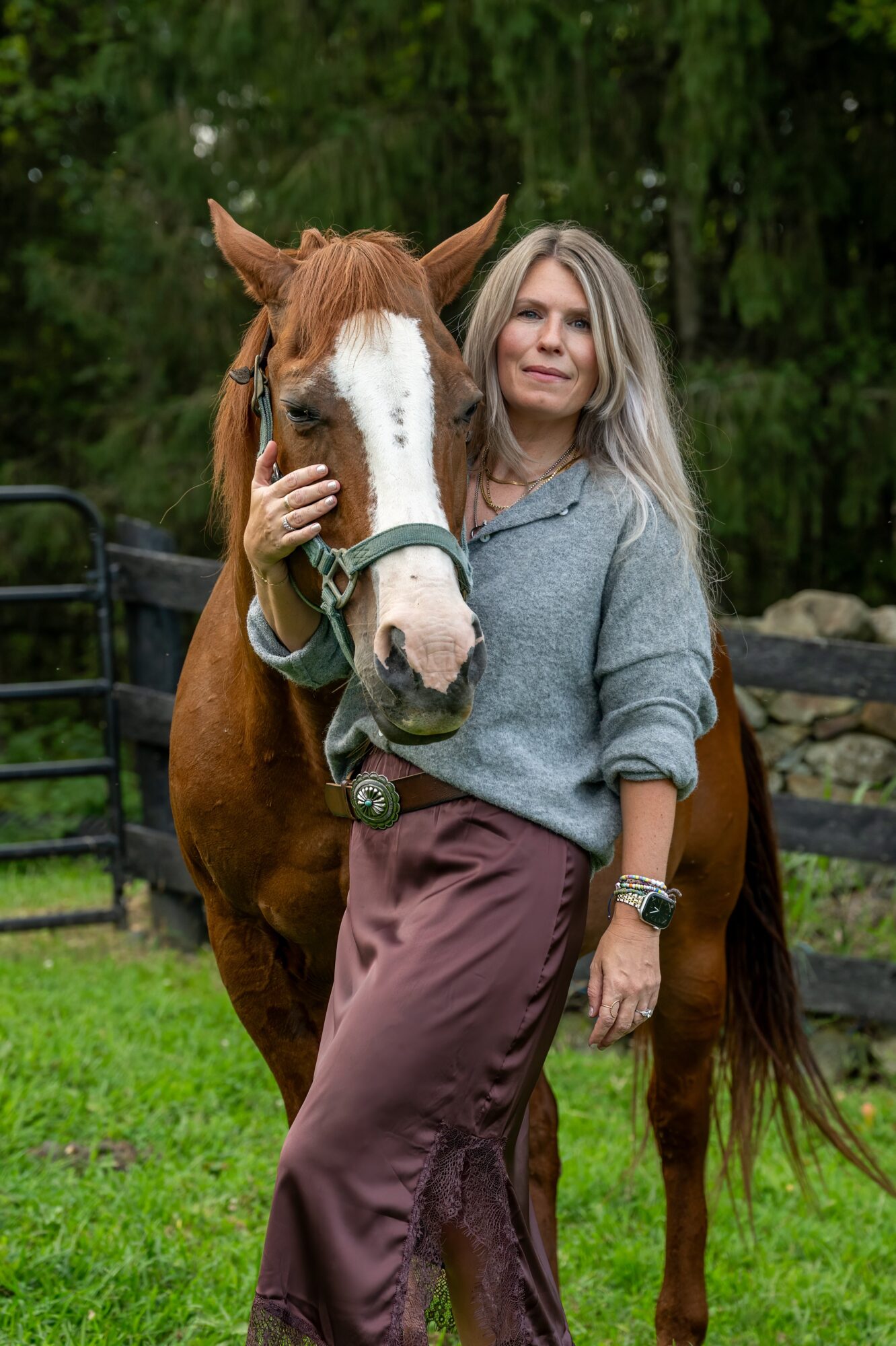
Today we’d like to introduce you to Stephanie Christensen.
Hi Stephanie, so excited to have you on the platform. So before we get into questions about your work-life, maybe you can bring our readers up to speed on your story and how you got to where you are today?
Listening to stories is honestly one of the reasons I love what I do. I grew up listening to my dad tell stories about growing up on a horse ranch in Arizona. And I grew up in horse country in Virginia, so between the two, I think I was just destined to love horses. I started riding when I was young and fell in love pretty instantly.
The other great love of my young life was music. Music gave me permission to feel things really deeply. I loved getting lost in the story being told through the words and the music. I studied music in college, but after I graduated, I remember feeling pretty aimless. Despite my job in the music industry, I struggled to feel purposeful.
So I did what I think a lot of people do when they’re trying to find themselves—I went somewhere else. I spent three months living in Uganda and then several more weeks in Guatemala, trying to forget my own worries by focusing on and serving other people.
It was there that I met, Shefi, a 14-year-old boy with severe physical and mental disabilities. His story was just heartbreaking, and it changed the trajectory of my own story. I came home with this really clear sense that I wanted to help families. I wanted to strengthen them and support them.
That eventually led me to Virginia Tech’s marriage and family therapy program. I took a bit of a leap of faith and signed up for a continuing education class called Lifespan Development, and somewhere in there, I found the third love of my life: psychology.
What I loved about psychology is that it gives me a framework; theory and research that help me make sense of people’s stories—why we do what we do, how our experiences shape us, and how we can change for the better.
It’s been such a surprising and really welcome experience to discover a career that lets me bring so many of the things I love together. I get to listen to people’s stories. I get to feel deeply with them in their suffering and in their joy. I get to help them make sense of their experiences through the lens of psychology, and then help them figure out how to live a little differently.
And now, as an equine-assisted therapist, I get to do all of that with the sacred partnership of horses. It’s kind of a dream, really.
Would you say it’s been a smooth road, and if not what are some of the biggest challenges you’ve faced along the way?
My dad said something to me a few years ago that I’m still thinking on. He said, “The older I get, the more I realize that everything in life is about balance.” And I think about that a lot because, I guess, a dream really wouldn’t be a dream without a few nightmares along the way.
Once I found the marriage and family therapy program, I actually didn’t go back to school for another eight years. I got married, moved across the country, and took a few, let’s just say, less-than-stellar jobs while my husband finished his education.
Those eight years were hard. I remember feeling really lonely. I missed my home. I missed my family. I became a mom while we were there, and I struggled with a lot of anxiety. Looking back now, I can make a lot more sense of that experience. I think I was just really out of balance. I was constantly pouring out, and there wasn’t a whole lot of pouring back in.
So eventually I came back to this dream of becoming a therapist. And I started pouring back into myself. But even that was hard, though. I was volunteering at a women’s shelter, studying really late at night for the GRE, applying to graduate programs, and still being a full-time caregiver to my three kids.
I remember thinking that once I got accepted into school, surely the hard part would be over. But the program really required me to dig deep and dismantle all of my own formations and narratives about myself and how I viewed others so that I could learn how to not let myself get in the way of guiding others. It was a very tough three years that ultimately, I think, made me a better human, spouse and mom. This all happened during the COVID pandemic so I suddenly found myself trying to attend class virtually, finish assignments, see patients, and homeschool three kids—all at the same time.
The funny thing is, I always knew I could do it. There were definitely moments, though, when I questioned whether I actually wanted to. Quitting became pretty appealing. But I’m really glad I chose the hard.
As hard as that season was, I think it was endurable because I was practicing more balance. I wasn’t just investing in everyone else. I was investing in myself, too. And I think there was something really important about learning that I could care for other people without completely abandoning myself in the process.
We’ve been impressed with Kota Health, but for folks who might not be as familiar, what can you share with them about what you do and what sets you apart from others?
Kota Health really developed over years of practicing therapy and figuring out what seemed to be most helpful for the people sitting across from me. I don’t really practice one single modality. It’s more of a compilation of different approaches that help us bring the mind, body, and soul into better integration.
Interpersonal Neurobiology helps us understand the brain and the role it plays in how we experience the world—how we feel, how we think, how our nervous system responds, and how we can begin moving from automatic reactions and narratives toward more intentional ones.
Emotion-Focused Therapy gives us a way to understand our patterns by getting underneath the behavior and looking at the emotions driving it. And then, through secure relationships, we can begin to shift those patterns and develop a greater sense of safety, both within ourselves and with other people.
Internal Family Systems, or what people sometimes call “parts work,” can be really helpful for people who feel like there are all these different parts of themselves competing for attention. It gives us a way to understand those parts, unburden them from doing what they’ve always done so that they can integrate into a core self, and ultimately feel more whole and grounded, despite the changing external circumstances.
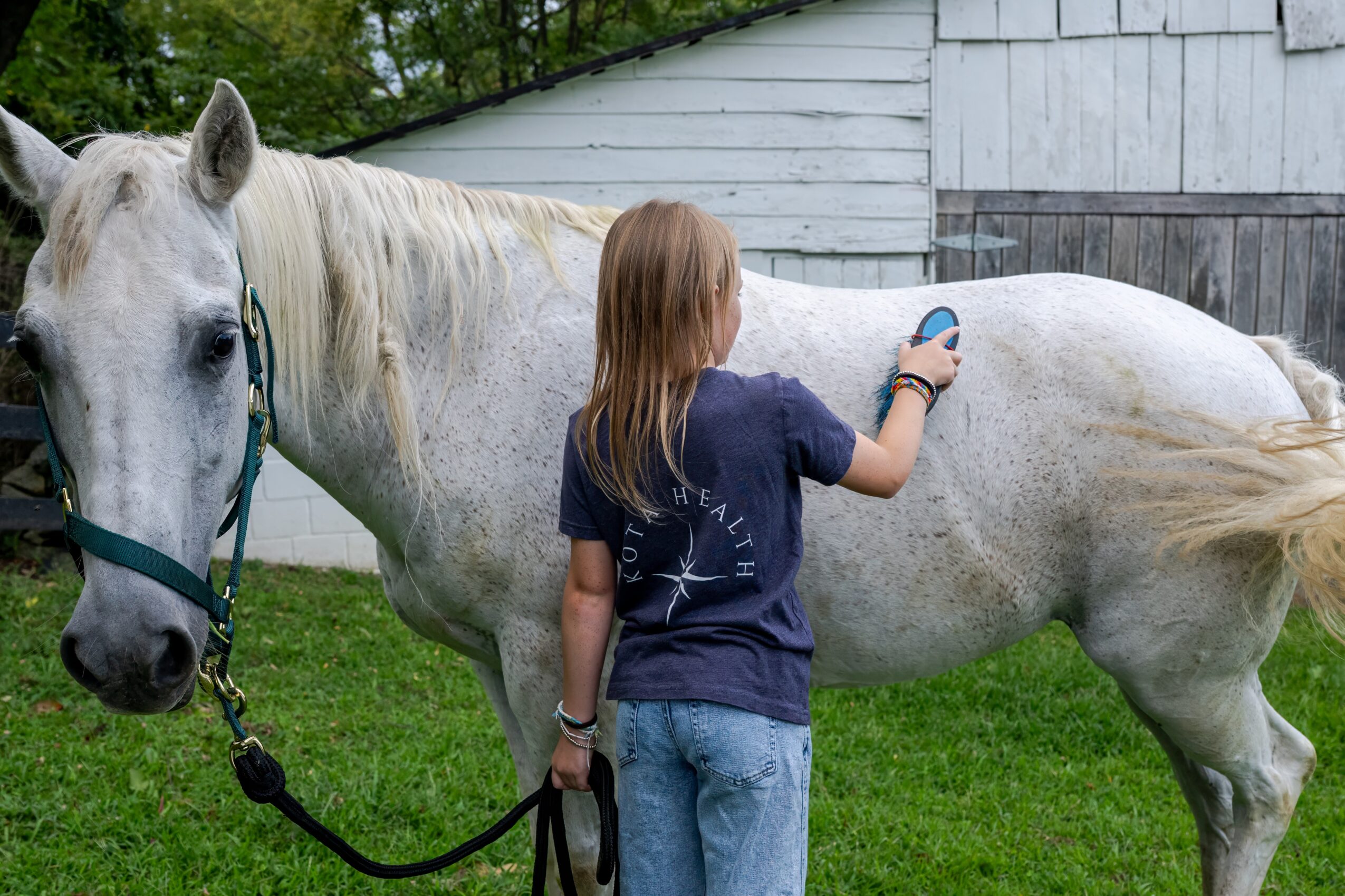
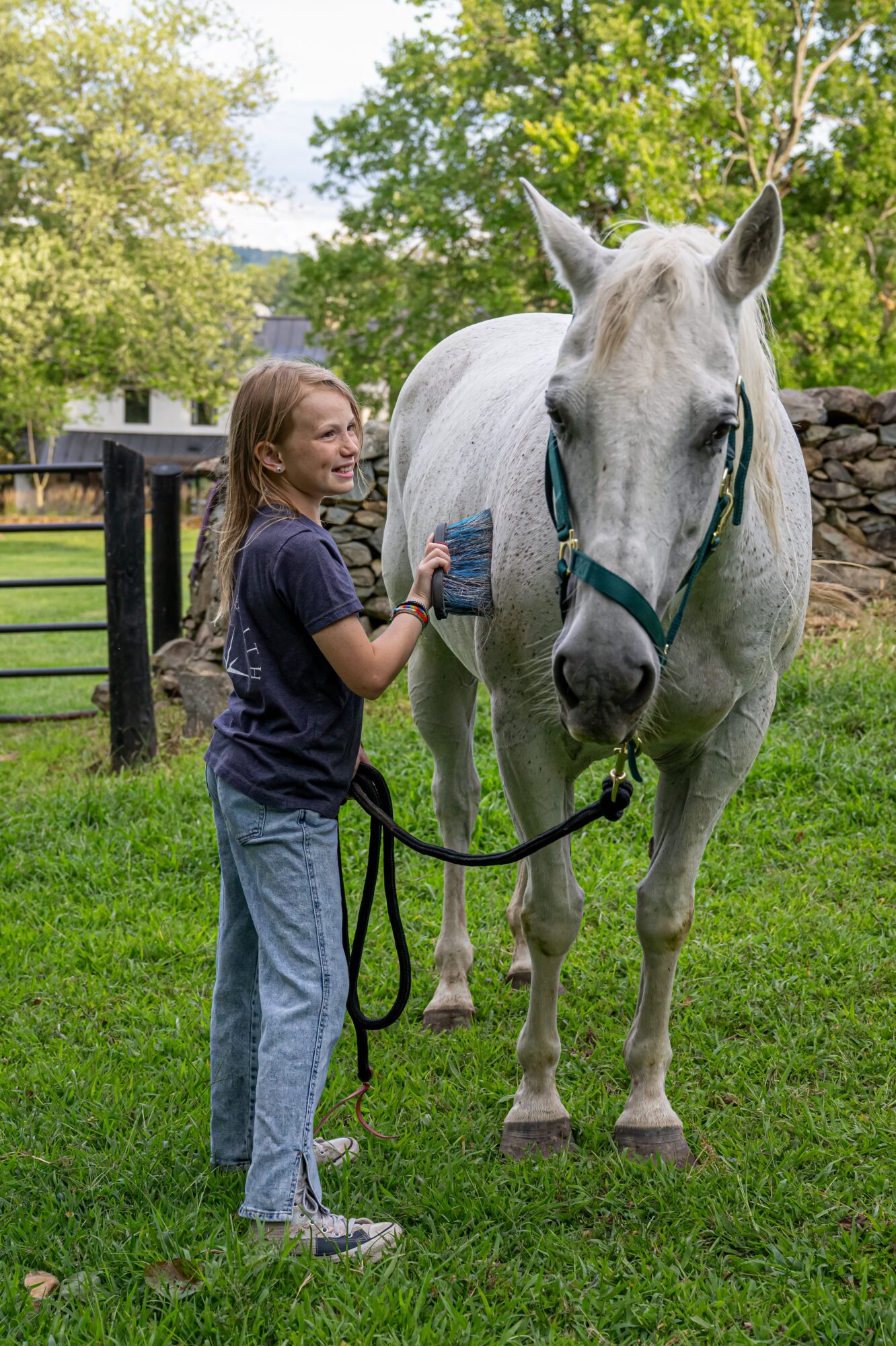
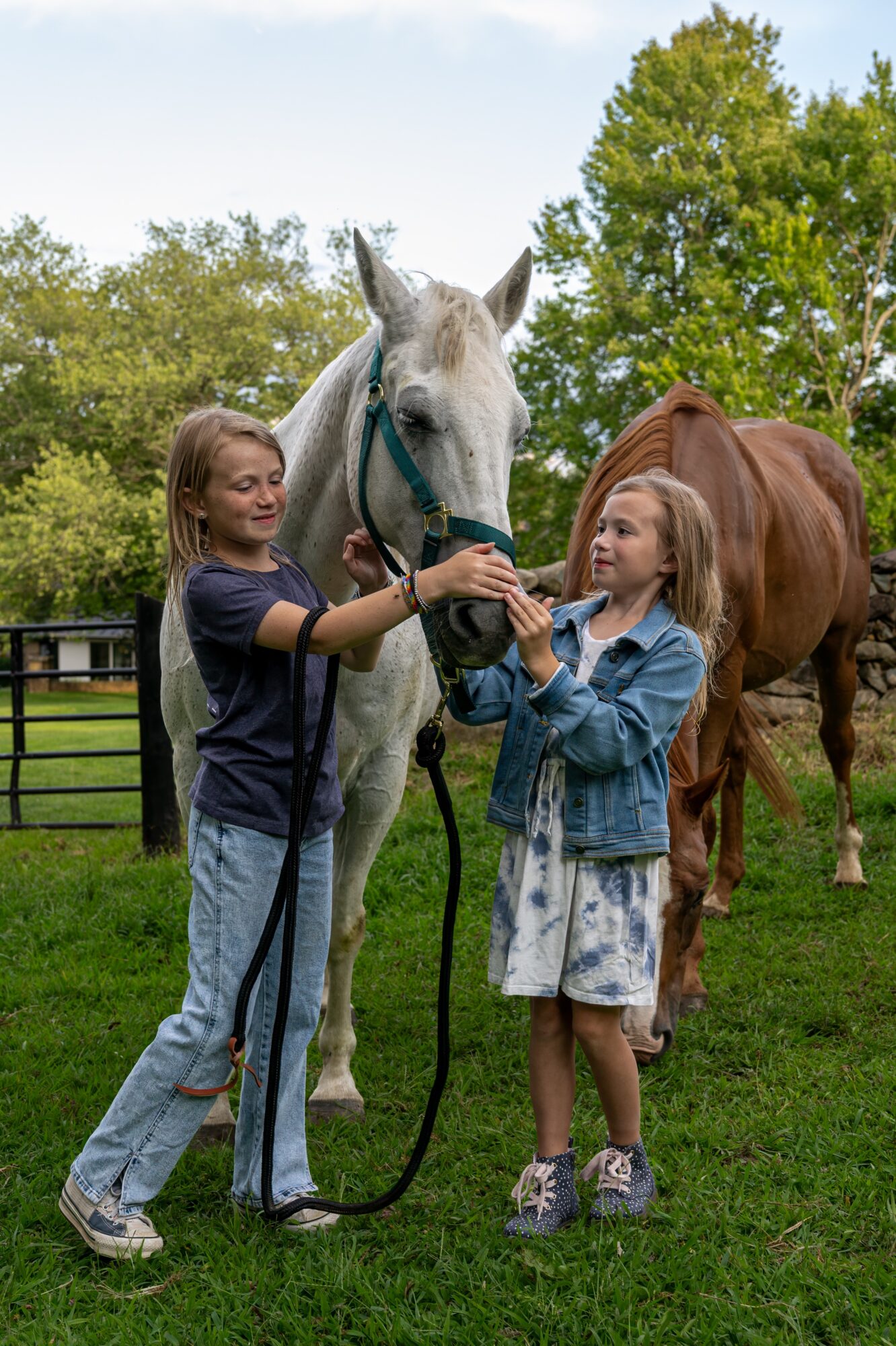
And then, of course, there are the horses. I tell people all the time that if I could, I would probably spend every session at the barn. The type of equine-assisted therapy I practice doesn’t involve riding. Instead, we use the client’s observations and relationship with the horse as a kind of safe, external lens for understanding what’s happening in their own lives. And the horses require something from us that is so simple yet so hard: honesty.
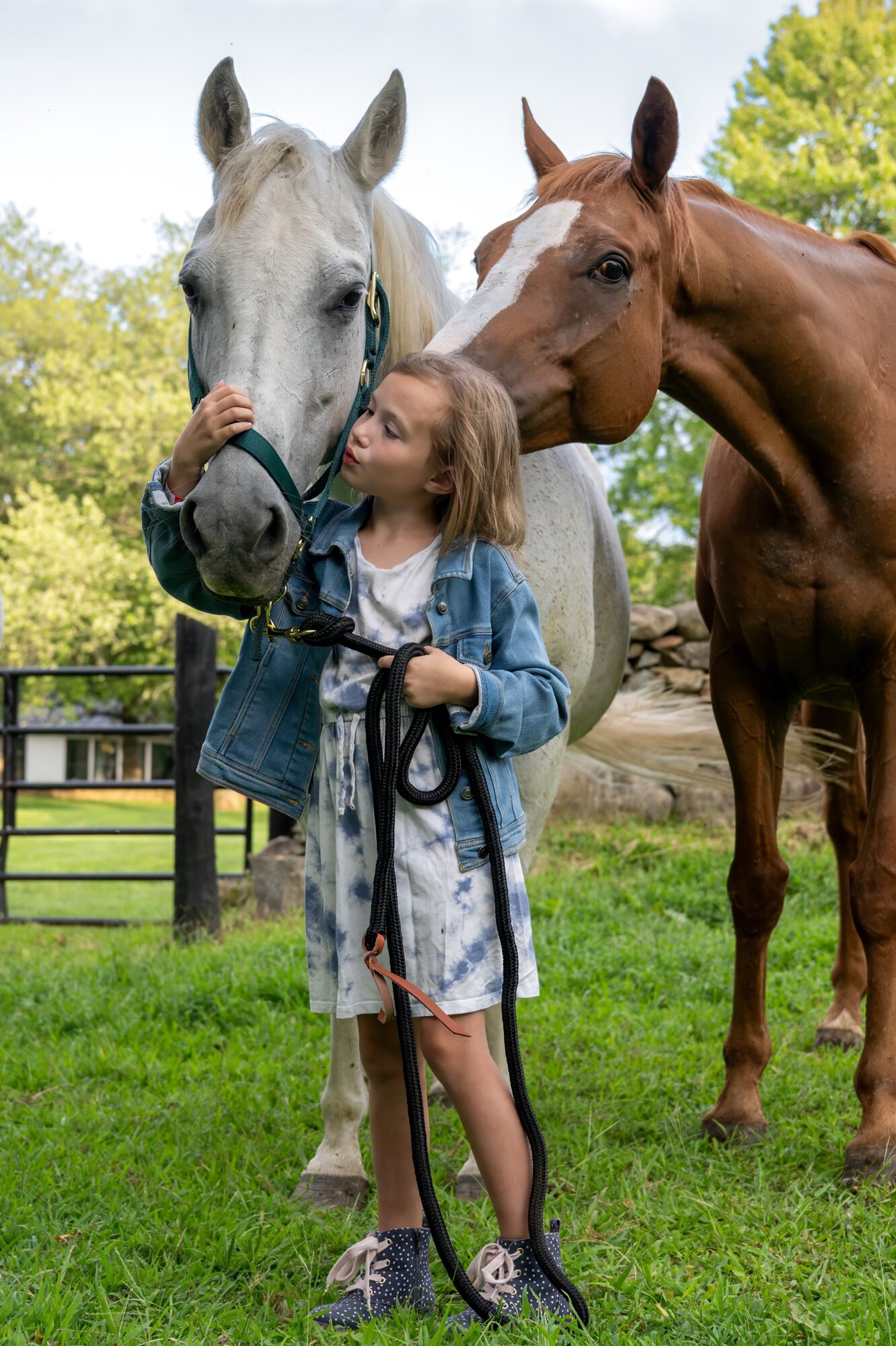
Horses are prey animals, so they’re incredibly attuned to their environment. They pick up on what you’re carrying, and they respond to it whether you’re aware of it—or even willing to admit it—or not. But they don’t force anything out of you. They just gently invite you to notice. And then you get to decide what it means. I think that can be especially powerful for people who want a way to process difficult or traumatic experiences without having to find all the words right away. Sometimes the horse can help create a little bit of space between you and the experience, and from that space, you can begin to understand it differently.
As far as services go, I offer individual, couples, and family therapy virtually and in Leesburg, Virginia. I also offer intensive therapy formats, which can be a really great way to jumpstart someone’s growth over a more concentrated period of time.
Intensives can be especially helpful for people who live outside the area and can carve out two or three days to come to beautiful Loudoun County and really lay the foundation for their therapeutic work.
When I think about the future of Kota Health, I’d love to partner with other like-minded clinicians who are interested in treating people more holistically. I’d love to eventually expand our services to include more somatic approaches—things like chiropractic care, breath work, therapeutic yoga, hormone-replacement therapies, and nutritional therapies.
Ultimately, I’d love Kota Health to become a place where people can come and, under one roof, find support for the whole person—the mind, the body, and the soul.
What do you like and dislike about the city?
One of my CliftonStrengths is context. Which means, I really value history – looking back to help understand the present. Leesburg’s history is definetly one of the things I love most about it. It’s not just the buildings that hold charm, it’s a felt sense that a lot of life has been lived here. Just outside of Leesburg, all the little towns like Purcellville, Middleburg and Lucketts just add rolling hills, farm stands and stonewall fences to the city’s charm.
If there’s anything I don’t like, it’s just how quickly it has changed. If I could slow down development, I would – and preserve the history that makes it feel the way it does.
Contact Info:
- Website: https://www.kota.health/