




Today we’d like to introduce you to Ada Haensel.
Hi Ada, it’s an honor to have you on the platform. Thanks for taking the time to share your story with us – to start maybe you can share some of your backstory with our readers?
I grew up taking lessons at a lesson barn once a week. It was never enough. When I got home, I would refuse to shower, trying to hold the smell of horses on my skin as long as I could — until my mom finally made me wash it off. One lesson a week was what my parents were paid for, so I begged them to let me volunteer at a therapeutic riding center just to be near horses a little longer. Even then, I wanted more.
At fourteen, I started scouring Virginia Equestrian classifieds, hoping to find a free lease or an exercise position — anything that would put me in a saddle. I came across a Friesian thirty minutes from my house who needed exercise. There was only one condition: I had to take a weekly lesson at his barn. It was a show barn, and those lessons were more than my parents wanted to pay. The trainer must have seen my face drop, because she asked me a question that changed my life: did I want to work for it?
I took that job seriously. I was always asking what else I could do — but she never worked me the way most working student positions do. Instead, she asked me to be a role model for the younger kids at the barn. The trainer became family. The barn became home. When I got my driver’s license, I was there seven days a week, all day, every day I wasn’t in school. She paid my way to horse shows. She nurtured me.
Then I went to college, and everything I had built came apart. I felt like I had lost my barn family and any chance of riding. I developed a severe panic disorder and lost thirty pounds in a month. Eventually I had to drop out of school, and I confined myself to my house. The only place I could drag myself to was the barn.
When I rode, it was the only time I could feel the anxiety leave my body. My brain had to focus on the horse instead of the fear. The tension in my body had to release, because a horse can feel it — and a horse won’t relax until you do. Horses were doing for me what nothing else could. I just didn’t have a name for it yet.
I bought a saddle from Tad Coffin, who referred me for a working student position at a high-end barn. This one was different. I worked twelve hours a day, seven days a week. The riding and showing opportunities were extraordinary — but the manipulation and the dynamic of that barn pushed me away from the upper levels of the horse world for a while. I went back to school with my service dog by my side and earned my degree in speech-language pathology.
But I missed horses terribly.
Then I heard about a treatment method called hippotherapy — speech, occupational, and physical therapists using the movement of horses to help individuals with disabilities. Everything clicked. The kid who wouldn’t wash the barn off her skin. The college student who could only breathe on a horse’s back. The therapist I had become. Horses had spent my whole life healing me. Now I could put them to work healing others.
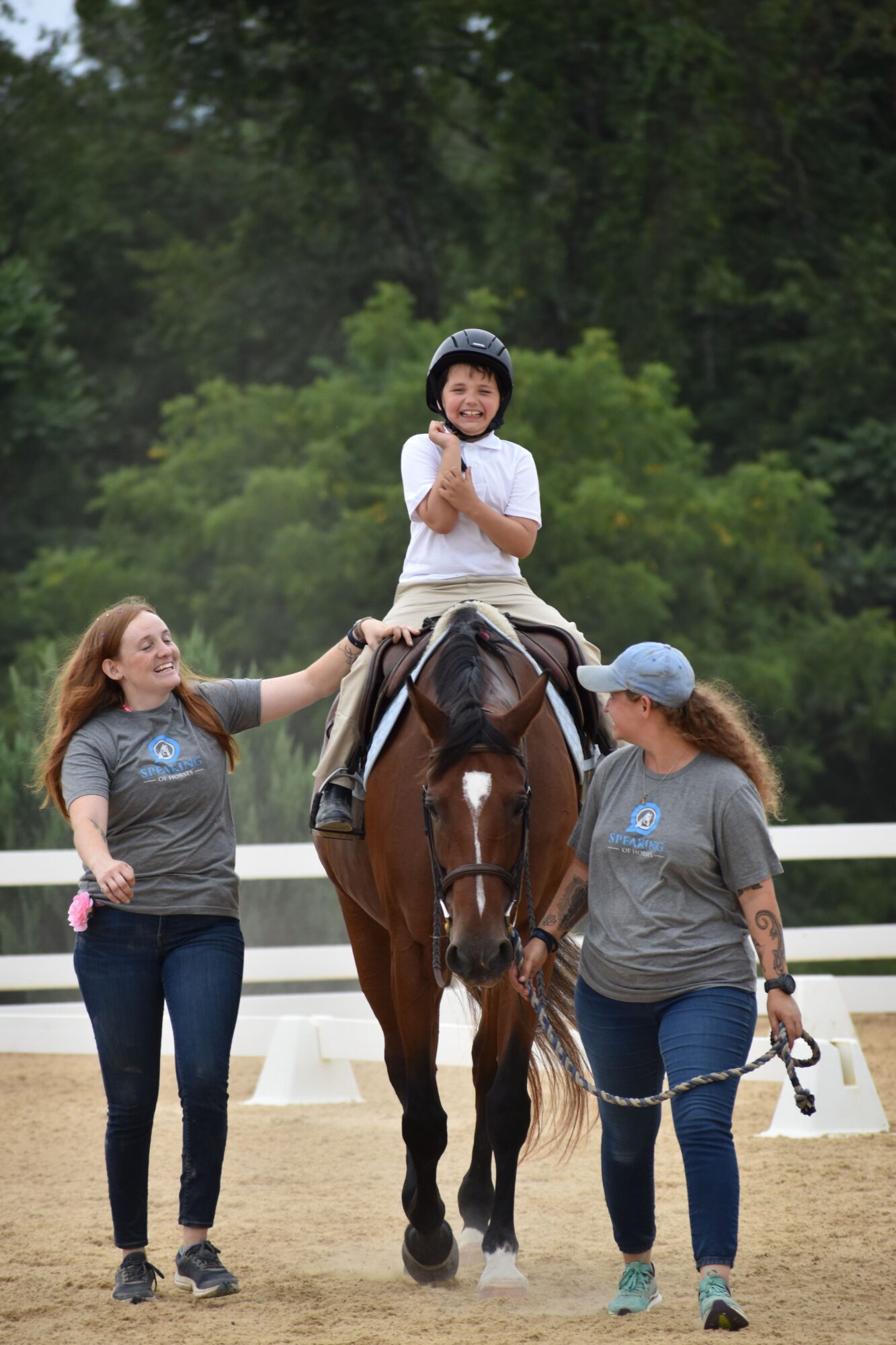
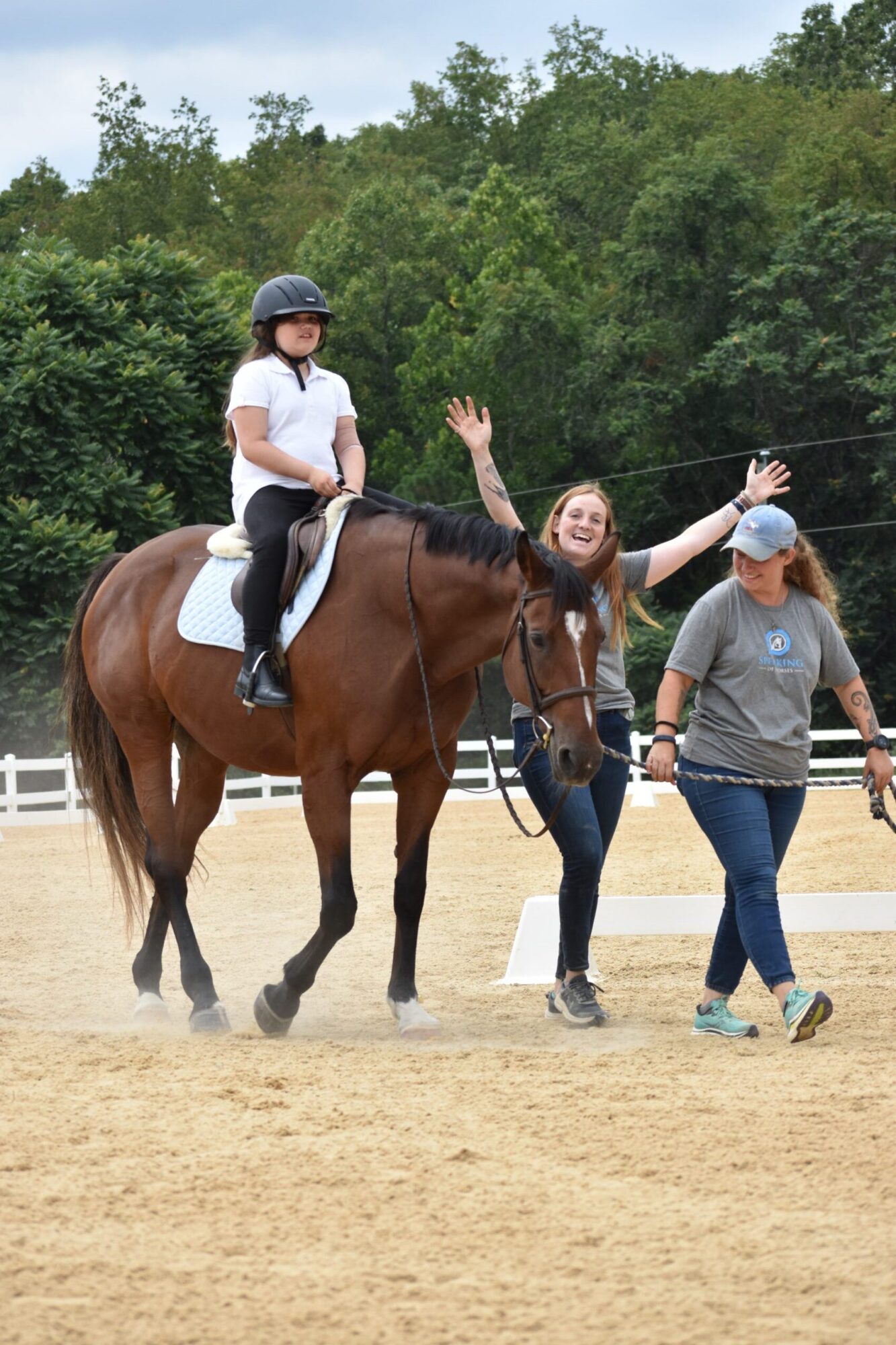
In February 2022, I founded Speaking of Horses with one pony and one client. Winnie — a Welsh pony donated through a connection from my showing days — carried the entire practice on his small back. In months, I saw progress with that first client that I had watched take years in an outpatient clinic. The rhythm of a horse’s walk moves a child’s body the way a human gait does. A child who won’t engage across a therapy table will do anything to make a pony walk on. I knew I was onto something.
That same winter, I made a decision that had nothing to do with the practice and everything to do with the girl who never stopped wanting more: I bought a six-month-old colt by Bliss MF. It was love at first sight — awkward, ugly weanling stage and all. I named him Red, and I spent every spare moment with him.
Then, at eight months old, he jumped out of the field and broke his leg. During his six months of stall rest, he hit his hip in the stall and developed a hematoma. The vet came and lanced it, and when I went to check on him a few hours later, he was in shock. I thought he was colicking and walked him in the ring. His eyes rolled back in his head and he collapsed to the ground.
An emergency vet call revealed colitis. She suggested I take him to the animal hospital, but I couldn’t afford it — I was a brand-new business owner, and the bill would have been double what I’d paid for him. She didn’t judge me. She set up shop right there in the barn, hung IV bags from the rafters, and left me with instructions: if I had to give him a third shot of pain relief before morning, I was to call her, and we would put him down.
I slept on the concrete beside him that night. He made it through.
Red taught me something that would come to define Speaking of Horses: the horses who have fought their way back are the ones with the most to give. As I rebuilt Red, I began building a program around horses just like him.
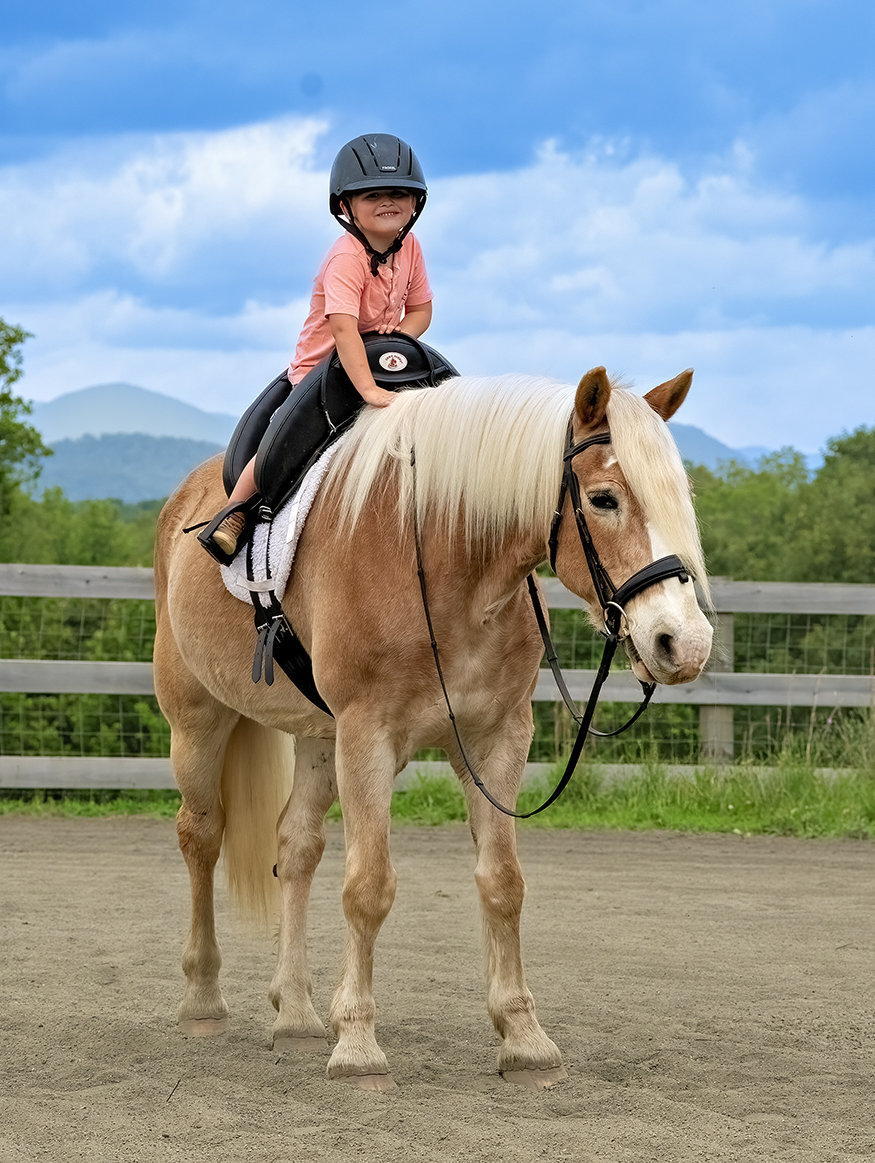
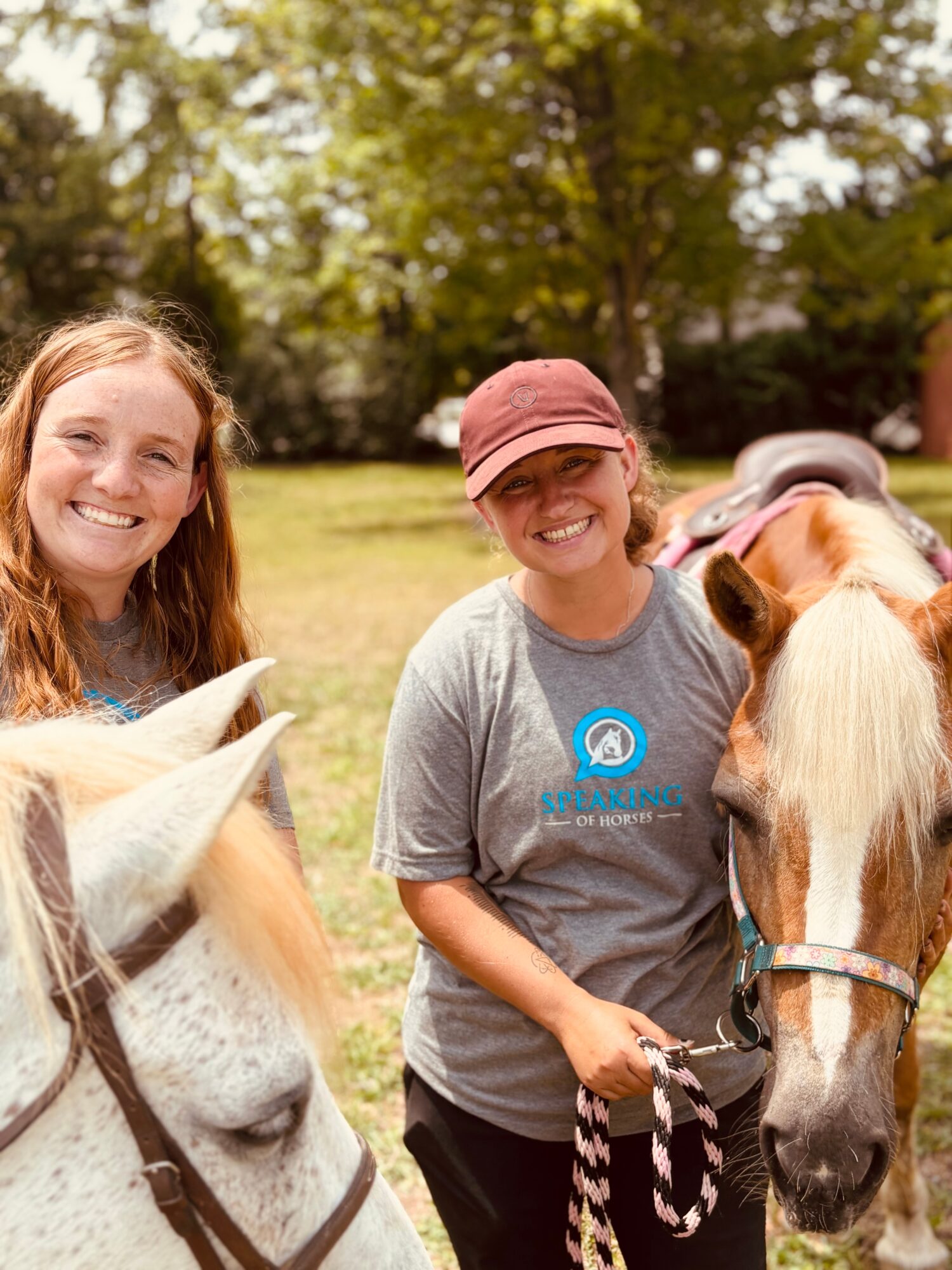
No horse shows that better than Teddy. He was rescued and rehabilitated by Brooke Baugher, who grew up on Celt Run Farm and has generously let me use her horses in our therapy program even before she became president of it. His story begins in an Amish community. For the Amish, horses aren’t pets — they’re machinery. They work, and when they can no longer work, they’re replaced. So when Teddy began losing weight and could no longer serve them, they sent him to slaughter, assuming he was used up. What they didn’t know was that the problem was fixable. Teddy had no grinding teeth — only his incisors — so he stood surrounded by hay and feed he could tear off but never chew, starving in plain sight, with no way to tell anyone. All he needed was soaked feed — and love. The vets believed Teddy had been starving for a year or more, and bringing a horse back from that edge is anything but simple. His body was so ravaged by starvation that his recovery brought colic after colic, emergency vet call after emergency vet call, small careful meals, setbacks and slow gains, months of patience and worry. But every single one of those meals was fed with love — and the horse who was going to be shipped slaughter at a body condition score of 1.5 bulked back up into a beautiful, gleaming Haflinger. Teddy nearly died because he couldn’t communicate one simple need — and then he went to work helping children who know the gravity of that all too well.
His very first rider was a three-year-old boy who was barely saying anything at all. His parents were desperate to hear him. Week after week, that little boy climbed onto the back of the horse nobody had wanted, and something between them simply worked. The words started coming — slowly at first, then all at once — until the quiet little boy on the rescued pony had blossomed into a chatterbox, narrating his rides, calling out to Teddy, filling the arena with everything he’d been holding inside. Teddy spent years with no one to speak for him. Then he helped a little boy find everything he had to say.
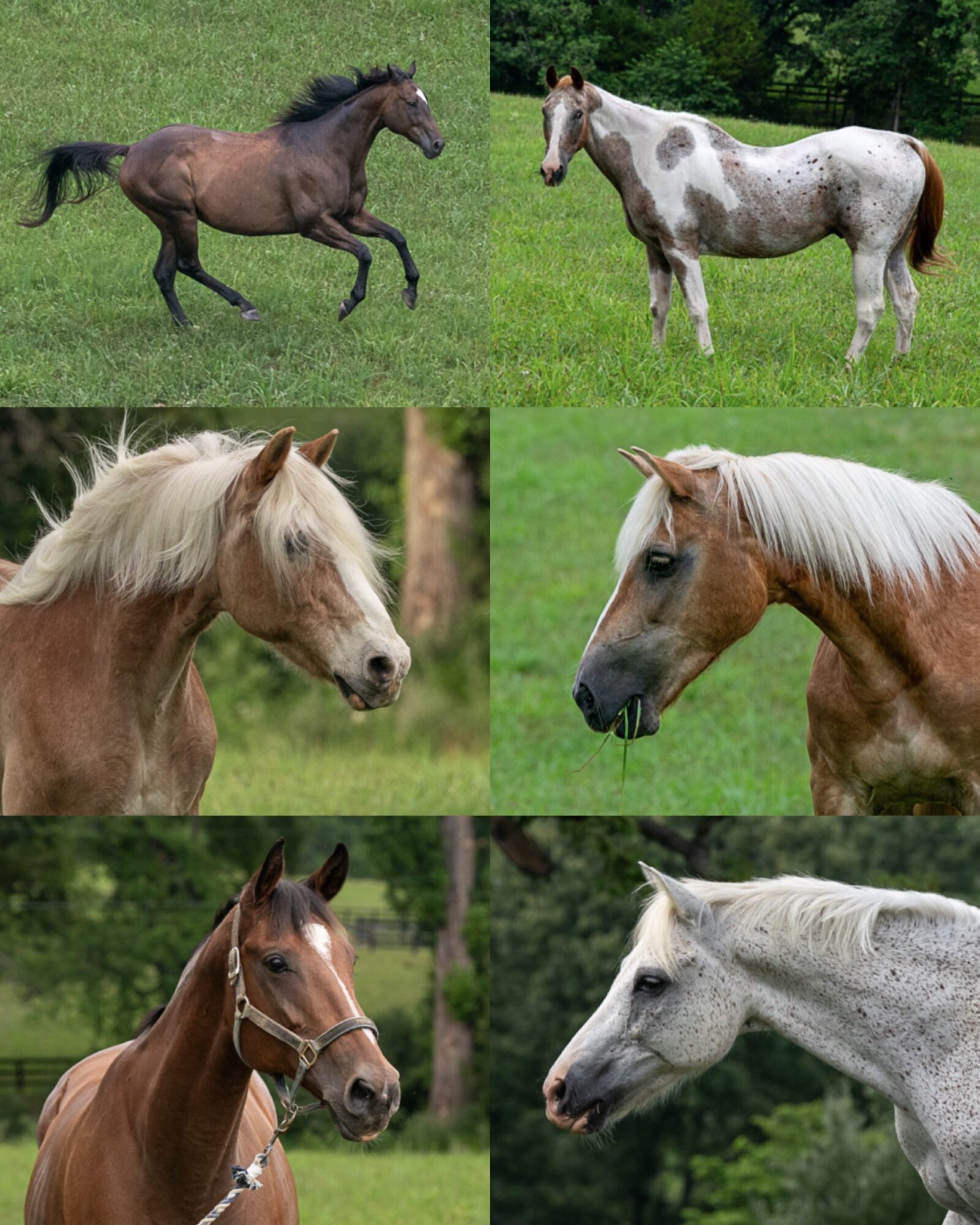
The herd kept growing — rescued Thoroughbreds, seasoned schoolmasters, and a crew of miniature horses, including Bubbles, a silver dapple pinto pulled from the slaughter pipeline. And Blue — my service dog, the same golden retriever who stood beside me when I fought my way back to school — joined the team as a therapy dog. Every animal at Celt Run Farm has a story, and almost every one of those stories starts with being underestimated.
One of those stories came full circle. Rex, a miniature horse I trained from six months old to three, became Pet Partners certified and liberty trained under my hands. I sold him to a seventeen-year-old girl who, after a riding accident took away her ability to ride, refused to let it take away her purpose — she started her own nonprofit instead. Now Rex walks hospital hallways with her, bringing horses to the people who need them most but can never come to the barn. I poured two and a half years into that little horse, and letting him go was one of the proudest things I’ve ever done. That is what Speaking of Horses raises: horses who go out into the world and give.
The practice grew alongside them. I credentialed Speaking of Horses with Medicaid and commercial insurance — making us, as far as I know, the only outpatient speech-language pathology practice in central Virginia delivering equine-assisted treatment while billing insurance. That matters more than anything else we’ve built. Hippotherapy is usually a privilege reserved for families who can pay out of pocket. I was once the kid who had to work for every minute in the saddle because no one was going to hand it to me. No family should be priced out of their child’s voice, and no child’s access to therapy should depend on what someone else is willing to pay.
We have known loss, too. In October 2025, we lost Blink, one of our founding therapy horses, to terminal liver cancer. Overnight, our capacity dropped from around twenty children to seven. It broke my heart — and then it did what hard things at the barn have always done for me. It made me rebuild. We grieved, we grew the herd, and we brought our families back.
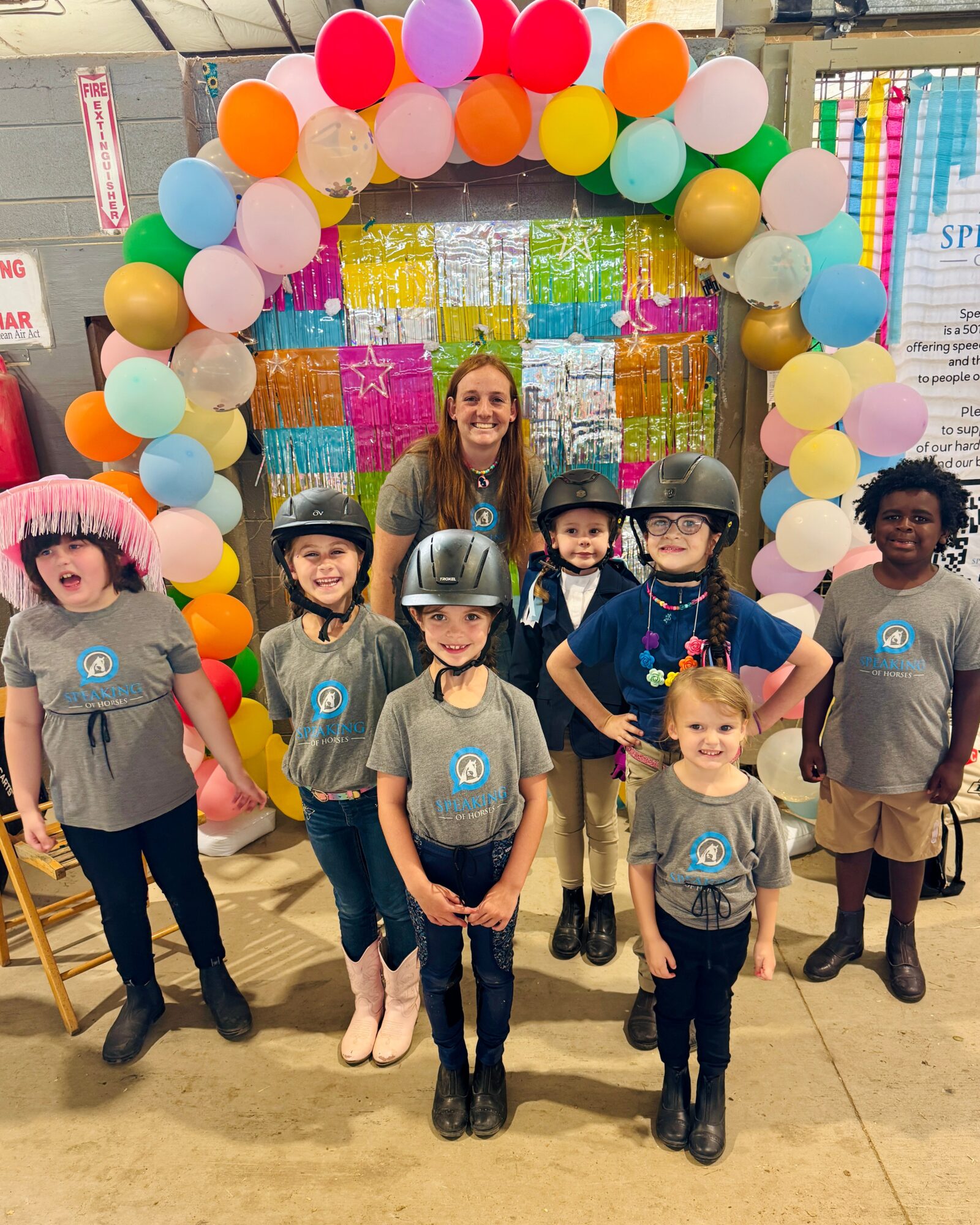
Today, Speaking of Horses is a thriving nonprofit at Celt Run Farm in Stanardsville, Virginia, with a full therapy herd, community programs, and a USEF Community Outreach Program partnership. This year we took our riders to the first-ever Virginia Commonwealth Equestrian Games at the Virginia Horse Center to compete in adaptive dressage — watching children who came to us without words hear their own names called at a horse show is something I will never be able to describe properly. Teddy is a finalist for USEF Heart Horse of the Year, which feels like the world finally seeing what a discarded Amish work horse was worth all along. We’re being featured in Horse Power, a video series from the Emmy Award–winning Wahoo Video Productions about the impact of horses across Virginia. I’m working toward my PATH International CTRI credential, and we’re raising funds toward a covered therapy arena, so that no child’s progress ever has to pause for weather. And Red — the colt who nearly died on a barn floor — is my competition horse, carrying me through every obstacle.
Our stories grew up together: the girl who couldn’t get enough of horses, the colt who refused to quit, and the practice built on the belief that horses can give people their voices.
As Red grew, so did Speaking of Horses. They are still growing — both of them — and so am I.
Alright, so let’s dig a little deeper into the story – has it been an easy path overall and if not, what were the challenges you’ve had to overcome?
No. It has never been a smooth road, and I don’t think I’d trust it if it had been.
The first obstacle was simply money. I was a horse-crazy kid in a family that paid for one lesson a week, and everything I got after that, I worked for. That taught me a great deal, but I want to be honest about what it costs a child to want something that badly and know the door is closed. Every barn I walked into, there were kids whose parents wrote a check for the things I was mucking stalls to earn. I don’t say that with bitterness. I say it because it is the entire reason Speaking of Horses bills insurance.
Building the practice brought a different kind of hard. Founding a nonprofit means being the clinician, the billing department, the grant writer, the fundraiser, the stall cleaner, and the person who answers the phone at nine at night — all while working a full-time clinical job to pay for it. Credentialing with Medicaid and commercial insurance took a level of persistence that I did not know I had: enrollment applications, network verification, prior authorizations, denials, appeals, and a system that has no category for what we do. I was told, more than once, in more than one way, that equine-assisted therapy is a nice extra rather than real skilled treatment. Proving otherwise — in documentation, in data, in outcomes — has been one of the hardest and most important fights of my career.
And the everyday struggles never really stop. We’re still at the mercy of the weather, because we don’t yet have a covered arena — a thunderstorm can cancel a child’s therapy the same way it cancels a horse show, except this child has been waiting all week. Hay prices, vet bills, farrier bills, insurance reimbursement rates, finding volunteers who can be trusted with both a child and a horse, keeping a herd of aging and rescued animals sound and comfortable. Every single one of those is a reason someone could reasonably decide to quit but not us.
Thanks for sharing that. So, maybe next you can tell us a bit more about your business?
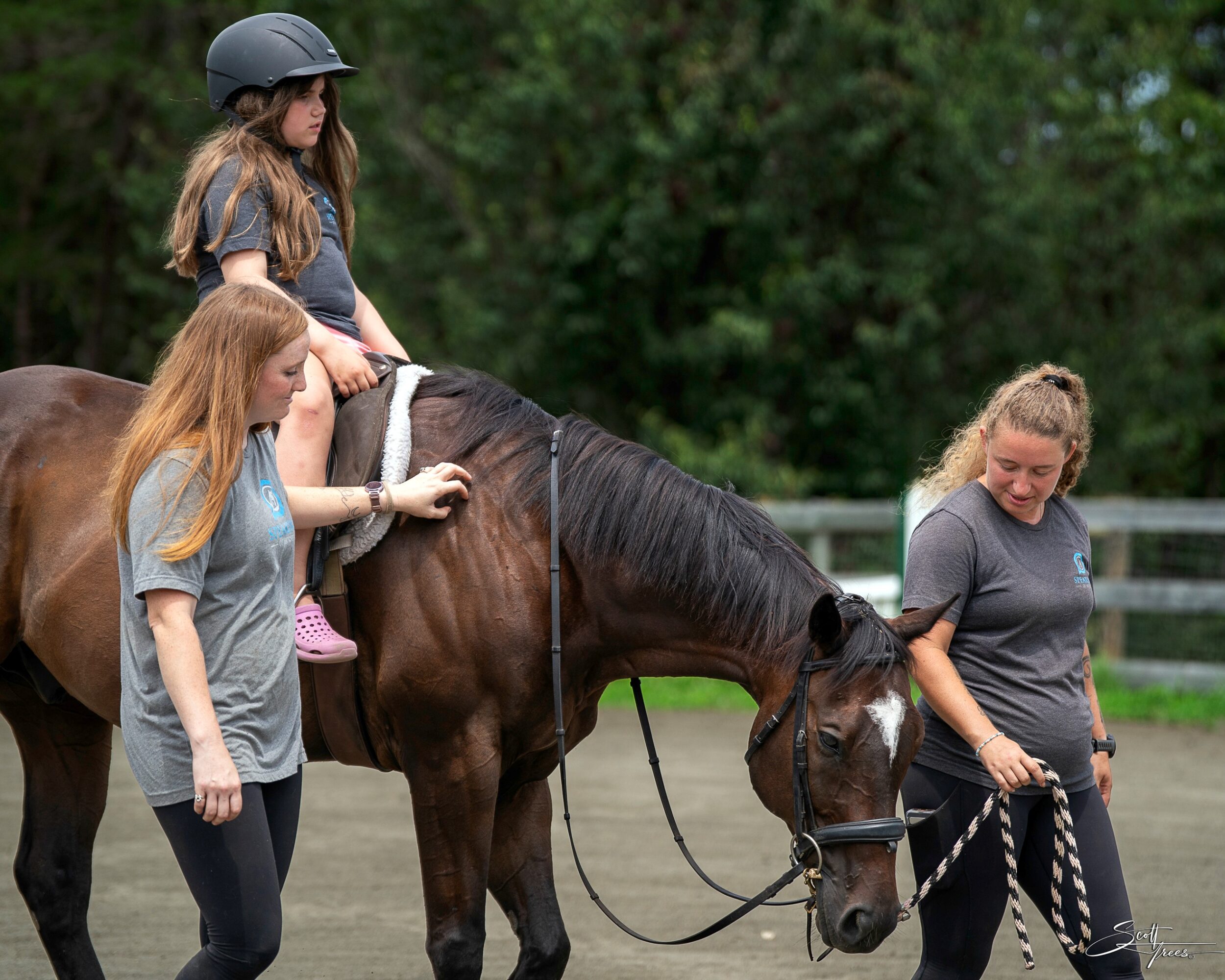
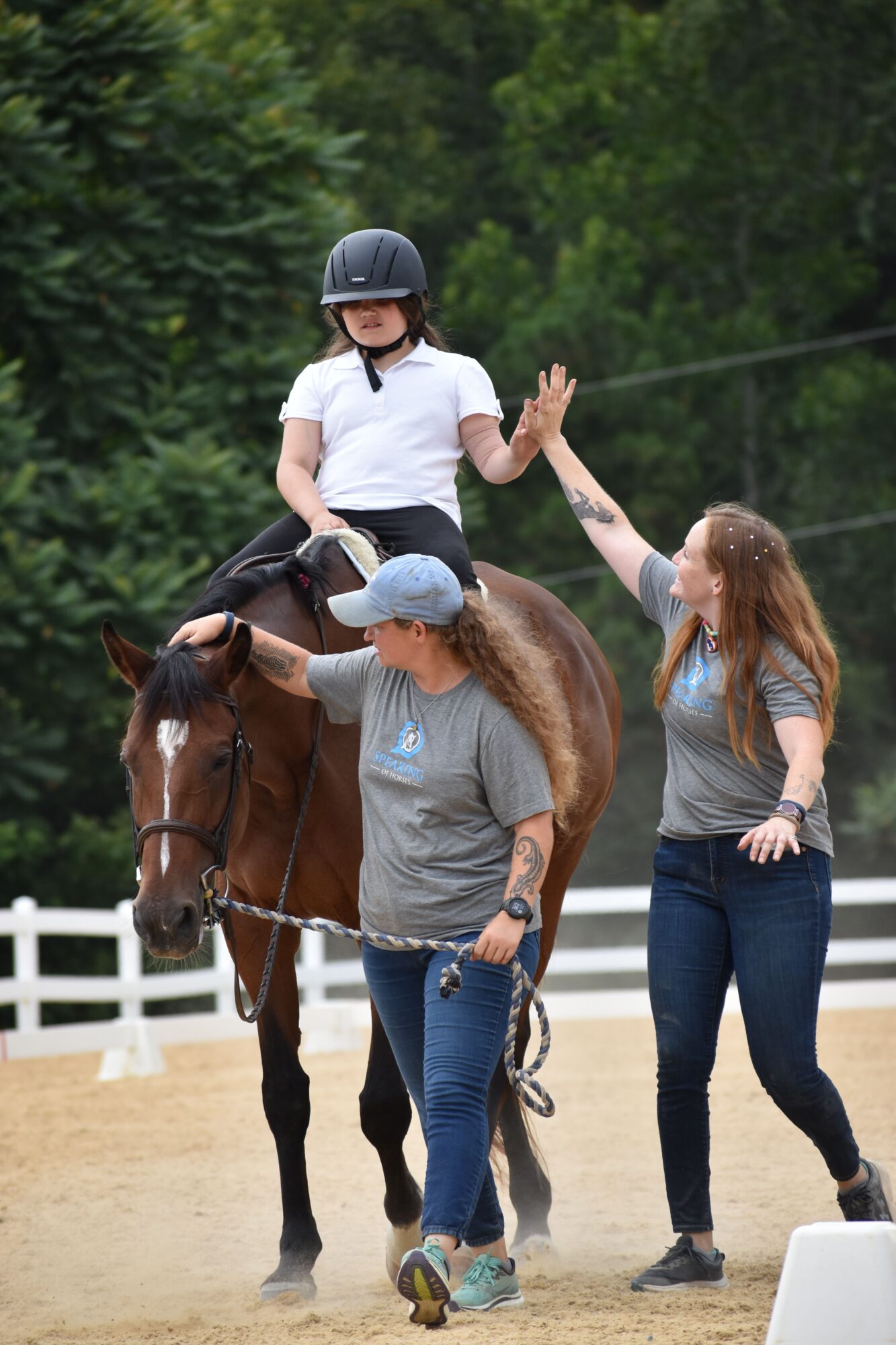
Speaking of Horses, Inc. is a 501(c)(3) nonprofit outpatient speech-language pathology practice based at Celt Run Farm in Stanardsville, Virginia. The simplest way to describe us: we are a speech therapy practice where the treatment room is a riding ring.
Nationally, equine-assisted therapy is almost always private pay, which quietly makes it a service for families who have money. Doing the credentialing work — the enrollment, the network verification, the prior authorizations, the appeals — was tedious, unglamorous, and the single most important thing we’ve built. It’s what makes us accessible instead of exclusive.
What were you like growing up?
Three things defined my childhood: I was obsessed with horses, I was fighting to read, and I was quietly terrified almost all of the time.
Start with school. I was a great student in the sense that I worked relentlessly — but I have dyslexia, and nobody caught it until fourth grade. Before that, I was simply a kid who struggled with reading and writing, and I was placed in special education classes. I want to be careful about how I say that, because those classes serve a lot of children well. But they weren’t where I belonged, and being there tells you something about yourself before you’re old enough to argue with it.
My third grade teacher, Ms. Skomra, is the reason my life looks the way it does. She was the one who figured out I was dyslexic. She got me out of those classes and onto a track that eventually led me to the University of Virginia — twice. I’m not sure I would have gotten in without her. One adult paid close enough attention to see that the problem wasn’t my intelligence, it was the way my brain processes text. That single act of noticing changed the entire trajectory of my life.
I’ve thought about that a great deal since becoming a speech-language pathologist. I was a child who had a lot to say and no reliable way to get it onto the page. Everything I do now — sitting with a kid who can’t get their words out, believing there’s something in there worth waiting for, refusing to accept the first explanation for why a child is struggling — comes straight out of being that child.
Then there was the anxiety, which was undiagnosed and enormous. I remember being unable to walk from the car to a door without an adult with me. That was my normal, and I assumed everyone felt that way and was simply better at hiding it. I was also a brutal perfectionist, and nobody was applying that pressure but me. I once got an A-minus, crumpled it up, and shoved it to the bottom of my backpack so no one would see it. My parents weren’t demanding that of me. I was.
The two were connected, though I couldn’t see it then. A child who has already been told, structurally, that her brain doesn’t work right will hold herself to an impossible standard to prove otherwise. The perfectionism and the dyslexia weren’t separate problems. They were the same problem wearing different clothes.
The barn was where all of it went quiet. When I rode, my brain had to attend to the horse instead of the fear, and my body had to release its tension, because a horse feels everything and won’t relax until you do. I didn’t have language for that then. I just knew that was the one place I could breathe.
Which is why the horse-crazy thing wasn’t really a hobby. Horses were the only thing that reliably turned the volume down, so I organized my whole childhood around getting closer to them. I read every horse book in the school library, dyslexia and all — it was the one kind of reading I’d fight through willingly. I drew them in the margins of every worksheet. I could tell you the breed of any horse in any movie. I knew the names of all the horses at the barn before I knew the names of most of my classmates, and I’d count down the days between lessons the way other kids count down to a birthday.
It also made me fearless in a way that nothing else in my life did. A kid who couldn’t cross a parking lot alone would climb on a thousand-pound animal without hesitating. My anxiety simply had no jurisdiction there. I think that’s the thing I’d want people to understand about my childhood: I wasn’t a brave kid who happened to like horses. I was an anxious kid who found the one place she got to be brave.
And underneath the anxiety and the drive, I was a caretaker. My trainer saw it before I did — instead of grinding me down the way most working student positions do, she asked me to be a role model for the younger kids at the barn. I gravitated toward the nervous ones, the awkward ones, the ones who didn’t fit yet. I was doing a version of my current job at fifteen and calling it barn chores.
So: an anxious, dyslexic perfectionist who found the one place her brain would let her rest and then built a career out of giving that to other people’s children.
Pricing:
- Speech Therapy session $150 for private pay or your copay if going through insurance.
- Recreational lessons are $75
- Donations are needed and welcomed!
Contact Info:
- Website: https://www.speakingofhorsesincorporated.com
- Facebook: https://facebook.com/speakingofhorses