




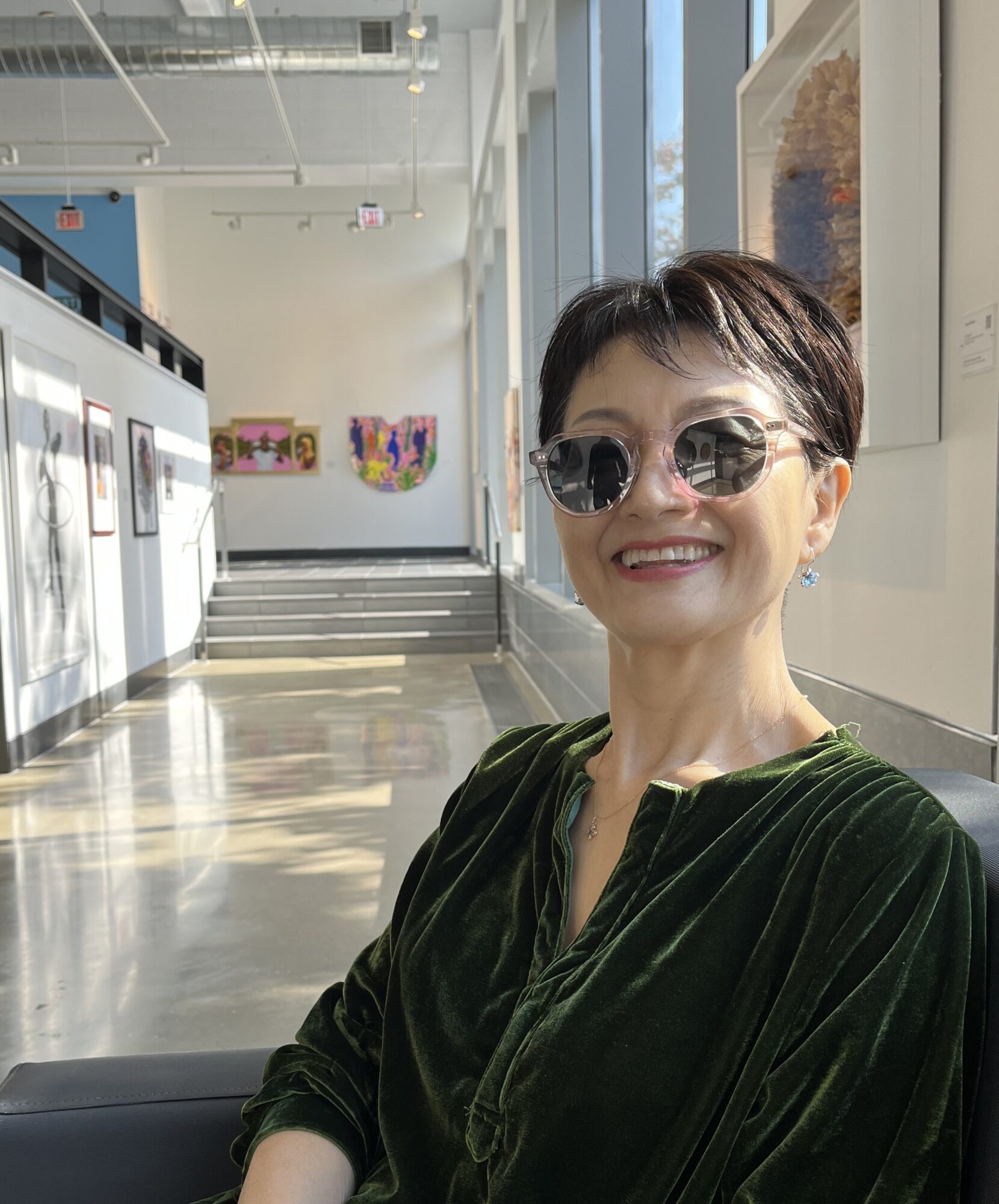
Today we’d like to introduce you to Hana Inhee Yang.
Hi Hana Inhee, we’re thrilled to have a chance to learn your story today. So, before we get into specifics, maybe you can briefly walk us through how you got to where you are today?
Making art has been part of my life for as long as I can remember.
For more than twenty years, I explored charcoal, oil, acrylic, and watercolor — always searching for the voice that felt most like my own.
That search was a long river, and it carried me back to the spring where it began: home, to my roots.
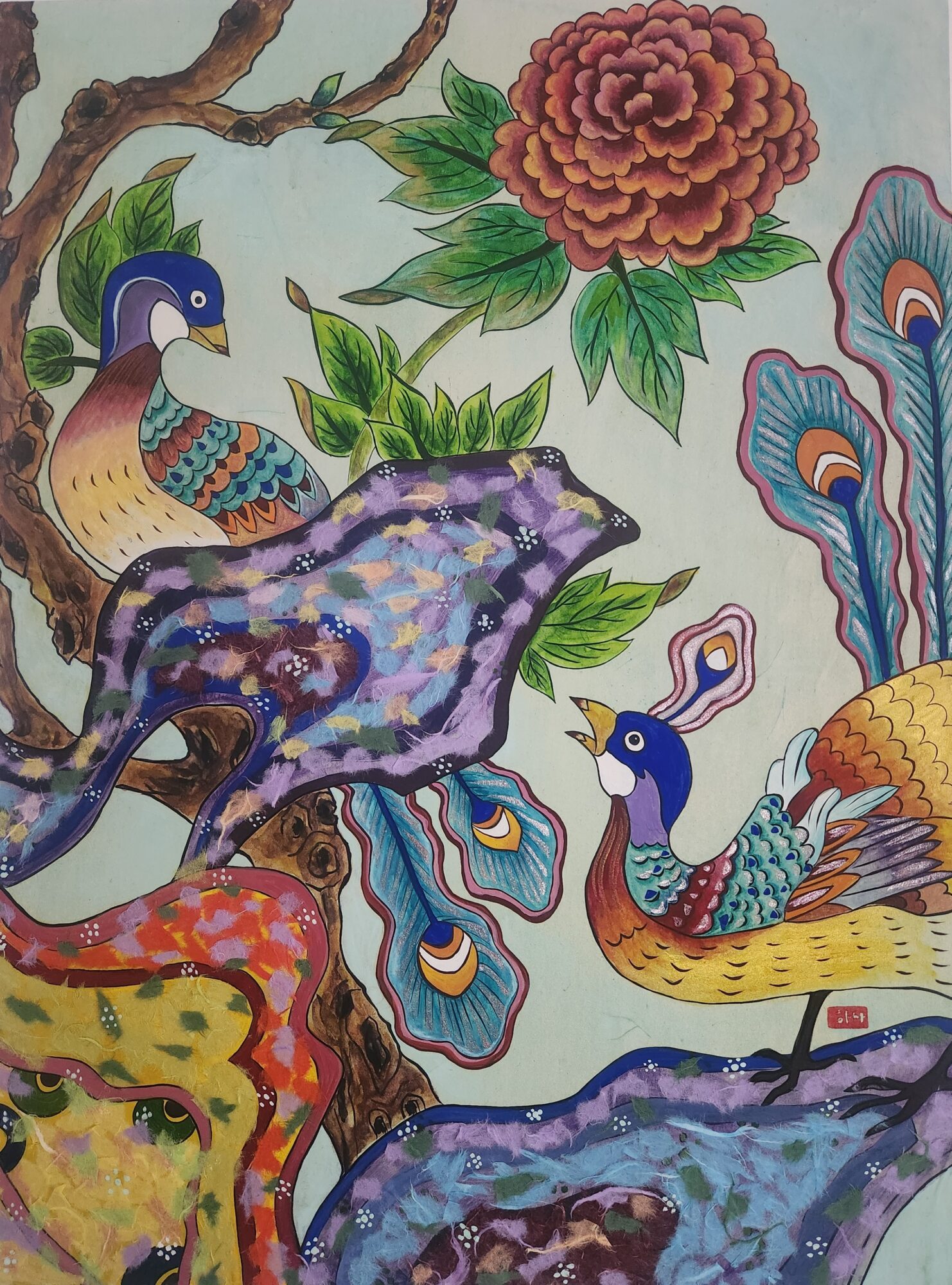
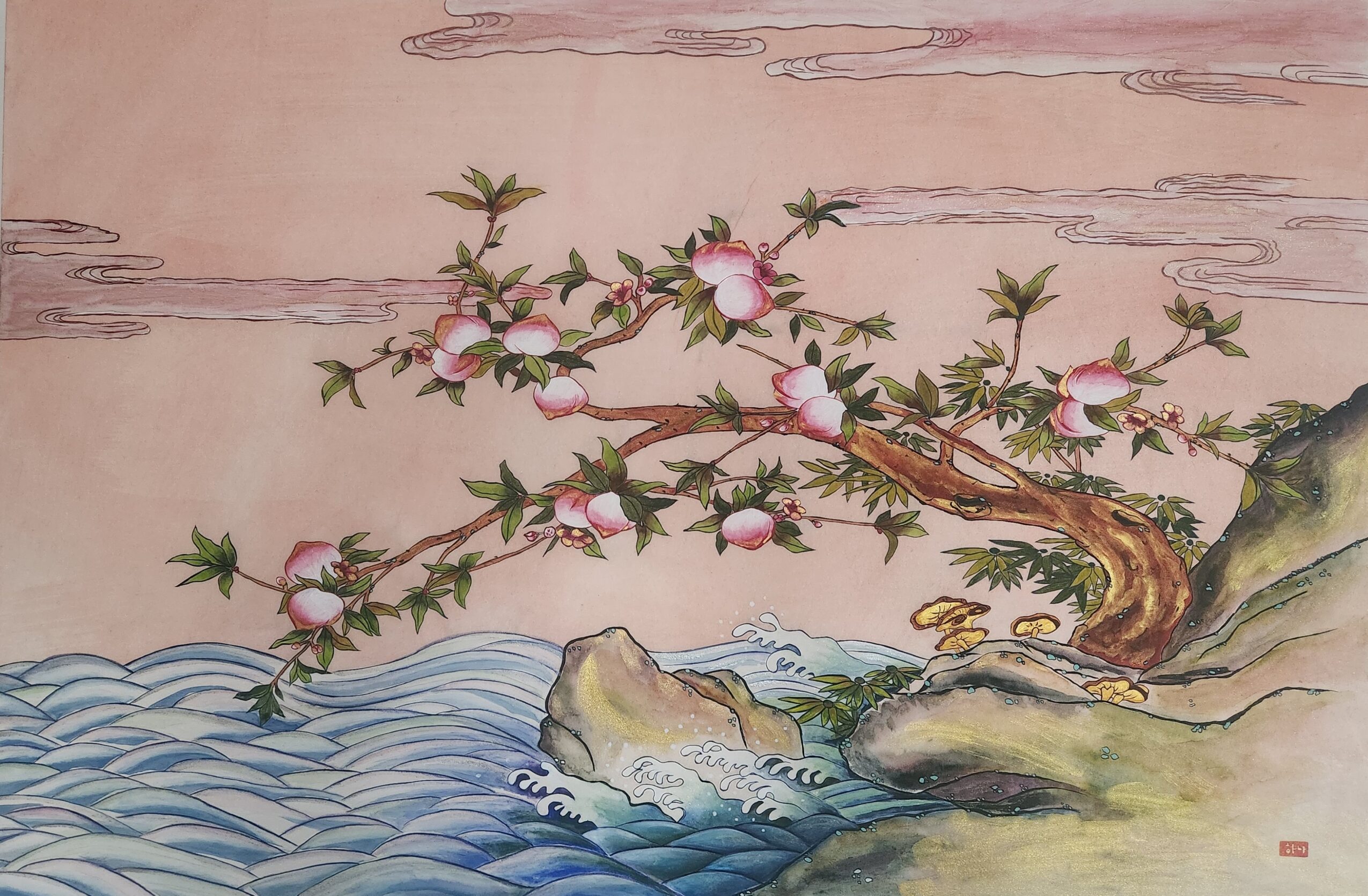
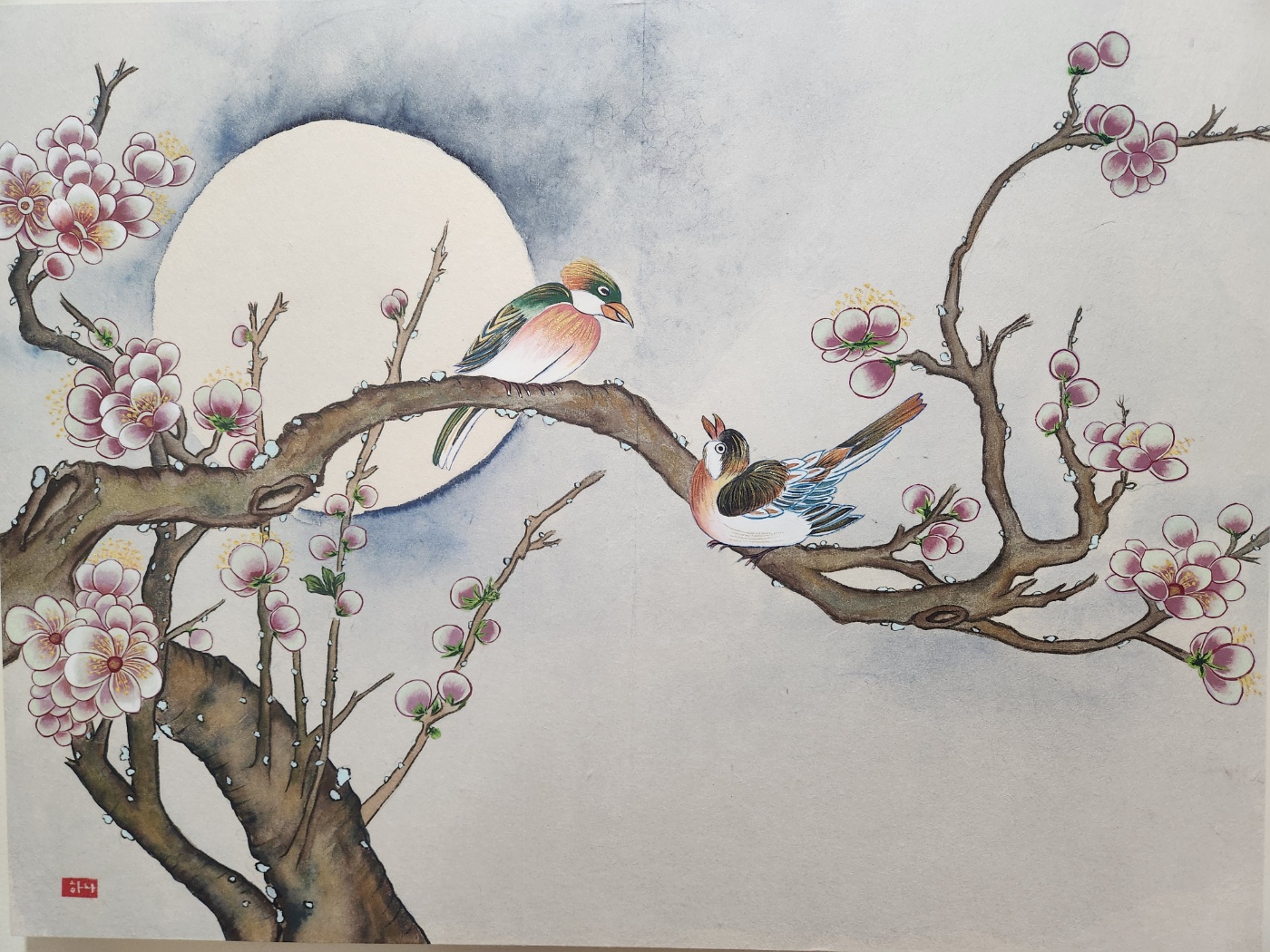
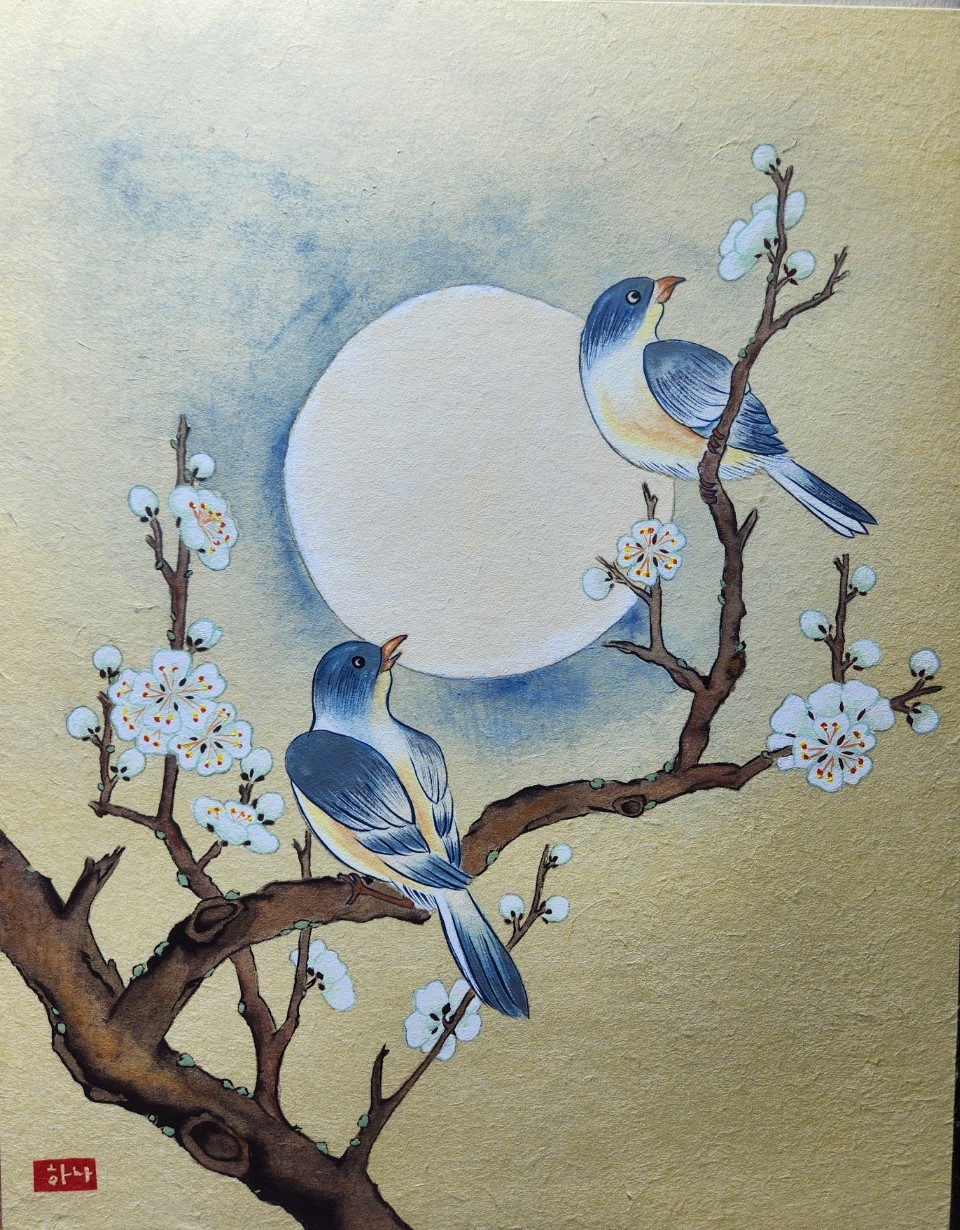
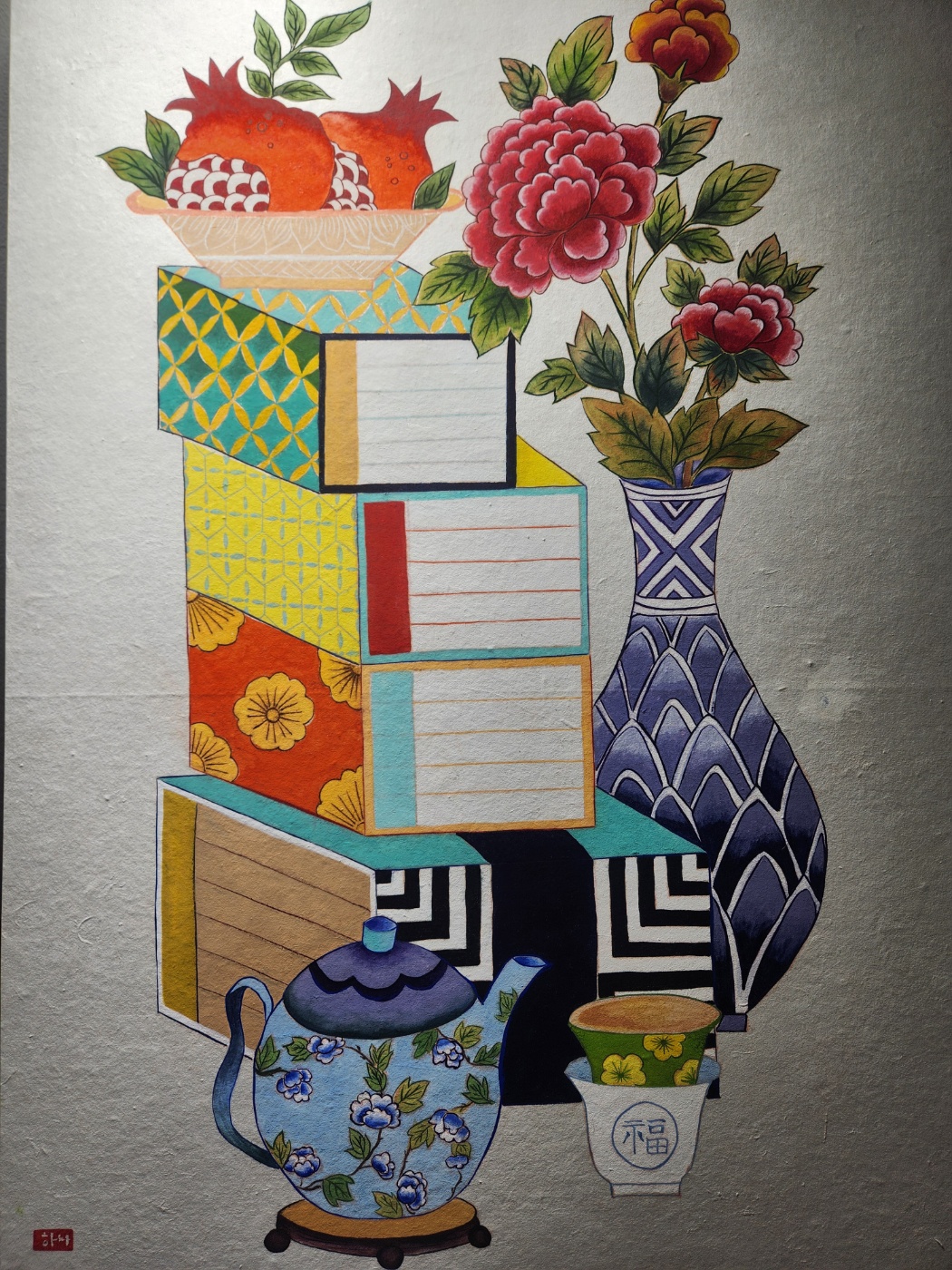
I am a Korean artist, and in Minhwa — the traditional folk painting of Korea, the art I had grown up seeing — I found the ground I came from.
Minhwa was the art of ordinary people, painted for centuries not for fame, but to wish for blessings, protection, and hope. It felt less like learning something new and more like remembering who I was.
But the roots were a beginning, not a resting place.
A root that only clutches the past hardens into an anchor; a root that feeds new growth becomes a tree.
Since moving to the United States, my work has found a second home here — roots in one soil, branches reaching into another.
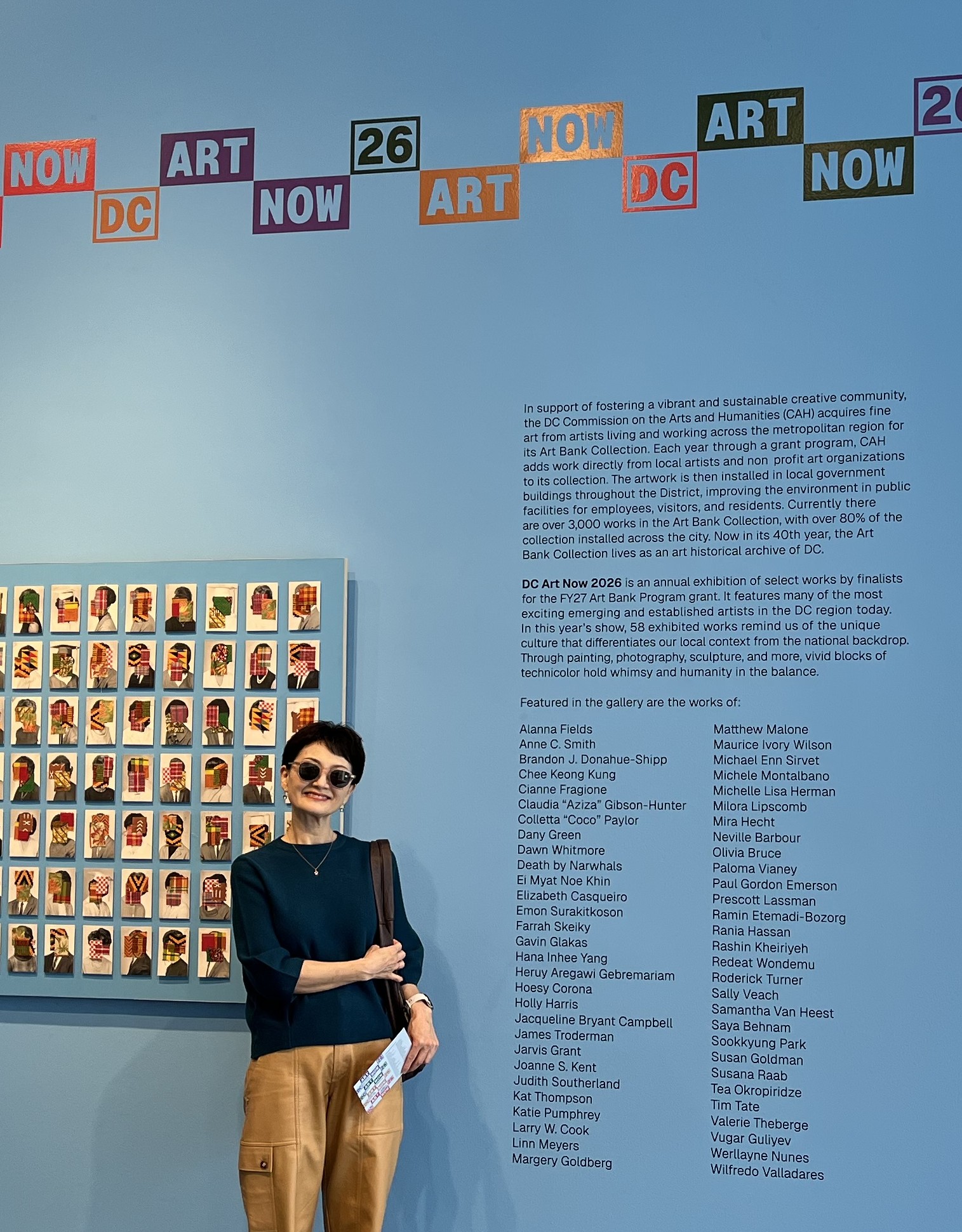
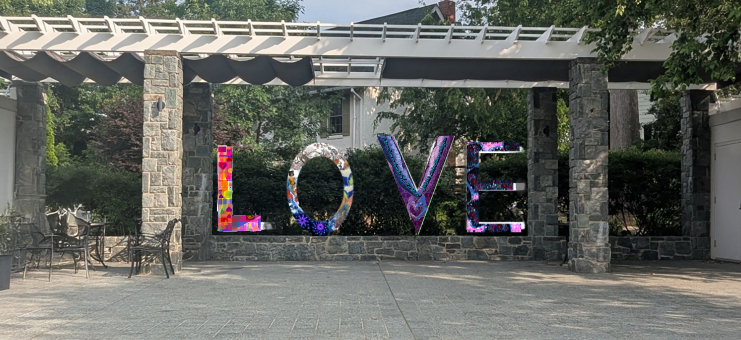
Today I live and paint in Alexandria, Virginia, and I exhibit across DC, Virginia, and Maryland. My work was recently named a finalist for a DC Commission on the Arts and Humanities grant, and one of my paintings now crowns a public art installation in Fairfax City.
An exhibition is where my deepest wish takes shape.
A viewer stands before a painting, and across the centuries, a Korean grandmother’s blessing reaches a modern heart.
It stirs emotion. It offers comfort.
Tradition and the present meet, quietly, in harmony.
If the blessing and hope held in Minhwa can touch the people standing here today, and help open a future we share, that is the meaning of my work.
I’m sure it wasn’t obstacle-free, but would you say the journey has been fairly smooth so far?
It has not been a smooth road.
Life, I believe, hands everyone joy and hardship together.
Starting over in a foreign country, in a second language, felt like crossing an unfamiliar desert — fear and helplessness that had to be endured, step by step.
There were seasons when life had to come first and the easel had to wait.
What comforted me then was Minhwa. Through Korea’s long and difficult history, ordinary people painted these pictures for one another — wishing each other blessings, offering comfort, and finding in hope the strength to endure hard times — and in America, this same art was my comfort and my hope in an unfamiliar land.
Nothing here was easy: traditional materials could not be found, and Minhwa itself was unknown. Making my own dakjongi paper and pigments by hand was an inconvenience that turned out to be a gift in disguise — the chance to forge my own tools.
And the many trials and mistakes along the way ripened, in time, into new techniques, and into a Minhwa I can call my own.
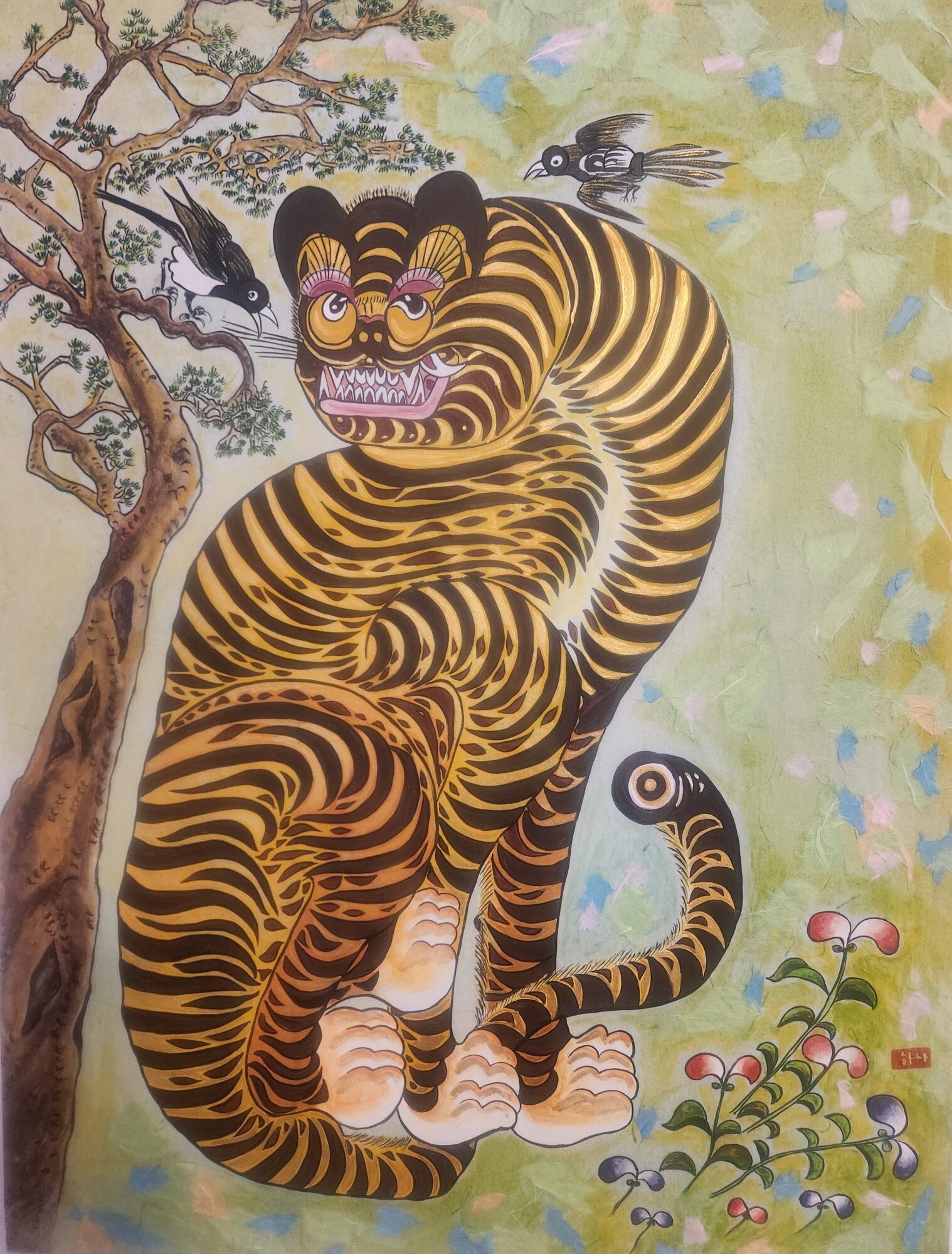
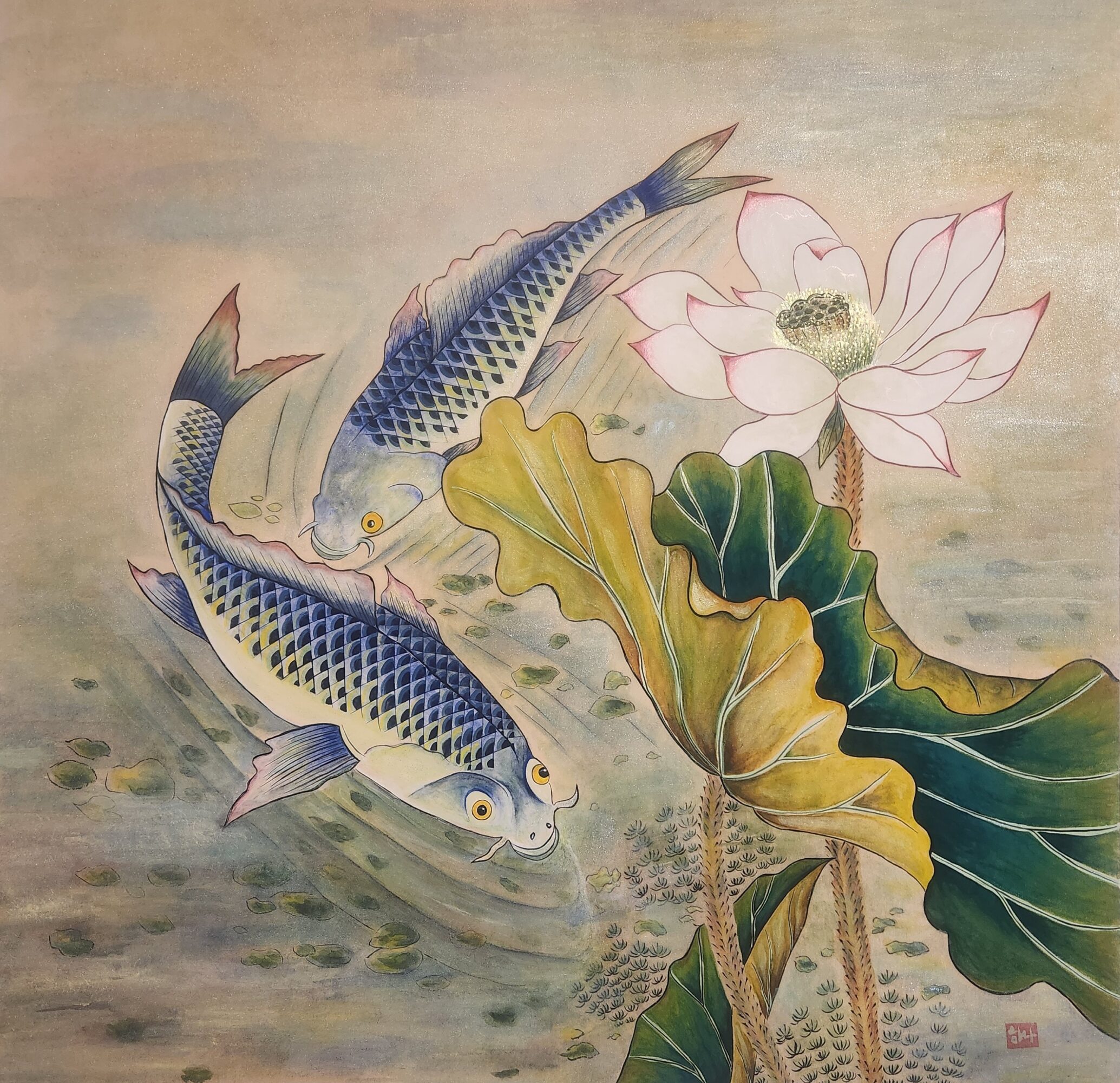
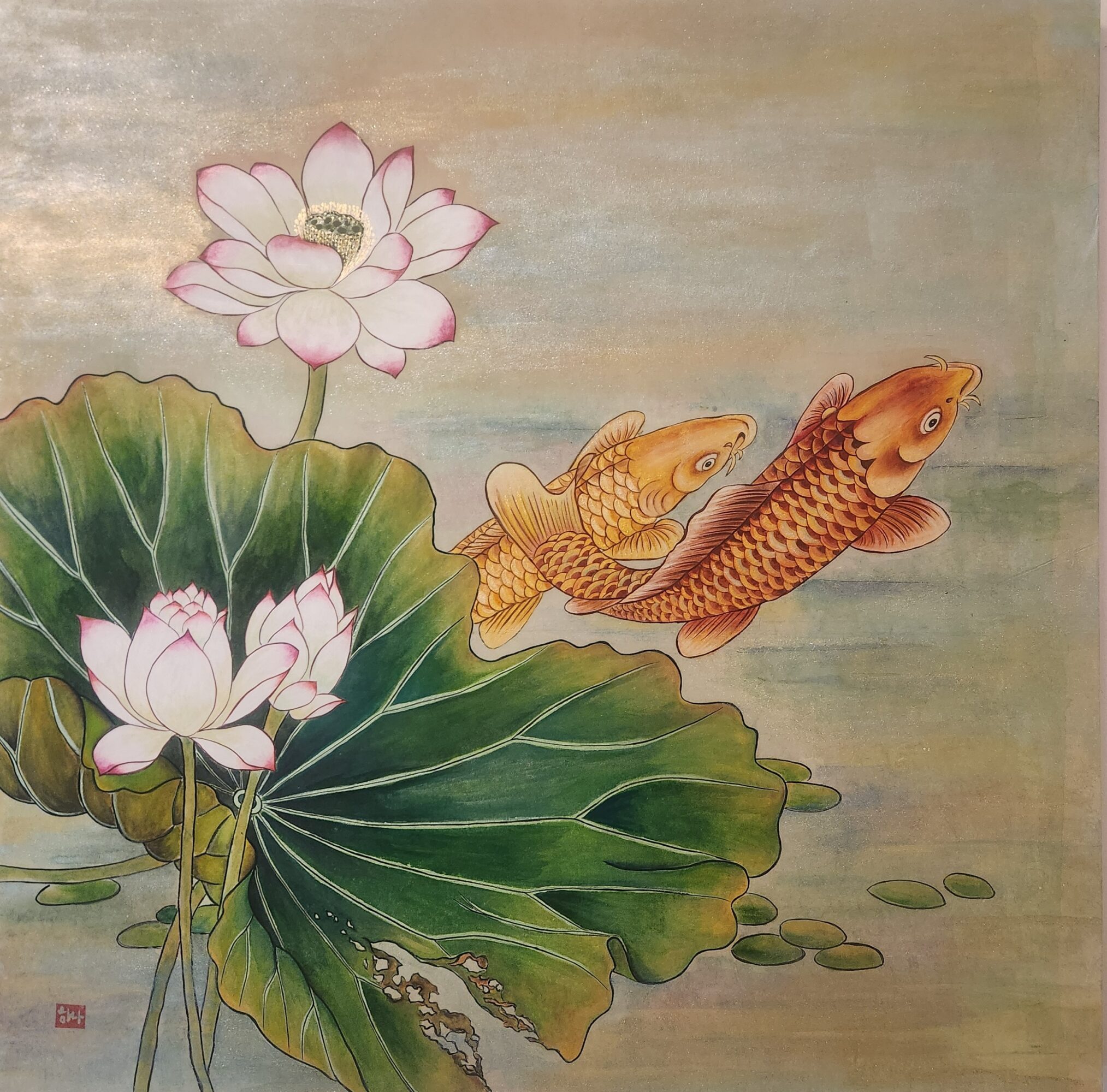
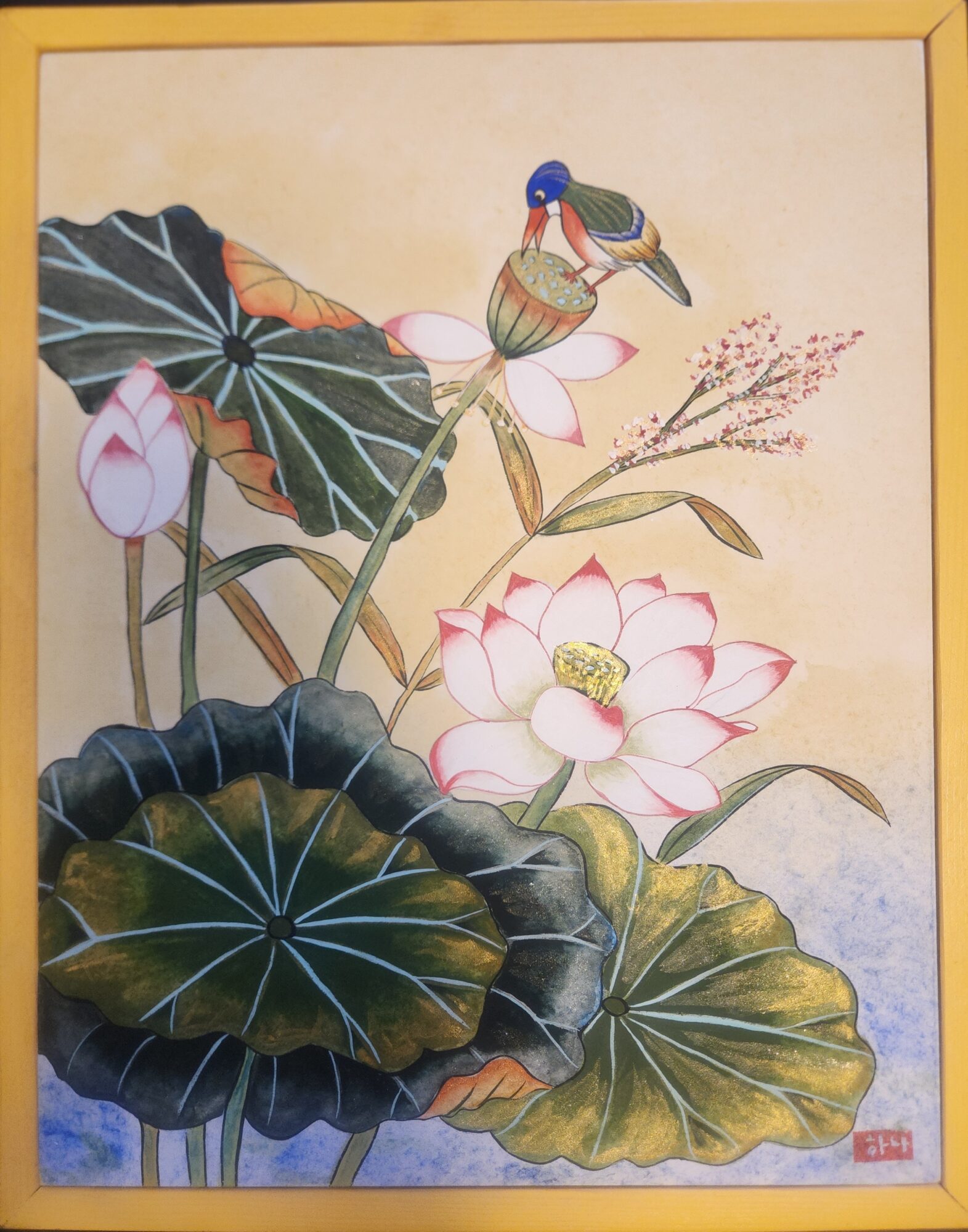
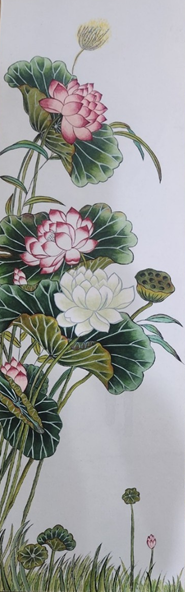
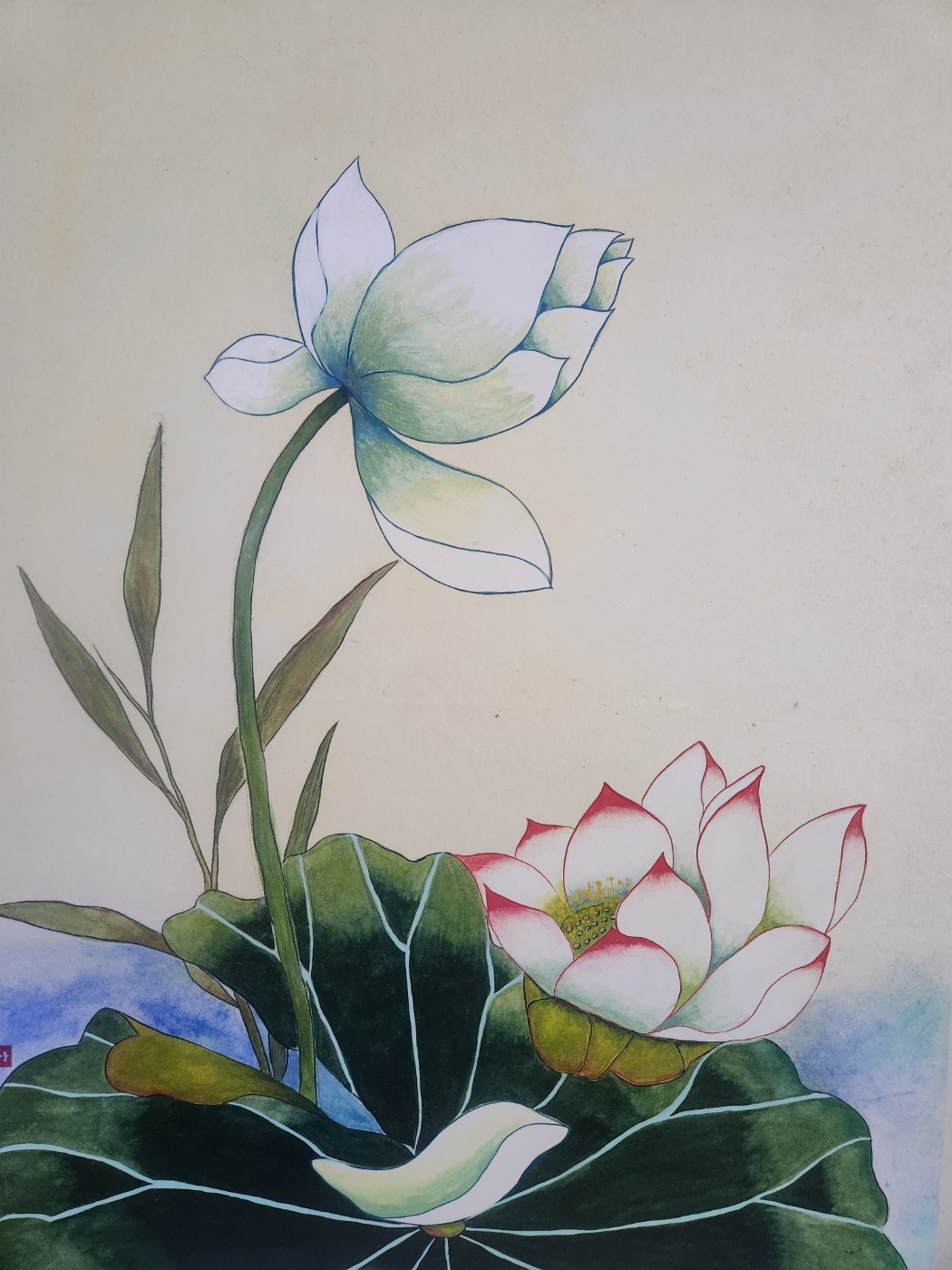
The symbols of Minhwa reached into my hardest hours and became my strength and my comfort: the tiger, lending courage; the lotus, rising clean out of muddy water, teaching that beauty can grow from the darkest ground. Painting them,
I found I was not only wishing blessings for others. I was receiving one.
Can you tell our readers more about what you do and what you think sets you apart from others?
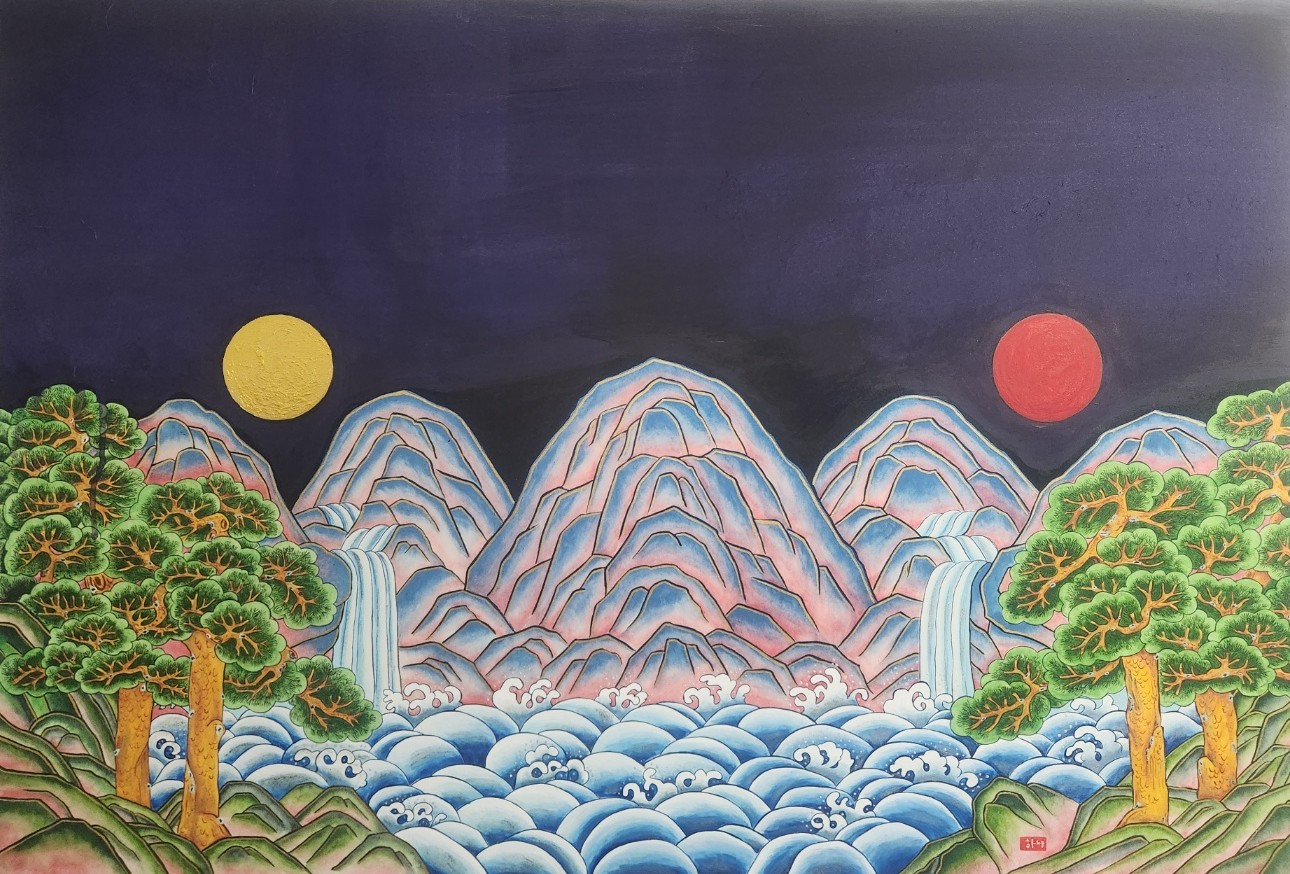
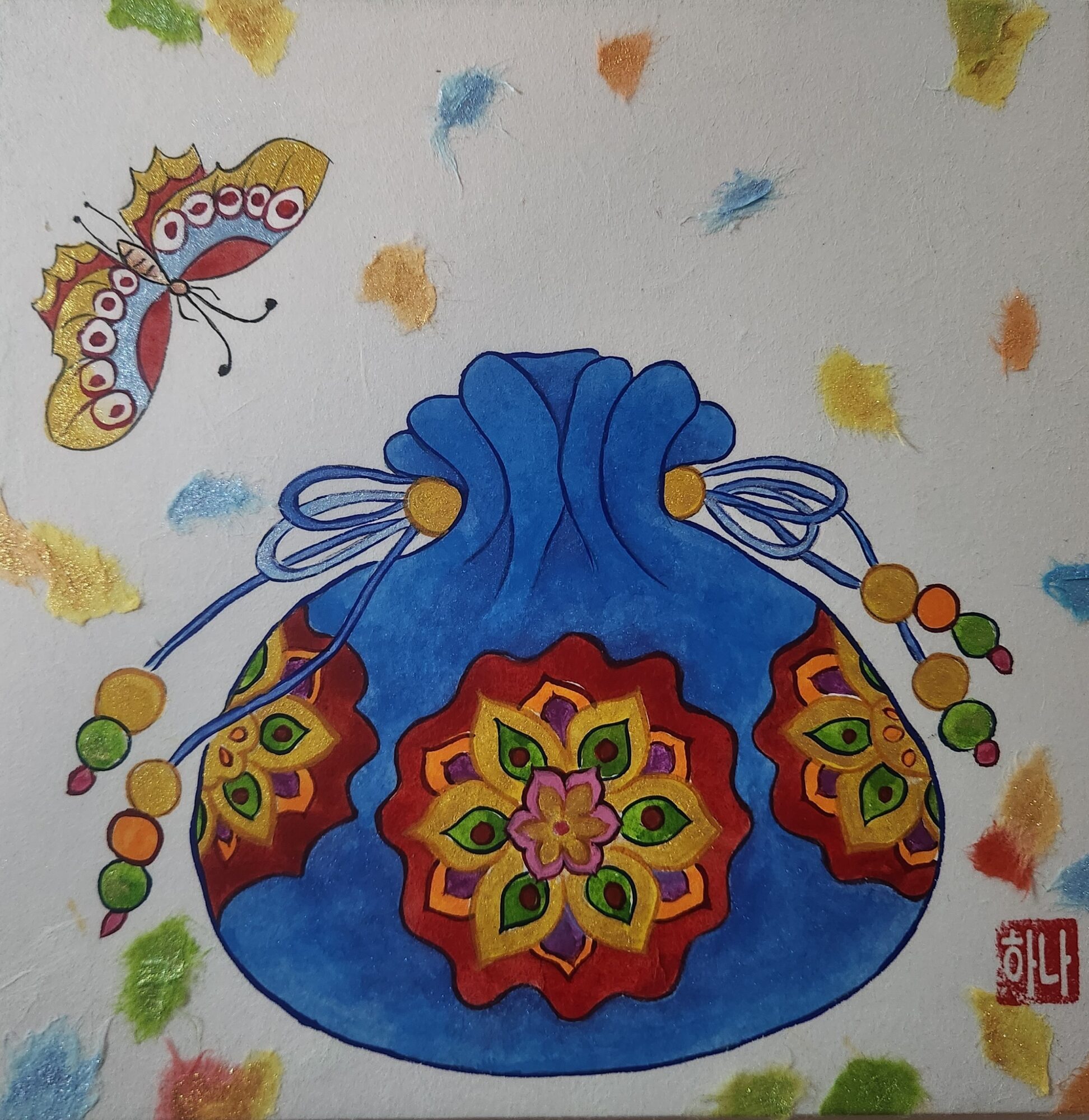
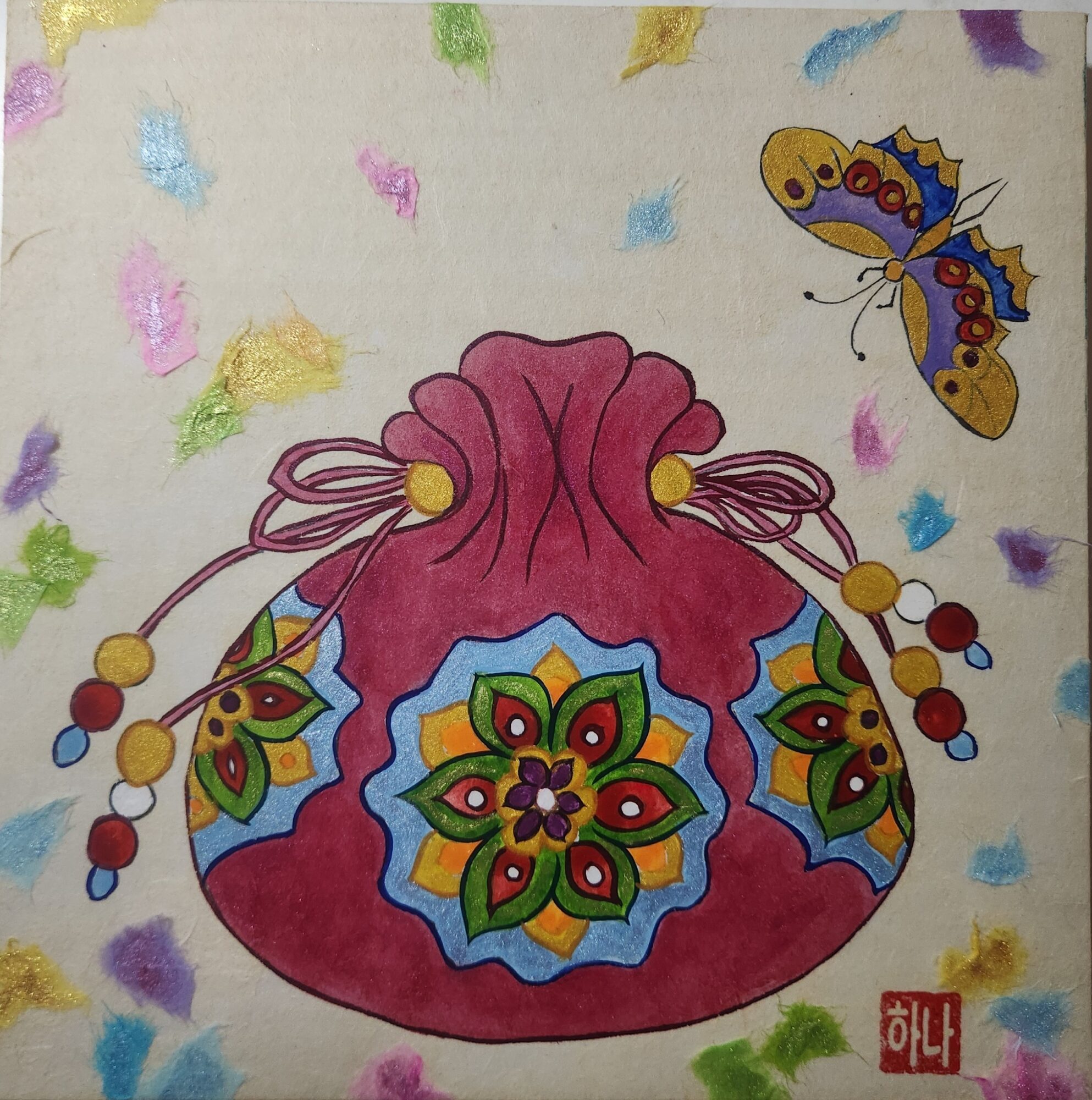
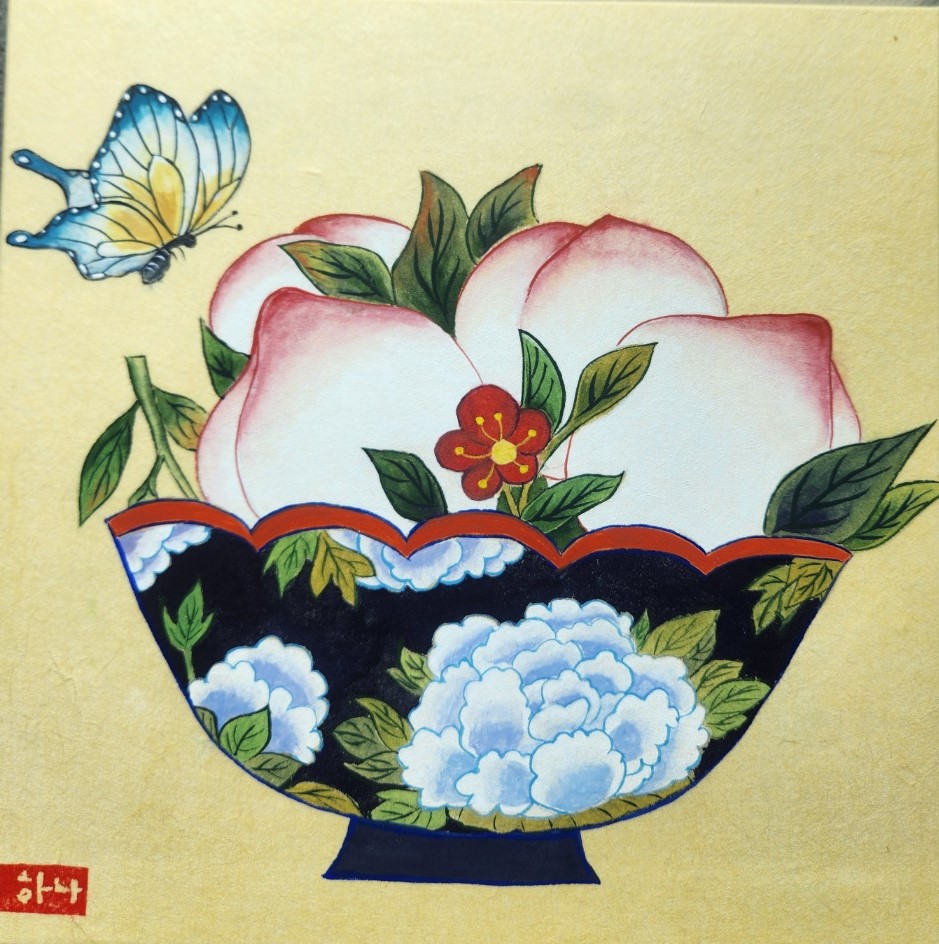
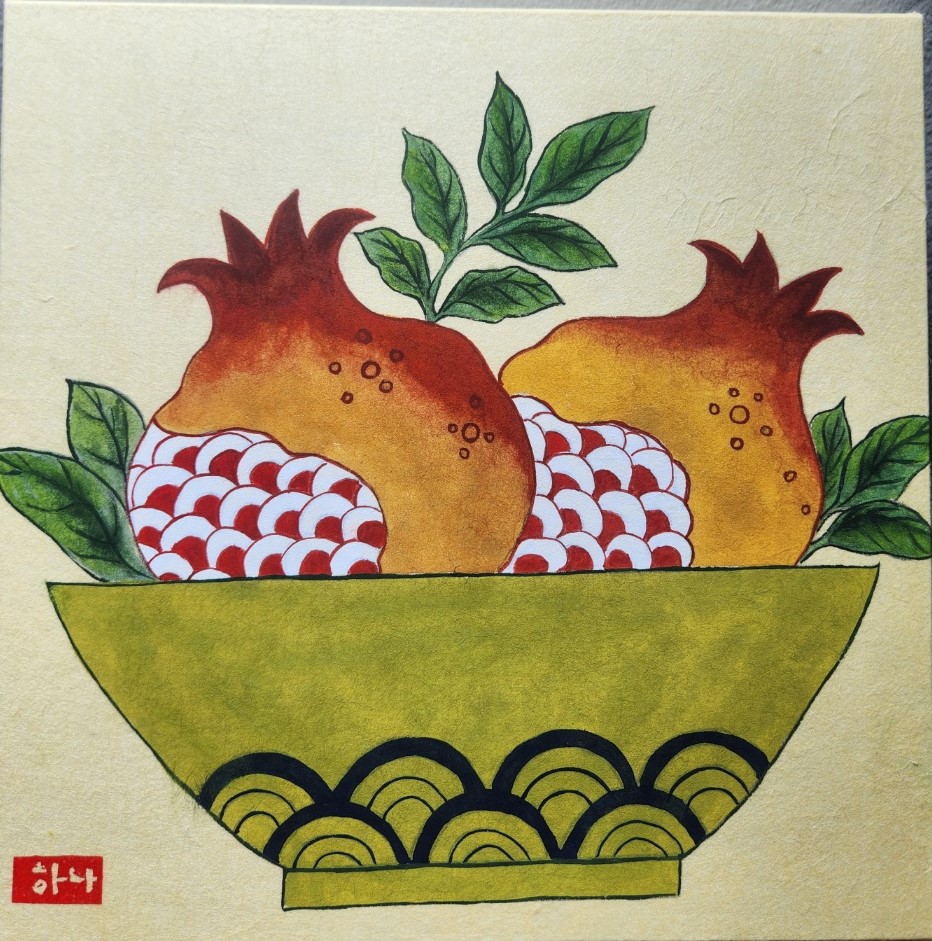
I paint Minhwa, Korea’s traditional folk art, on dakjongi (Korean mulberry paper), with natural mineral pigments and gold powder, in slow, meditative layers that cannot be rushed.
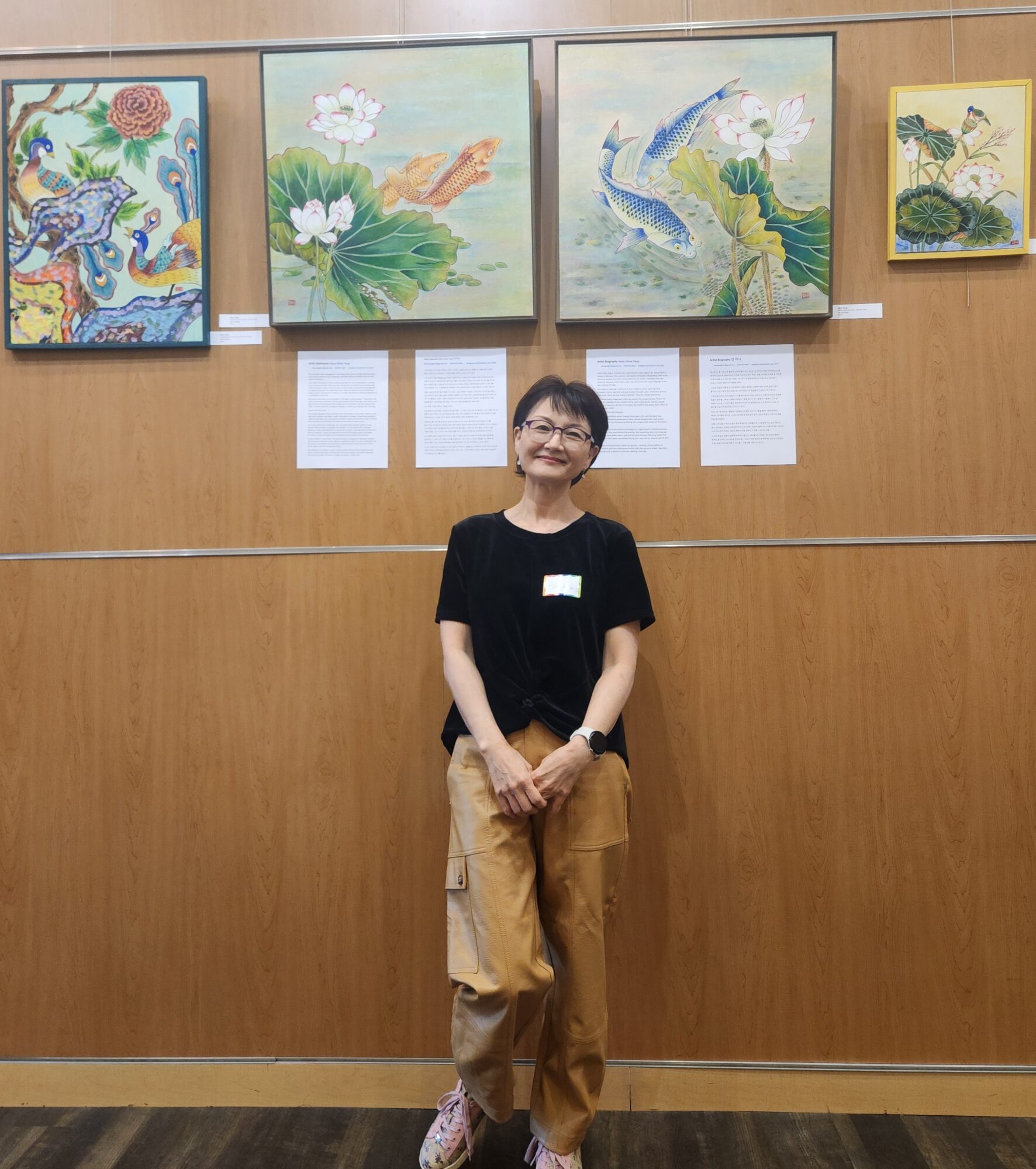
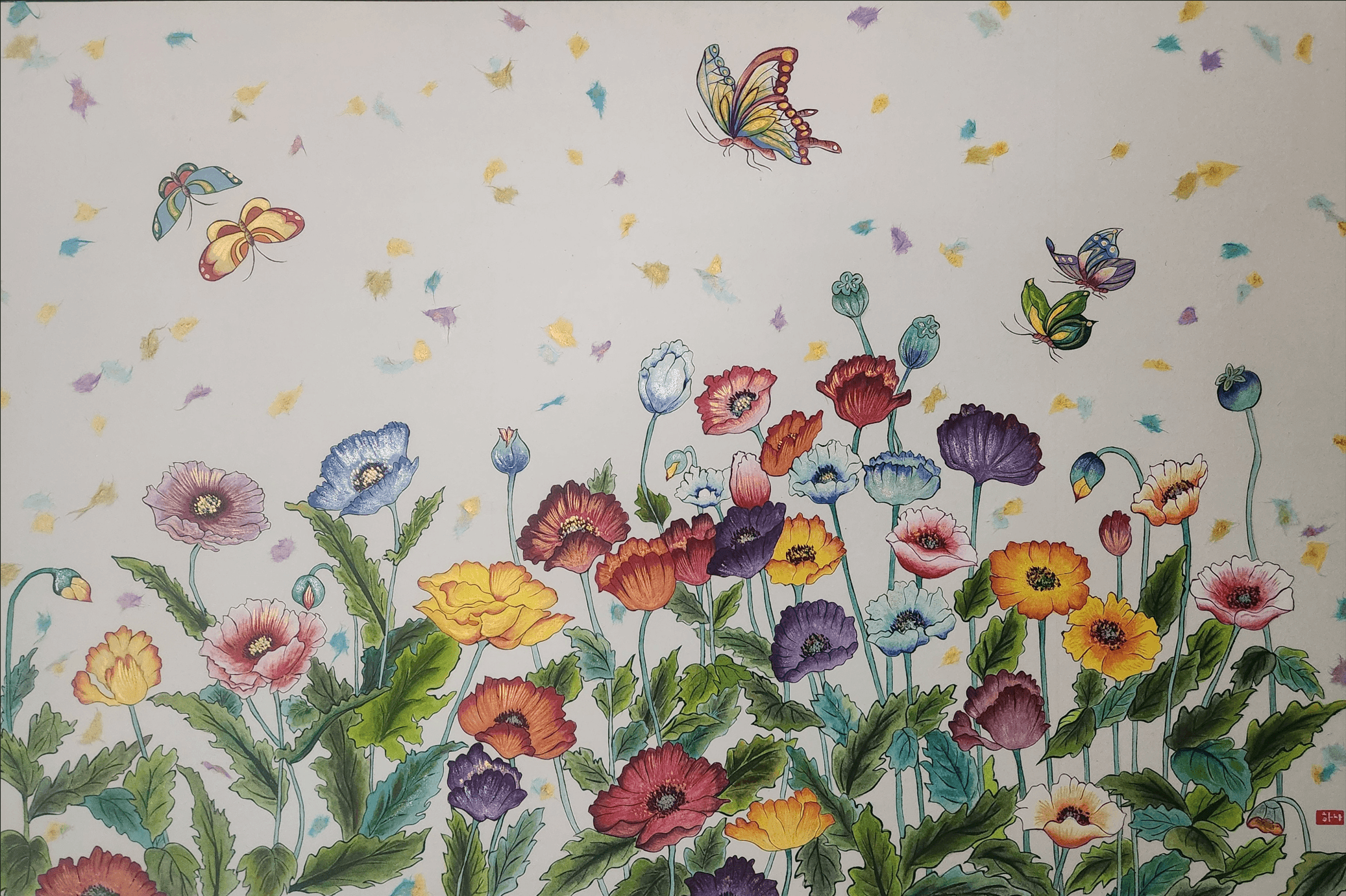
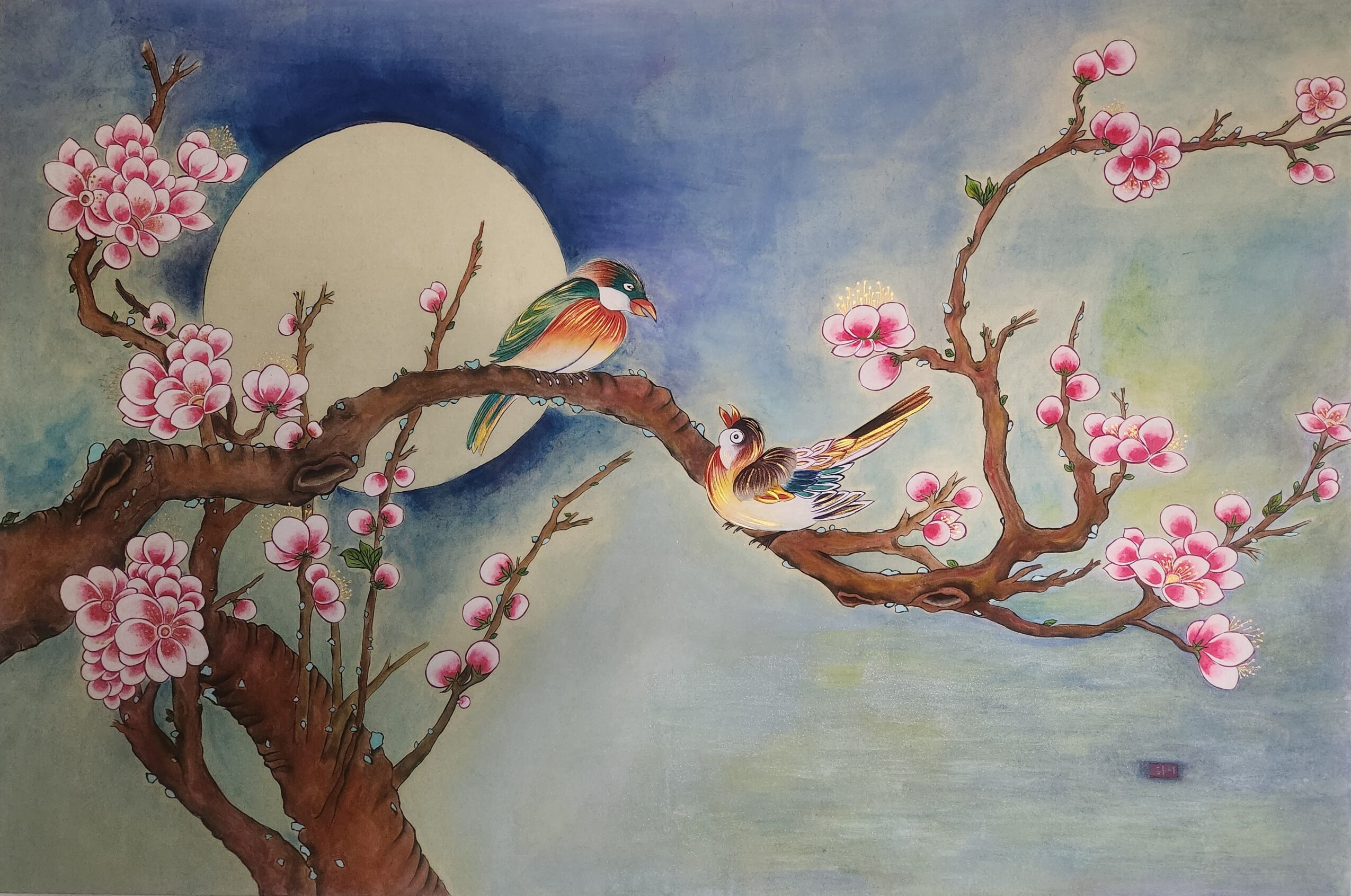
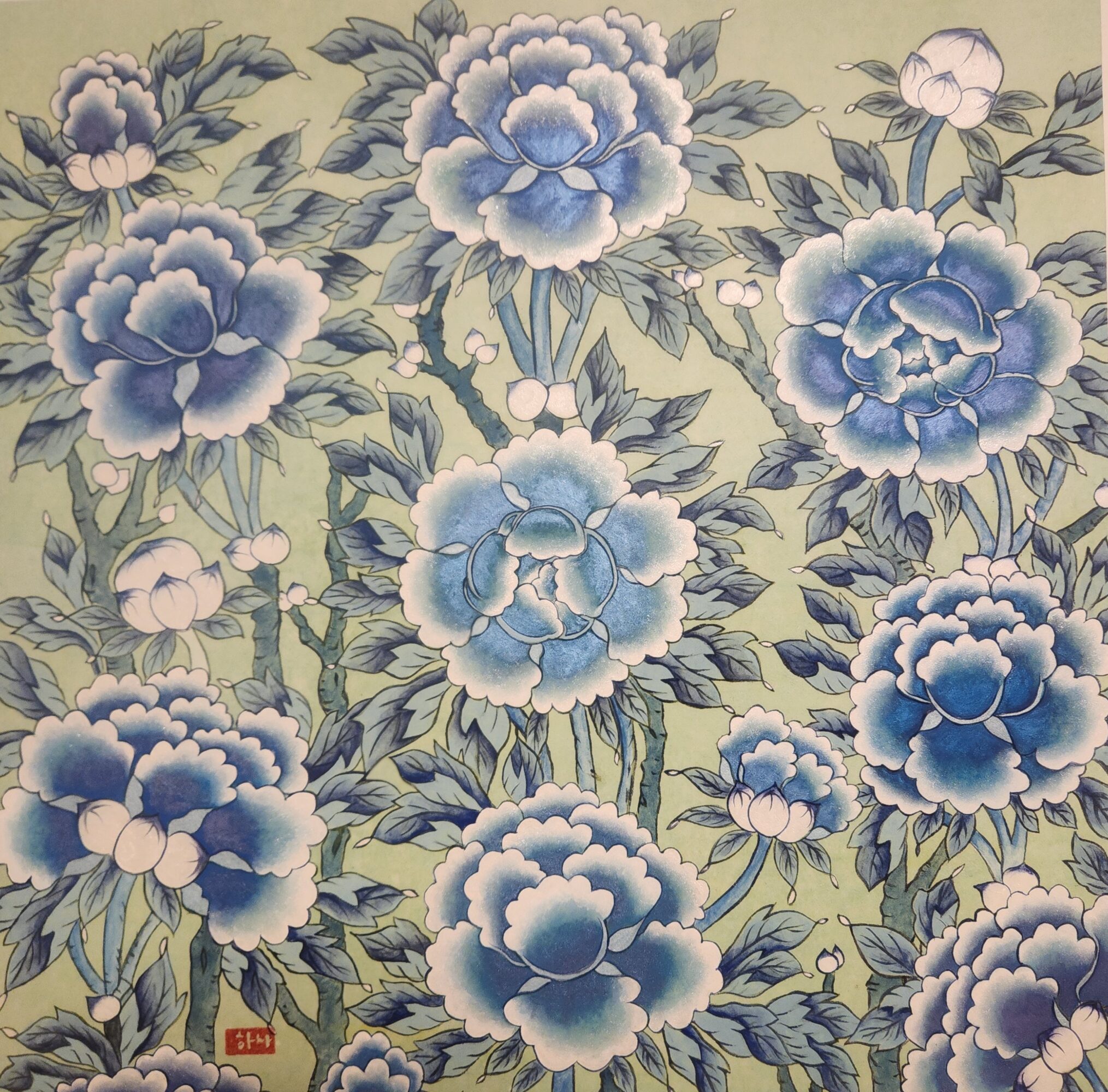
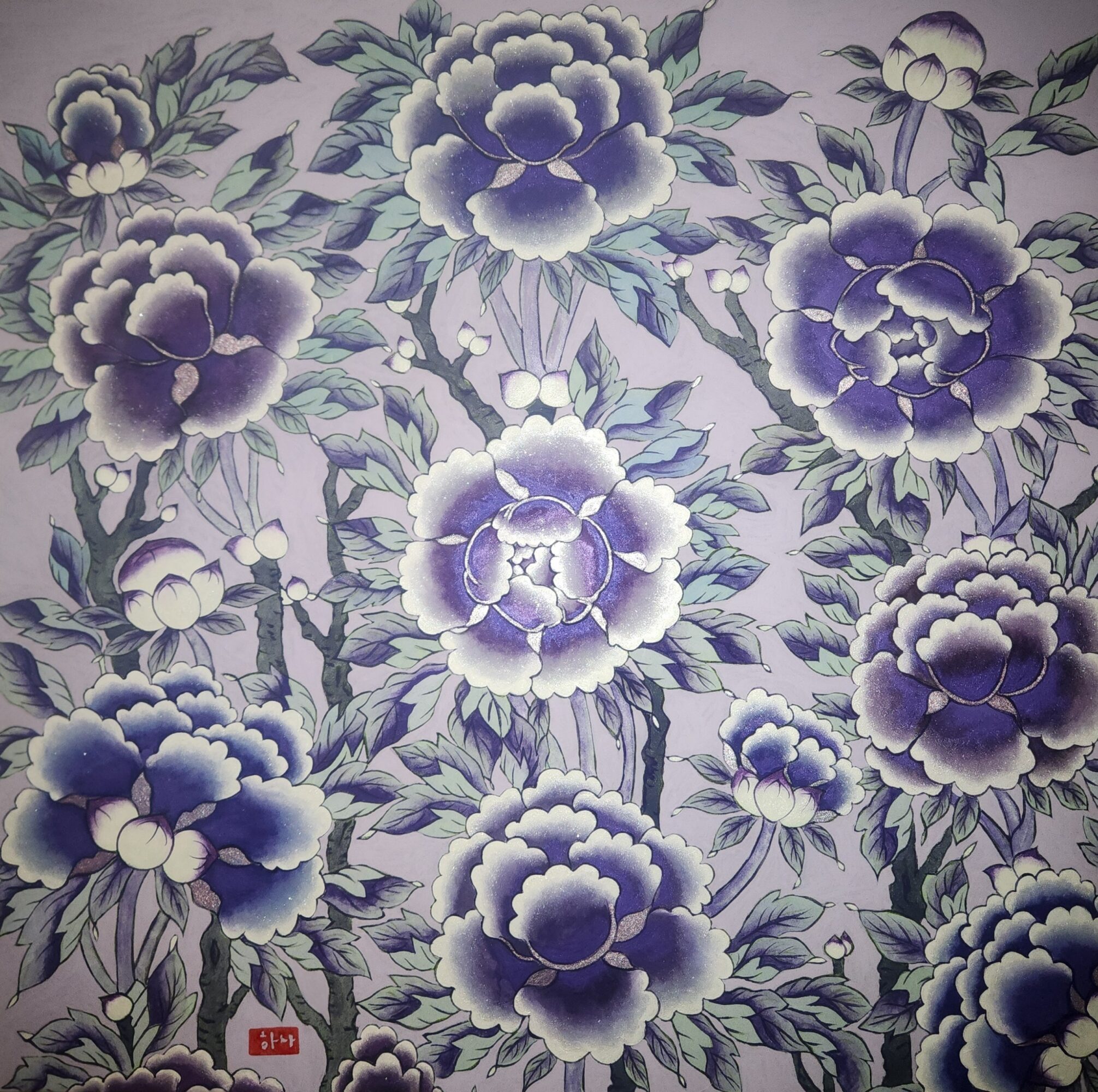
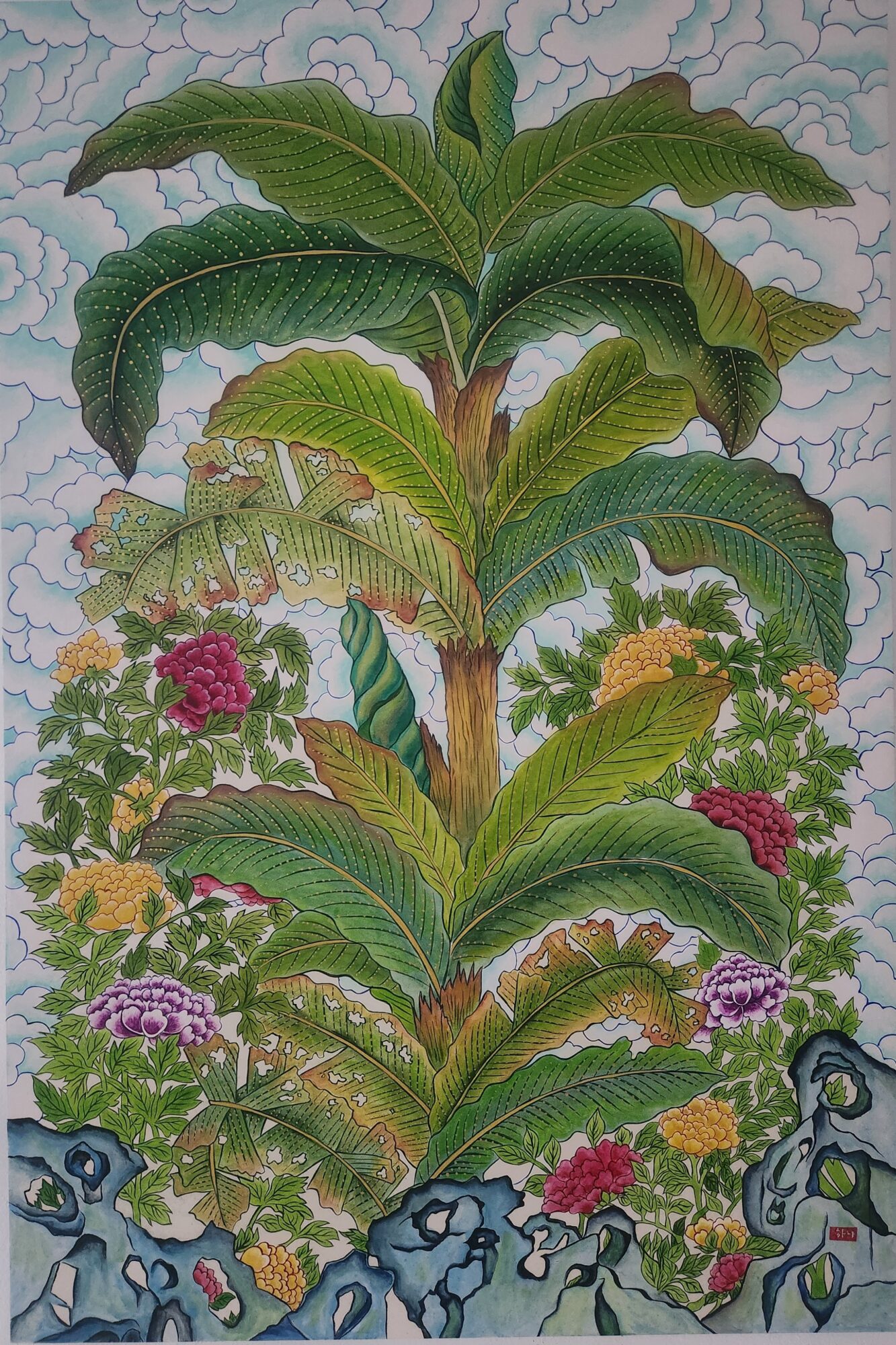
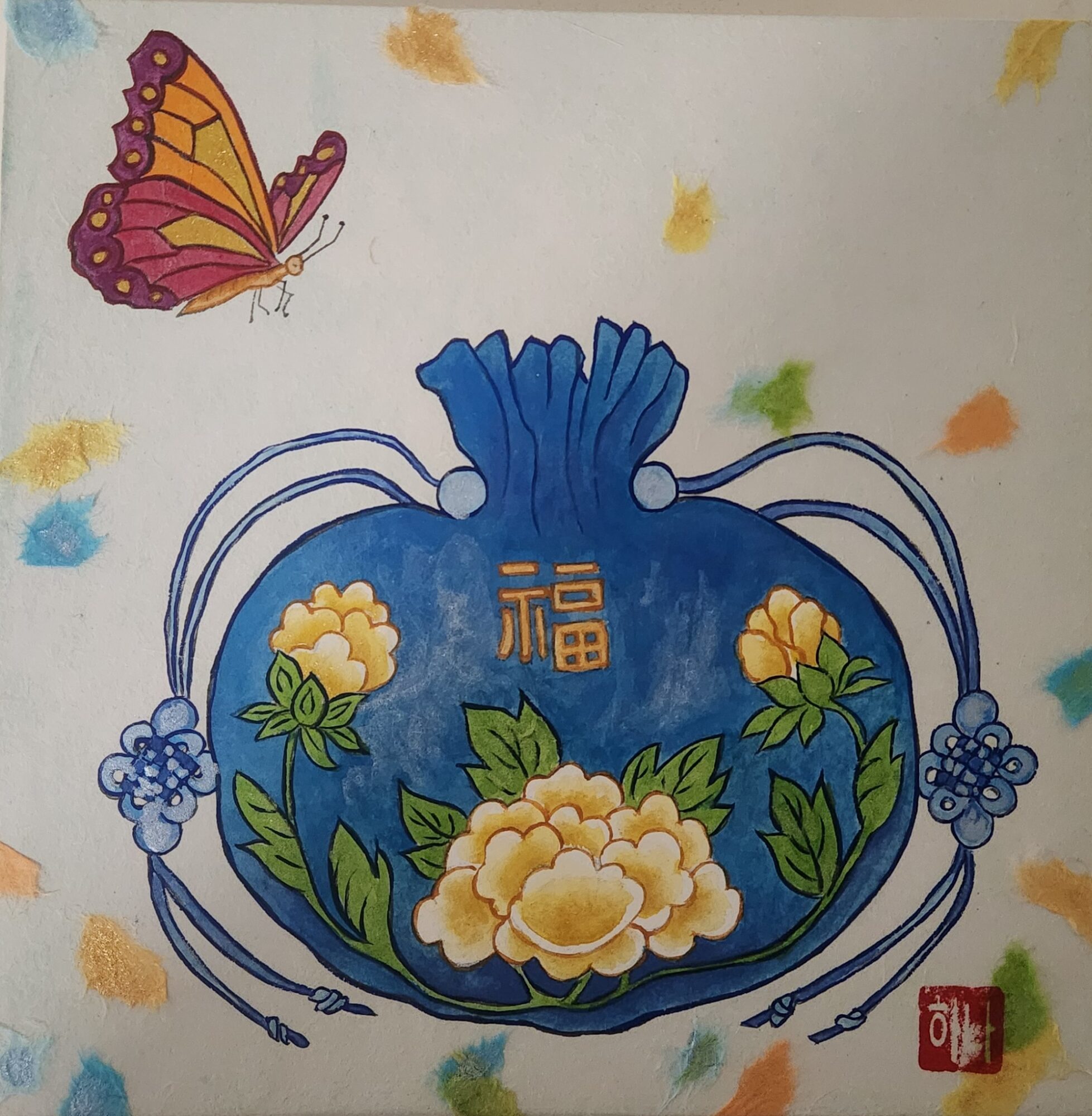
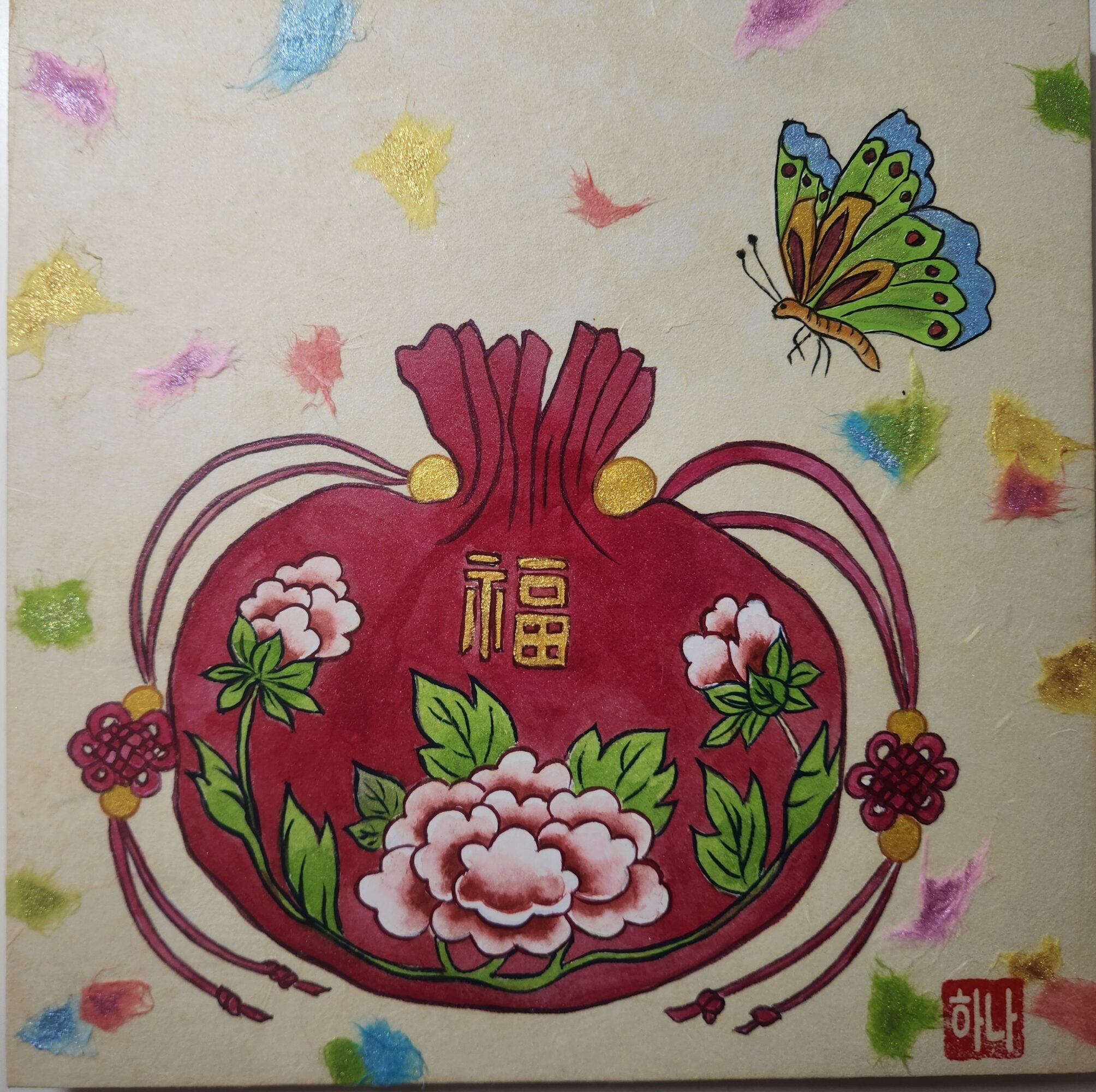
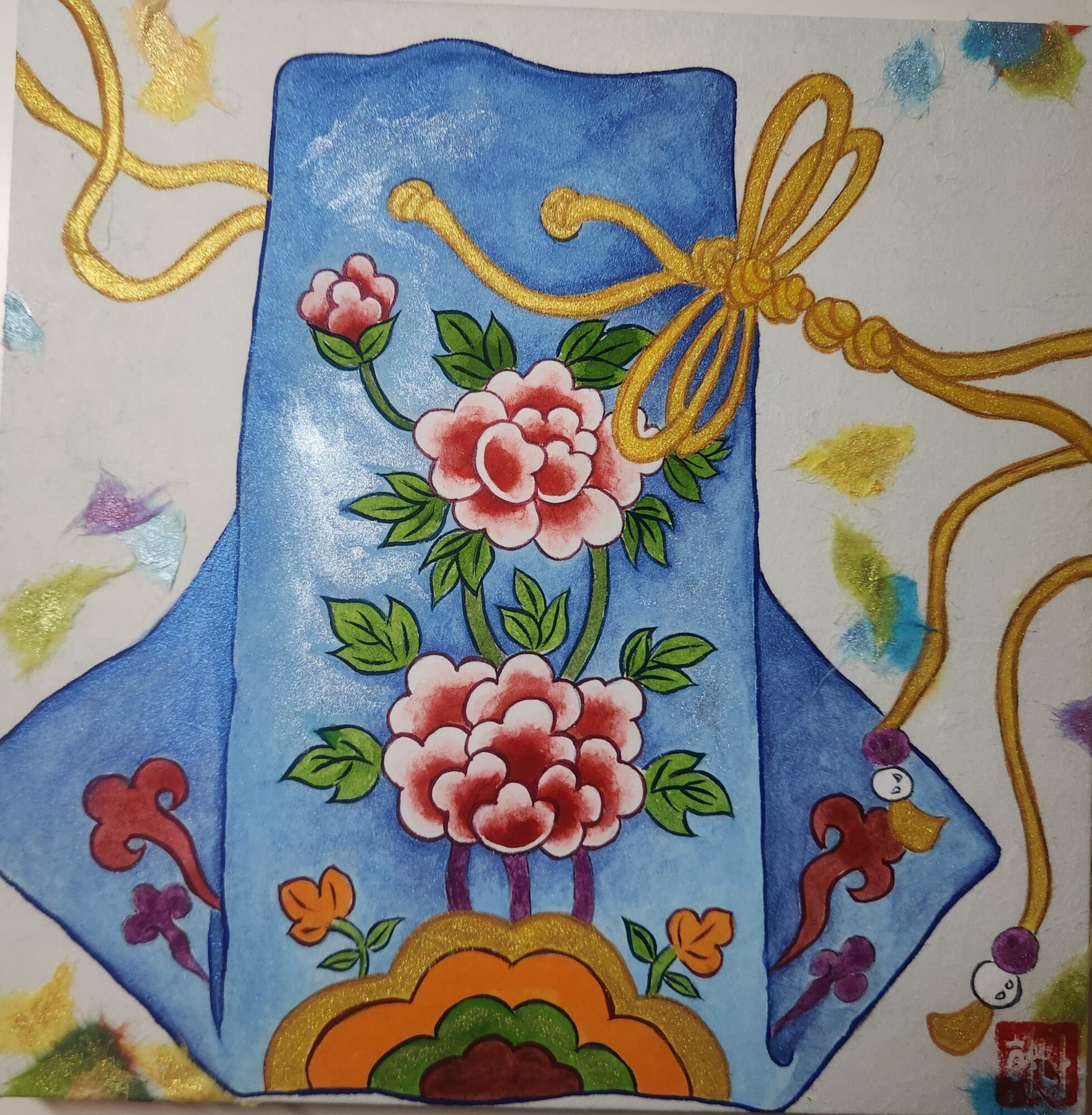
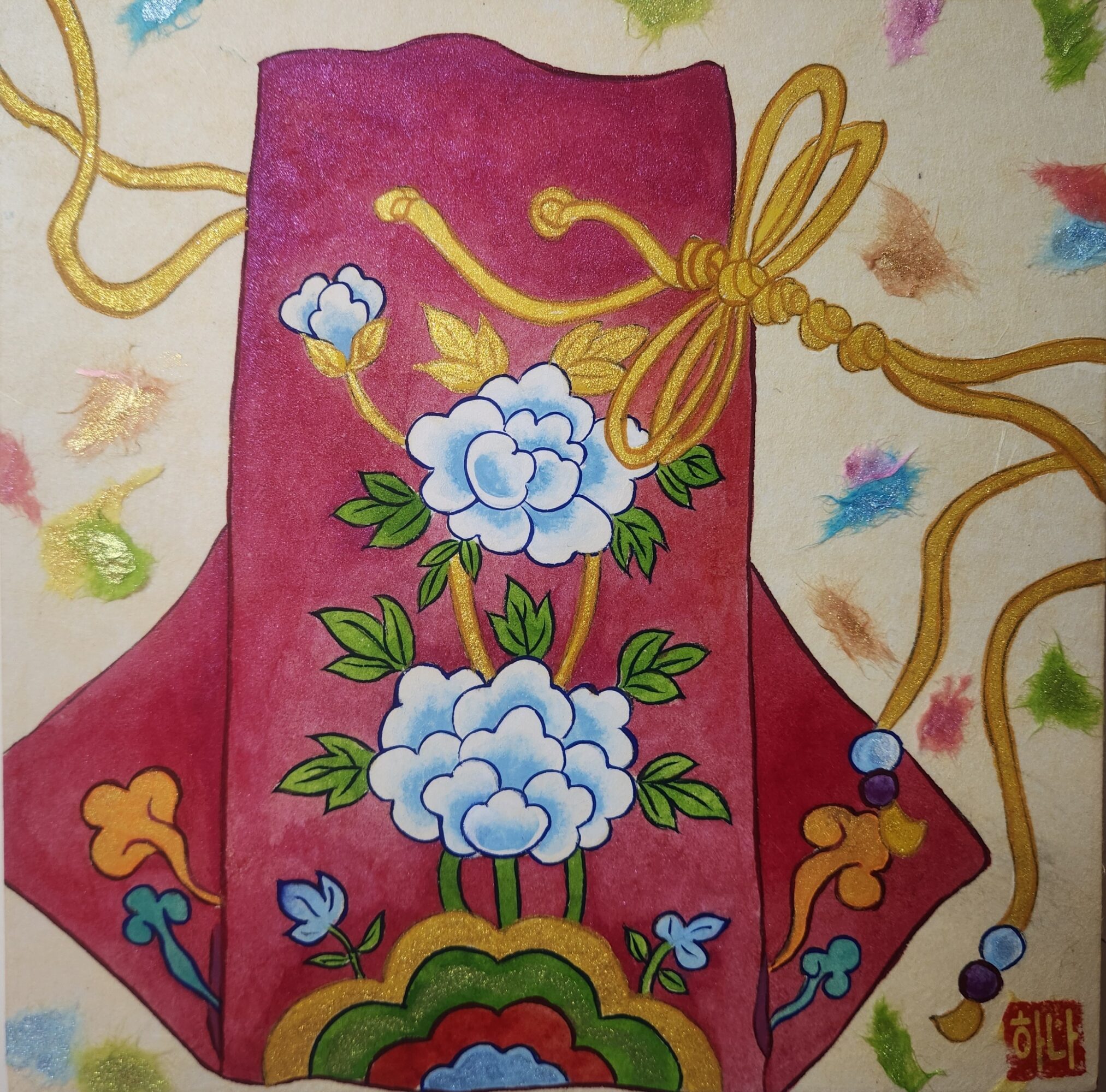
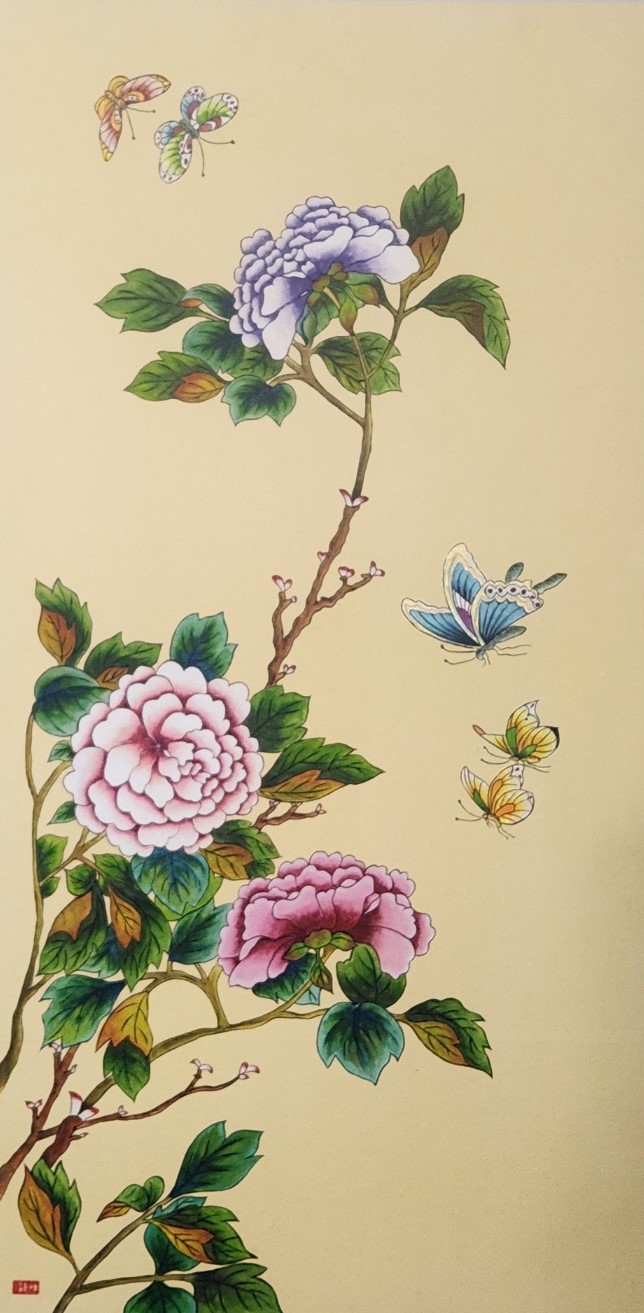
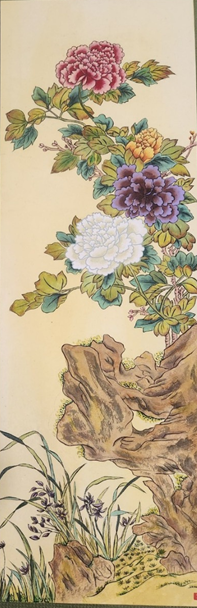
Minhwa is a visual language of wishes: the tiger and magpie bring protection and good news, peonies stand for prosperity, lotus flowers for renewal, and koi for perseverance and abundance.
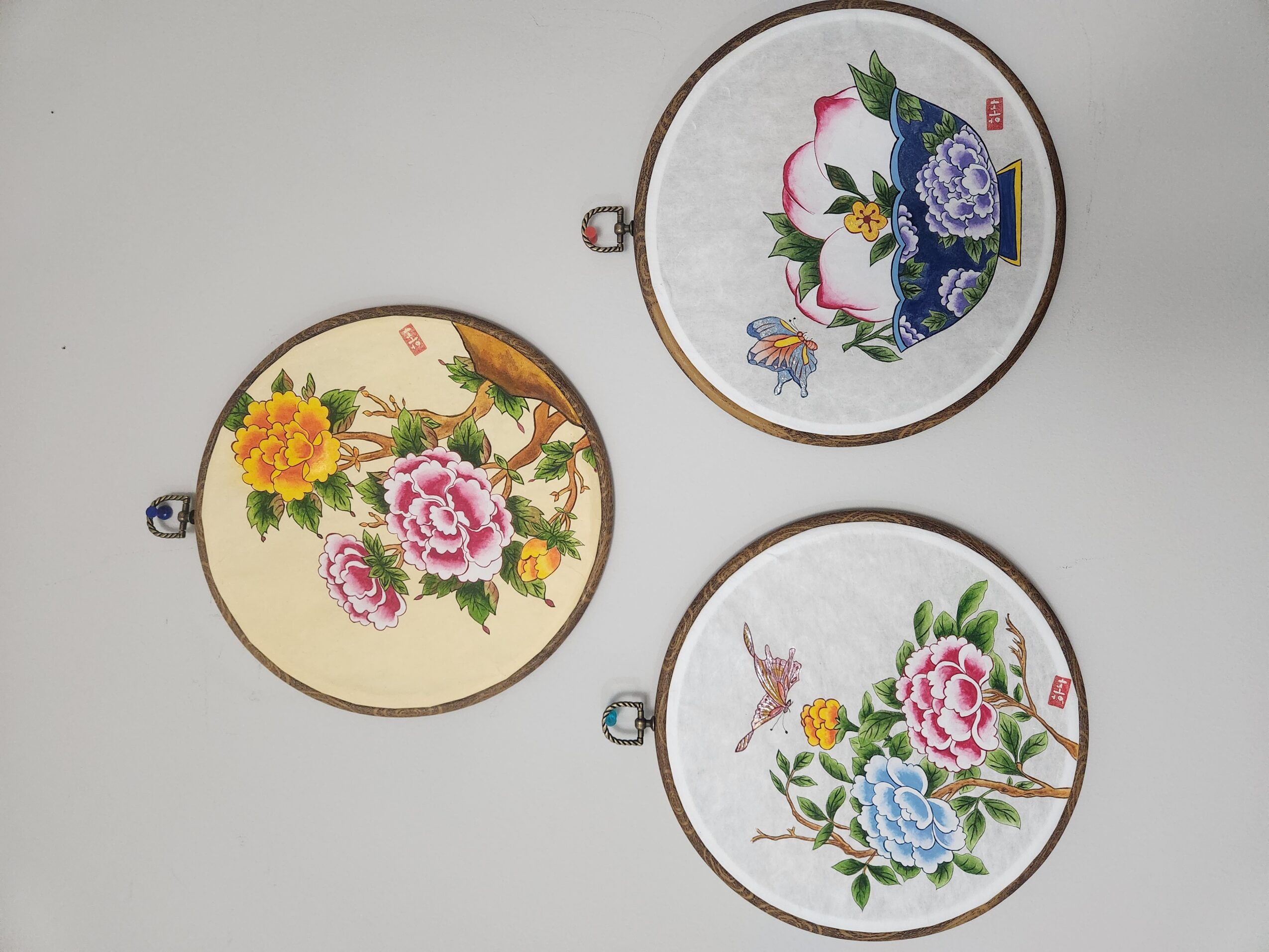
My work begins with traditional technique — and from that ground, I keep venturing. I paint not only on dakjongi but on silk and other papers; not only in the standard square format but in round embroidery hoops and changing sizes; not only with Minhwa’s time-honored motifs but where the figurative meets the abstract.
Each attempt is a small expedition. The tradition gives me my roots and my language; a contemporary sensibility gives me new questions to ask of it — and what emerges is a re-creation: old methods, new light.
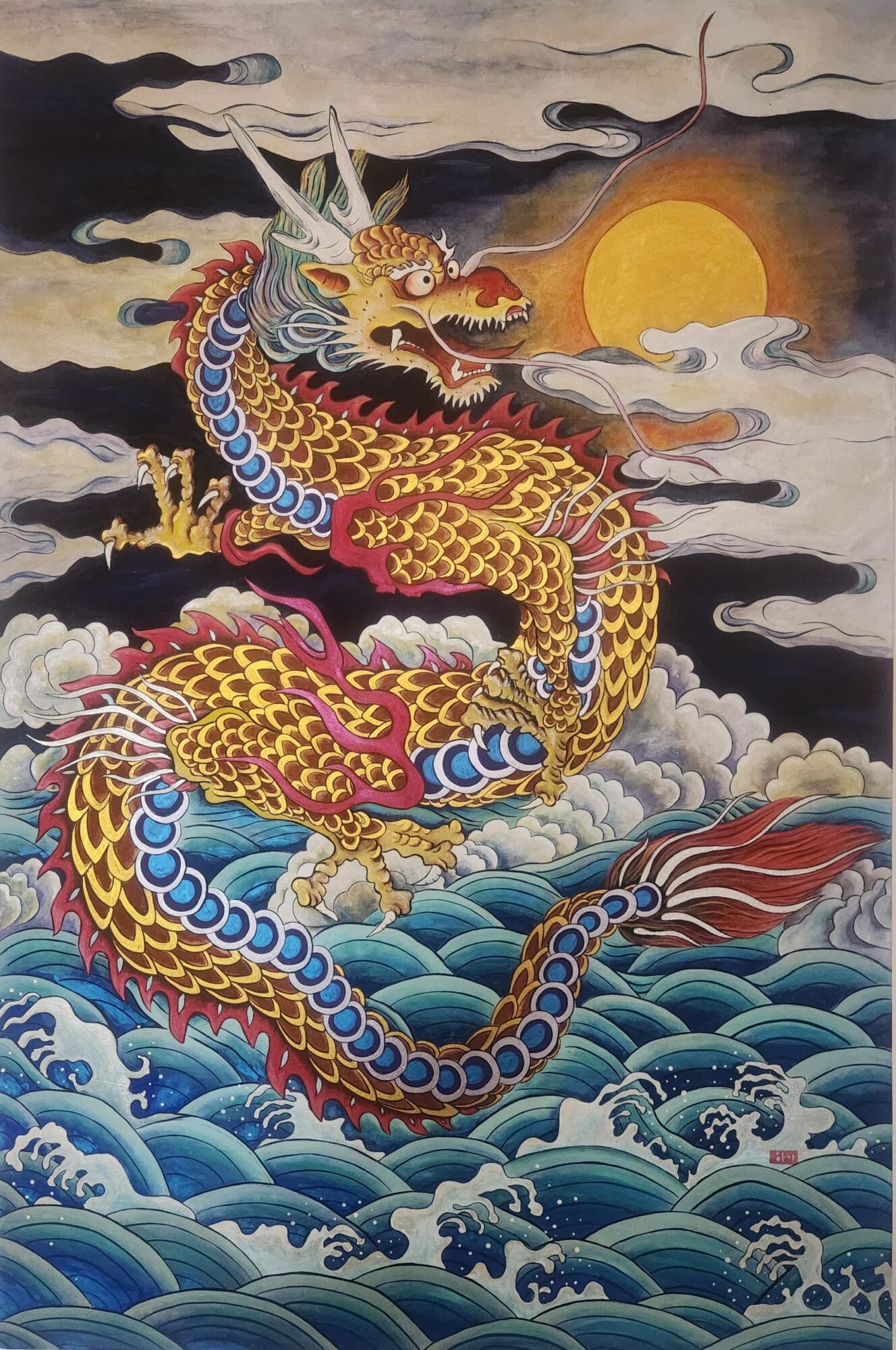
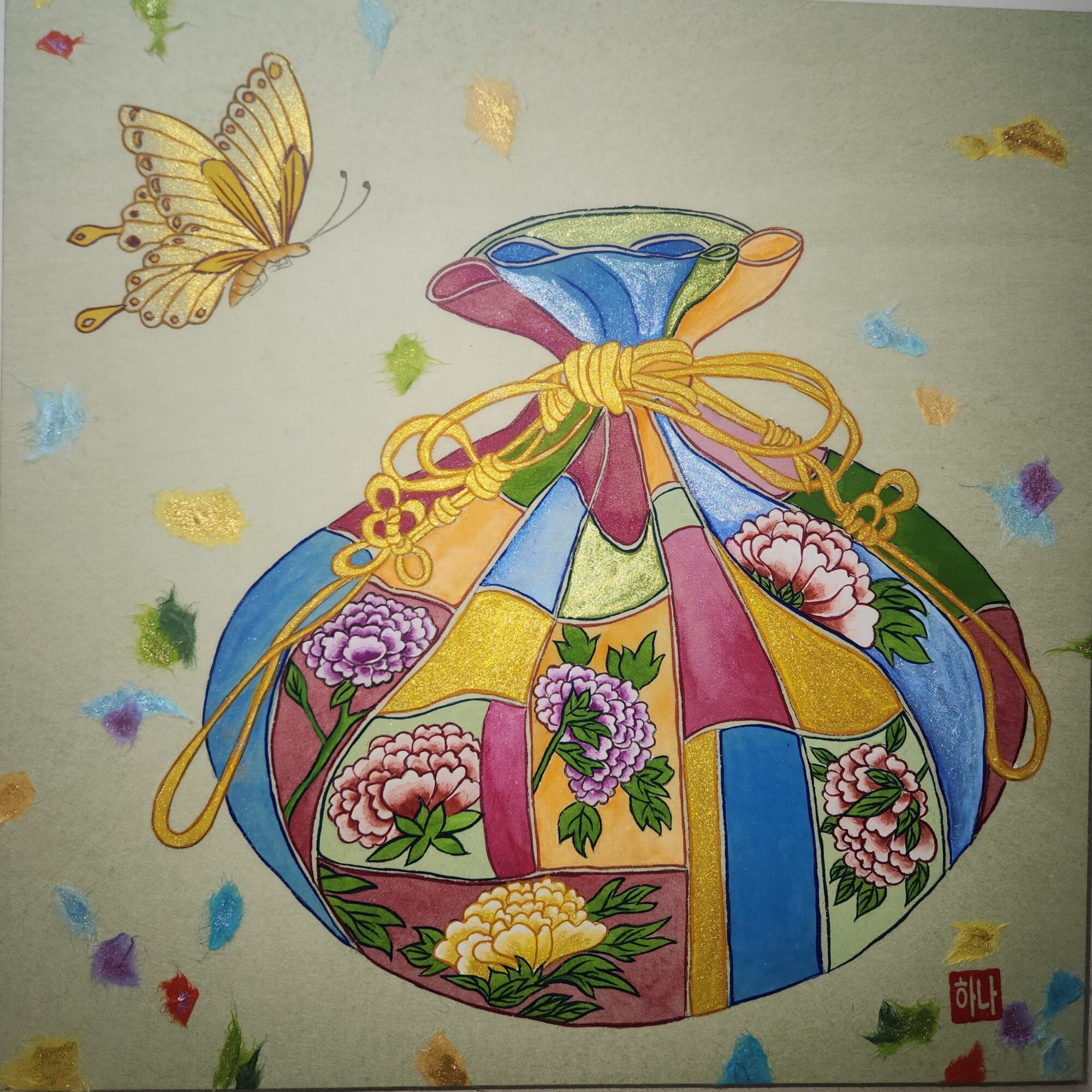
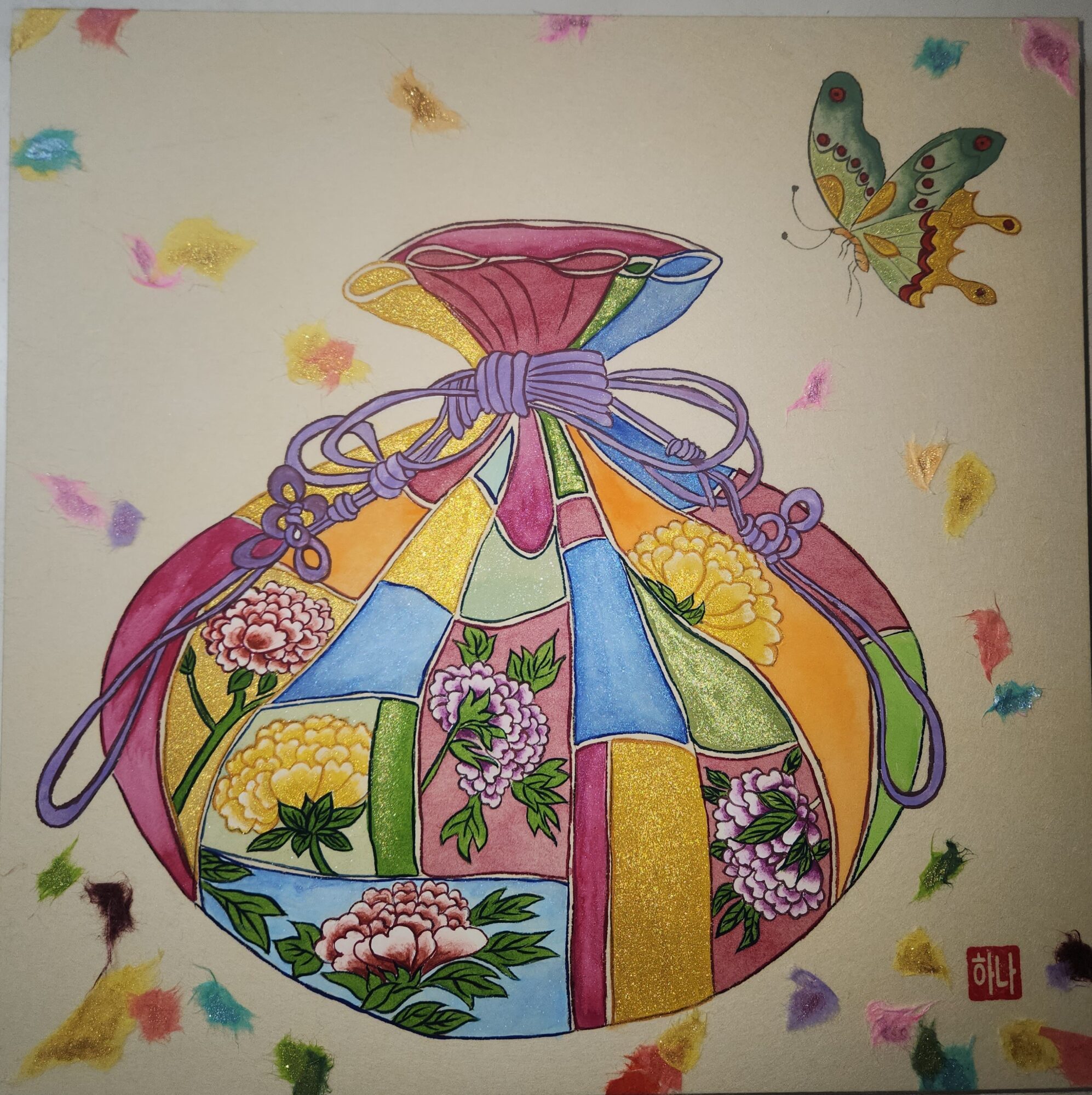
My paintings move across scales, from luminous large-format works like “The Golden Dragon’s Triumph,” a 48-inch painting about freedom and self-determination, to intimate series: small fortune-pouch (bokjumeoni) paintings that hold a blessing the way a pouch holds a treasure.
In my hands, hanji is torn, layered, and collaged until old paper becomes new skin and sunlight pours down in three dimensions.
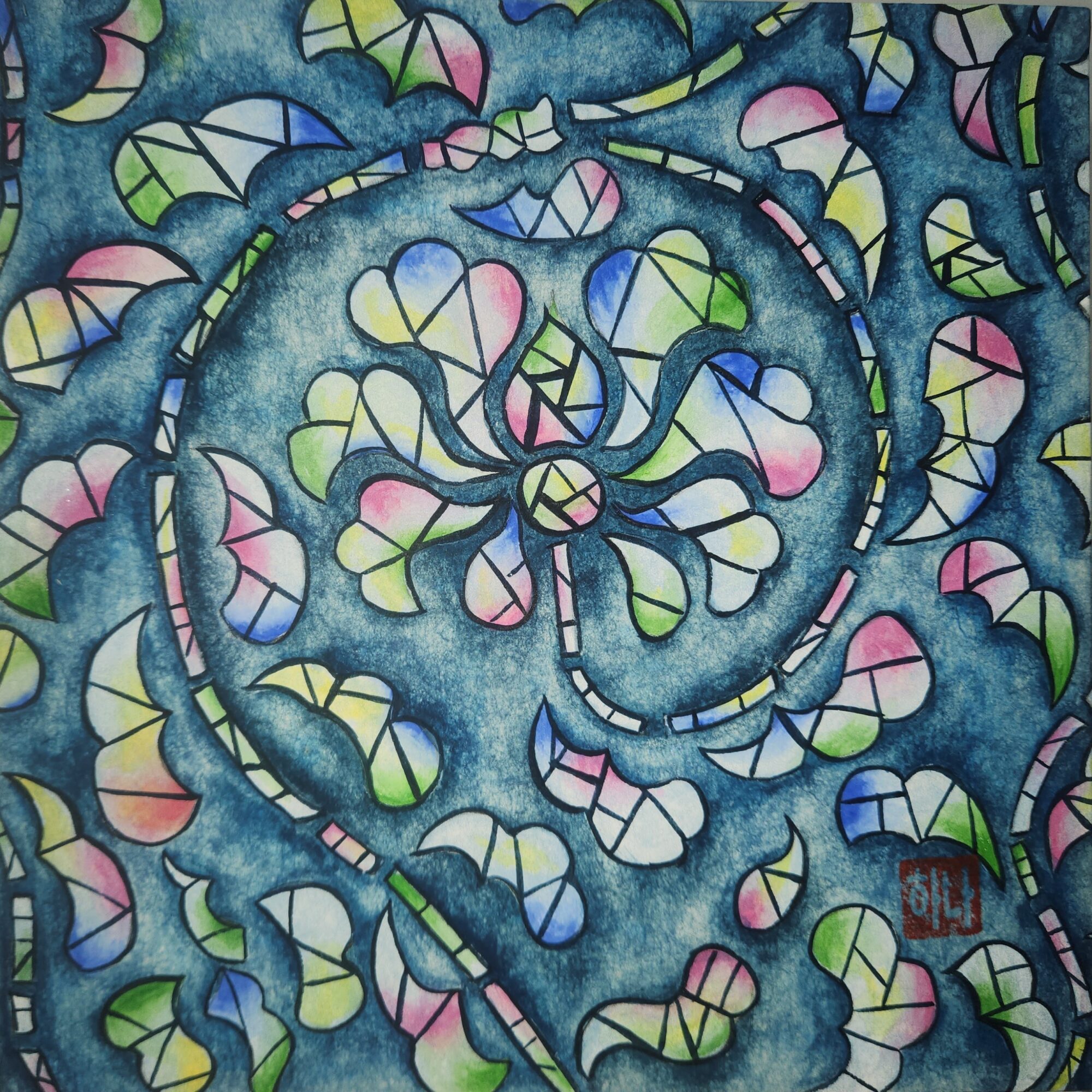
My most recent work is an experiment: in “Peony in Pearl Light,” the peony dissolves into fragments of pearl-like light on a deep blue ground — tradition remembered not as a fixed image, but as light, still changing.
Facing a blank sheet feels like Alice standing before a door to another world.
My passion and my life melt into the work, and the door opens toward the future; that is how I stand as a bridge between past and present.
When a finished painting reaches strangers as hope and as blessing, and I watch them leave carrying its warmth, what I feel above all is gratitude.
And this is my hope for each painting: that it may rest in someone’s heart like a letter from home, a small blessing of comfort and hope, still warm when opened again in a difficult season.
How do you define success?
For me, the meaning of life is a flame that burns with passion yet never burns out — a flame slowly refined into charcoal.
I aspire to a life that takes the fire it once blazed with and holds it within: purifying the air around it, and quietly giving warmth to others for a very long time.
The birth of a pearl remains another lesson for me.
A grain of sand pierces the oyster’s tender flesh, and the oyster, holding that pain inside, gives birth to a jewel of quiet luster.
Like the pearl, I want the pain and hardship of my own life to become seeds from which new jewels are made.
That is the value of art as I believe in it, and my meaning of success.
If my paintings, with the warmth of charcoal and the light of a pearl, can comfort someone in a hard season and give them hope, and go on doing so for a long time, that is success to me.
Contact Info:
- Website: https://muse.ai/s/hana-yang-minhwa-gallery-hw6tox0lxlxcbxv/7XLntffS90KXSa-RDanlPGAOG8TprwGiAR8yiTJeOA8
- Instagram: https://www.instagram.com/miracle_icon_hana/
- Facebook: https://www.facebook.com/profile.php?id=100070947315696