




Today we’d like to introduce you to Jackson Bartlett.
Hi Jackson, we’d love for you to start by introducing yourself.
My path from professor of African American Studies to leader of conservation and trails work in Virginia may seem a little unique, at first glance. To me, though, it makes a lot of sense. I’ve always been interested in place, and how our relationship to a place can shape the outcomes we’re more or less likely to experience. In the United States, our race is one determinant of our relationship to place, and our access to healing, restorative greenspaces.
We know, for instance, that race is one of the strongest determinants of where people live. People who live in safe, walkable communities have longer lifespans and better health outcomes. People who live in car-centric places, or places where for any number of reasons it’s unsafe to move about (air quality, or heat for instance), have worse outcomes. Things like redlining and racial discrimination have led to racial patterns in neighborhood quality, and thus racial patterns in health outcomes.
We also know that access to greenspace and nature improves health outcomes. An increasing number of peer reviewed studies are showing how spending time outdoors relieves stress, and helps reset our bodies, leading to better health. Ancient signals like the sound of birds, or the smell of rushing water, tell our bodies that we’re where we belong. It activates the parasympathetic nervous system to reduce blood pressure, heart rate, and cortisol levels. It puts a biological brake on a fight-or-flight response to stress, and helps bring the body back to homeostasis. Greenspace with trails that get people moving, and that create active transportation options that replace cars, are even better for our health.
There’s also this more macro part of it that’s about decolonization. In grad school, I got to learn about the ways in which enlightenment ideals of freedom, democracy, and what it means to be human were actually bound up in this violent, extractive colonialism that we’re still living through today. The people who were already living on this land had (and still have) a very different definition of freedom that requires symbiosis with the living things around them.
So for me, personally, I’m still kind of doing the same things. In the classroom, I’m working to help people understand their relationship to bigger systems, whether that be social or ecological, and get them involved in making our world a better place to live. I’m also doing that at Friends of the Lower Appomattox River, as we work to conserve more greenspace in our region, create more access to that greenspace through parks and trails, and bring more members of our community out to the river to participate in its recovery and restore our relationship to it.
We all face challenges, but looking back would you describe it as a relatively smooth road?
My road to FOLAR was interesting. While this has turned out to be my dream job, I got it sort of by accident. I first came to Virginia in 2024 to lead diversity, equity, and inclusion education at VCU and VCU Health. That all fell apart, of course, shortly after the election. Being on a senior administrative contract, I wasn’t guaranteed another placement. I also wasn’t sure I wanted to stay in higher ed at that point. There’s a lot of moral injury taking place, as professors and administrators are increasingly put in positions that don’t align with their values. I was also tired of moving around, and wanted to put down roots and really do something in my community. I’d been volunteering at FOLAR and really falling in love with their mission and their community-focused approach. When the previous Executive Director announced her retirement, I threw my name into the hat.
Just like FOLAR’s projects, my studies were always focused on neighborhoods and quality of life. I wanted to find ways to improve communities for people where they are, versus the continuation of public policy that seeks to improve peoples lives by moving them somewhere else (think housing and school vouchers, for example). FOLAR is all about community-engaged conservation work. The success of what we do is largely measured by how involved our neighbors actually are in the process, and how much they are able to access and benefit from the work.
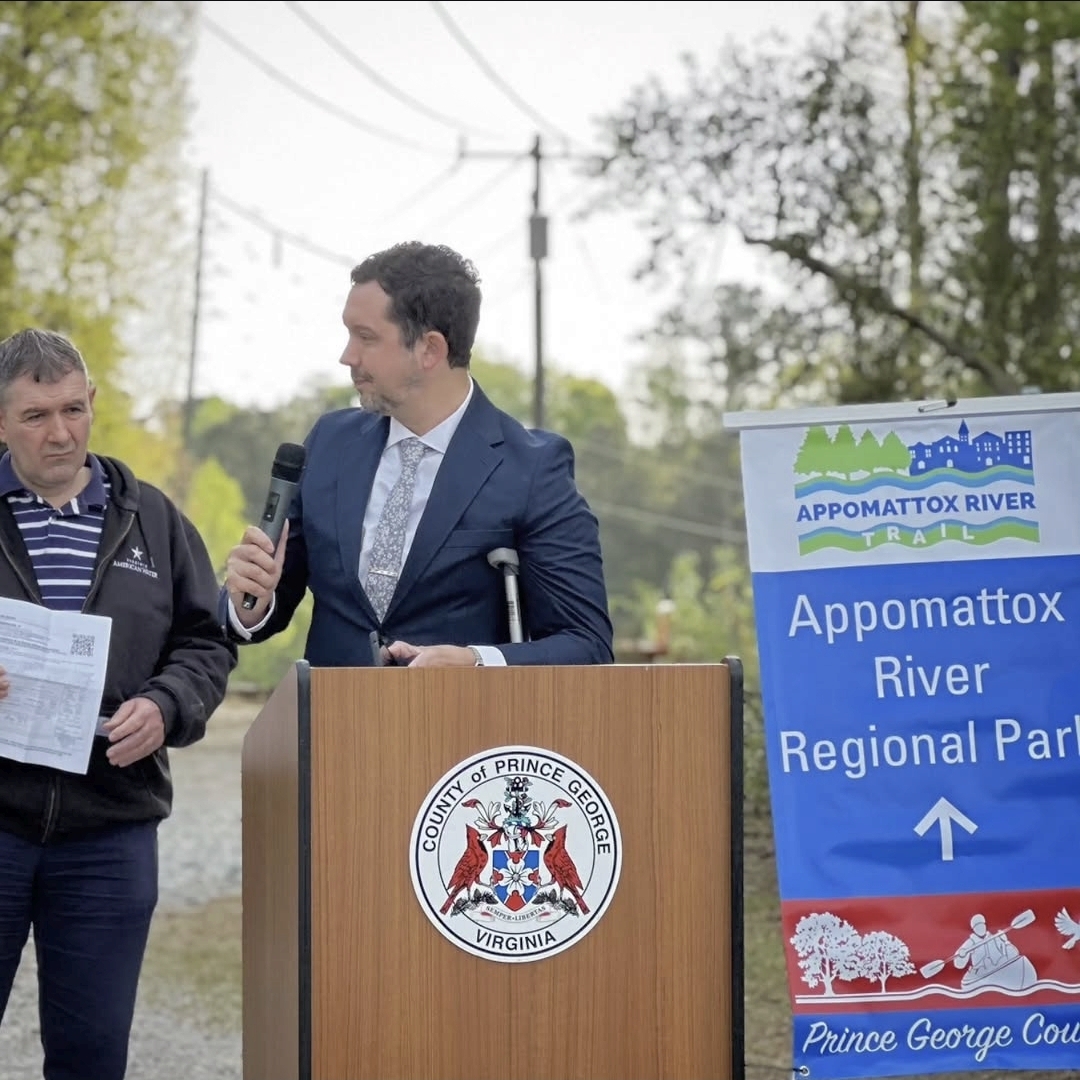
The work takes time. Especially building the Appomattox River Trail. It can take years to get a project from concept to completion. But you celebrate each win. That’s what keeps you going. We’re in the design-phase on more than $10m worth of projects in Petersburg and are still a couple years off from being able to walk those new miles on the trail. But we also just cut the ribbon on a new project at Appomattox River Regional Park in Prince George. It’s a process.
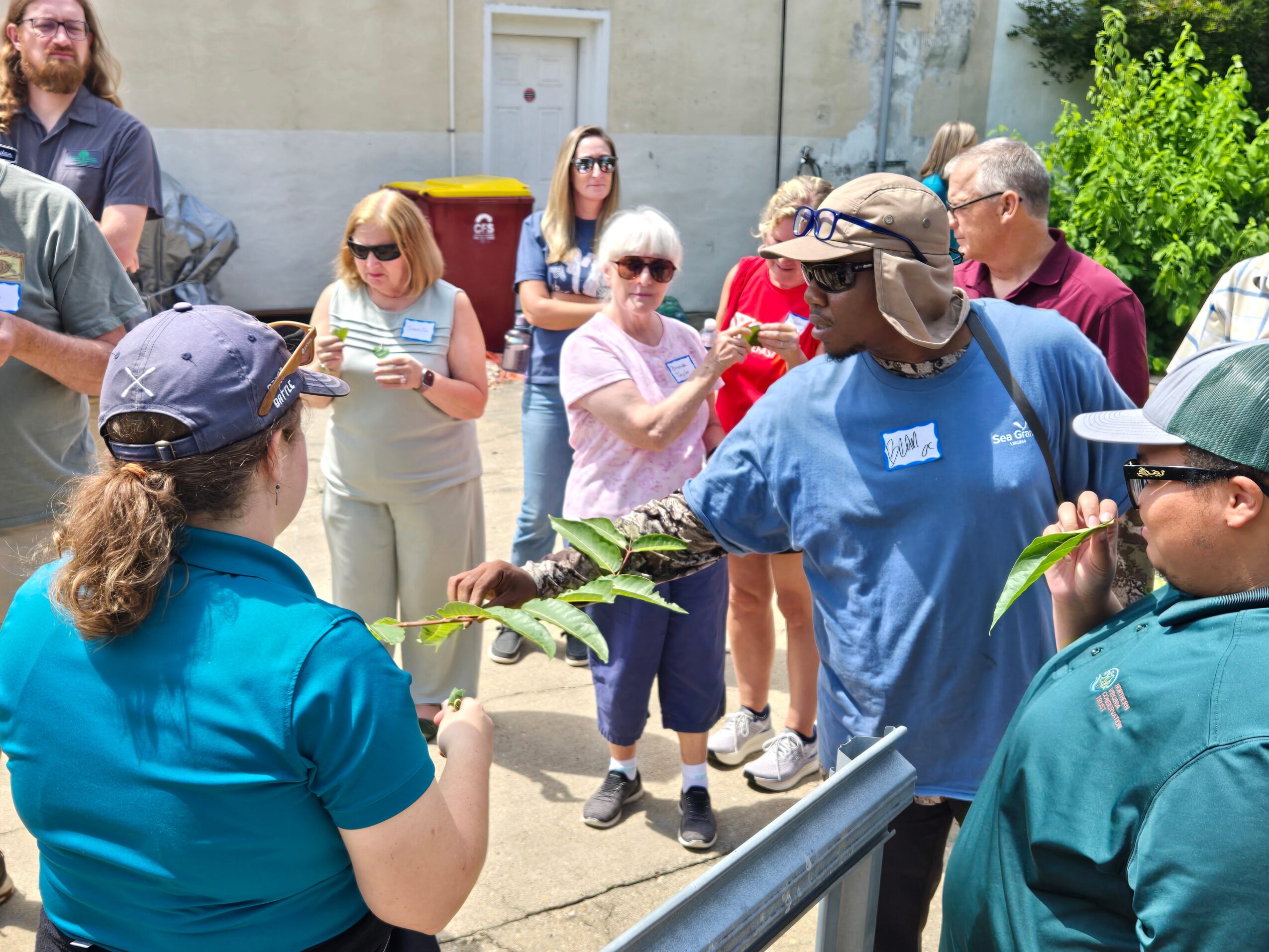
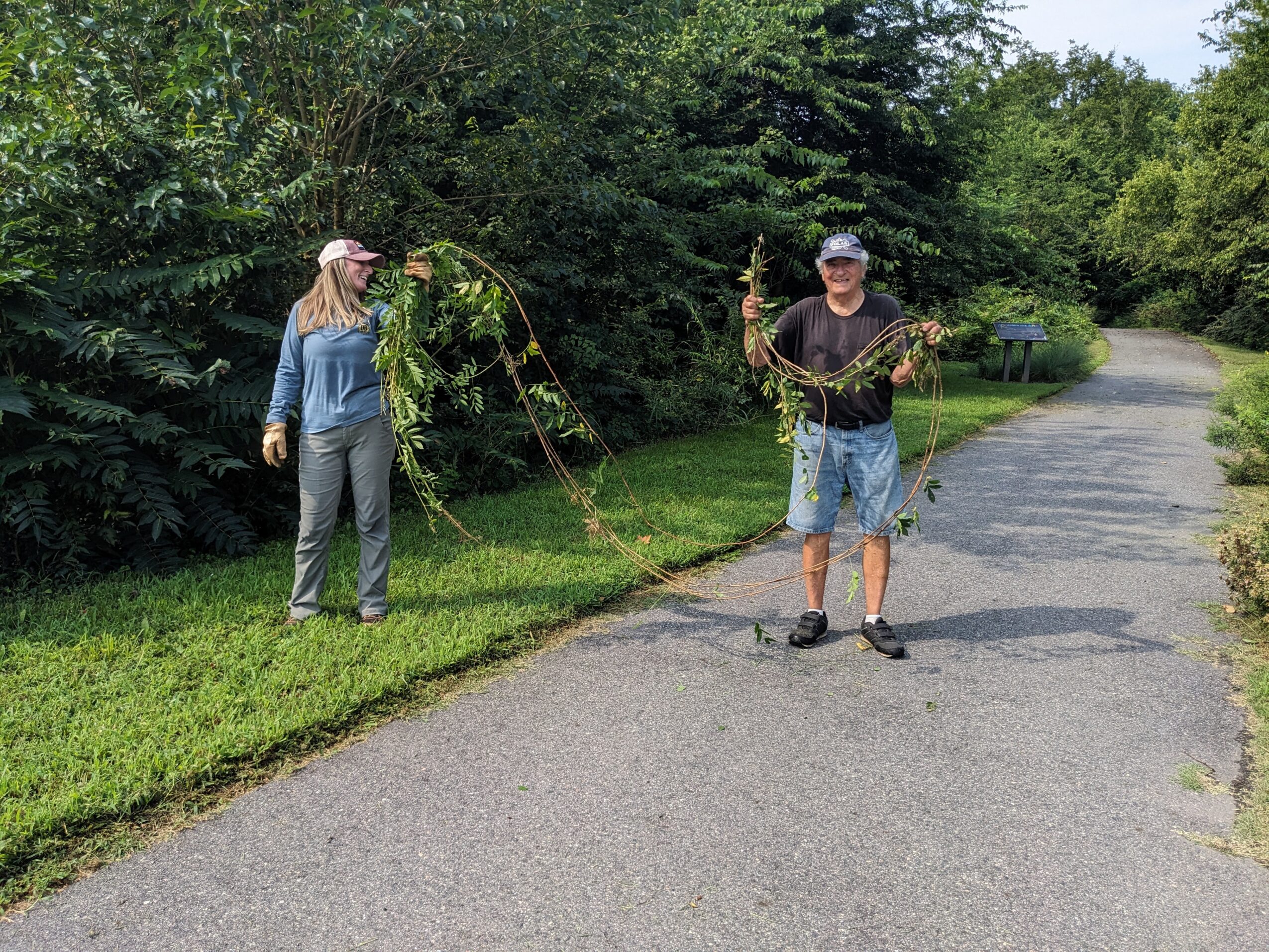
It’s also a long-term effort to conserve the river and restore native ecology. We do a lot of work with our volunteers to remove invasive plant species along the Appomattox, and let native plants grow that can serve as food sources and habitats for insects, birds, and other living things along the river. One of my goals has been to integrate our work at FOLAR with broader efforts across the state to combat invasive species. We now offer trainings with state certification for local government staff, partner agencies and nonprofits, and area residents. We’re focusing on both containment and elimination of specific plant species in targeted areas, where our work will have the most impact.
Appreciate you sharing that. What else should we know about what you do?
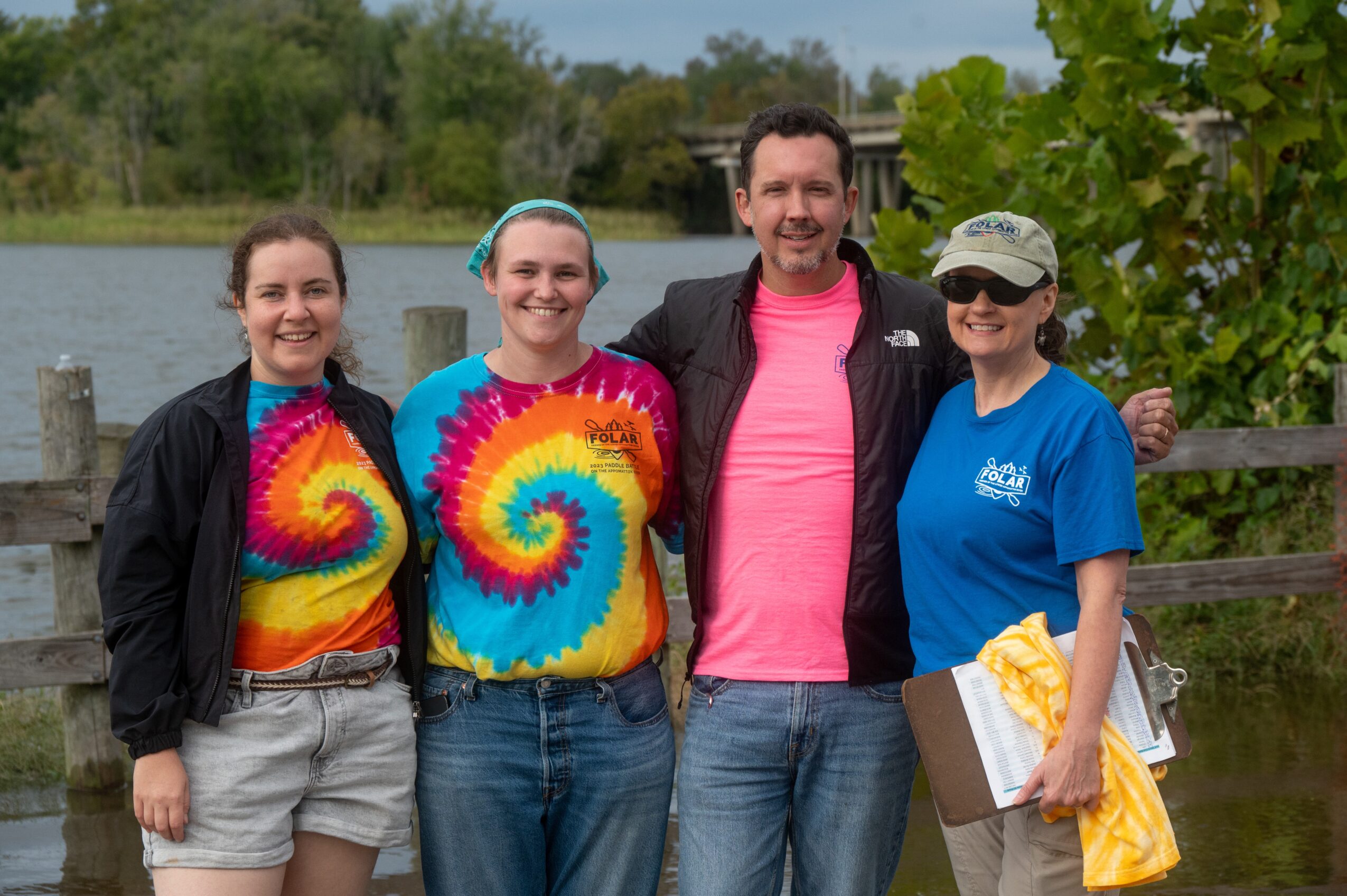
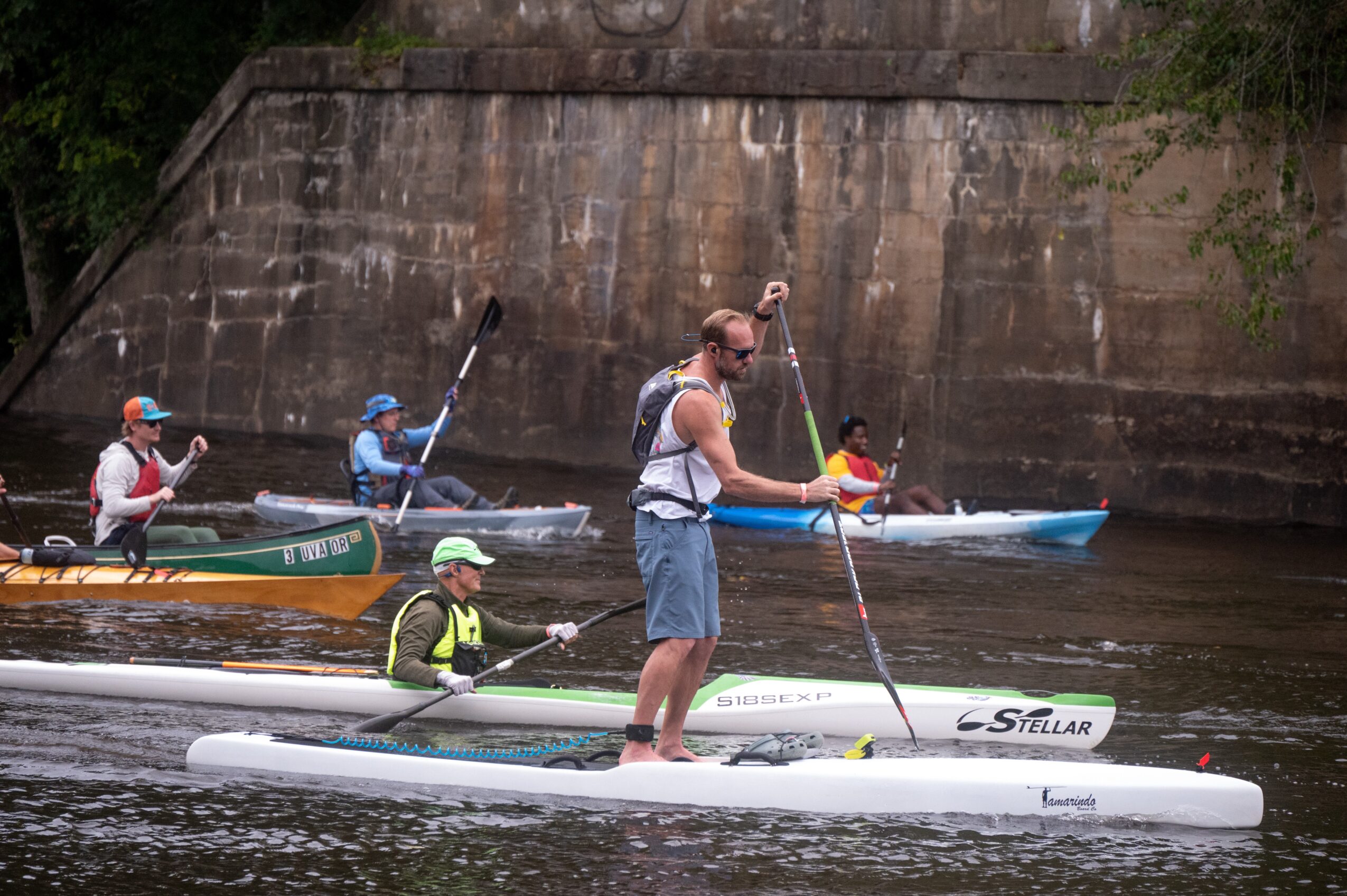
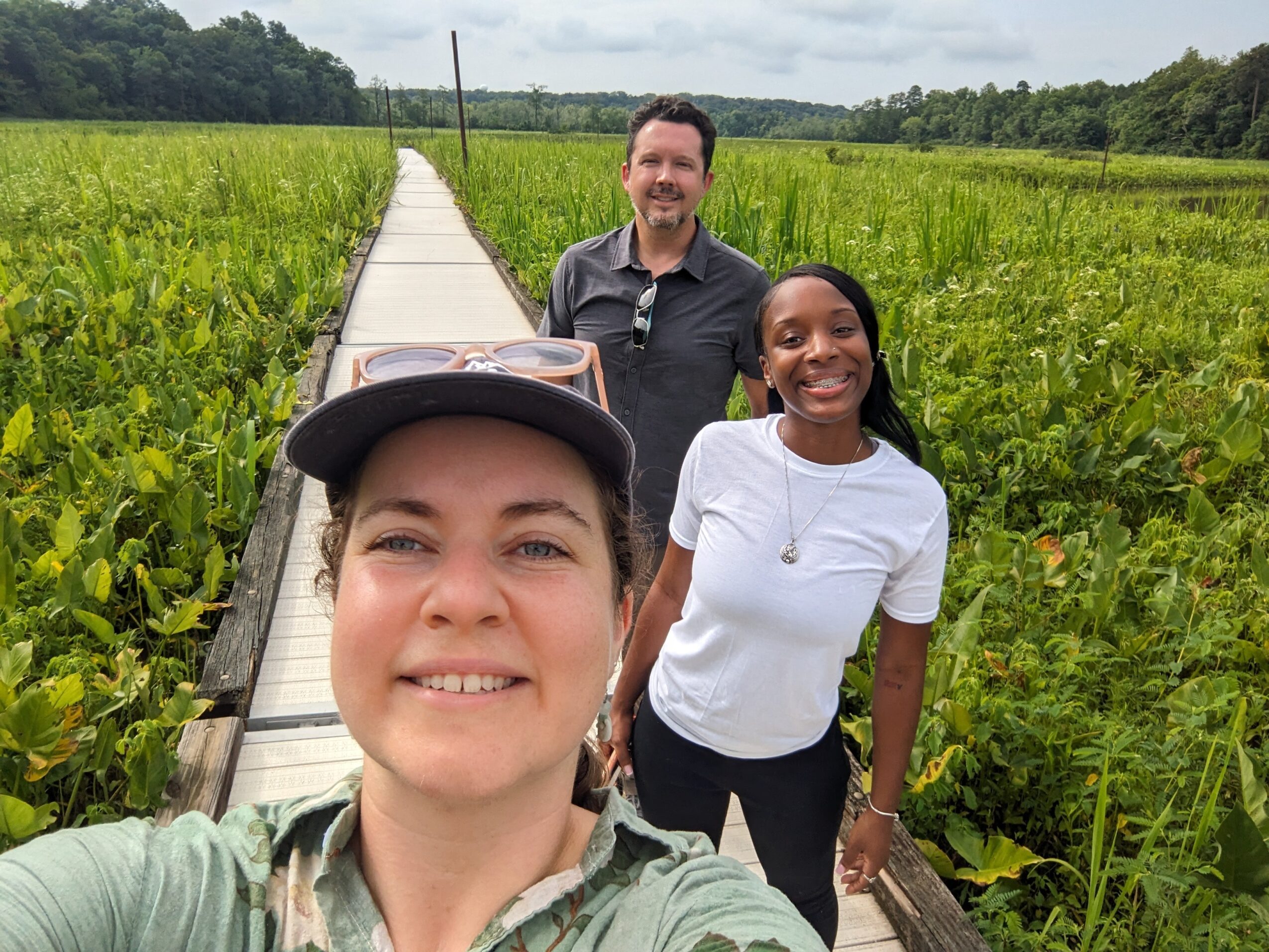
I lead a small team of planners and program managers who engage the public in conservation, and work towards the completion of the Appomattox River Trail, a 25-mile bike and pedestrian pathway along the lower Appomattox River, just outside of Richmond. At FOLAR, we have a twin mission of conservation and recreation, understanding that by bringing more people to the river, more people will fall in love with it and want to protect it for future generations.
River conservation groups do a lot of different things. FOLAR focuses primarily on the forest buffer, or riparian buffer. This is the place along the riverbanks where trees, insects, birds, mammals, and plant-life are delicately intertwined with the fish, reptiles, amphibians, microbes, and plant life of the river. We work to protect and repair the forest buffer because a healthy buffer supports a much broader river ecosystem in the air, land, and sea. That work includes removing invasive plant species. Invasive species are those that are both, 1) not from here; and 2) spread aggressively, crowding out native ecology. This includes certain species of wisteria, privet, ivy, and a plant called kudzu, also known as “the plant that ate the south.” Removing these curtains and carpets of invasive plants allows room for native ecology to restore itself, anchoring the riverbanks and providing the tannins, food, and other resources that native species have learned to evolve alongside for millions of years.
One thing FOLAR does really well is make sure that we aren’t just going out there and cutting stuff down, but we’re engaging the community, in an effort to create a shared culture of environmental stewardship in Central Virginia. Our goal is to build capacity for environmental work among community groups and neighbors. Protecting local ecology is a big job that we can’t do all on our own. It’s also restorative work for our community. When I started volunteering with FOLAR, I was experiencing some of the worst career stress of my life. The election had just happened. I had moved to a new place. I felt lost. But getting dirt in my fingernails and smelling the rushing water… That has grounded me. People are struggling out here, and there’s something about being outdoors that connects us with our ancient past, and puts our bodies at ease.
I think what sets me apart as a leader of an organization is my ability to humanize the work. Our inner world at the office needs to reflect our outer mission of righting our relationship with ourselves and with nature. My job as Executive Director is to foster an environment where my staff can do the work effectively, and sustain their motivation and health. So as much as I love getting my hands dirty out in the field, I’m often driving around fundraising. Working on the finances. Building workflows and processes that help my staff work more efficiently and humanely. Giving inspiration in talks and articles. And never letting us forget the why of the work that we’re doing.
Let’s talk about our city – what do you love? What do you not love?
As far as FOLAR is concerned, our “city” is is a couple different things. It’s each of the six localities along the lower Appomattox, each with their own distinct character, history, and needs, but it’s also the Tri-Cities region and Greater Richmond, where we’re very involved with other organizations like the James River Association, Virginia Conservation Network, and Capital Region Land Conservancy, to name a few.
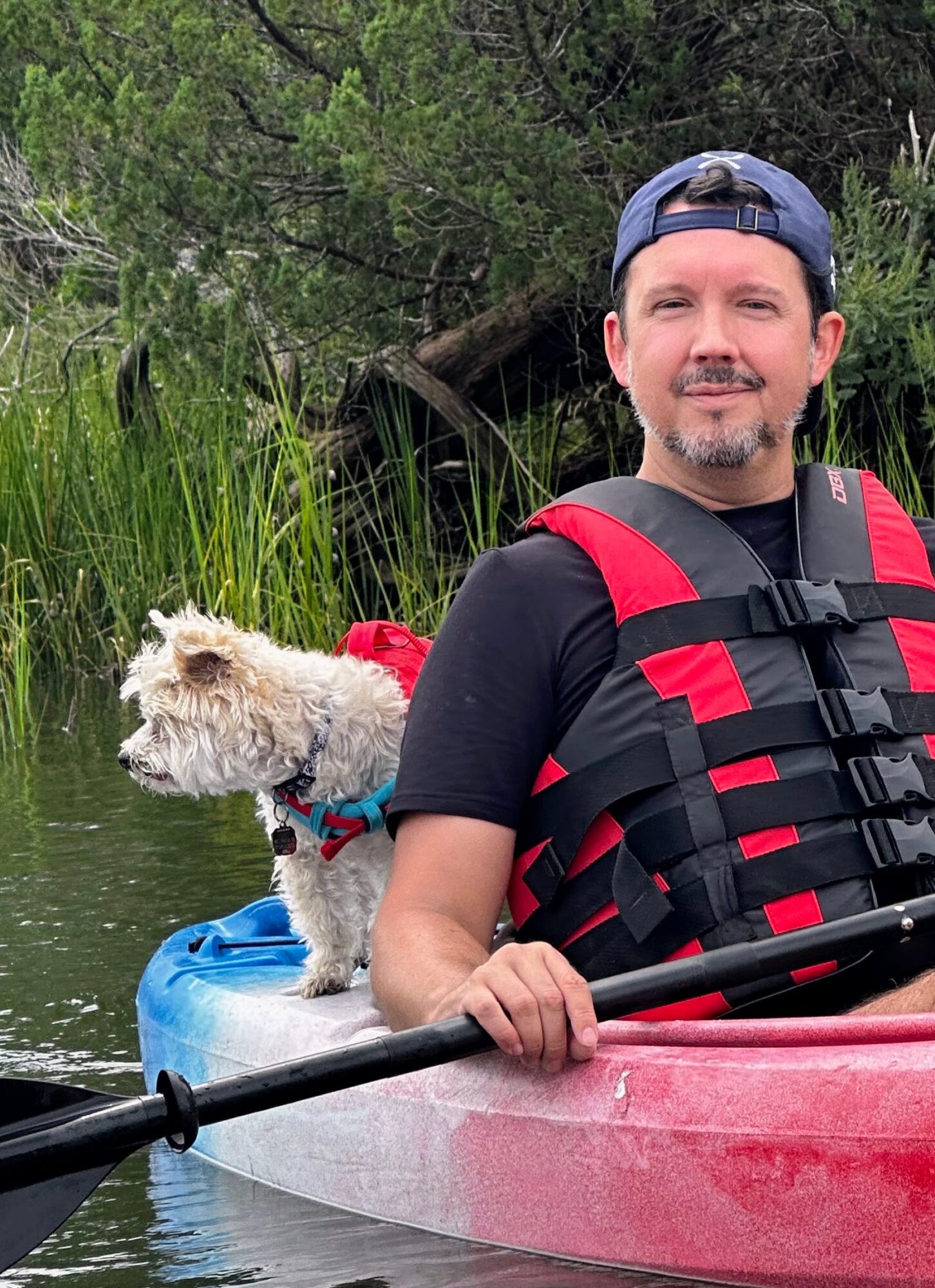
I personally love living here. I live in a historic district in Petersburg. I can walk to bars and restaurants downtown or jump on the Appomattox River Trail and be in the middle of the wilderness in about ten minutes. When the weather’s good, I strap my dog to my back and bike to Petersburg National Battlefield which is just a couple miles from my house. If you like history, nature, nightlife, we sort of have it all. A lot of people are surprised about that!
Petersburg and the Tri-Cities definitely have their challenges. There’s been alot of disinvestment over the past few decades, especially in Petersburg. It’s coming back, I just hope that comeback can help improve life for everyone who lives here, and not just serve new people moving in.
My work at FOLAR is truly about a love of place and love for my community. I really believe that we can’t have a healthy community without a healthy river, and that everybody deserves access to healing and restorative greenspaces.
Contact Info:
- Website: https://www.folar-va.org
- Instagram: @folarva
- Facebook: https://www.facebook.com/FriendsoftheLowerAppomattoxRiver/
- LinkedIn: https://www.linkedin.com/in/jackson-bartlett/