





Today we’d like to introduce you to Kenny Smith.
Hi Kenny, so excited to have you on the platform. So before we get into questions about your work-life, maybe you can bring our readers up to speed on your story and how you got to where you are today?
After about 20 years in the car business, I can almost finish a customer’s sentence.
“What’s your best price out the door?” “What’s the lowest lease payment?” “What’s the lowest monthly payment you can get me?”
Those aren’t unreasonable questions. They’re what people ask when they’re about to make a big financial decision and don’t want to get it wrong.
But the answers are rarely just one number. Incentives, financing terms, qualifications, taxes, and the exact vehicle can all change the picture. A person can research for hours and still arrive at a dealership unsure what a good deal really looks like.
I know the other side of that experience because I’ve spent my career inside dealerships.
A customer may have compared vehicles, ruled out trims, and worked through a budget long before contacting a store. Yet the dealership might receive little more than a name, phone number, and vehicle. The salesperson doesn’t know the thinking behind the inquiry. The customer has to explain it all over again.
That’s the part that has stayed with me. Technology has changed nearly everything around car shopping, but too often the conversation between the shopper and the dealer still starts from zero.
In 2015, I began studying automotive forums where people shared what they had paid, discussed leases, and helped strangers understand their options.
The information mattered, but the conversations interested me more. People were willing to help each other work through a process that felt more complicated than it needed to be.
That March, I wrote down a plan for a community-based automotive website: forums organized by make, model, and trim; prices paid; dealer reviews; research; and calculators for out-the-door pricing, financing, and leasing.
I wanted to bring the useful pieces together instead of sending someone from site to site to piece together an answer.
I worked with developers on an early version. It ran into coding limitations before it was finished. I found myself working through layouts, feature requirements, and technical questions while learning how difficult it is to turn years of dealership experience into something people can actually use on a screen.
That experience made me look beyond the website itself.
A better forum or calculator could answer a question, but what happened when the person moved to the next step? They could find a car, compare it, work through payments, and then have to explain everything again when they contacted a dealer.
And once they bought it, service, recalls, vehicle value, and the next purchase were scattered across other systems.
I began to see that we didn’t just need better tools. We needed the tools—and the people using them—to connect.
That’s what AutoUnite is meant to become.
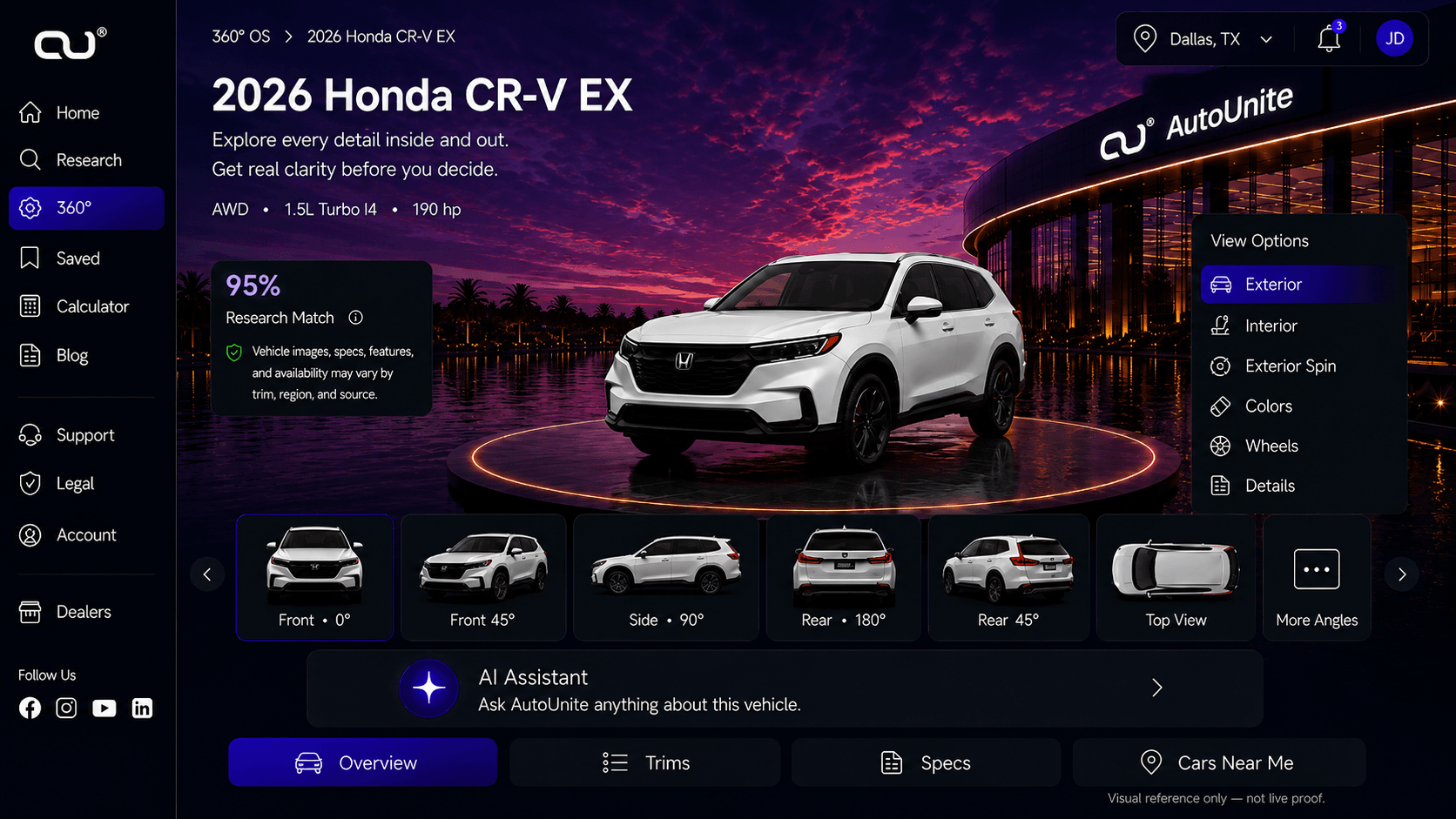
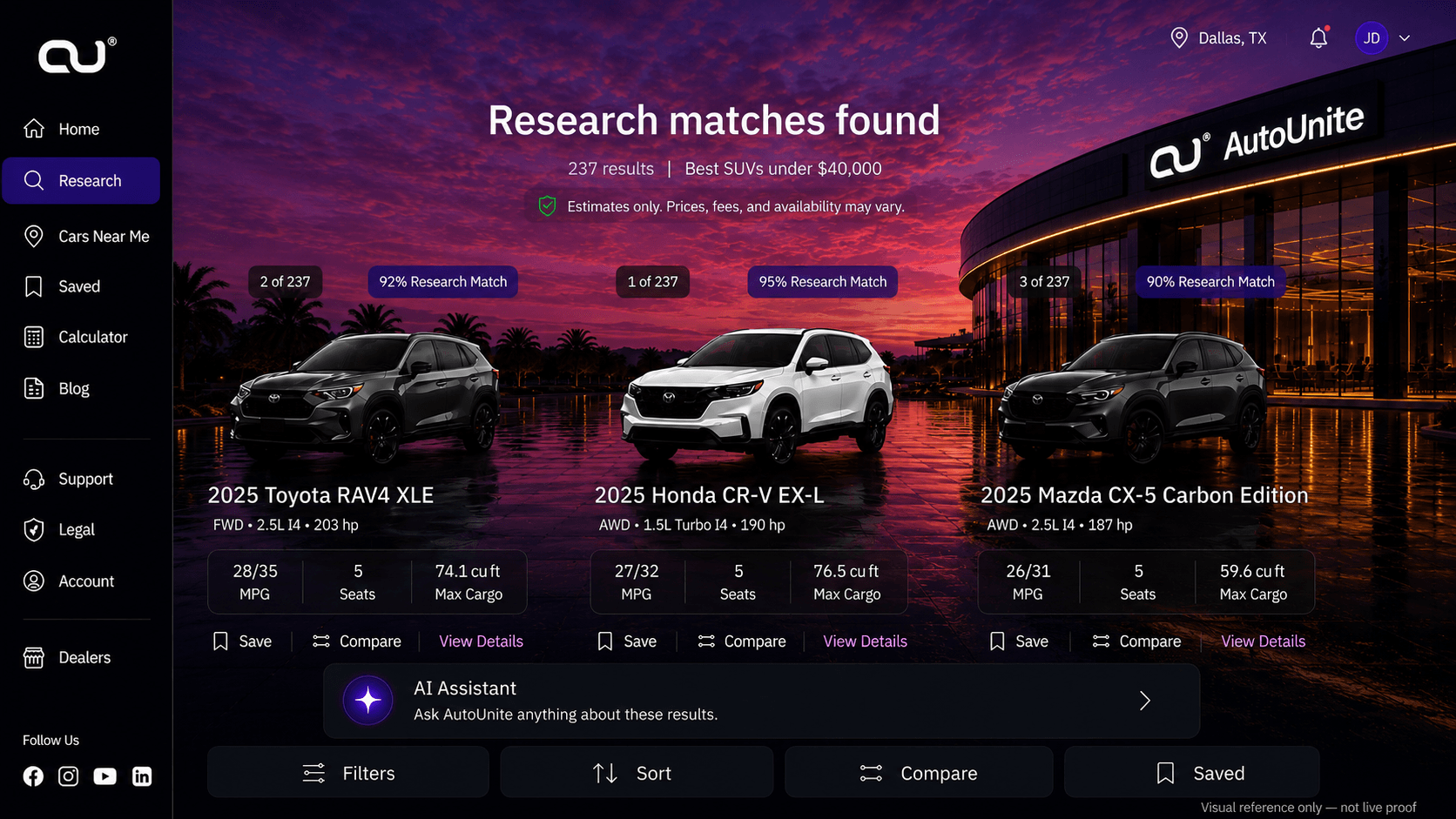
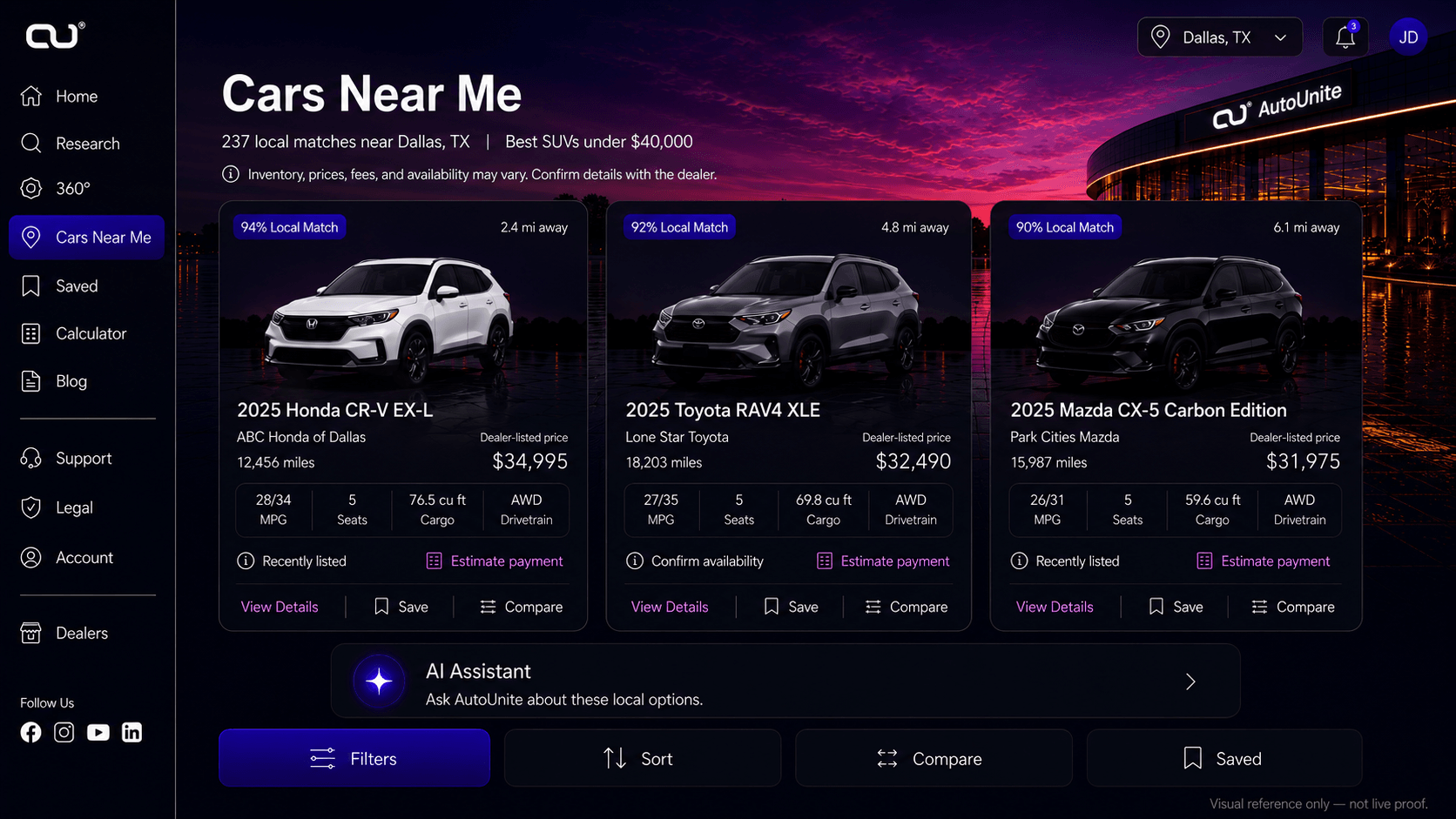
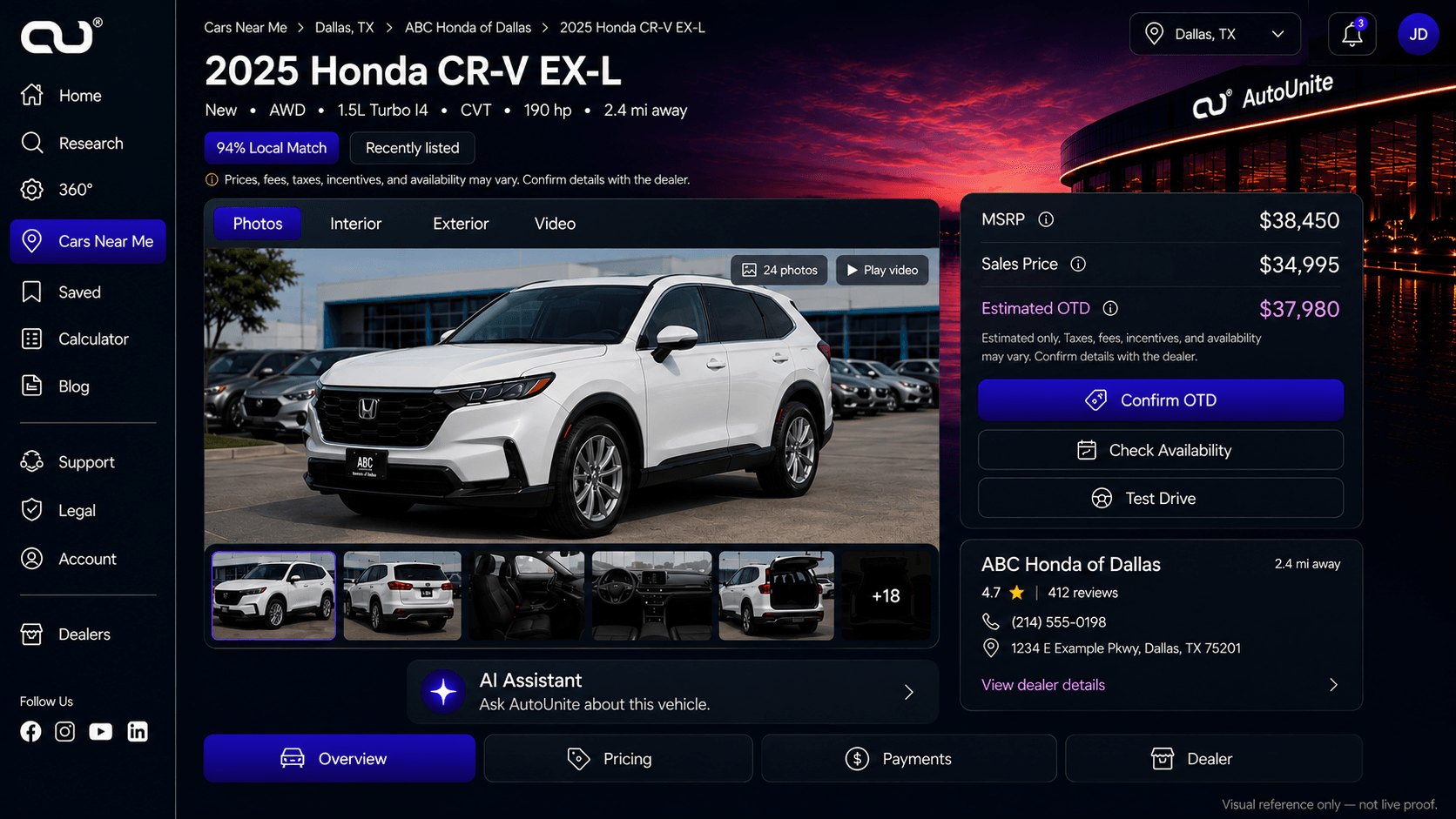
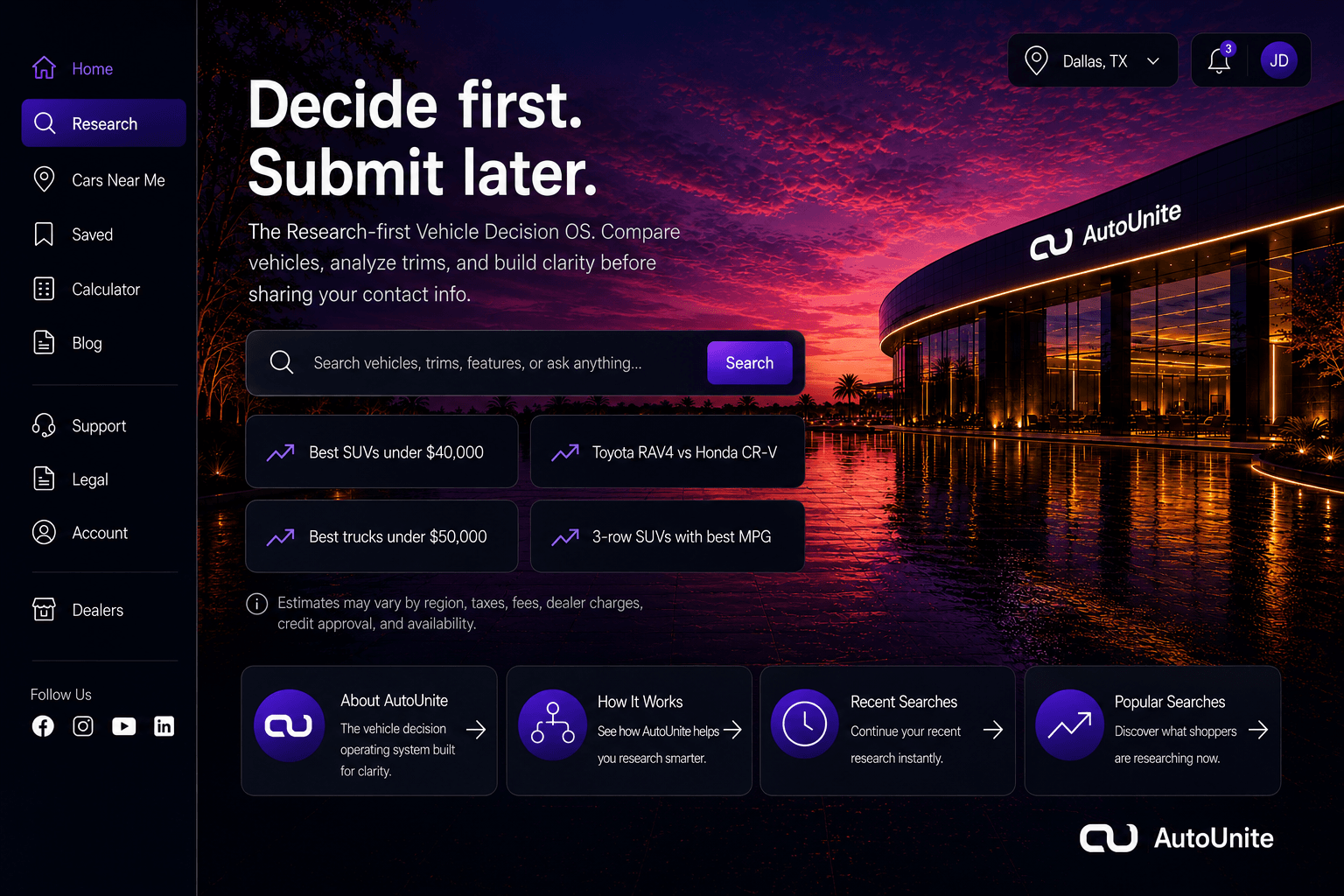
I’m building an all-in-one automotive experience where someone can begin with a question, understand the vehicles that fit, compare their options, explore pricing and local inventory, and choose when to involve a dealership.
When they do, the dealer should be able to see the relevant information that shopper has chosen to share, so the conversation picks up where their research left off.
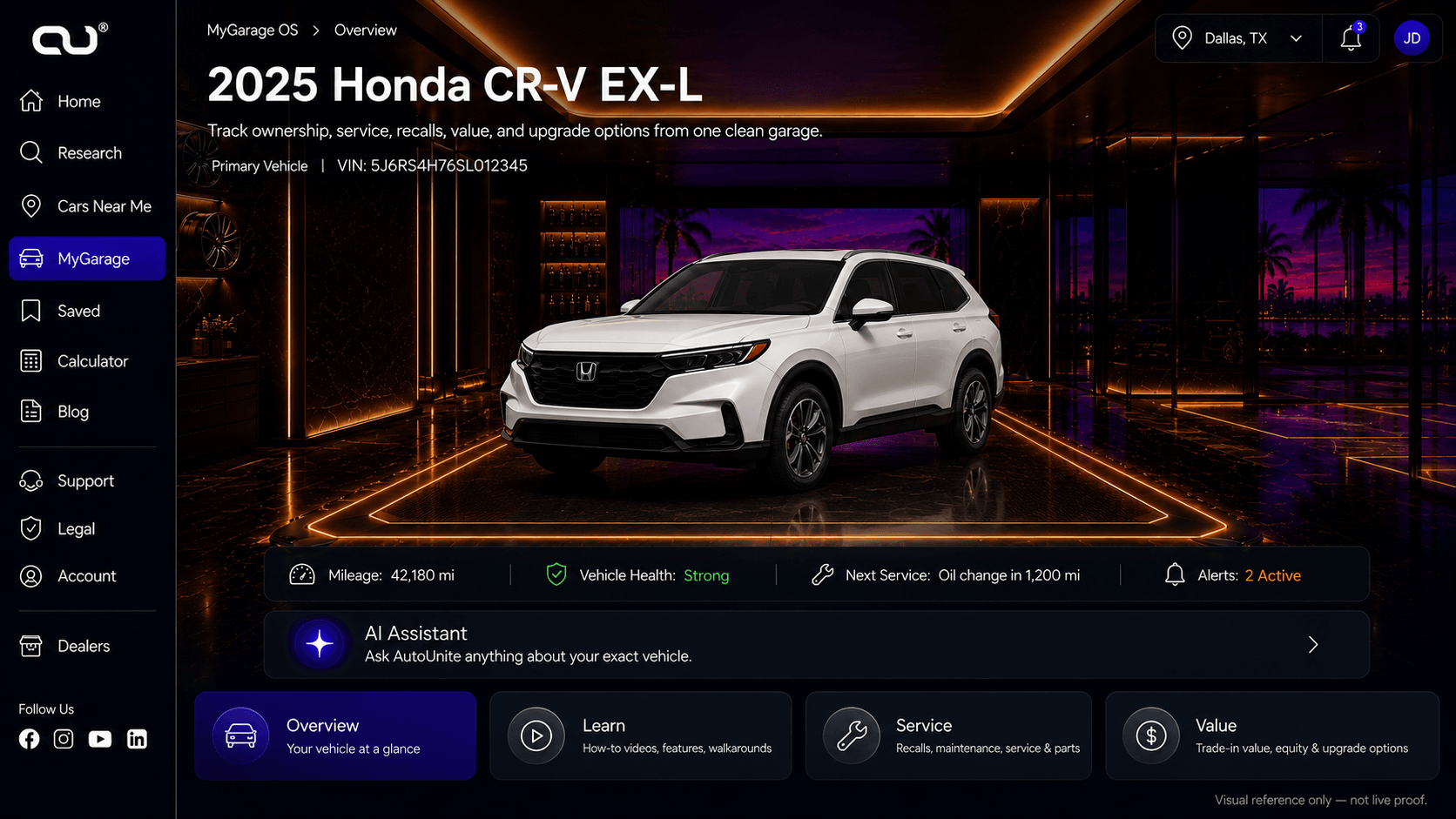
And I want the same connection to continue after the sale, through ownership and eventually the next vehicle.
The opportunity today is different from 2015.
Advances in data and artificial intelligence make it more practical to help people navigate complex automotive information in everyday language and carry useful context from one step to the next.
But technology is only useful if people can trust it. A payment estimate should be called an estimate. A rebate with conditions should explain those conditions. If something isn’t known, the answer should say so.
AutoUnite is still being built, with some experiences in preview and parts of the longer-term vision planned for later. I don’t want to confuse what we’re working toward with what’s already available.
I’ve worked in this industry long enough to know there are real people and real pressures on both sides of the desk.
Customers deserve to feel informed and respected. Dealership teams deserve a fair chance to help, without having to guess what the customer actually needs.
I’m not building AutoUnite to put those two sides against each other. I want to give them a better way to work together.
For years I’ve heard, “That’s just how the car business works.”
Sometimes that means there’s a good reason for a process. Sometimes it just means we’ve gotten used to it.
I want to break that wheel—not by tearing down the business I’ve spent my life in, but by changing the parts of the experience that keep people stuck in the same cycle.
I don’t want the next 20 years of the car business to look like the last 20.
That’s why I’m building AutoUnite.
Alright, so let’s dig a little deeper into the story – has it been an easy path overall and if not, what were the challenges you’ve had to overcome?
No, it definitely hasn’t been a smooth road. And I think one of the biggest lessons I’ve learned is that recognizing a problem and actually building something to solve it are two completely different things.
When I first started exploring the idea behind AutoUnite in 2015, I understood the automotive business, but I had a lot to learn about technology and development.
One of my early attempts to build the website ran into coding limitations. Something that seemed straightforward when I explained it turned out to be much more complicated to actually create. I found myself learning about website functionality, design, working with developers, and how to turn ideas into something people could actually use.
That was an education in itself.
But as the idea grew, I realized the technical challenges were only part of it. The bigger challenge was figuring out how to solve problems that have existed in the automotive industry for decades.
From the customer’s perspective, buying a vehicle can be confusing. From the dealership’s perspective, there are so many moving parts, from inventory and pricing to manufacturer programs, customer communication, and everyday operations.
I’ve experienced those challenges firsthand, and one thing became clear to me: improving one side without understanding the other wasn’t going to create the kind of change I wanted.
Even something that sounds simple, like showing someone an accurate monthly payment, involves different vehicle configurations, incentives, taxes, fees, financing terms, and qualifications. Getting that information right matters because people are making real financial decisions based on it.
I didn’t want to create another website that simply made everything look easier while leaving the same problems underneath.
And building something that connects the experience for both consumers and dealerships is a much bigger undertaking than I originally imagined.
Another challenge has been keeping up with how quickly technology changes. Some of the things we’re exploring with AutoUnite today weren’t nearly as practical when I started in 2015. Artificial intelligence and better access to automotive data have opened up new possibilities, but they also bring new responsibilities. Information has to be accurate, the experience has to make sense, and people need to know what they can trust.
I’ve had to keep learning, rethink approaches, and recognize that building something genuinely different takes more than adding new features.
We’re still developing AutoUnite, and there is more work ahead of us. I’m proud of how far the idea has evolved, but I also understand that a vision means very little unless you can turn it into something that genuinely helps people.
What keeps me motivated is that I’m still in the automotive business. I still hear the same questions and see many of the same frustrations that made me start thinking about this nearly a decade ago.
There are a lot of things I respect about this industry, especially the people who work hard to take care of their customers. I don’t want to lose that human side of the business. I want to build technology that makes those relationships better.
I think one of the hardest parts of trying to change something that’s been done a certain way for so long is accepting that there isn’t always an easy answer.
But I’ve learned that just because something has always been done a certain way doesn’t mean it has to stay that way.
For me, the challenge isn’t just building something new. It’s making sure what we’re building is actually better than what people have been used to for the last 20 years.
Great, so let’s talk business. Can you tell our readers more about what you do and what you think sets you apart from others?
AutoUnite is the company I’m building to change how people experience the automotive industry, from the moment they start thinking about a vehicle to the day they’re ready for their next one.
When you look at how the process works today, almost everything is separated. People research vehicles on one website, compare models somewhere else, calculate payments using another tool, search for inventory on different platforms, and eventually contact a dealership where they may have to start the conversation all over again.
And once they purchase a vehicle, ownership, maintenance, recalls, service, and eventually trading it in become another set of disconnected experiences.
I believe there’s a better way to bring all of that together.
Our vision for AutoUnite is an all-in-one automotive experience that connects consumers, dealerships, and the entire vehicle journey in one place.
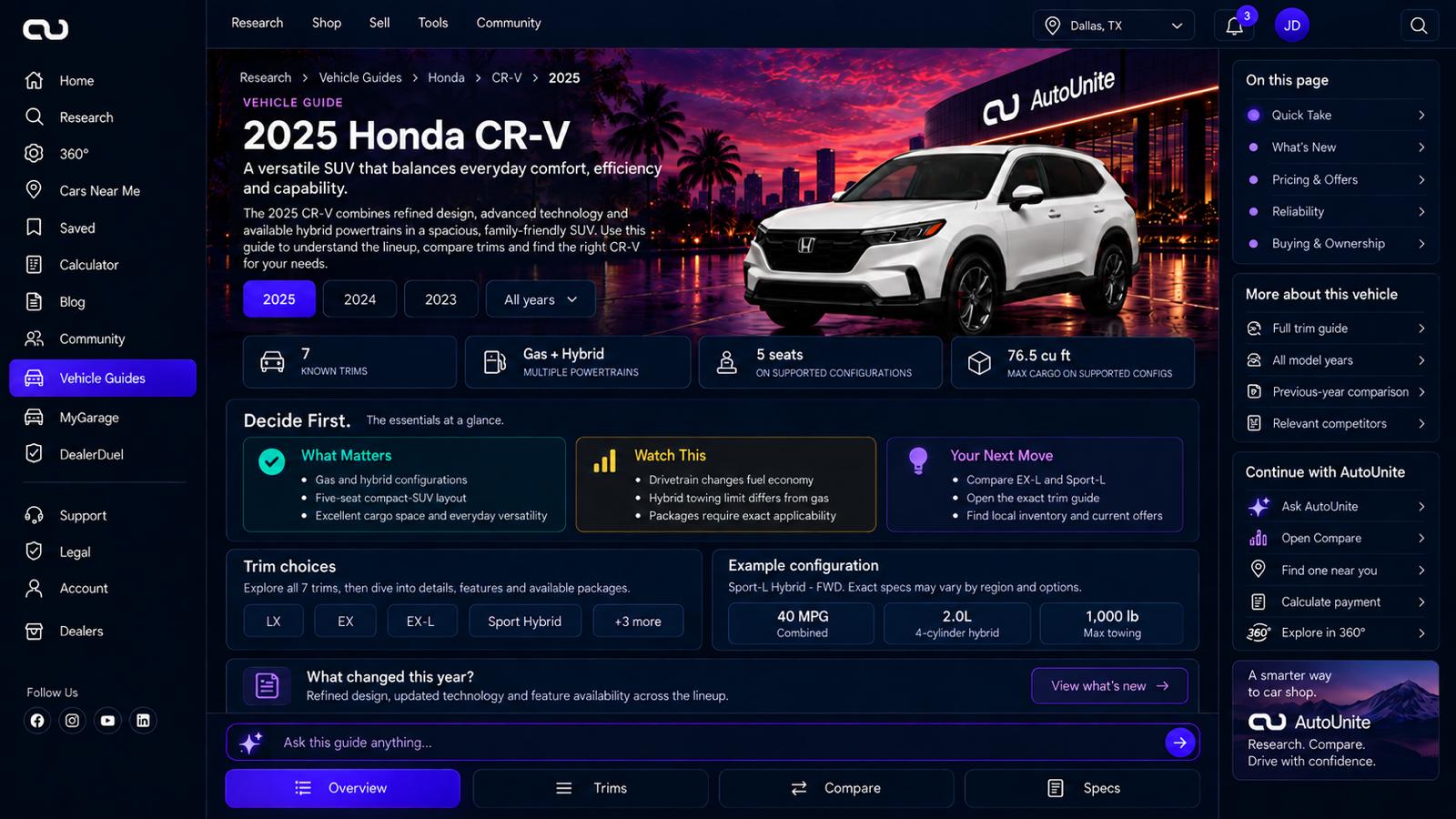
On the consumer side, we’re developing tools to help people research vehicles, understand differences between models and trims, compare their options, explore local inventory, and better understand pricing, financing, leasing, and affordability.
We’re also bringing artificial intelligence into the experience to make complicated automotive information easier to understand. Rather than searching through dozens of pages or trying to figure everything out alone, I want people to be able to ask questions naturally and get useful, relevant information that helps them make informed decisions.
But one of the biggest differences in how I envision AutoUnite is that the experience shouldn’t start over every time someone takes another step. Their research, preferences, comparisons, and decisions should work together as part of a connected journey.
Just as important, I believe consumers should have more control over when they’re ready to involve a dealership. They should be able to explore their options and become informed without feeling pressured to provide their personal information before they’re comfortable.
That leads to the other side of what we’re building.
Dealerships are an important part of the automotive experience, and I want AutoUnite to help them too. When a consumer chooses to connect with a dealership, the goal is to make that interaction more meaningful by providing relevant information the customer has agreed to share.
Instead of beginning with a name, phone number, and very little understanding of what someone needs, a dealership could have a better starting point for the conversation.
I think that benefits everybody. Consumers feel better understood, and dealerships have an opportunity to provide better service.
Our long-term vision extends beyond the purchase. We want to connect more of the ownership experience, including maintenance, vehicle information, recalls, value, and eventually the next vehicle decision.
What sets AutoUnite apart is that we’re not simply trying to create another vehicle-listing website, another calculator, or another standalone dealership tool. We’re working toward bringing those experiences together so they support one another.
We’re building this vision in stages, and some of the broader features are still in development. I believe it’s important to be transparent about what we’re building and what remains ahead of us.
What I’m most proud of is the purpose behind the company. AutoUnite isn’t an idea that came from watching the automotive industry from a distance. It grew from years of working inside it, understanding the customer experience, and seeing the challenges dealerships face.
There’s a principle behind our approach that I think says a lot about the company: Decide first. Submit later.
I want people to have the information they need to make decisions before they feel pressured to take the next step.
And I want dealerships to benefit from customers who are better informed, more confident, and ready to have meaningful conversations.
If we’re successful in bringing those two sides together, I believe we can make a real difference in how people experience the automotive industry.
That’s what I want AutoUnite to be known for: making the automotive journey simpler, more connected, and more useful for everyone involved.
What sort of changes are you expecting over the next 5-10 years?
I believe the automotive industry is approaching one of the biggest transformations we’ve seen in decades. And I don’t think the most important change will simply be electric vehicles, artificial intelligence, or buying cars online.
I think the real transformation will be in how the entire automotive experience comes together.
We’ve made incredible advances in technology, but there are still parts of buying and owning a vehicle that operate much like they did 20 years ago. Customers have access to more information than ever, yet they can still struggle to understand what a vehicle actually costs, whether it’s the right choice, or what happens after they decide to buy it.
I believe that’s going to change because consumers are becoming less willing to accept disconnected experiences.
One of the biggest shifts will be toward greater transparency and affordability. With vehicle prices, interest rates, insurance, and ownership expenses putting pressure on households, people need more than an advertised price or an attractive monthly payment. They need to understand the complete financial picture, including financing terms, incentives, maintenance, and long-term ownership costs.
I also believe artificial intelligence will fundamentally change how people research and shop for vehicles. Instead of spending hours navigating different websites, consumers will increasingly be able to explain what they need in everyday language and receive information that helps them compare vehicles, understand their options, and make decisions.
But there’s an important distinction. Technology has to provide trustworthy information, not just quick answers. If a payment is an estimate, it needs to be identified as one. If a manufacturer incentive has qualifications, those conditions need to be clear.
The dealership side will evolve just as much.
I don’t believe dealerships or the human relationships within them are going away. In fact, I think the dealerships that embrace better technology while maintaining genuine customer relationships will have a significant opportunity.
Imagine a customer arriving at a dealership where the team already understands the vehicles they’ve considered, their priorities, and the questions they’ve asked—with that customer’s permission. Instead of spending time repeating information and rebuilding the conversation, both sides could focus on finding the right solution.
I also expect the types of vehicles people choose to continue evolving. Electric vehicles, hybrids, and traditional gasoline vehicles will all have roles as technology, infrastructure, affordability, and consumer preferences change. The important thing is helping people understand which choice fits their actual needs rather than assuming one solution works for everyone.
Another major shift, and one I believe deserves more attention, is what happens after someone buys a vehicle.
The relationship shouldn’t end when the paperwork is signed. Maintenance, recalls, vehicle value, service needs, and eventually the decision to trade or replace a vehicle are all connected to ownership. I believe technology will increasingly bring those experiences together instead of treating each one as a separate transaction.
That’s the future we’re working toward with AutoUnite: a more connected automotive experience that serves consumers and dealerships throughout the vehicle journey.
We’re still building toward that larger vision, but I believe the opportunity is greater today than it has ever been.
After spending about 20 years in this business, I’ve seen how much the industry is capable of changing. I’ve also seen how easily familiar processes can remain in place long after better alternatives become possible.
For me, the next five to ten years shouldn’t just be about selling vehicles differently. They should be about creating a better experience for everyone involved.
The automotive industry has spent decades asking customers to adapt to its processes. I believe the future belongs to companies willing to build those processes around the customer.
Contact Info:
- Website: https://www.autounite.com/
- Instagram: https://www.instagram.com/autouniteofficial/
- Facebook: https://www.facebook.com/autounite
- LinkedIn: https://www.linkedin.com/company/auto-unite/
- Twitter: https://x.com/autounite
- Youtube: https://www.youtube.com/@AutoUniteOfficial
- Other: https://www.tiktok.com/@autouniteofficial