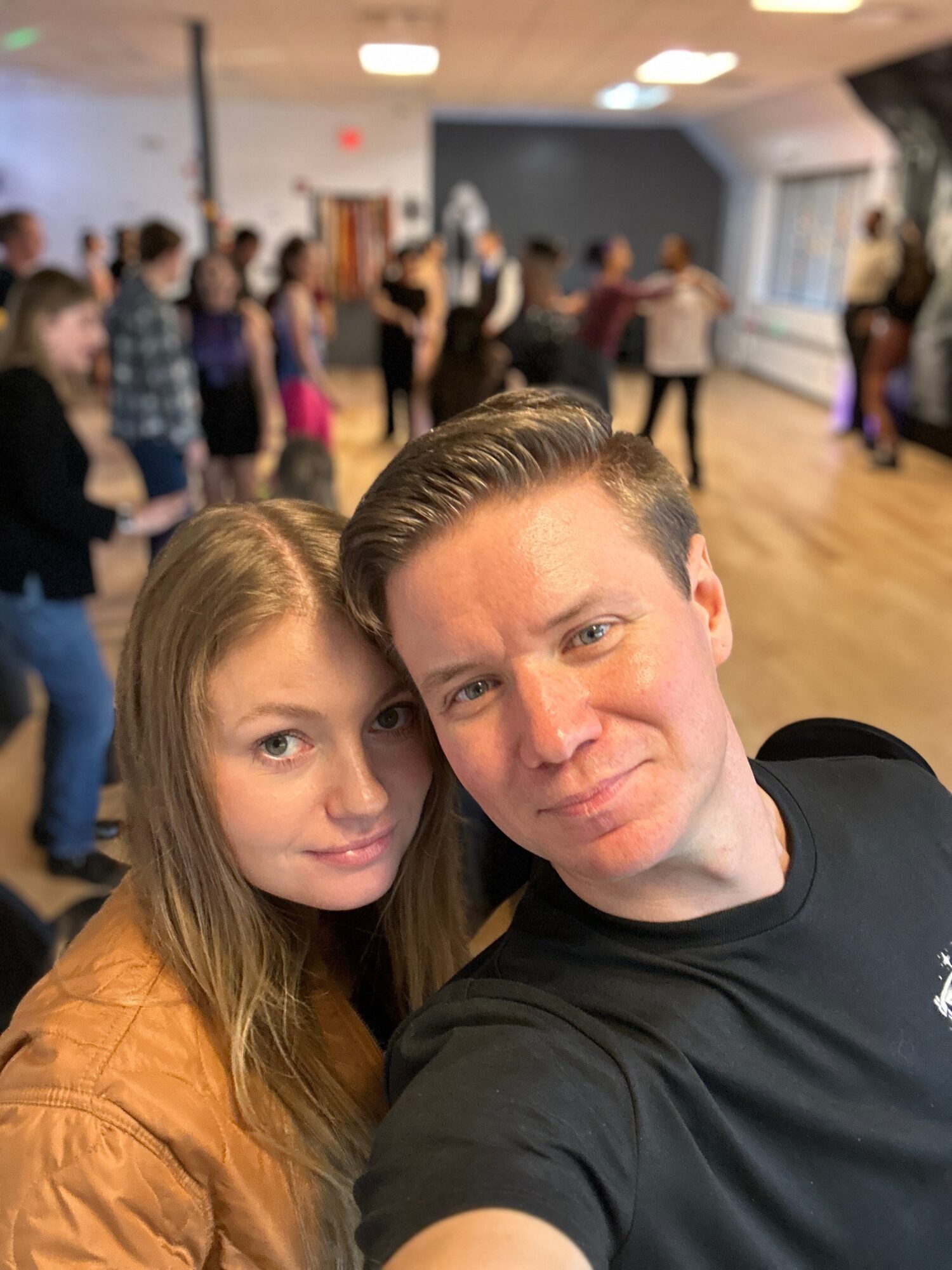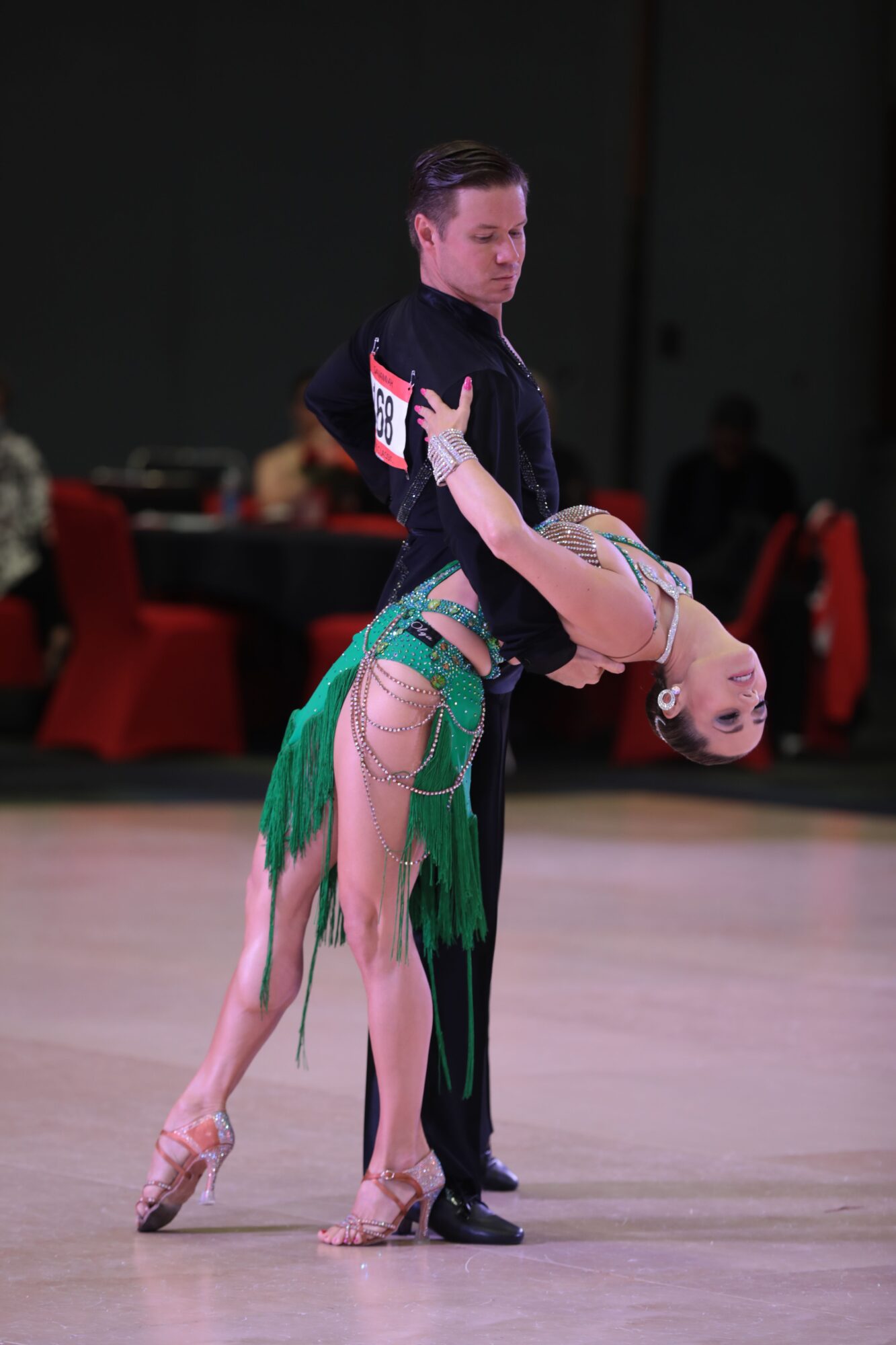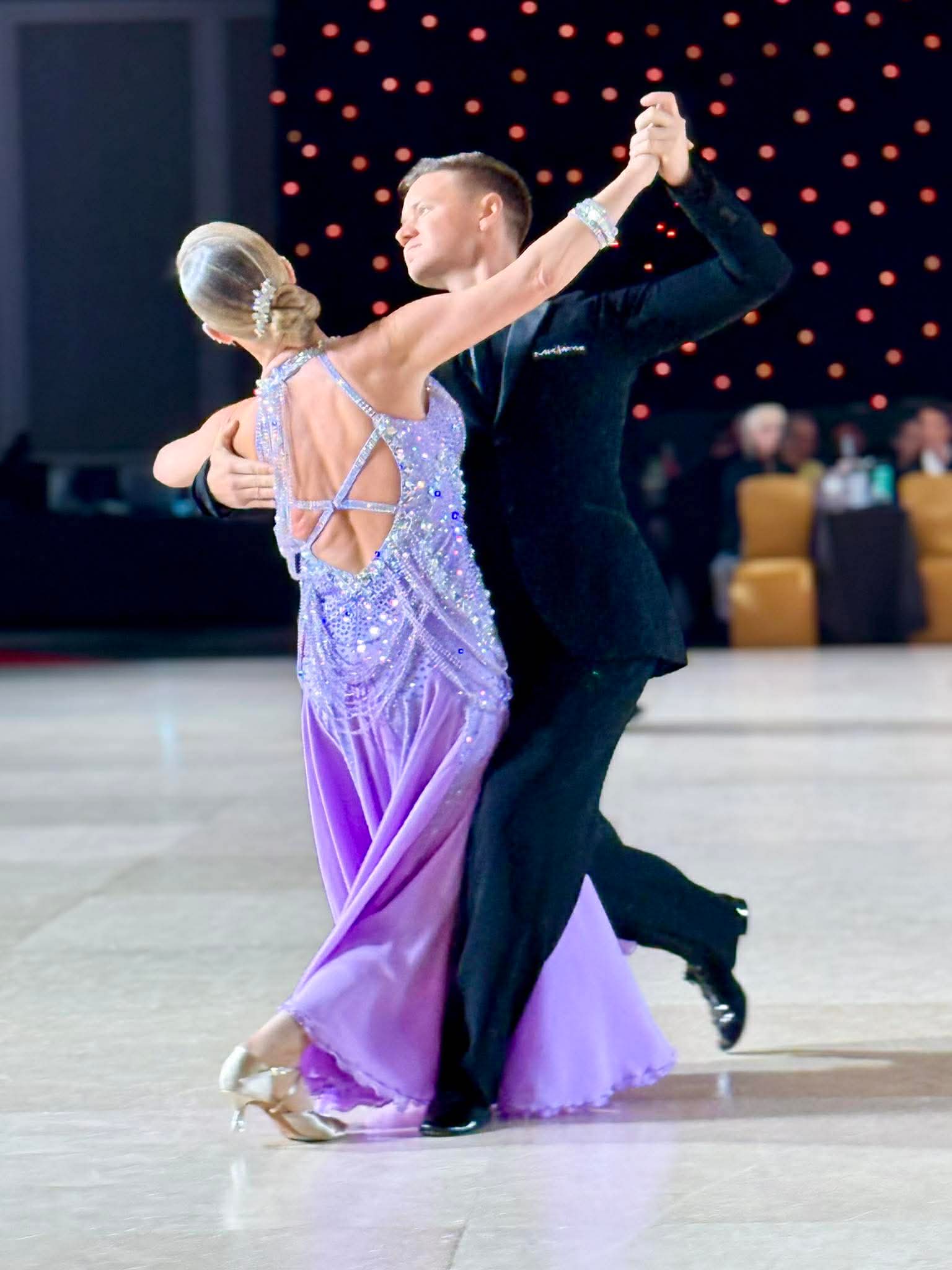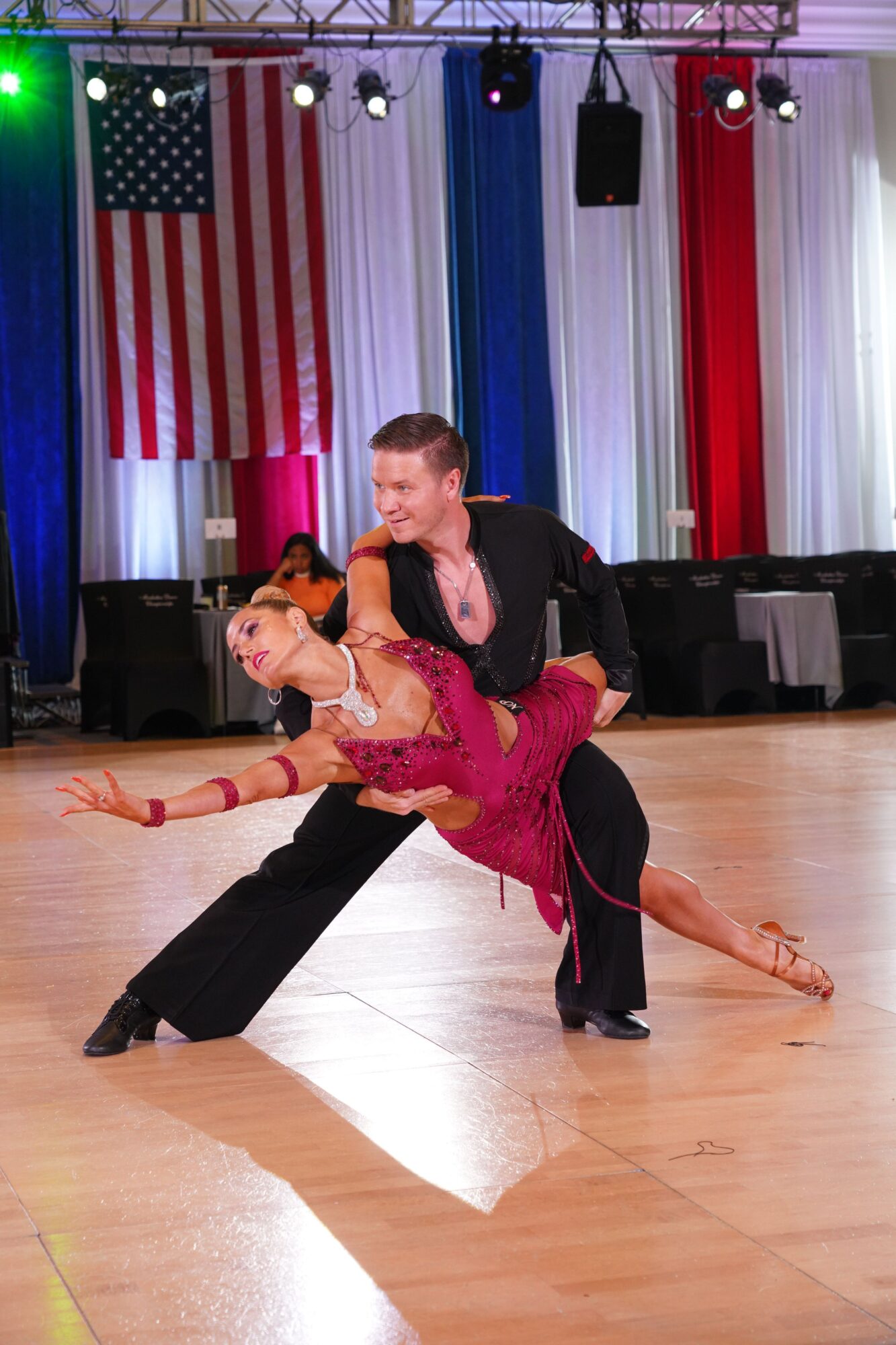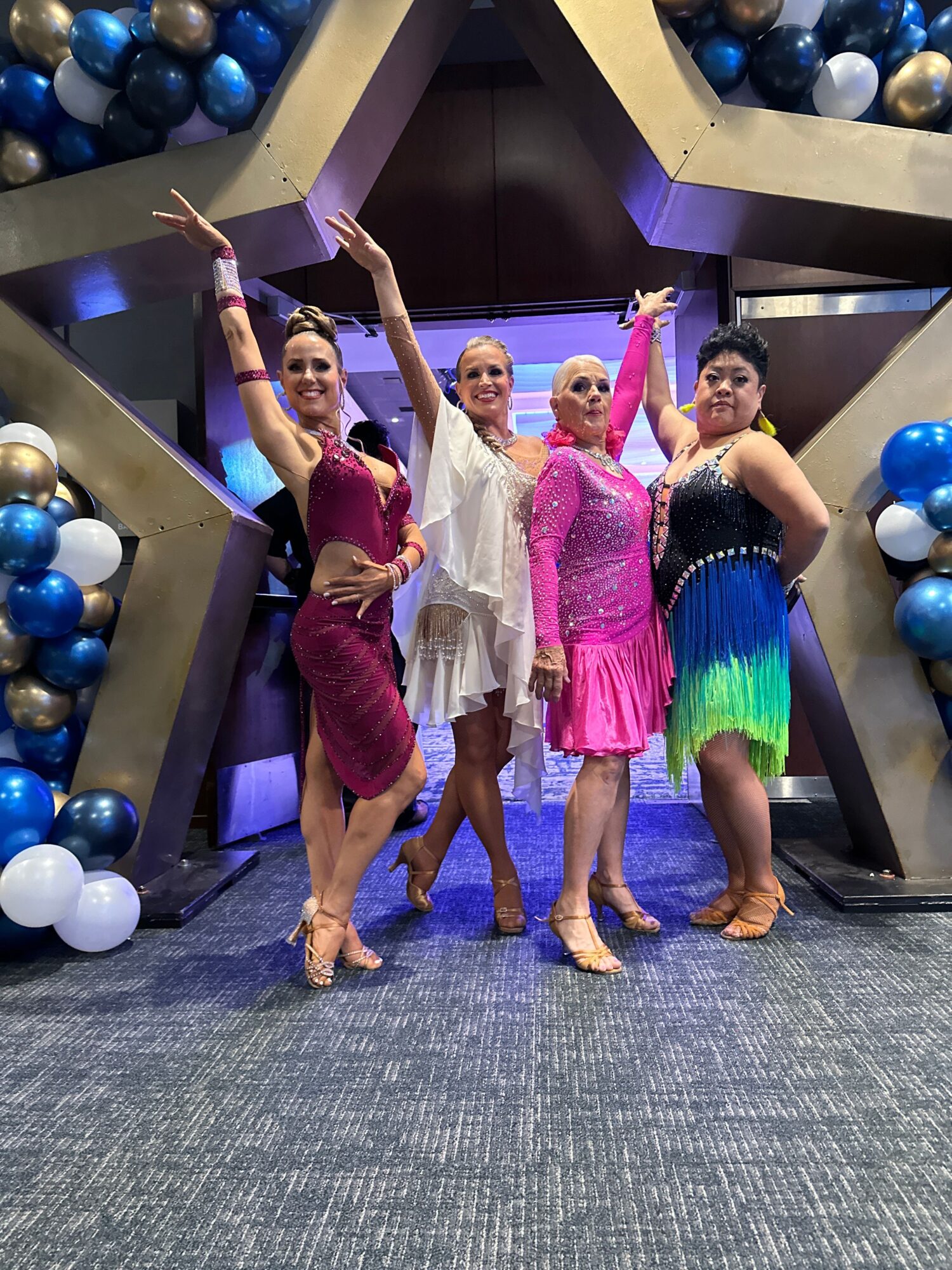






Today we’d like to introduce you to Dmitri Dolgopolov.
Hi Dmitri , we’re thrilled to have a chance to learn your story today. So, before we get into specifics, maybe you can briefly walk us through how you got to where you are today?
I was born in 1985 in what was then the Soviet Union and grew up in Russia. Interestingly, I never thought dancing would become my career. Growing up, I danced because it was fun. I was surrounded by a strong dance culture and continued developing as a dancer, but I never had some grand childhood plan to become a professional dance teacher, much less own a studio in the United States.
I originally came to America in 2005 through a student work-exchange program with my girlfriend at the time, who later became my first professional dance partner. After we were already here, we were recruited by a franchise ballroom dance studio, and together we went on to win multiple titles in the American Smooth and Rhythm categories.
That became my introduction to the American dance business, and initially, I wasn’t particularly impressed.
Coming from Russia and Eastern Europe, where ballroom dancing is televised, major competitions attract thousands of spectators, and dancing is treated as both an elite sport and an art form, I was accustomed to a very high level of technical training and a deep culture surrounding dance. It has personality, history, artistry, discipline, and generations of incredible dancers and coaches. For many people, it is almost a way of life.
So when I first encountered the American Pro-Am ballroom system, I naturally viewed it through that background. Students were spending significant amounts of money while sometimes dancing at what I considered a relatively basic level. At 20 years old, my reaction was basically, “What is going on here?”
With time, I realized I was looking at the American system from the wrong perspective.
American Pro-Am dancing wasn’t an inferior version of the system I knew. It was a fundamentally different model serving a different customer.
Most adults walking into a dance studio aren’t trying to become world champions. They may be preparing for their wedding, wanting to learn Salsa or Bachata, hoping to Swing dance when they hear a song they like, or simply looking for something more interesting than going to the gym. They may be newly single, recently retired, or new to the area and looking for a social outlet.
Some eventually become serious competitive dancers. Others simply want dancing to become part of their lives.
Understanding that distinction probably shaped everything I eventually built.
My first few years in America were an adventure of their own. I lived with a host family with six children and, somewhat randomly, Travis Pastrana was our neighbor. I worked at a gas station during the day, took online courses in business, psychology, and anything else that interested me, helped with the host family’s children when I could, and tried to figure out what I wanted my life in America to look like.
I had never been someone focused on only one thing. Growing up, I played sports, competed in trampoline, rollerbladed, breakdanced, built model airplanes, DJed local parties, and generally spent a lot of time trying new things. Dance was one of those things—until suddenly it wasn’t.
I worked at the franchise studio for a couple of years and became one of its top-performing instructors in the country based on the number of lessons taught and revenue generated. Somewhere during that period, I realized that something I had always considered mostly fun could actually become a career.
That career eventually developed much further than I ever expected. Over the years, I have earned multiple Top Teacher titles at major dance competitions, including Top Teacher honors through the World Pro/Am DanceSport Series, one of the most recognized Pro-Am competition circuits in the industry. I have also consistently ranked among approximately the top 5–10% of Pro-Am teachers nationally.
There is a certain irony in that. I arrived in America at 20 years old questioning the entire Pro-Am system and eventually became deeply involved in it—teaching students from their very first dance lesson all the way through high-level competition.
I also discovered that I was almost as interested in the business of dancing as I was in dancing itself.
I have always had a brain that wants to analyze and optimize things. When I see a system, I immediately start asking questions: Why is it done this way? What works? What doesn’t? Can it be more efficient? Can the customer receive a better experience? Can the teachers be treated better? Can we improve the quality without making the product unaffordable?
Eventually, that mentality pushed me toward a more independent studio environment. I wanted more freedom to explore my own ideas while continuing to develop my dancing with coaches of my choice.
That brought me to Arlington, Virginia, where I began working at the Dance Factory, owned by Dennis Schroeder.
The Dance Factory was a very successful studio and an important chapter in my development. Dennis gave his teachers tremendous support and freedom, including immigration assistance that can be extremely important for professional dancers coming to the United States from other countries. At the same time, I had the independence to continue developing as a dancer.
Then Arlington began changing very quickly.
Commercial real estate became increasingly expensive, and eventually the building housing the Dance Factory was sold for redevelopment. The studio was demolished to make room for an apartment development, and Dennis decided it was a good time to retire.
Suddenly, all of the teachers were on their own.
Some stopped teaching, some joined other studios, and others moved farther away. I wanted to remain in Arlington because that was where my students were, but finding an appropriate space was much harder than I expected. For a while, I had no choice but to teach at a studio in Alexandria, approximately 45 minutes away, while continuing to search for something closer to my students.
In 2014, I finally found a community building in Arlington where I could rent space one day a week.
That was really the beginning of the studio.
I taught private lessons and group classes there. The building was old and fairly run-down, and whenever it rained heavily, it tended to flood. Sometimes I had to cancel classes because of it.
It certainly wasn’t glamorous, but I was back in Arlington.
I felt a responsibility to the students who had stayed with me. I didn’t think they should have to spend 45 minutes driving to Alexandria simply because I couldn’t find an appropriate place to teach.
Eventually, through one of my former colleagues, I was introduced to an old American Legion building.
Calling it a traditional ballroom would have been generous.
The building smelled strongly of cigarettes because some of the American Legion veterans apparently had not gotten the memo that indoor smoking had been banned quite a while earlier. But they were wonderful guys and, quite frankly, after everything many of them had done and experienced in their lives, I figured they had earned the right to have a few quirks.
The building was also shared with a mobile lobster business, which was one of the Legion’s few sources of rental income at the time.
But upstairs was something becoming almost impossible to find in Arlington: a huge, open hall that was already properly zoned as a dance hall.
I quickly learned how important that was. Arlington has plenty of commercial real estate, but surprisingly few spaces where you can simply open a dance studio. Between zoning, occupancy requirements, parking, permitted uses, and construction costs, converting an ordinary commercial property into a legal dance studio can become an extremely complicated and expensive project.
The Legion building was old and imperfect, but the bones were there.
I came up with a proposal. Rather than occasionally renting the room, I would lease the second floor and provide the Legion with dependable monthly income. In exchange, I would invest my own money into installing proper dance flooring and mirrors. My condition was that if the property was eventually sold for redevelopment, I could take the floors and mirrors with me.
After plenty of meetings, discussions, and committee votes, they approved it.
Initially, the idea was very small. My friend Jennifer and I simply needed somewhere to teach our students.
There was only one problem: the room was enormous.
Two teachers couldn’t possibly use all of it, which forced me to start thinking more seriously about the kind of studio I wanted to create.
By then I had experienced several sides of the ballroom business. Large franchise studios can be extremely organized and successful, but sometimes that structure comes at the expense of the freedom talented professional dancers need. Independent studios provide much more freedom, but they can go too far in the other direction and become chaotic businesses built around unpredictable scheduling and rental fees.
I wanted to find the middle ground.
The goal became to create a professionally operated studio while treating instructors as one of the most important assets of the business and giving good teachers enough independence to continue developing their own careers.
We initially allowed outside teachers to rent floor space, but I quickly learned that relying entirely on rental fees doesn’t create a particularly stable business. Income is unpredictable, scheduling becomes chaotic, and it is difficult to build a cohesive studio community.
So we began hiring instructors and building a team.
At the same time, something even more important was happening.
We were teaching beginners—lots of them.
People who had never danced a step in their lives came through our doors wanting to learn Salsa, Swing, Bachata, ballroom dancing, or simply how to move comfortably with another person.
Wedding couples became an enormous part of the business. Over the years, we have taught **more than 10,000 wedding couples**, many of whom arrived saying some variation of, “We have two left feet and just don’t want to embarrass ourselves at the wedding.”
Working with absolute beginners became the backbone of our community.
We never wanted to become a studio where somebody needed to understand ballroom dancing before feeling like they belonged. A person walking into their first dance lesson should feel just as welcome as someone training seriously for a competition.
That remains one of our biggest strengths today.
Someone can walk through our doors knowing absolutely nothing and learn Salsa, Swing, Bachata, Waltz, Foxtrot, Rumba, or Cha-Cha. That same person may eventually decide to compete seriously, travel to competitions, and train with internationally recognized coaches.
Or they may simply dance once a week because it makes them happy.
Both are equally valid reasons to dance.
The American Legion years became some of the most memorable in the studio’s history. At some of our biggest parties and group classes, we had more than 170 people in the building at once. There were so many cars outside that police officers occasionally stopped to see what was happening.
Once they discovered that the suspicious activity consisted of 170 people peacefully dancing, some of the officers even joined the group class.
Unfortunately, redevelopment eventually caught up with us again.
The American Legion property was sold, and we had to move.
The timing could not have been worse.
In December, immediately before COVID, we signed a lease on another space nearby. The new studio was approximately one-quarter the size of the Legion hall, while the rent was about five times higher. It needed significant remodeling, and we didn’t have the budget to hire someone to do all of it.
So my brother, a few friends, and I did much of the work ourselves.
We pulled up the dance floors at the Legion, removed the mirrors, loaded everything into a U-Haul, moved it to the new location, reinstalled the floors and mirrors, painted, remodeled, and turned an ordinary commercial space into a dance studio.
I invested a significant amount of my personal savings into the project and personally guaranteed the lease.
Then COVID hit.
Almost overnight, the business went from group classes, private lessons, parties, and constant activity to essentially nothing.
Some of our longtime students were incredibly supportive. They purchased lesson packages for the future because they wanted the studio to survive. Others took online lessons.
To be completely candid, teaching partner dancing through a computer has obvious limitations. From a purely technical dance perspective, those lessons weren’t always especially productive.
But they served another purpose.
For people isolated at home, that hour sometimes had very little to do with learning another Rumba figure. It gave them human interaction, structure, and something positive on the calendar to look forward to.
It reinforced something I had gradually learned since coming to America: the value of a dance studio cannot be measured only by how much better somebody dances.
Fortunately, I had personal savings and had been involved in several other successful ventures over the years, which gave me enough financial flexibility to continue paying the rent. Government assistance also played an important role. Some smaller loans were eventually forgiven, but we also had to take on a substantial SBA loan that will remain a financial obligation for many years.
It wasn’t free money. It was survival money.
And it helped the studio survive.
The belly-dance studio directly across the hall unfortunately did not make it through COVID. Eventually, some members of that community found their way to us, and one of their dance groups became a long-term renter in our studio. They are still with us today.
After COVID, you would think we had experienced enough disruption.
Apparently not.
Our building was sold for redevelopment, so we moved into the building next door. Then that building was sold for redevelopment too.
Within the first years of establishing the business, we had already operated from four different locations, all essentially within the same Arlington zip code.
At that point, I realized we needed stability.
We made the difficult decision to sign a long-term lease approximately one mile down the same street. The new space was more expensive and farther from the Metro and the apartment buildings that had allowed some students to walk to lessons.
But it gave us a large open dance floor, considerably more parking, and a landlord who takes very good care of the property—something I have learned not to take for granted.
That is our home today.
Over roughly a decade of officially operating in Arlington, we have employed more than 20 instructors, both local teachers and professionals who came here from other countries.
We have taught **more than 10,000 wedding couples** and introduced thousands of complete beginners to Salsa, Swing, Bachata, ballroom, and Latin dancing.
We have taught children confidence, coordination, social skills, and etiquette. We have watched people walk in terrified of dancing in front of anyone and eventually perform in front of hundreds of people. We have watched friendships form, relationships begin, and even marriages improve.
Ballroom dancing is unusual because two people actually have to connect. You have to touch another person, communicate without talking, make mistakes together, adjust to each other, and learn something as a team.
There are fewer and fewer places in modern life where people do that.
Our youngest students are around four years old. Our oldest student is 102. She can no longer drive herself to the studio, but she still dances.
Between those two ages is almost everybody imaginable.
We teach people from different countries, cultures, professions, religions, political beliefs, and economic backgrounds. On the dance floor, most of those differences become remarkably unimportant.
When I was younger, I never imagined that would become one of the things I valued most about dancing.
I originally danced because it was fun. Then I learned how seriously it could be studied. Then I discovered it could become a career.
Eventually, through building the studio, I realized that dancing can serve a completely different purpose for every person who walks through the door.
For one person, it is competition. For another, it is art. For somebody else, it is preparing for a wedding. For someone who just moved to Washington and knows almost nobody, a beginner Salsa class might be where they make their first friends. For an older student, dancing may simply be what keeps them moving, thinking, and interacting with other people.
I often joke that dancing is cheaper than therapy—and sometimes I am convinced it works better.
The studio is still constantly changing.
More studios have opened in our area in recent years. Commercial rents continue to increase. Finding and keeping excellent teachers is always challenging. Arlington’s demographics change, and what customers want changes with them.
We have certainly made mistakes along the way, and I expect we will make plenty more.
But one reason the studio has survived is that we have never treated the business as finished.
We continue experimenting, adapting our programs to the community around us, providing opportunities for teachers who want a better professional environment, and keeping dance accessible enough that an absolute beginner never feels ballroom dancing is reserved only for experienced competitors.
Every once in a while, I still question whether staying in Arlington makes financial sense. There are places where commercial rent is much cheaper, regulations are easier for small businesses, taxes are lower, and competition is limited.
From a spreadsheet alone, moving somewhere else can look very attractive.
But businesses aren’t built entirely on spreadsheets.
We have students who have made this studio their dance home. We have teachers who have built careers here. We have people who moved to the Washington area knowing almost nobody and eventually found friends and a community through our classes.
That creates a responsibility.
The business may expand or change in the future, but I want there always to be a place for our community in Arlington.
Looking back, there certainly wasn’t a master plan.
I was a kid born in the Soviet Union who thought dancing was mostly something fun to do. Then I came to America on a student work program, was recruited into a completely unfamiliar dance-business model, lived with a family of six kids with Travis Pastrana next door, worked for a franchise, became one of its top teachers, built a competitive Pro-Am career, moved to an independent studio, lost that studio to redevelopment, taught in a community building that flooded, helped turn an old cigarette-smelling American Legion hall into a ballroom, shared a building with a lobster truck company, hosted events with 170 people, moved dance floors and mirrors in U-Hauls, signed a personally guaranteed lease immediately before a global pandemic, survived COVID, and then kept moving as one building after another was sold for redevelopment.
Somehow, through all of that, a dance studio grew.
And maybe that is the best way to explain how I got where I am today.
It wasn’t one brilliant idea or one perfectly executed business plan. It was continuing to adapt, continuing to learn, refusing to disappear every time something went wrong, and trying to build a slightly better version of the studio every time we had to start over.
Any advice for finding a mentor or networking in general?
Trying to serve local community and talking to them. Many older people have lots of connections and a lot of experience
Contact Info:
- Website: https://www.ArlingtonBallroom.com
- Instagram: @ballroomstudio
- Facebook: https://www.facebook.com/DanceArlingtonBallroom
- Yelp: https://www.yelp.com/biz/dance-arlington-ballroom-arlington