




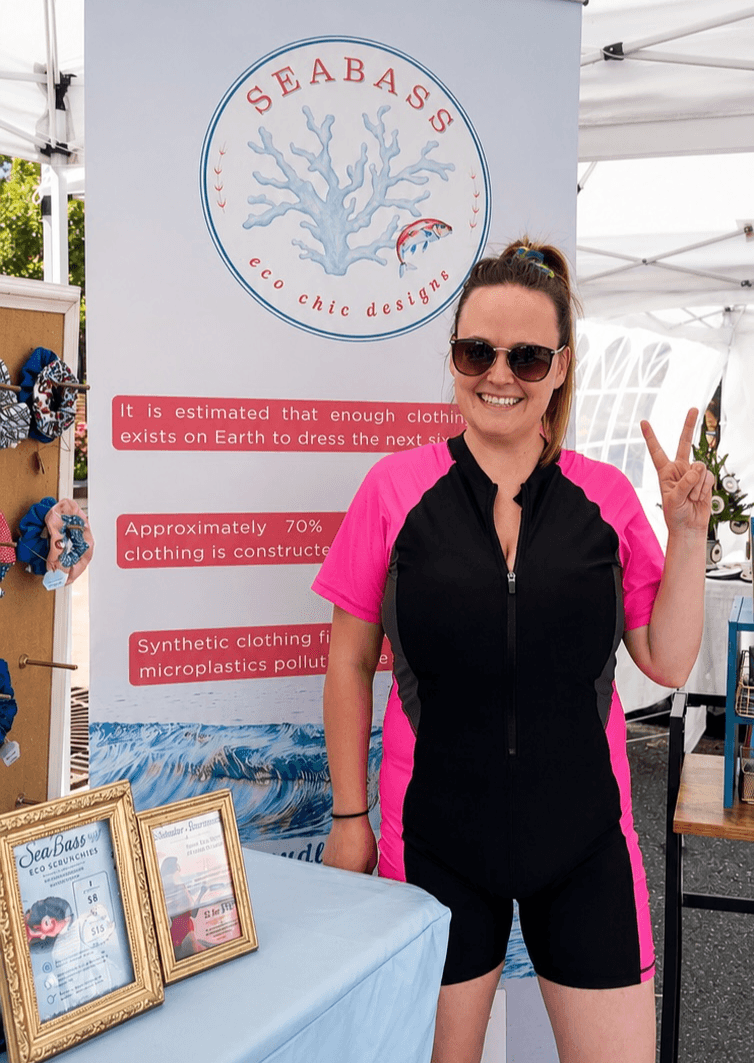
Today we’d like to introduce you to Erin Serpis.
Hi Erin, we’re thrilled to have a chance to learn your story today. So, before we get into specifics, maybe you can briefly walk us through how you got to where you are today?
SeaBass Eco Chic Designs really started with one of those moments in life that completely changes your perspective.
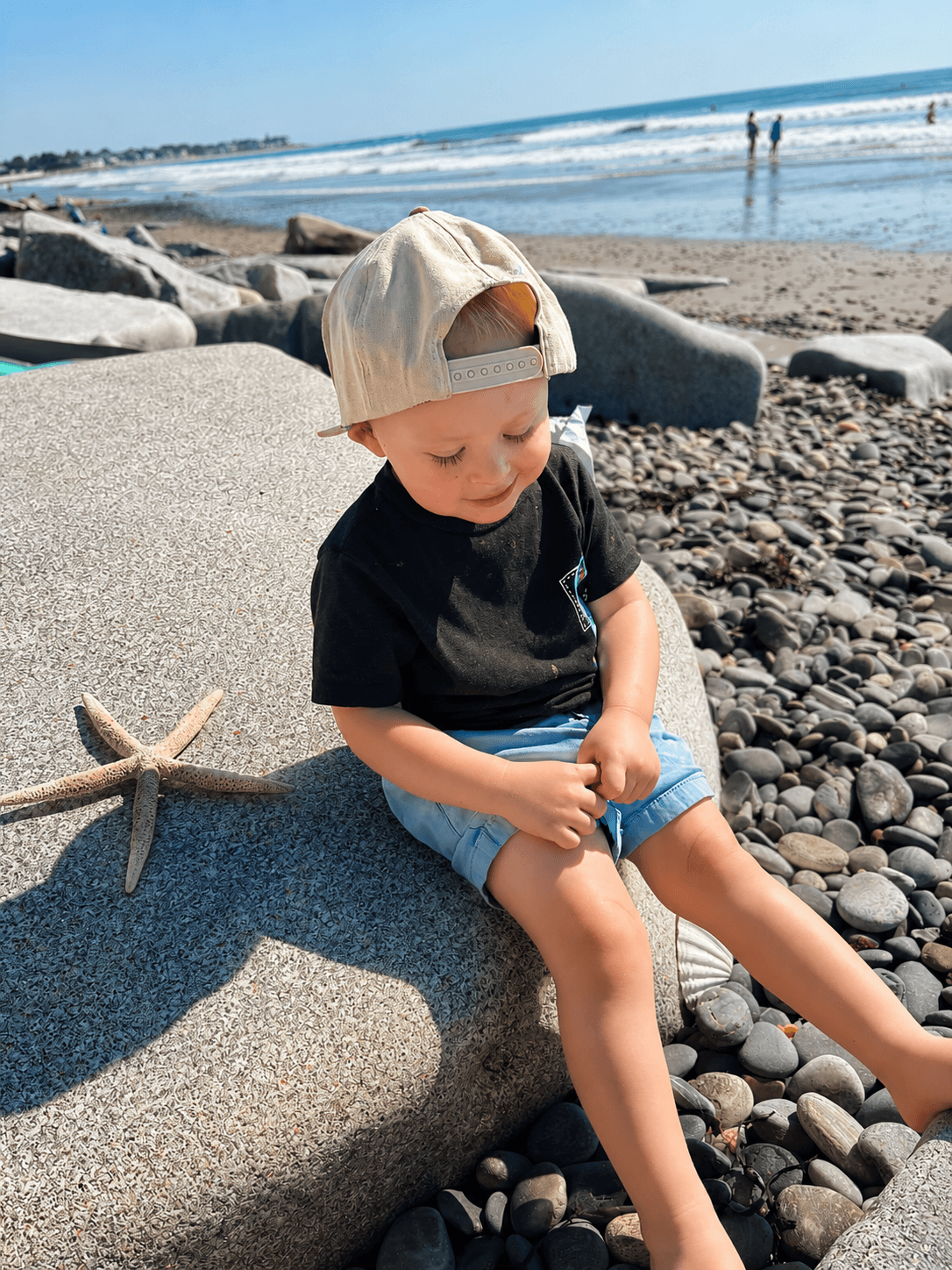
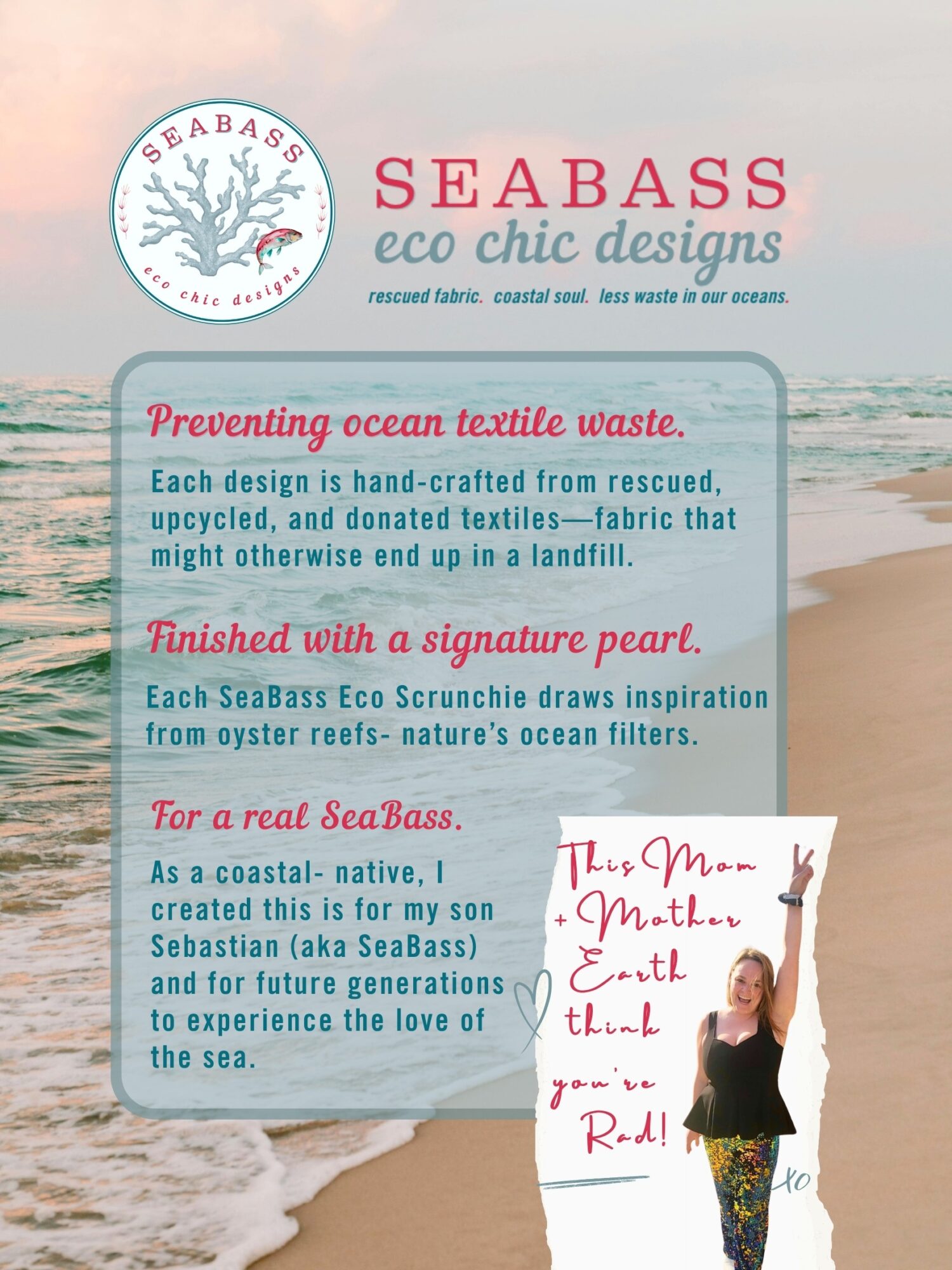
After a completely random, life-threatening medical event in February 2026, I decided to walk away from the traditional 9-to-5 to focus on spending time with my two-year-old son, Sebastian (whom we endearingly call Seabass). Becoming a mom had already changed the way I thought about time, success, and what I wanted my life to look like. I was feeling pretty burnt out in my career as a new mom, so one day in January 2026 I woke up with the burning urge to “just make something.” What began as a creative pursuit and healing journey suddenly felt a lot more important than following the path I thought I was supposed to be on.
At 32, I picked up a needle and thread again. I wasn’t a lifelong professional seamstress or formally trained fashion designer. I was essentially starting over as a beginner, creating from home during this completely new chapter of my life.
As a coastal native from Hampton, New Hampshire, I’ve always felt connected to the ocean, so sustainability became a natural part of what I wanted to create. I also love thrifting, bold fashion, surf culture, and finding potential in things other people might overlook. Eventually, those pieces came together into SeaBass Eco Chic Designs.
Today, I rescue discarded and leftover textiles and transform them into one-of-a-kind, coastal-inspired scrunchies and bags. The idea is simple: beautiful fabric shouldn’t become waste just because there isn’t enough of it left for traditional production. I want to show that sustainable fashion can be colorful, expressive, elevated, affordable, and cool.
Our tagline really sums up what I’m trying to build: “Rescued Fabric. Coastal Soul. Less Waste in Our Oceans.”
And SeaBass is becoming more than a product brand. I’m also building an educational side through sewing tutorials, beginner-friendly patterns, upcycling, and creative content because I want people to see that they don’t have to be experts—or completely overhaul their lives—to start creating and making more sustainable choices.
Most importantly, I’m building something that allows me to be creative, advocate for something I care deeply about, and be present for the little boy who inspired the whole thing.
We all face challenges, but looking back would you describe it as a relatively smooth road?
Definitely not—and I think pretending that entrepreneurship is a smooth, perfectly curated journey does a disservice to anyone thinking about starting something of their own.
SeaBass came out of a difficult season of my life. A life-altering medical event forced me to reconsider what I wanted my future to look like, and leaving the security and structure of a traditional career was scary. Then I decided to start learning a new creative skill at 32 while also navigating motherhood and trying to build a business from home. There was no perfect roadmap.
One of my biggest challenges has been allowing myself to be a beginner.
There is so much pressure—especially online—to look polished immediately. You see the finished brands, beautiful websites, and viral content, but you don’t necessarily see the hundreds of tiny experiments that came before them. I’ve had to learn sewing, product development, branding, photography, content creation, markets, packaging, and the business side as I go.
And then there is the reality of building a creative business while raising a toddler. Some days I feel like a designer and entrepreneur. Other days my greatest accomplishment is answering an email while someone is asking me for a snack.
But that experience has actually shaped one of the philosophies behind SeaBass: progress over perfection–which is not only my business philosophy, but also my approach to sustainability.
In respect to sustainability, I never want SeaBass to become another brand telling people they aren’t doing enough. Environmental issues can feel enormous and overwhelming. My goal is to turn that anxiety into something tangible: rescue this piece of fabric, wash something differently, thrift one outfit, learn to repair something, make one better choice.
Small wins still count.
I’m learning right alongside the people who follow SeaBass, and I think being willing to show that process has become one of the most authentic parts of the brand.
Thanks – so what else should our readers know about your work and what you’re currently focused on?
I like to describe SeaBass Eco Chic Designs as the place where rescued textiles, coastal culture, bold fashion, and ocean advocacy collide.
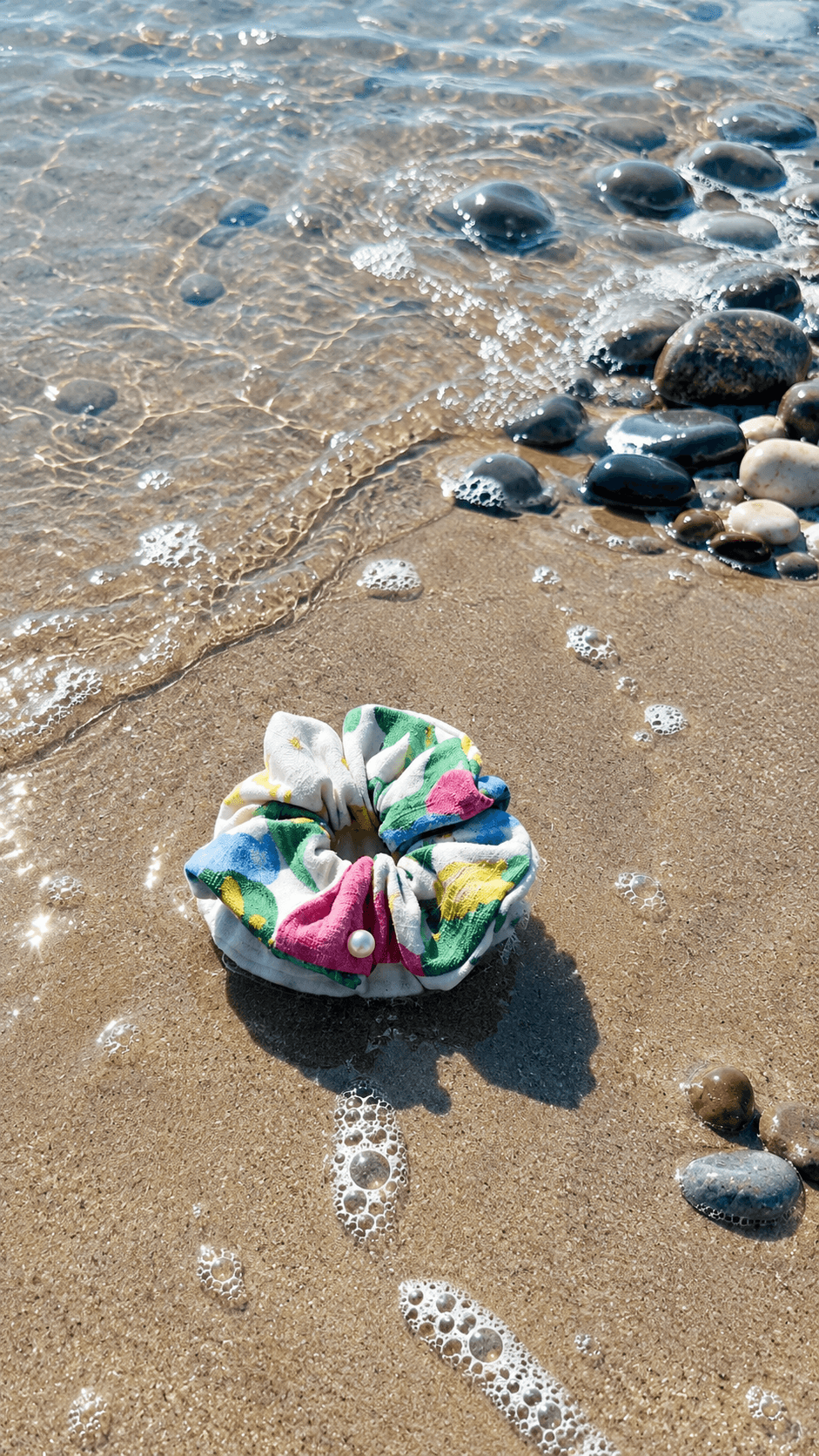
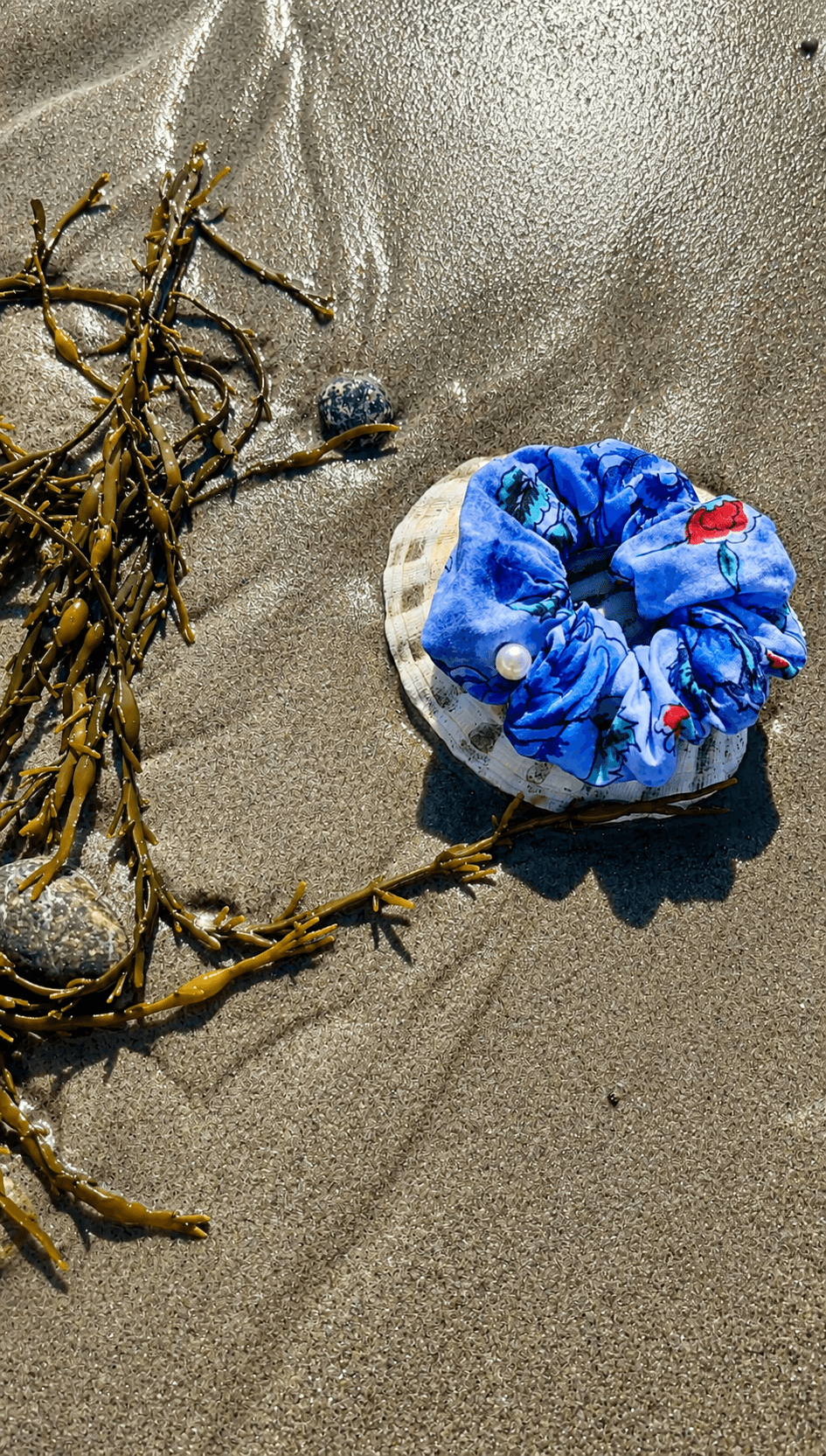
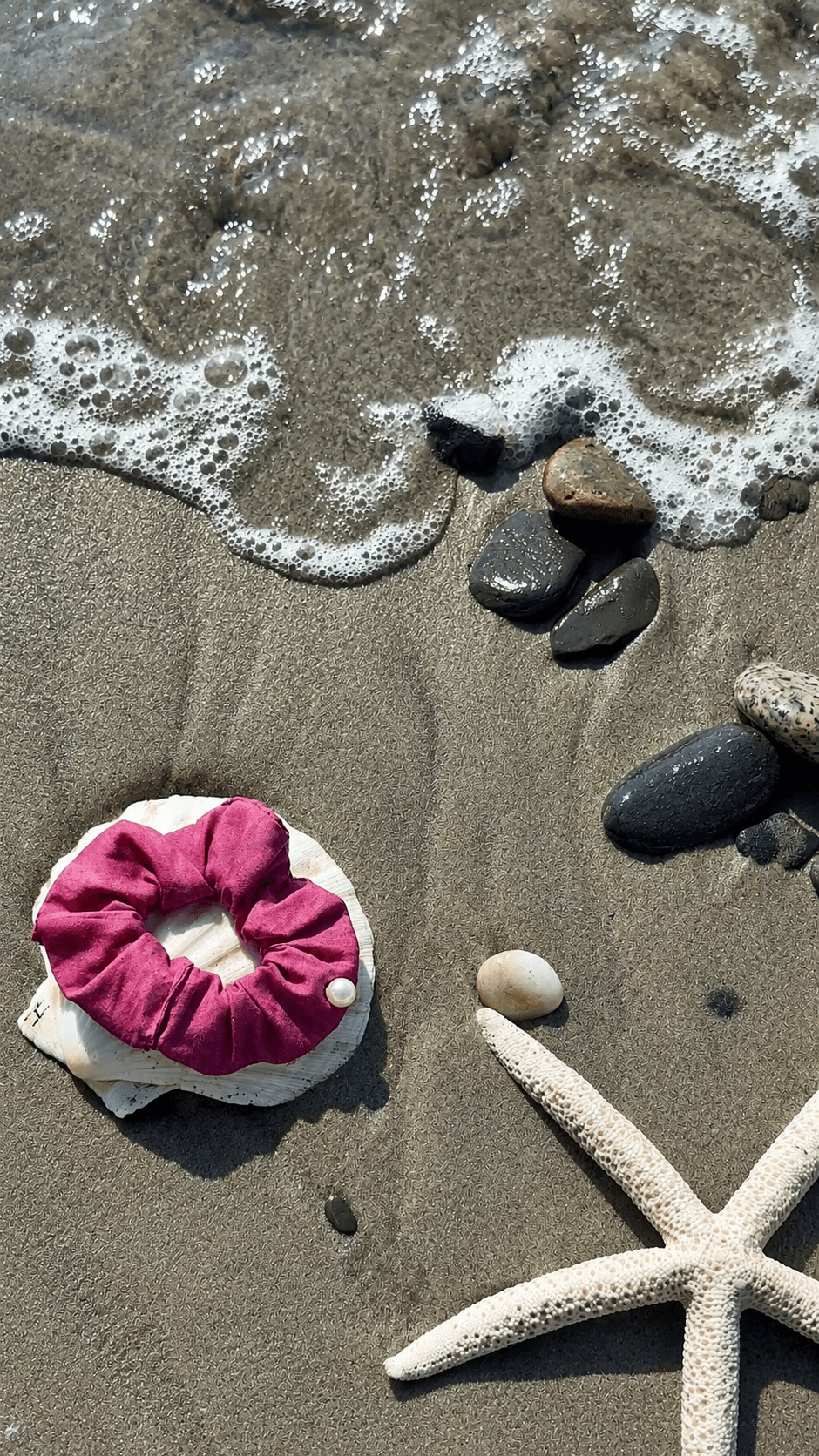
I specialize in taking rescued fabric—textiles that might otherwise be discarded—and transforming it into one-of-a-kind coastal-inspired accessories, particularly our SeaBass Eco Scrunchies and Eco Bags (though, stay tuned for ready-to-wear, relaxed beach and resort apparel!) Because I work with rescued materials, the fabric itself often helps dictate the design. There is something really special about taking a forgotten scrap of textile and asking, What could this become?
Every SeaBass product is one-of-a-kind because it comes from limited rescued textiles. That limitation is actually one of my favorite parts of designing this way. Instead of trying to make thousands of identical products, I get to transform what is already available.
There are also little pieces of storytelling built into the products.
Every SeaBass Eco Scrunchie and every Eco Bag zipper pull features our signature pearl charm. The pearl honors oyster reefs, which are incredible natural filtration systems for coastal waters that are currently threatened by ocean pollution. It turns a tiny design detail into an opportunity to talk about ocean conservation.
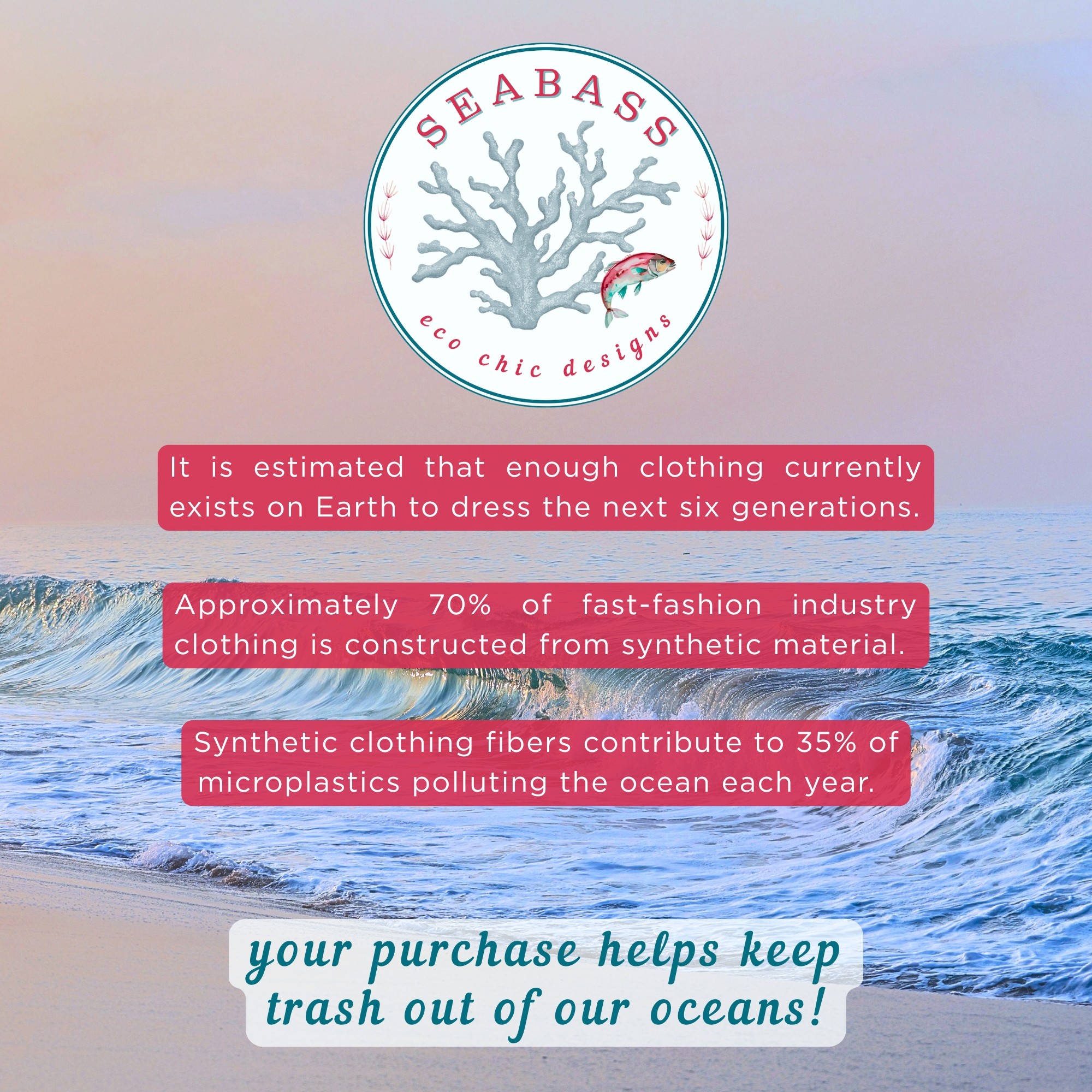
Even the $8 price of our signature scrunchie tells a story. The number eight represents the approximately 8 million tons of plastic entering our oceans annually. When people think of plastic in the ocean, they think about plastic water bottles and straws (which, of course, is a massive problem), but textile waste is also a major villain in ocean pollution. On planet Earth, it’s estimated that there is already enough clothing that has already been made to outfit the next 6 generations (at least). In garment construction, 15% of fabric becomes waste directly from the bolt before it’s even sold. Also, 70% of those bolts of fabric in the fast-fashion industry are synthetic materials (plastic). The result is that 35% (over one-third) of the microplastics polluting the ocean every single year are from textile waste. When someone asks me, “Why $8?” the price itself becomes a conversation starter about ocean sustainability.
What I’m probably most proud of is that SeaBass doesn’t approach sustainability through guilt.
You don’t have to become the world’s most perfect environmentalist before you’re allowed to care about the ocean. You can love fashion. You can love bold colors. You can be on a budget. You can be a beginner. You can make one small change today and another one later.
Creatively, I think that is what sets SeaBass apart. Sustainable fashion sometimes gets boxed into a very neutral, minimalist aesthetic. That’s not me. SeaBass is colorful, maximalist, surf-inspired and a little irreverent. I wanted to move away from “boring coastal minimalism,” eco-guilt, gatekeeping and performative environmentalism in favor of elevated upcycled fashion, accessibility and celebrating small wins.
Is there any advice you’d like to share with our readers who might just be starting out?
Give yourself permission to be bad at something long enough to become good at it. Most things are figure-out-able–even if it feels like an insanely high mountain to climb when you start.
I picked sewing back up at 32. I didn’t have decades of professional experience behind me. I had an idea, a reason for pursuing it, and a willingness to figure things out.
It is incredibly easy to compare your Chapter One to someone else’s Chapter Twenty—especially when you’re building something in the age of social media. But the polished version of somebody else’s business doesn’t show you all the mistakes, abandoned ideas, ugly prototypes and existential crises wondering “what am I even doing?” that got them there.
So start before you feel ready.
Make the first thing. Take the imperfect photo. Set up the booth. Post the video. Ask the question. Learn the skill. Change your mind. Try again.
I would also tell anyone starting a creative business to figure out their why before obsessing over their logo, packaging or social media following. Products can evolve. Your aesthetic can evolve. Your business model can evolve. But having a reason behind what you’re building gives you something to come back to when things get difficult.
For me, that is my son, wanting to build something creatively for myself, and the ocean.
Finally, don’t let perfectionism disguise itself as sustainability—or entrepreneurship. You don’t need to do everything perfectly for your choices to matter. That philosophy applies to business too.
Progress over perfection. Small wins count. Just keep paddling.
Pricing:
- SeaBass Eco Scrunchies — $8 each. The $8 price intentionally connects to the approximately 8 million tons of plastic referenced in the SeaBass brand story as entering our oceans annually. Each scrunchie is made from rescued textiles, is one-of-a-kind, and features a signature pearl charm honoring oyster reefs as natural ocean filters.
- SeaBass Eco Scrunchies- 2 for $15. 15% of fabric used in clothing production becomes waste before it’s even sold or worn.
- SeaBass Eco Bags- Price dependent (tied to other ocean sustainability statistics)
Contact Info:
- Website: https://seabassecochic.etsy.com
- Instagram: https://www.instagram.com/seabassecochic/