



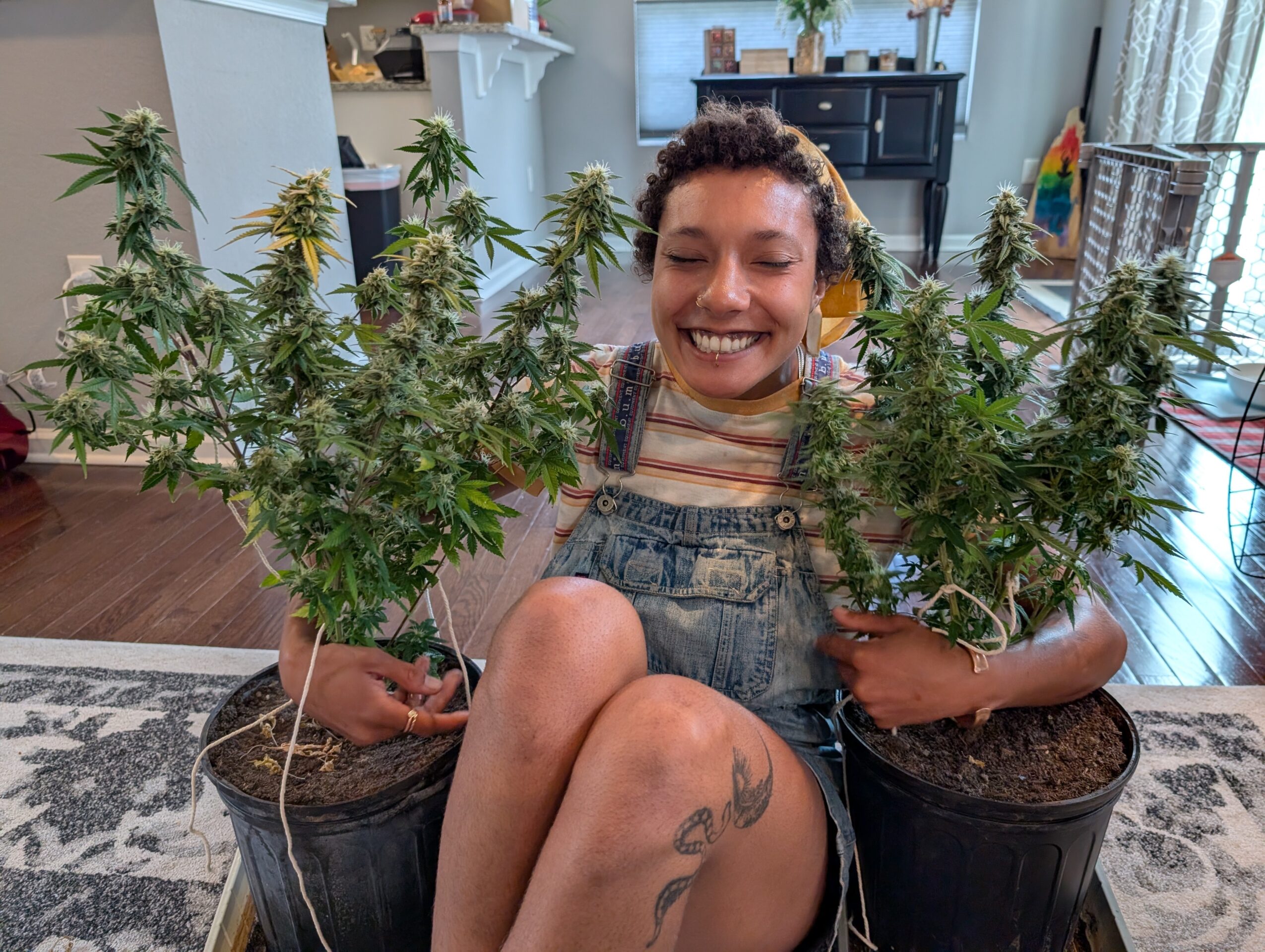
Today we’d like to introduce you to Xandra Hucklebeary.
Hi Xandra, we’re thrilled to have a chance to learn your story today. So, before we get into specifics, maybe you can briefly walk us through how you got to where you are today?
I am a migrant farmer, revolutionary and student. My earliest teachers were my great grandmother’s garden, long antelope hunts with my grandpa and cleaning fish by the river with my mom. They taught me respect for the animals and the cost of their lives. The patience to grow food from seed. My reverence for the land became a deep commitment to food justice, ecological healing, and freedom. Deepening my relationship with the land helped me reconnect with my family’s history, trauma, and grief. As well as my responsibility to my community.
Over the years, I have worked with diverse farms, market gardens, small-scale livestock operations, seed saving companies, and cooperative business models. I have also worked in media and outreach, including farm education programs and a reality television production, which strengthened my ability to communicate and inspire others to reconnect to the land while honoring ancestral knowledge. Taking me from Monacan land to unceded Duwamish territories. I integrate regenerative practices like upcycling and waste reduction, soil-building practices, and renewable energy.minimizing harm and honoring all of the resources I steward. Along the way, I’ve challenged assumptions about food, culture, the earth, racial capitalism, settler colonialism. and our overall sense of belonging.
Today, I am committed to building and empowering the communities of the greater DMV area to take their food sovereignty back through free programing and sliding scale consultation to build gardens and nurture equitable relationships with the land, our culture, and our ancestry. In addition to individual gardens, I plan to collectively build a cooperative farm and land trust that supports, protects and provides access to migrant, indigenous and marginalized communities.
Alright, so let’s dig a little deeper into the story – has it been an easy path overall and if not, what were the challenges you’ve had to overcome?
As a multiracial black woman I’ve tried to fit into communities that wouldn’t work for me. looking for acceptance I worked tirelessly to support their projects and not my own. Masking until I became crippled, using avoidant conflict resolution skills, and eventually lashing out. Living with depression and mental illness, I realize I need strong community support to find fulfillment and purpose. I was left feeling helpless in a system that was built to oppress me. I imagine a lot of multiracial children feel or have felt the same way. Not knowing where they belong, or what is their purpose. Unable to look away from the world’s collective suffering and struggle for liberation in silent complacency, I’m applying. Because all beings deserve a safe place to connect more deeply to the land, ancestral foods and time honored traditions. This project will focus exclusively on offering disadvantaged youths and minorities radically free land.
Alright, so let’s switch gears a bit and talk business. What should we know about your work?
The mission of this project is to radically share land. To offer the greater community unrestricted access to land so they can gather, grow food, build together, feast and celebrate ourselves, the land and our history. Healing and regenerating the land and empowering all oppressed peoples of all generations. Together we will build a community rooted mutual aid organization and land trust.
The land will be held collectively under a conservation easement, the beneficiaries being the Virginia Nottoway Indian circle and square foundation. With guidance from our ancestors we will forge clear paths of healing through sustainable and non extractive farming and farm practices. focused on renaturalizing and rebuilding a strong ecology in our waterways, wetlands and forests.
During “summer”months a child-led day camp will be held to connect children, the land and therapy animals. The summer program will invite young people to explore these interconnections through hands-on and experiential learning activities on our farm and in our gardens, kitchen and wetlands. At our youth education programs kids develop practical garden skills, learn about the animals and plants they encounter, and experience harvesting and cooking food they have helped grow. With the help of community partners like Matchbox Mutual aid we will be able to provide free education and hot meals for students. Part of the education program will be to shed light on the systemic issues that pollute our water, our land and restrict our access. Through education we will transform our old ways of thinking, unlearning and decolonizing our minds, our youth and ultimately divest completely from the systems of oppression that we adhere to. Hopefully we will inspire change so great that we are able to provide respite and relief in the form of non harmful systems of cooperating and living together.
Every month regardless of the weather a seasonally locally grown or sourced community meal will be hosted on the land and free education and workshops will be offered to the community. The workshops that I would be most interested to host or lead would be, hide tanning, beef jerky making, soap and salve making, beeswax candles, bee keeping, flower drying, raw dog food, water and soil testing, ect.
Together we will grow produce and raise livestock animals for our community and always free produce stands. While multiple service based agribusinesses will sustain the project long term. The low impact, high yield concepts for a service based agribusiness model I’ve thought of so far are compost, bee and tree removal services. Repurposing waste byproducts or unwanted “pests”. Service based business as opposed to product based models work better with my needs to take work or rest as I need it, refuse jobs or create recurring relationships with customers without harmful expectations.
My long term goals are building a foster home on the land and eventually creating a financially independent intentional community. Based on the Freedom Farms model founded by Mrs. Fannie Lou Hamer, SNCC and the NCNW. The opening of this foster home will benefit black, brown and all children susceptible to oppression, marginalization and exploitation. Offering these children a stable, multigenerational village type social environment will give them the safety to heal from the trauma of America’s foster care system. My great aunt Rosa, fostered and adopted over 20 children in her lifetime. Aspiring to follow in her footsteps I chose to create spaces for our youth to initiate their own relationship with the land through regenerative farming and farm practices. Fostering this relationship with the land, and therapy animals from an early age will benefit their development of empathy, care, compassion and responsibility
Do you have recommendations for books, apps, blogs, etc?
Sistas who kill
100 years of solitude
Music
Yoga
YMCA saunas
All books fr
Assata
Pricing:
- Donations welcome
- Land donations
- Cash donations
- Tattoo donations
Contact Info:
- Website: https://www.xansworld.com