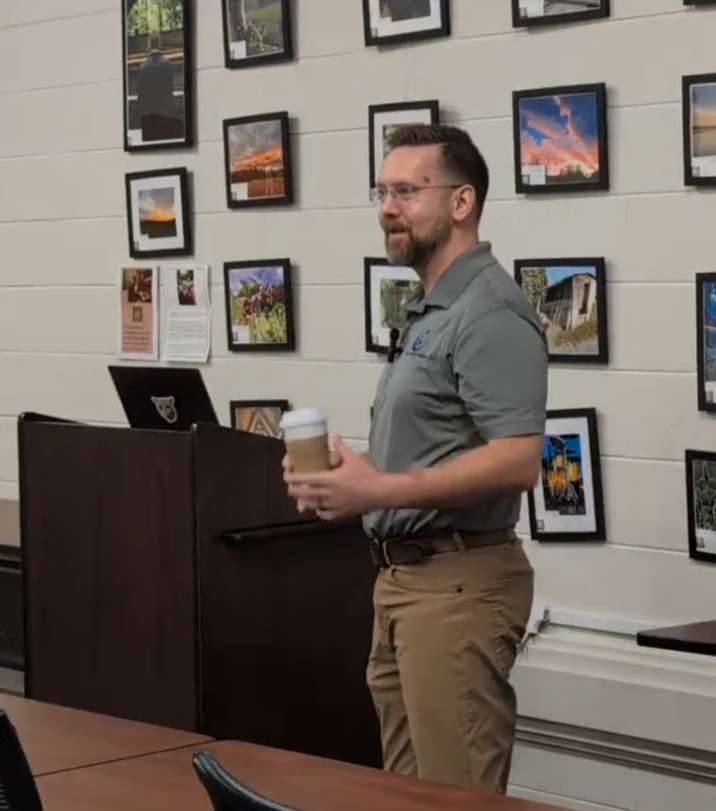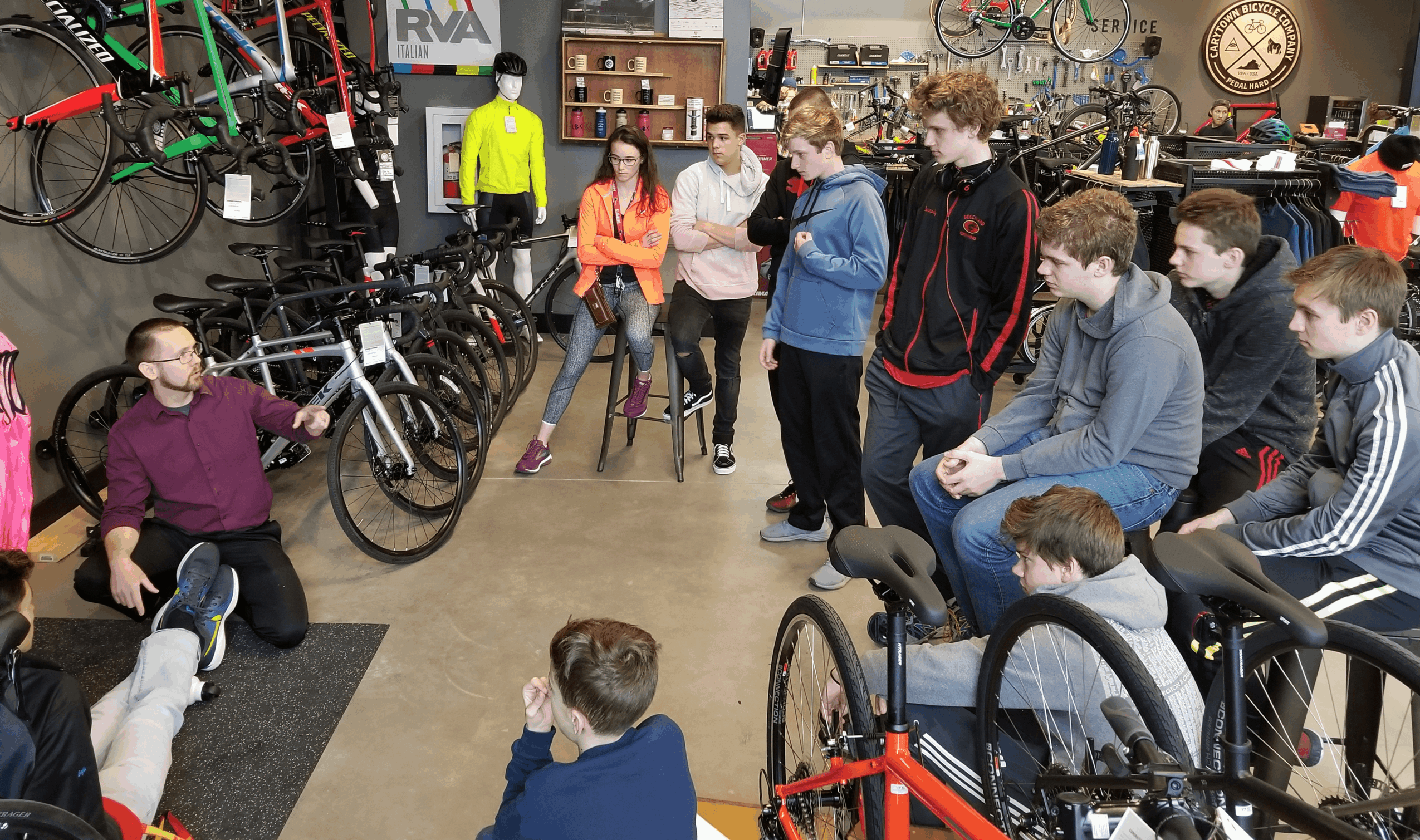





Today we’d like to introduce you to David Bass.
Hi David, please kick things off for us with an introduction to yourself and your story.
For over a dozen years I practiced the kind of physical therapy most people picture when they hear the words. Somebody comes in with knee pain, I give them exercises for the knee. Stretching, strengthening, heat, ice, ultrasound, electrical stim. I put my hands on a patient for maybe five or ten minutes of a visit. I was good at it. I ran the clinic for nine of those years.
Then our two-clinic practice was bought by a twenty-six clinic company, and six weeks after that they merged with another company more than 10x their size. I don’t do well as an employee in a large company. I feel like a cog in the wheel, and that my needs, and those of the team I was leading would be largely ignored. I left when the merger was announced and started building my own private-pay practice, which just means I don’t accept insurance, bill insurance, or have anything to do with insurance. It allows me to care for my patients as individuals, and not juggle 3-5 people at once.
What actually changed my practice, though, wasn’t leaving. It was a squat.
I had started doing CrossFit. One day in class a guy I knew was doing repetitions at around 350 pounds and making it look easy, except he told me his right knee was killing him. So we went to my office and I had him do a single-leg squat. Left leg, all the way down, all the way back up, perfect form. Right leg, he got about halfway down and everything collapsed inward. Hip rotated in, opposite hip dropped, shin turned out, knee caving toward the midline. And pain.
Most physical therapists in the country would look at that and say the same thing: hip abductor weakness. Weak glute medius, weak external rotators. Give him side-lying abduction, give him clamshells, strengthen it up.
Except I was looking at 205 pounds of muscle who was in the gym five days a week lifting heavy, and I couldn’t make that story work. This man did not wake up one morning with a weak hip. If anything, that muscle had been asked to do more than almost anybody’s.
So I went the other direction. I put him on the table and did trigger point release on the glute medius, treating it as overworked instead of underworked. Ten or fifteen minutes. Then I had him squat again. All the way down, all the way back up, textbook form, no knee pain.
The way I explain it now is to think of a muscle as an engine. Well rested, it idles somewhere around 1,500 RPM, and it doesn’t redline until about 7,000. Redline is where it hurts. Now take that same muscle after months of heavy training without real recovery. It’s idling at 4,500, maybe 5,000. Nothing about the redline moved. What moved is how little you have to do to get there. That’s how a man who squats 350 pounds ends up with a knee that quits halfway down. The muscle isn’t weak. It was already running hot before he ever walked up to the bar.
It isn’t only barbells that do that to a muscle. The sixty-two-year-old who’s been told her knee is bone on bone isn’t training five days a week, but she may have spent two years walking on a hamstring that never let go. Same engine, same high idle. The difference is that her x-ray shows arthritis, so everybody stops looking.
I have built my entire practice on that premise since. Start with muscle. Treat what you think is the offender, then have the patient repeat the exact movement that hurt, right there, while they’re still in front of you. If it’s better, you were right. If it isn’t, you weren’t, and you know that in minutes instead of six weeks. And when you bring the idle back down, the muscle can work, stretch, and do more without pain.
The results are why I keep doing it. Roughly three out of four of my patients are done in two or three visits.
CrossFit kept teaching me, too, mostly by hurting me. In the three years I did it I had neck pain, toe pain, and just about everything in between, and I learned to treat every one of them on myself. And I never stopped. A nearly fifty-year-old body that still thinks it’s a twenty-something keeps handing me new material, so by now that’s a decade of case studies where I knew exactly what the patient did and exactly what they felt.
I want to be clear that I don’t think CrossFit is bad. I never had a real injury from it, and I certainly got stronger and more fit. But what I had was muscle overload, over and over, in enough different places that I eventually learned the map.
These days I start everyone in the same place — muscle first — and I find out within minutes whether that’s the answer. It keeps a lot of people out of imaging suites and operating rooms, and gets them back to what they need and want to do with far less time in a PT clinic — whether that’s one person or a whole crew.
We all face challenges, but looking back would you describe it as a relatively smooth road?
No, it hasn’t been smooth. And the surprising part is that almost none of the hard parts were clinical.
I wasn’t coming at the business side completely cold. As clinical director, I was responsible for doing some marketing — I didn’t hate it, but I wasn’t great at it, either. The relationships with physicians took years to build, and what built them wasn’t anything I said in a meeting. It was consistently delivering a good outcome for somebody else’s patient, over and over, until the referrals became a habit.
What I had never done was everything on the other side of that. For thirteen years I never once had to think about where a patient came from when nobody sent them. They appeared on my schedule. Somebody else handled the billing and the front desk and the phone. I would have told you I understood the business, and what I actually understood was the part that starts after the patient is already in the building.
Private pay was new to me. When insurance pays, patients don’t really know what their care costs. Some get a surprise bill weeks in. Some pay nothing. Either way, they almost never ask whether the care was worth the money, because the system never gave them a way to. Paying me directly changes that. Nobody pays out of their own pocket for adequate.
So the first real question I had to answer wasn’t a clinical one. It was: what do I have to be worth to justify this? That question changed how I practice more than any course I’ve ever taken. It’s the reason I test everything in front of the patient while they’re still standing there. If I treat a muscle and ask you to redo the movement that hurt, you know inside of a few minutes whether you got your money’s worth. You don’t have to take my word for it, and you don’t have to wait six weeks to find out.
Then there was selling, and marketing to patients directly instead of to physicians. Nothing in a doctorate program prepares you for that. Nine years of running a clinic doesn’t either. I had to learn it the slow way.
The piece I didn’t see coming was the referrals. I had surgeons who sent patients to me by name — not to the clinic, to me, personally. When I stepped outside the insurance system, that stopped. Relationships I had spent more than a decade earning, one good outcome at a time, simply went quiet. That was humbling. And it meant I was starting a patient pipeline from zero at the same time I was learning how to build one at all.
It isn’t all behind me, either. Two things are hard right now.
The first is the employer side. I think the case is obvious — a small business with people in pain is paying for it whether they realize it or not, in absences and in the half-present days that nobody counts. But that’s a slower door to get through than a patient’s, and I’m still learning how to open it.
The second is that I’m the bottleneck. Three out of four of my patients are done in two or three visits. That’s the entire point — but it also means my schedule empties itself out on purpose. I’ve built a practice where success is the patient leaving. That’s the right way to treat people and it is a strange way to run a business, and I haven’t fully solved it.
I’d make the same choices again. But I’d be lying if I said it was smooth.
We’ve been impressed with Focus Physical Therapy, but for folks who might not be as familiar, what can you share with them about what you do and what sets you apart from others?
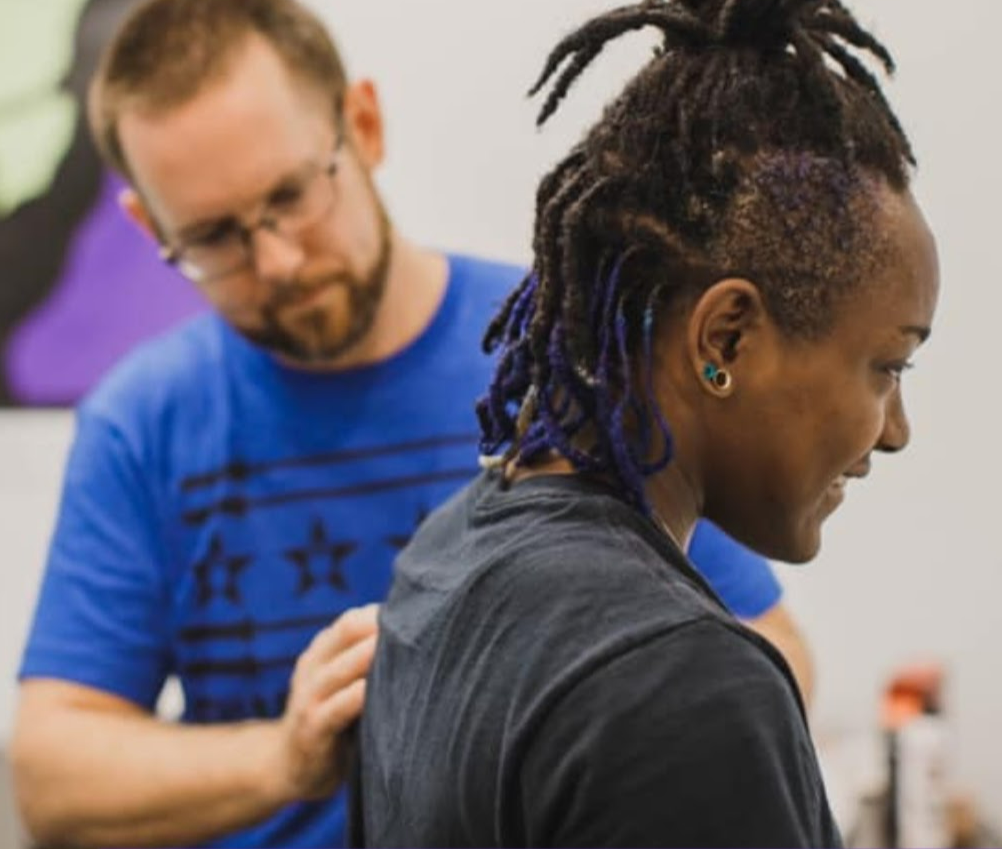
My practice is private pay. I don’t accept insurance, I don’t bill insurance, I have nothing to do with insurance. I see individuals, and I work with small businesses that want their people out of pain and working at full capacity. The treatment itself is hands-on, so nearly all of it happens in person either way. Virtual has a real place for follow-ups — a check-in, or fixing how somebody is doing their home technique — but the core of it is one person at a time, in the room, with my full attention for as long as they need me that day.
There’s a name I use for what I treat: non-traumatic onset of pain. That means there was no single moment you can point to. Nothing popped, nothing gave out, there was no one rep or one step where everything changed. You did your normal stuff yesterday and today your shoulder hurts. That’s the patient I specialize in, and it’s most people.
The reason that distinction matters is that real tissue damage announces itself. A tear happens when force gets applied fast, right up to the point of failure, and you know immediately — a rolled ankle, a broken bone, that kind of thing. There’s no mystery about when it happened. So when someone tells me their shoulder started hurting the morning after a workout and they can’t name the lift that did it, the timeline is already telling me something, and what it’s telling me is muscle.
If I’m known for anything, it’s the diagnosis. Most of my work happens before I touch anybody. I ask a lot of questions — how it started, what makes it worse, what makes it better, what you’re trying to get back to — because the answers narrow it down enormously. By the time I put my hands on you I usually already have a theory. My testing isn’t how I find the problem. It’s how I confirm I’m right.
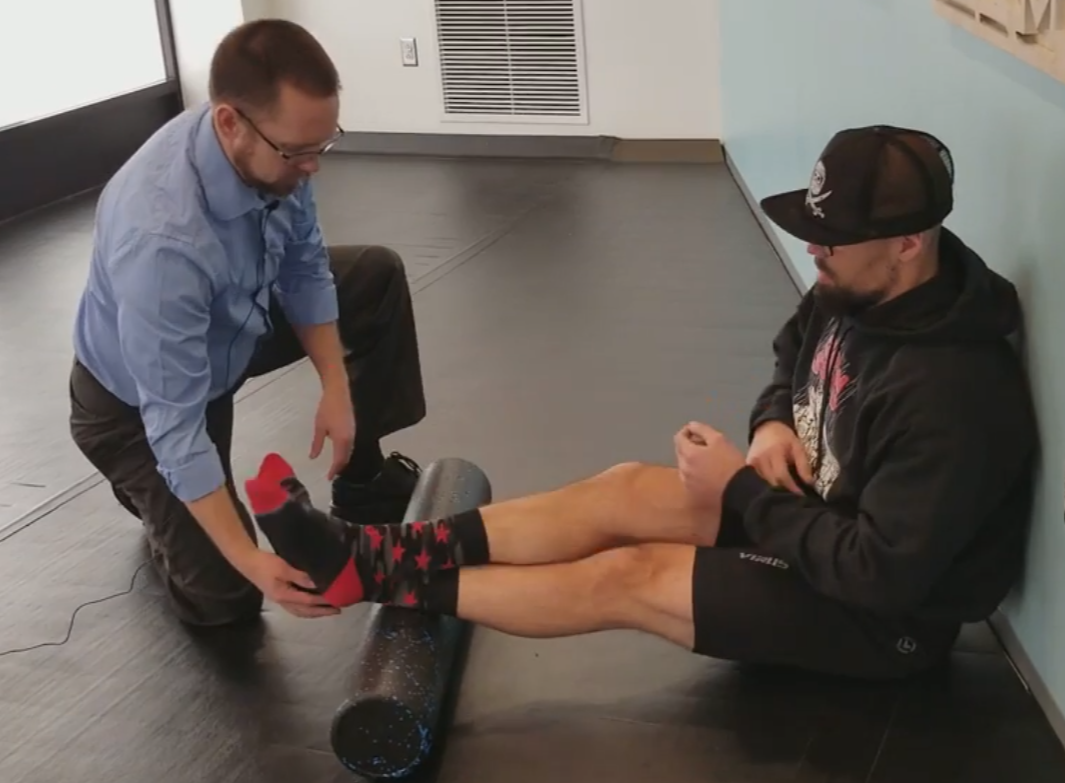
Then I prove it in front of you. I have you do the thing that hurts, I treat the muscle I think is the culprit, and I have you do the thing again. You should feel meaningfully better before you leave — not fixed, but clearly better — and it should hold for hours. If you get to your car and it’s already back, I didn’t treat the right thing, and we both know it that same day. That’s the part I’d want your readers to understand. Most approaches ask you to commit to six weeks before you find out whether they were right. Mine tells you in ten minutes, and it tells me when I’m wrong just as fast.
And then I give it away. People leave my office understanding why they hurt and knowing how to treat it themselves. That’s the whole goal. I’m not trying to build a practice full of people who need me indefinitely. I’d rather hand you the tool and have you handle the next flare-up in your own living room.
What sets me apart, I think, is that I treat the patient in front of me instead of an image. A lot of people arrive having already had an x-ray or an MRI they probably didn’t need, and once there’s a finding on that screen, everybody stops looking. Consider that arthritis takes years to develop. If your knee started hurting three weeks ago, a slow change that’s been building for a decade may not be the reason. The picture is one piece of information. It isn’t the whole story. But it’s persuasive and it’s right there, so the conversation turns to the picture, and that’s how people end up with procedures aimed at something that may never have been causing their symptoms.
That doesn’t make me anti-surgery. I’m anti-unnecessary. Most injuries that genuinely stand to benefit from an operation are fairly obvious, and we find that out pretty quickly. When that’s where somebody is headed, we talk through the pros and cons of that path together, and I help them figure out who to see, when to see them, and why. That’s a real part of what I do. The medical system is murky on purpose, and I act as a guide through it, so my patients get the right person at the right time.
What I’m proudest of is being a contrarian who gets to practice this way. I spent thirteen years inside the conventional model and I don’t believe its defaults serve patients well — not because the people in it are bad, but because the path of least resistance runs through the most expensive and most invasive door first. I built something that starts at the other end. My patients save time, money, and pain, in that order and usually all three.
Before we let you go, we’ve got to ask if you have any advice for those who are just starting out?
There are really two answers to that, depending on where you’re starting from.
If you’re just out of PT school, don’t go out on your own yet. Your knowledge is still in its early stages, and what you need most right now is seasoned PTs around you and a lot of patients coming through the door, because you need reps. Traditional insurance-based practices give you that volume. So do the larger private-pay companies. Go somewhere busy, and work next to people who have seen more than you have.
And find a mentor. That can’t be overstated. Find an experienced PT who wants to teach you and help you grow as a clinician, a communicator, and a professional. I had one for my first five years of practice. He started with clinical knowledge, how to evaluate and treat. Then he worked on how I communicated. Then he taught me how to manage. I wouldn’t be where I am today without him.
If you’re already a skilled clinician and you’re thinking about going solo, or moving to private pay, the advice changes. Your clinical skill isn’t what will hold you back. The most important thing you’ll need to learn is how to sell, with integrity and with service in mind.
The mechanics of forming and running a business matter too, but that’s the easy part to get help with. There are plenty of resources out there. Sales and marketing are different. They take knowledge and experience to develop, and you’ll probably stink at them in the beginning. I did. But if you stick with it, get your reps, and want to improve, you’ll get better, the same way you got better at treating patients.
Contact Info:
- Website: https://www.focusptrva.com
- LinkedIn: https://www.linkedin.com/in/davebasspt
- Youtube: http://www.youtube.com/@OrthoDIY