




Today we’d like to introduce you to David Boyer.
Hi David , it’s an honor to have you on the platform. Thanks for taking the time to share your story with us – to start maybe you can share some of your backstory with our readers?
I grew up in a loving two-parent home with my mother and father. We had love, values, and a strong family foundation, but we didn’t always have access to capital or financial resources. At times that put us in a position of poverty, and as I got older, I began to understand the difference between simply working hard and actually having access to opportunity, resources, and ownership.
That understanding became a major part of my journey as an entrepreneur. I started building DSB Lawn Service and learned business from the ground up—serving customers, managing people, developing systems, and figuring out how to grow with the resources available to me.
As DSB grew, my vision grew beyond one business. I became involved in real estate through DP Property Solutions and founded H.O.P.E. to serve and create opportunities within the community. Today, much of what drives me is building things that can outlive me—businesses, systems, opportunities, and resources that can benefit my family and other people.
I’m still building, still learning, and still growing, but everything I do comes back to the same idea: turning opportunity into something sustainable and using what we build to create opportunities for others.
Alright, so let’s dig a little deeper into the story – has it been an easy path overall and if not, what were the challenges you’ve had to overcome?
No, the road has not been smooth. One of the experiences that shaped me most happened during my career with Starbucks. I started as a barista and worked my way through shift supervisor, Coffee Master, and Assistant Store Manager, with aspirations of becoming a Store Manager.
I had already been through difficult circumstances earlier in my life, including involvement with the criminal justice system, but I had changed the direction of my life. I worked, developed as a leader, and earned greater responsibility. Yet as I advanced, my criminal history became something that I felt was repeatedly used against me, and eventually circumstances led to my resignation.
With the perspective I have today, I also believe race was part of that experience. And I don’t separate my experience from the larger history of barriers that Black Americans have faced in employment, access to capital, advancement, and ownership. These aren’t conversations I believe we should be afraid to have simply because they’re uncomfortable.
What troubled me wasn’t accountability for my past—I believe in accountability. It was the realization that a person can change, do the work, demonstrate leadership, and still encounter systems where yesterday’s mistakes can become tomorrow’s ceiling.
That experience helped change my understanding of opportunity and ownership. I realized I didn’t want my future—or the future of my family—to depend entirely upon whether someone else believed I deserved another opportunity.
Entrepreneurship hasn’t made the road easier. I’ve dealt with limited access to capital, cash-flow pressures, hiring challenges, equipment failures, long hours, and learning how to transform myself from someone who performs a service into someone who builds organizations and systems.
But those experiences also influence the kind of leader I want to be. I believe in accountability, but I also believe in redemption. I believe people who have genuinely changed deserve meaningful opportunities to demonstrate that change. And I believe we have to be willing to confront systemic barriers when they continue preventing people from accessing those opportunities.
I don’t tell that part of my story out of bitterness. I tell it because injustice doesn’t disappear when we stop talking about it. It changes when we’re willing to identify it, confront it, and build something better.
Great, so let’s talk business. Can you tell our readers more about what you do and what you think sets you apart from others?
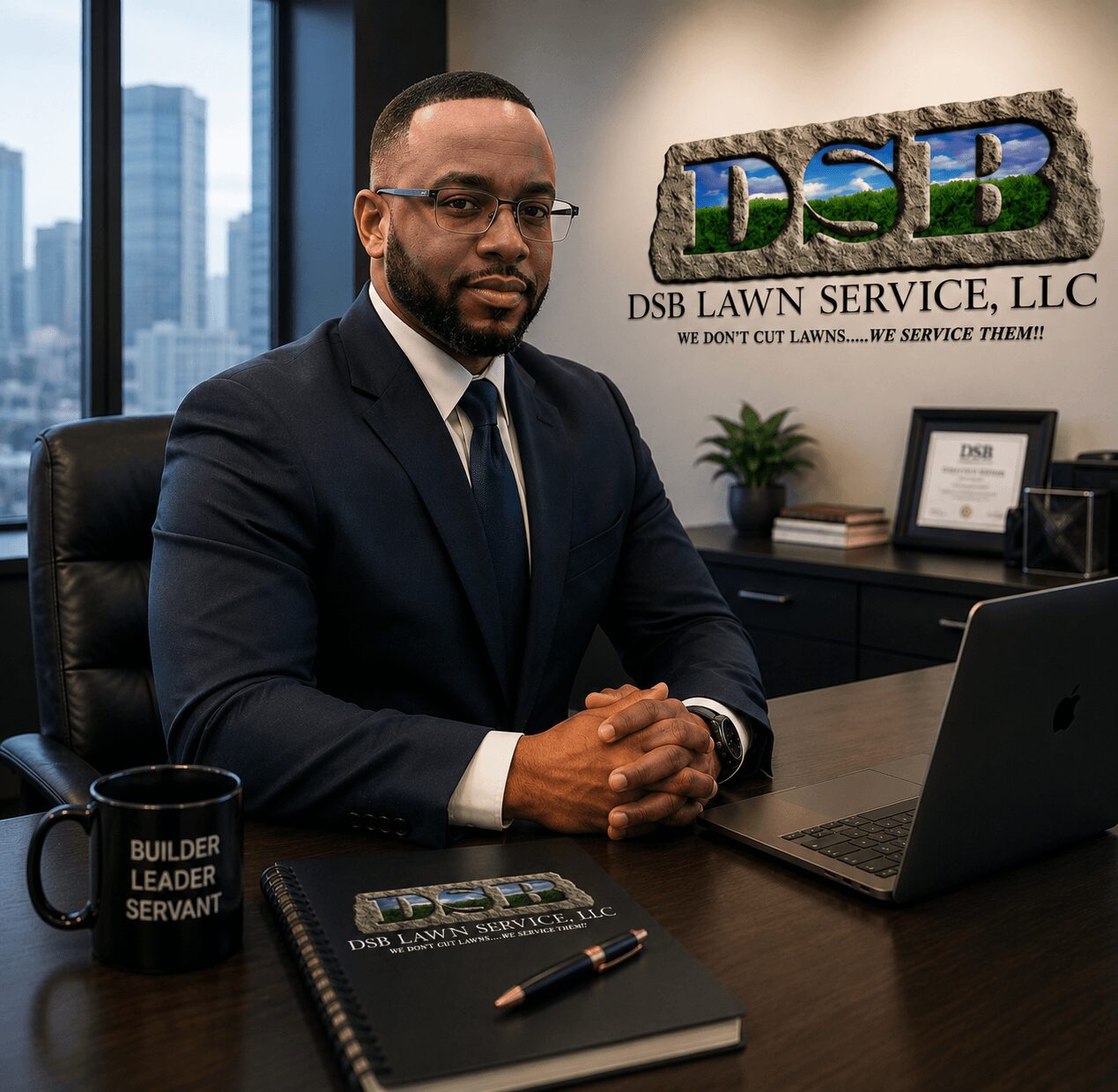
DSB Lawn Service Inc. is a lawn care, landscaping, and exterior property service company serving Danville and the surrounding Southside Virginia area. But what we’re building goes beyond simply cutting grass.
Our philosophy is, “We don’t just cut lawns, we service them.” That means approaching every property with consistency, efficiency, attention to detail, and respect for the customer. Whether we’re maintaining a residential property, servicing a commercial account, completing landscaping projects, or fulfilling municipal contracts, our goal is to take something off the customer’s plate and give them confidence that the job will be handled correctly.
What sets DSB apart is our focus on systems. As we’ve grown, I’ve become intentional about developing processes for how our crews work, how employees are trained, how properties are serviced, and how we maintain quality as the company scales. I don’t want DSB to be a business that only works because I’m physically present. I’m building an organization that can develop people, create careers, and eventually operate beyond me.
I’m especially proud that we’ve grown from serving individual lawns into an operation capable of handling residential, commercial, and municipal work. That growth represents years of learning, reinvesting, making mistakes, adapting, and refusing to quit.
But the larger vision is bigger than lawn care. Entrepreneurship has given me a platform to build opportunities for my family, employ people in my community, invest in real estate, and support the community work we do through H.O.P.E. I want people to understand that DSB isn’t just about landscaping. It is one piece of a much larger vision centered around ownership, opportunity, service, and legacy.
Can you talk to us about how you think about risk?
I absolutely consider myself a risk-taker, but my understanding of risk has matured over the years. I’ve learned that there is a difference between taking a risk because you’re chasing something and taking a calculated risk because you’re building something.
Entrepreneurship itself was a major risk. Building DSB meant putting my own money, reputation, time, equipment, and livelihood on the line without any guarantee that it would work. As the company grew, the risks became bigger—hiring employees before the revenue always felt comfortable, purchasing equipment, pursuing larger contracts, managing payroll and cash flow, and making decisions where other people’s livelihoods were now connected to mine.
One of the biggest risks, though, was believing that I could build something beyond the circumstances and limitations that had been placed in front of me. When you don’t come from access to large amounts of capital, you learn very quickly that entrepreneurship can require betting on yourself before banks, investors, or anybody else is willing to bet on you.
Today I look at risk differently. I research. I ask questions. I study the numbers. I build systems. I look at the downside as seriously as I look at the opportunity. And then, once I have enough information, I’m willing to move.
I also understand that sometimes not taking the risk is the bigger risk. Staying comfortable can cost you opportunities, growth, and years you can never get back.
I’m still willing to bet on a vision, but I’m much more disciplined about how I place that bet today. Faith gives me the courage to move, but wisdom tells me to count the cost.
Contact Info:
- Website: https://DSBLAWNSERVICEllc.com
- Instagram: DSBLAWNSERVICE_