




Today we’d like to introduce you to Port Tamara.
Hi Port, we’d love for you to start by introducing yourself.
My career in social work has taken me through a lot of different settings, communities, and even countries—and I think each experience has shaped the therapist and business owner I am today.
I started my career working with high-crisis families through social services, which gave me an early understanding of just how complex people’s lives can be and how important it is to look beyond a diagnosis or presenting problem.
Later, my family and I had the opportunity to live overseas. While living in Nairobi, Kenya, I worked in social services and had the privilege of supervising and training social workers serving some of the city’s most vulnerable communities. We later lived in Frankfurt, Germany, where I worked with expatriate families and schools. Those experiences broadened my understanding of family systems, trauma, grief, culture, and the many ways our environments shape our mental health.
When we returned to Virginia, I eventually made the leap into private practice. In 2017, I opened Mountain View Therapy. At the time, I wasn’t setting out to build something large—I really just wanted to create the kind of therapeutic space where people felt genuinely known, supported, and cared for.
Over time, that vision grew.
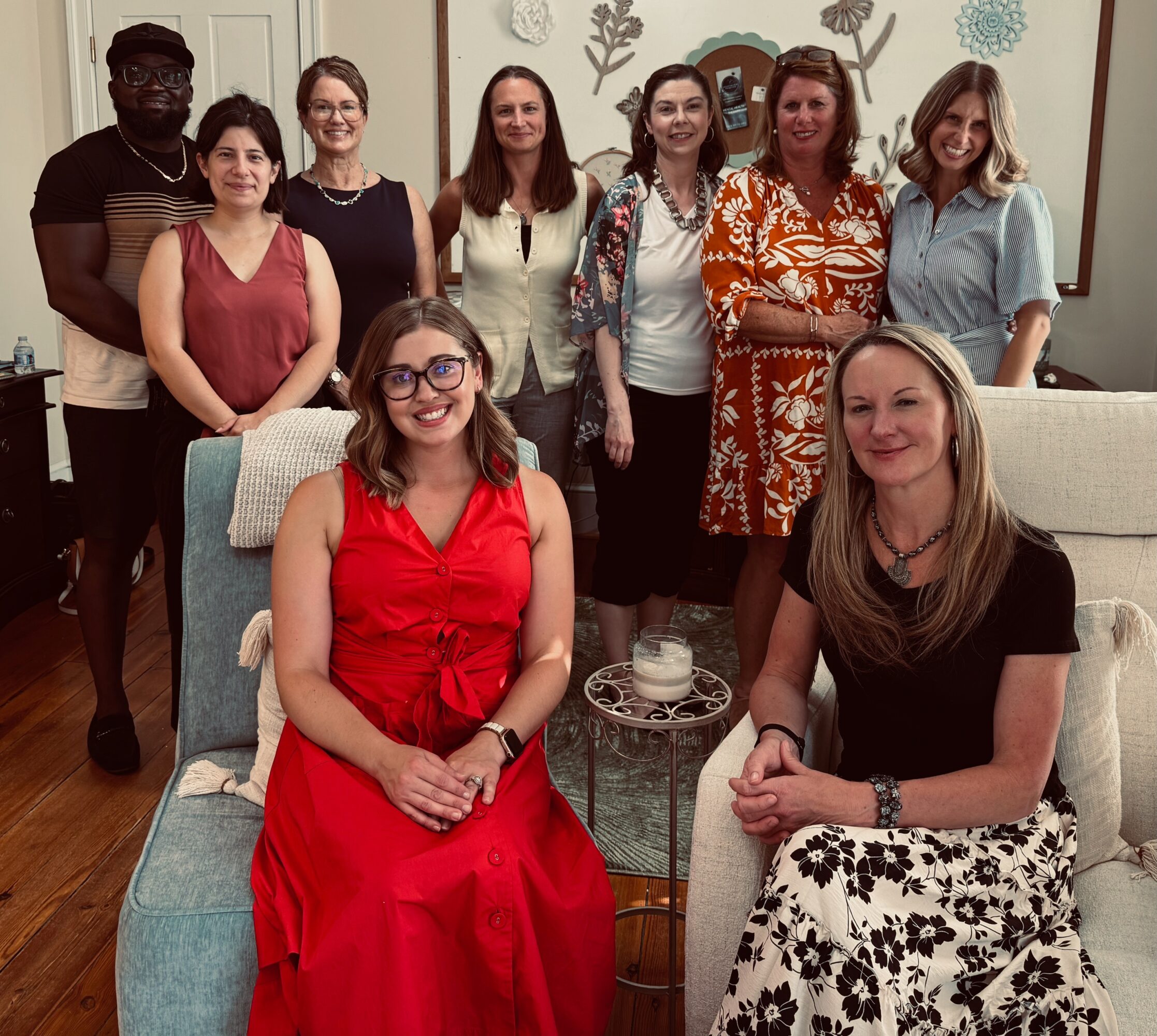
In 2023, Carissa Francis and I founded Mountain View Therapy Group. What began as a small practice has grown into a team of talented clinicians serving children, teens, adults, couples, and families. We have since expanded beyond our original Purcellville location and opened a second location in West Virginia.
One of the things I’m most proud of is that growth has never been just about becoming bigger. We’ve worked hard to build a practice where clinicians feel supported, where newer therapists have access to mentorship and supervision, and where clients can find a therapist who genuinely fits them. I have become increasingly passionate about supporting therapists themselves—not only as clinicians, but as people doing emotionally demanding work.
That has led to some of the things we’re dreaming about and developing now, including more opportunities for therapist education, connection, restoration, and professional community.
When I look back, there wasn’t one grand plan that got me here. It has really been a series of experiences, relationships, risks, and opportunities that kept building on one another. I still love the clinical work, but I’ve also discovered how much I love mentoring other therapists and creating spaces where both clients and clinicians can grow. I’m excited to see where that continues to take us.
Would you say it’s been a smooth road, and if not what are some of the biggest challenges you’ve faced along the way?
It definitely hasn’t always been a smooth road. I think one of the biggest surprises for me was realizing that being a good therapist and being a good business owner require very different skill sets.
As therapists, we’re trained to understand people, build relationships, navigate difficult conversations, and sit with uncertainty. We aren’t necessarily trained in payroll, HR, marketing, financial forecasting, hiring, insurance, or how to build systems that can support a growing organization. There has been a tremendous amount of learning as we’ve gone along.
Growth itself has also brought challenges. When you start a small practice, you can be involved in almost everything. As the practice grows, that simply isn’t sustainable. Learning when to delegate, when to bring in people who know more than I do, and how to build a leadership team has been both challenging and incredibly important.
There have also been hard lessons around hiring. In a helping profession, it can be tempting to give people endless opportunities to succeed because compassion is such a fundamental part of who we are. I’ve had to learn that you can care deeply about someone while also recognizing when something isn’t working. Protecting the health of the organization, the clinicians who work within it, and ultimately the clients we serve sometimes requires making difficult decisions.
Opening a second location brought an entirely new learning curve as well. What works in one community doesn’t automatically translate to another. We’ve had to be patient, adjust expectations, build new relationships, and remind ourselves that meaningful growth takes time.
And then there is the very human side of entrepreneurship. There have absolutely been moments of self-doubt, difficult conversations, mistakes, and decisions I would probably make differently today. But I think that is part of building something. I’ve learned to surround myself with people whose expertise complements mine, to ask for help sooner, and to be willing to change course when something isn’t working.
The road hasn’t been perfectly smooth, but I don’t think I would want it to have been. Some of the most challenging moments have ultimately made me a better leader, a better clinician, and much clearer about the kind of practice and culture we want to build.
Thanks for sharing that. So, maybe next you can tell us a bit more about your business?
Mountain View Therapy Group is a locally owned mental health practice serving individuals, couples, children, teens, and families in Virginia and West Virginia. We have locations in Purcellville, Virginia, and the Harpers Ferry area of West Virginia, and our team includes clinicians with a wide range of specialties, backgrounds, and areas of expertise.
One of the things that really sets us apart is that we don’t believe therapy is one-size-fits-all. Finding the right therapist matters. We have intentionally built a diverse clinical team so that when someone reaches out to us, we’re not simply asking, “Who has an opening?” We’re asking, “Who would be the best fit for this person?”
Our clinicians specialize in areas including trauma, grief, anxiety, depression, relationships, parenting, child and adolescent mental health, couples and family work, neurodiversity, identity, substance use, and major life transitions. We also have clinicians who bring personal experience and interests into their professional work—from athletics and the performing arts to parenting and other real-life experiences that can help clients feel understood in a different way.
Something else that is incredibly important to us is how we support our therapists. Mental health professionals spend their careers caring for other people, and burnout in this field is very real. We believe clinicians do their best work when they also feel supported, connected, mentored, and valued. We’ve worked hard to create a culture where clinicians can continue learning and growing rather than feeling like they’re practicing in isolation.
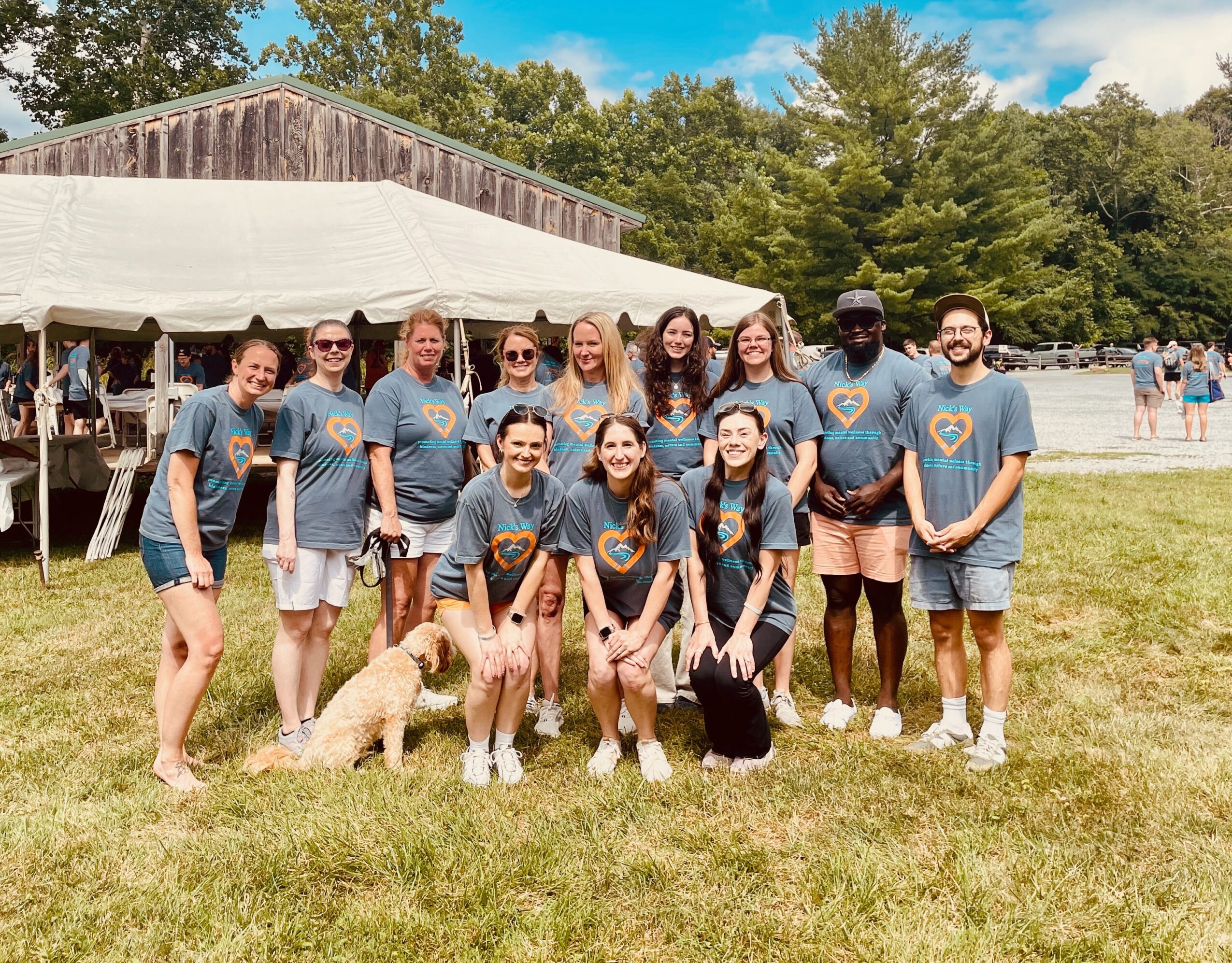
Community involvement is also a big part of who we are. One of the relationships we’re especially proud of is our work with Nick’s Way, which helps connect young people and families with mental health support when financial barriers might otherwise prevent them from receiving care. We want Mountain View to be more than a place people come for an appointment—we want to be an active part of the communities we serve.
As we’ve grown, our vision has expanded as well. We’re increasingly focused on supporting other mental health professionals through clinical supervision, mentorship, continuing education, connection, and opportunities for restoration. We’re even exploring new ways to bring therapists together outside of the traditional clinical setting.
Brand-wise, I think what I’m most proud of is that we’ve grown without wanting to become impersonal. We want people to feel warmth when they interact with Mountain View—whether they’re a client walking through our doors, a parent calling because they’re worried about their child, or a clinician joining our team.
Ultimately, I want people to know that Mountain View Therapy Group is built around relationships. We take the work seriously, but we also believe therapy can be human, approachable, collaborative, and even hopeful. As we continue to grow, that’s the part of our identity we never want to lose.
What’s next?
There are several things on the horizon that I’m really excited about. As Mountain View Therapy Group has grown, I’ve found myself thinking more and more about how we can support not only the clients who come through our doors, but also the therapists who spend their careers caring for others.
One of the projects we’re currently developing is a wellness and professional development retreat specifically for mental health therapists. Our vision is to create an experience that combines continuing education with genuine restoration—CEUs alongside things like yoga, sound healing, meaningful conversations, networking, beautiful surroundings, and, importantly, time to simply rest. Therapists are constantly encouraged to practice self-care, but we’re not always very good at creating spaces where they can actually do it. We want to change that.
We’re planning our first retreat for 2027 and envision it as an intimate experience where therapists can learn, connect with one another, and return home feeling genuinely resourced rather than exhausted from another professional conference.
We’re also preparing to launch The Resourced Therapist, a podcast that my business partner, Carissa Francis, and I will host together. We’ll be talking candidly about the realities of working in the mental health field—burnout, boundaries, clinical work, leadership, private practice, professional identity, and how therapists can build sustainable careers without losing themselves in the process. We also hope to bring other clinicians and professionals into those conversations and create a sense of community around the things therapists don’t always talk about openly.
Both projects feel like a natural extension of what we’ve been building at Mountain View. We want to continue growing our Virginia and West Virginia practices, expanding our clinical specialties, and serving our communities, but we’re also beginning to think bigger about what our role can be within the mental health profession itself.
I’m especially excited about creating opportunities for therapists to connect with one another. This can be incredibly meaningful work, but it can also be isolating and emotionally demanding. If we can build something that helps therapists feel more supported, more connected, and more excited about the work they’re doing, I think that ultimately benefits their clients and communities too.
I don’t know exactly what Mountain View will look like five or ten years from now, and I’ve learned not to over-plan every part of the journey. But I do know that I want our growth to remain rooted in the same things that got us here: relationships, community, excellent clinical care, and taking care of the people who spend their lives taking care of others. That’s the next chapter I’m most excited about.
Contact Info:
- Website: https://www.mvtg.org