




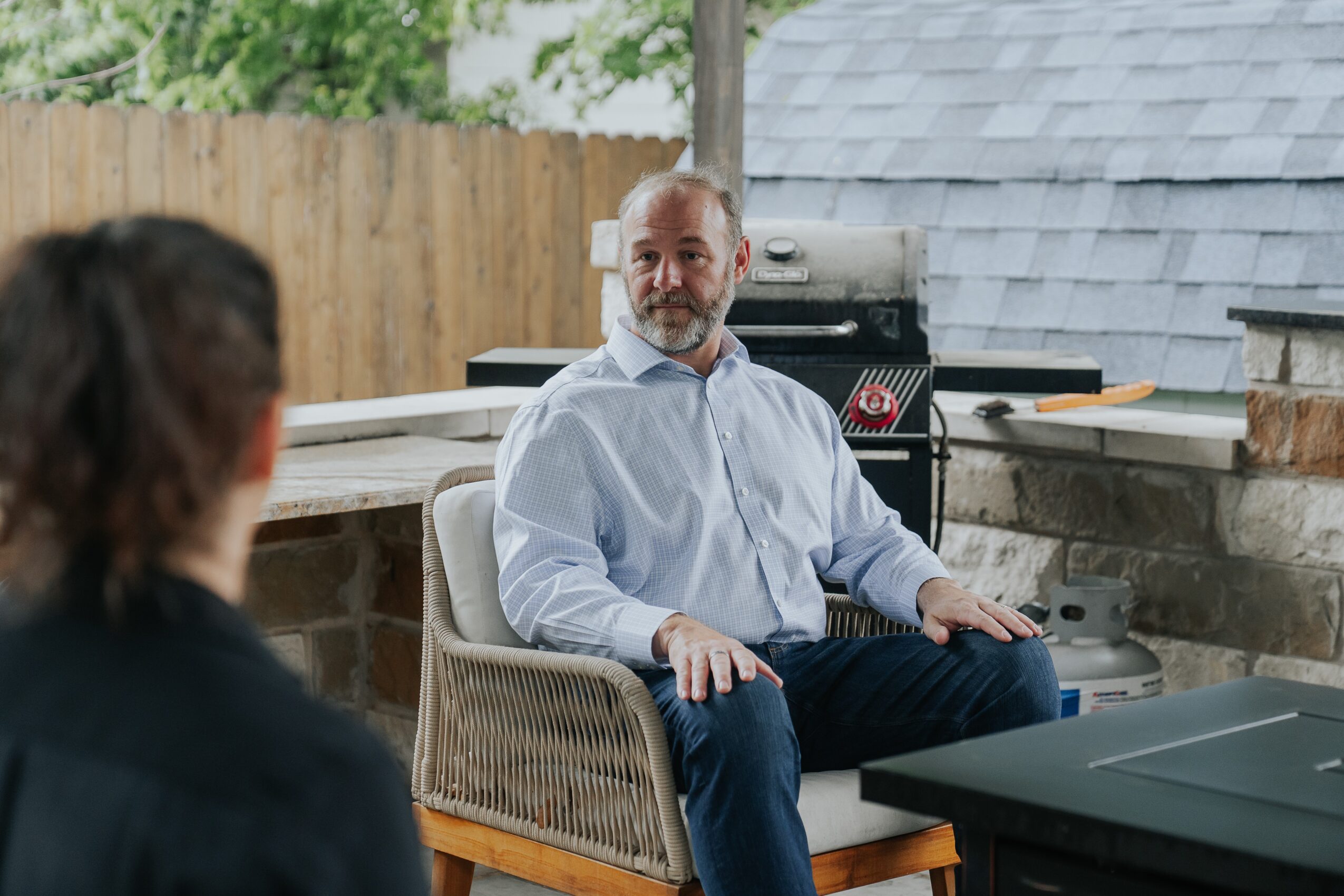
Today we’d like to introduce you to William Kimmins.
Hi William, please kick things off for us with an introduction to yourself and your story.
Overwatch Coaching grew out of a pattern I kept seeing across very different chapters of my career. I saw it while leading in the military, and I continued seeing it years later in clinical practice, particularly because much of my work has involved high-performing leaders. The environments were different, but the human behavior underneath them was remarkably similar.
These were intelligent, capable, accomplished people. They generally didn’t need someone to tell them what to do. They knew how to lead, solve problems, and make difficult decisions. What they struggled with was everything competing with their ability to do those things clearly—the pressure, expectations, relationships, fear, assumptions, competing priorities, and sometimes their own past success.
My clinical background gave me an incredible understanding of human behavior and why people think, react, and relate the way they do. But there are natural boundaries to therapy. There were conversations I wanted to have with leaders that weren’t necessarily about treating a clinical issue; they were about how someone wanted to lead their company, navigate a promotion, make a strategic decision, manage competing responsibilities, or determine what they wanted the next chapter of their life to look like.
Coaching created room for that broader conversation. It allowed me to bring together decades of operational leadership, behavioral science, and experience working with high-performing people and apply all of it to the decisions leaders are making right now.
Eventually, I realized there was a name for what I kept seeing: Leadership Interference™. Most leaders don’t lack capability. Their leadership becomes divided by everything competing for their attention, energy, judgment, and actions.
That ultimately became the foundation for Overwatch Coaching and Decisive MASS™. We Map the Interference, Attack the Assumption, Set the Decision, and Sustain the Shift. The goal isn’t to tell leaders where to go. It’s to help remove everything preventing them from seeing clearly enough to choose the direction themselves.
That’s also where the name Overwatch comes from. My job isn’t to make the move for you. It’s to give you another vantage point—to help you see what may be ahead, identify what you can’t see from your current position, and give you the foresight to make your next move as deliberately and strategically as possible.
We all face challenges, but looking back would you describe it as a relatively smooth road?
I’m not sure there really is such a thing as a smooth road. Life has a habit of putting something in front of you the moment you think you’ve figured everything out. The more useful question, at least for me, has always been whether you’re developing the resilience and adaptability to deal with whatever the road puts in front of you.
One of the challenges with Overwatch has actually been helping people understand what coaching can be. Leadership coaching has become such a broad category that people often arrive with assumptions about what a coach is supposed to do. They expect someone to give them answers, prescribe a five-step plan, hold them accountable, or tell them how to become a “better leader.”
That’s not what most of the people I work with need. Frankly, if you’ve reached a certain level of leadership, you probably don’t need another person standing over your shoulder telling you what to do. You have plenty of people with opinions already.
What you may not have is someone with enough distance from the situation to see what you can’t see from inside it—and enough experience to challenge you when the story you’re telling yourself doesn’t match reality.
That’s where Overwatch becomes literal for me. I can help you look farther downrange. I can point out terrain, risks, assumptions, blind spots, and opportunities you may not see from where you’re standing. But you’re still the person making the move.
That distinction matters because my goal is never to make a client dependent on me. In fact, I’m trying to work myself out of a job. If I’m doing this well, you become increasingly capable of identifying your own interference, challenging your own assumptions, making your own decisions, and sustaining those decisions when pressure shows up.
Great, so let’s talk business. Can you tell our readers more about what you do and what you think sets you apart from others?
Most of the leaders I work with don’t have a leadership problem. They have an interference problem.
They’re intelligent. They’re accomplished. They know how to make decisions. But as responsibility increases, so does the number of things competing for their attention—boards, teams, families, expectations, fear, past successes they’re trying to protect, assumptions they’ve stopped questioning, and the constant pressure of knowing other people’s livelihoods may depend on what they decide next.
At Overwatch Coaching, we call that Leadership Interference™: the internal and external interference dividing a leader’s attention, energy, judgment, and actions. Pressure creates interference. Interference creates hesitation. Eventually, that hesitation shows up as weaker decisions, strained relationships, burnout, overthinking, avoidance, or the exhausting experience of constantly negotiating with yourself about things you already know you need to do.
The answer isn’t necessarily more leadership training. Most of these people have read the books, attended the conferences, hired the consultants, and developed tremendous professional expertise. They don’t need more information piled onto an already overloaded system.
They need less interference.
That’s the thinking behind Decisive MASS™, our signature methodology. It’s inspired by the military principle of concentrating force at the decisive point, and it follows four stages: Map the Interference, Attack the Assumption, Set the Decision, and Sustain the Shift.
Map the Interference
We identify what is actually dividing the leader’s attention and influencing their decisions. That can include fear, expectations, relationships, old identities, competing priorities, outdated assumptions, or self-protective stories that may once have served a purpose but no longer do.
Attack the Assumption
High-performing people can be remarkably good at defending their own assumptions because they’re intelligent enough to build convincing arguments around them. We challenge those narratives and separate what is actually true from what the leader has simply stopped questioning.
Set the Decision
Eventually, analysis has to become action. We establish the decision, boundary, standard, or direction and end the constant internal negotiation around it. You don’t always get certainty before making a consequential decision, and waiting for certainty can itself become a decision.
Sustain the Shift
One good decision isn’t transformation. The real test is whether the new behavior survives the next board meeting, argument with your spouse, difficult quarter, promotion, failure, or moment when everything around you becomes uncertain again. We work until the shift becomes something the leader can sustain without me.
That’s ultimately what I’m most proud of about Overwatch. We’re not trying to manufacture a new version of someone. We’re helping highly capable people remove what’s dividing them so more of the person who’s already there can show up—in their company, their relationships, their family, and their own life.
Fragmented leaders waste energy. Concentrated leaders multiply it.
That’s leadership under pressure. That’s Overwatch.
Is there something surprising that you feel even people who know you might not know about?
The surprising thing may be that there really isn’t a different version of me behind the scenes. What you see is pretty much what you get.
I’m direct professionally because I’m direct personally. I’m honest with clients because that’s how I approach relationships in my own life. I don’t have a polished “coach persona” that turns on when a meeting starts, and I’ve never been particularly interested in creating one.
That doesn’t mean being unnecessarily harsh or provocative. Directness without empathy is just arrogance. But I do believe we waste an enormous amount of time dancing around things we already know need to be said.
My clients aren’t hiring me to agree with them. They’re hiring me because they want someone willing to tell them when the assumptions they’re operating from don’t hold up, when they’re avoiding the real issue, or when they’re spending tremendous amounts of energy solving the wrong problem.
So perhaps the surprising answer is: there isn’t much of a surprise. The no-bullshit version you get professionally is the same person my family and friends get personally. I think there’s freedom in not having to remember which version of yourself walked into the room
Pricing:
- Our engagements are customized because the level and type of support a leader needs can vary considerably. We work directly with executives and entrepreneurs, as well as organizations investing in support for CEOs and senior leaders.
- Some clients need a period of concentrated, intensive work around a transition, decision, or particularly demanding season. Others benefit from having a consistent strategic thought partner alongside them as they navigate longer-term growth, increasing responsibility, or significant organizational change.
- The goal, however, is never to create dependency. I want to work myself out of a job. The structure, intensity, and duration of an engagement should reflect what the leader actually needs in that season—not how long I can keep someone on a contract.
- For that reason, pricing is determined by the scope and structure of the engagement rather than a one-size-fits-all package.
Contact Info:
- Website: https://www.overwatchperformancecoaching.com
- Instagram: @overwatch_counseling
- LinkedIn: https://www.linkedin.com/company/overwatch-performance-coaching/