




Today we’d like to introduce you to Becky Morrison Gleed.
Hi Becky, so excited to have you on the platform. So before we get into questions about your work-life, maybe you can bring our readers up to speed on your story and how you got to where you are today?
As many of us know all too well, maternal health in the U.S. is not well protected at a basic level, which means we often fail to offer support to mothers in the early stages before a full-blown crisis develops. In the U.S., doing an “all clear” from OB/GYN is an ongoing standard. If you’re lucky, an Edinburgh screen will take place at the six-week appointment, which can capture postpartum depression but not postpartum anxiety or post-traumatic stress disorder. If you’re even luckier, the pediatrician might administer one.
I, unfortunately, experienced the shortcomings of the maternal health system after experiencing postpartum anxiety with my second daughter. In my search for a perinatal mental health therapist and reproductive psychiatrist, I quickly realized the harsh realities of accessing treatment: high cost, waitlists, and few providers (even in an urban area). In tandem with my personal experience, in my professional setting – psychiatric emergency services – I realized the paucity of emergency psychiatric care for perinatal psychiatric emergencies such as postpartum psychosis and depression. At this point, I filled the clinical gap and started training toward becoming a certified perinatal mental health professional.
At the time, I was one of a handful in the State of New Mexico. Since then, my training and clinical background have deepened considerably – including work under Salvador Minuchin at the Ackerman Institute and Dr. Sue Johnson in Emotionally Focused Therapy – and I spent years as a Senior Clinician with Fairfax County Government, where my Emergency Services team received an Innovation Award in 2017. From there, I grew my practice, contributed to various publications, published a perinatal book series, and continued creatively and passionately serving and bringing awareness to this important mission – support for the perinatal and reproductive communities.
I’m sure it wasn’t obstacle-free, but would you say the journey has been fairly smooth so far?
None of this has been a smooth road, and I don’t think it’s supposed to be. Working in psychiatric emergency services meant seeing the highest-acuity end of perinatal crises firsthand – postpartum psychosis, severe depression, families in the worst moments of their lives – and that intersection between my professional and personal journeys wasn’t always easy to sit with. Deep empathy for people in the perinatal period who lacked quality resources came paired with the hard limits of what one clinician could do alone. And the specialized, niche training required to work well with individuals, couples, and families in this space is a slow, deliberate process – there simply weren’t (and still aren’t) enough programs to fast-track it.
Growing from a solo practice into a multi-state group has brought a different set of challenges. Perinatal mental health remains a chronically underserved specialty, so finding and training clinicians who bring both the clinical skill and the lived sensitivity this population needs is slow, careful work, part of why the Board Approved Clinical Supervisor credential mattered so much to me: it let me build capacity by developing other clinicians, not just add more of my own hours. Multi-state licensure adds real logistical weight, too, since every state has its own requirements and timelines. And reimbursement and insurance coverage for perinatal-specific care are still inconsistent at best, which limits how many families can actually access support no matter how many clinicians are on the team.
There’s also the ongoing challenge of balance: splitting time between direct client work, supervising and mentoring newer clinicians, and building out the advocacy side – the podcast, the expanding book series, policy conversations, speaking engagements. None of those pieces happens without the others, but the hours in the day stay the same size no matter how much the mission grows.
Can you tell our readers more about what you do and what you think sets you apart from others?
Perinatal & Reproductive Wellness Group has grown well beyond where it started. What began as a solo effort in New Mexico is now a multi-state group practice, with clinicians serving clients across Virginia, Washington D.C., Maryland, South Carolina, Georgia, Florida, and beyond. I’m now licensed to practice in Virginia, Hawaii, and South Carolina, and I hold a Board Approved Clinical Supervisor credential in the Commonwealth of Virginia – which lets me train and mentor the next generation of perinatal clinicians, not just see clients myself.
What the practice offers today:
• A growing team of perinatal clinicians serving multiple states throughout the United States.
• Trauma-informed yoga with expertise in perinatal issues.
• An expanded perinatal book series (more on that below).
• The Perinatal & Reproductive Perspectives podcast, reaching listeners well beyond what one-on-one clinical work ever could.
• Continued commitment to advocacy: podcasting, policy reform activism, blogging, speaking, and magazine contributions.
A Podcast Was Born
One of the biggest additions to the field is the launch of Perinatal & Reproductive Perspectives, a podcast where I get to sit down with clinicians, advocates, and experts across the perinatal and reproductive space. It’s available on Spotify, Apple Podcasts, and Amazon Music, and it’s already reaching a wider audience – including a recent episode with clinical psychologist and advocate Dr. Susan Feingold on postpartum psychosis, which was featured in the Harvard Medical Massachusetts General Hospital Center for Women’s Mental Health weekly roundup.
The Book Series Keeps Growing
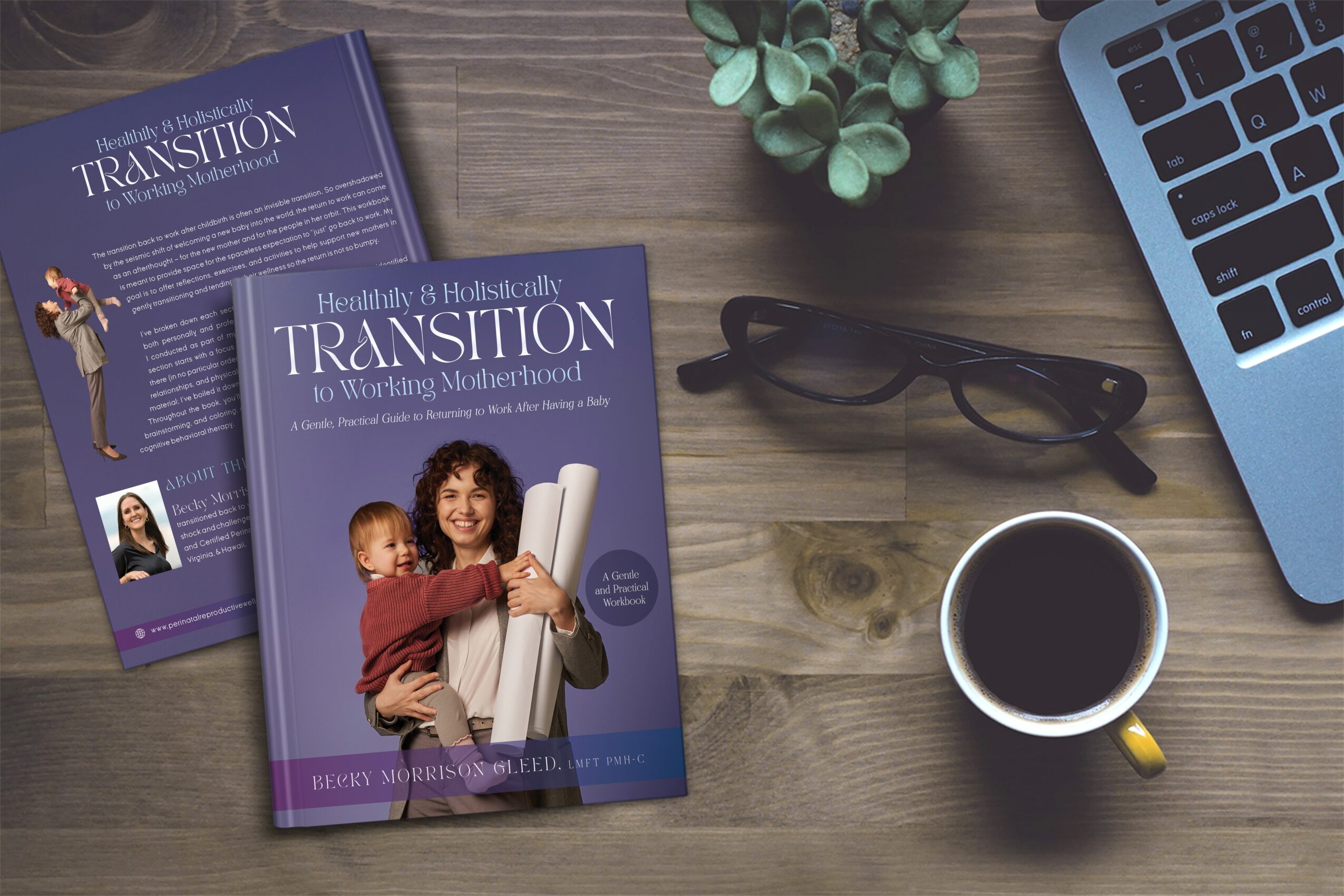
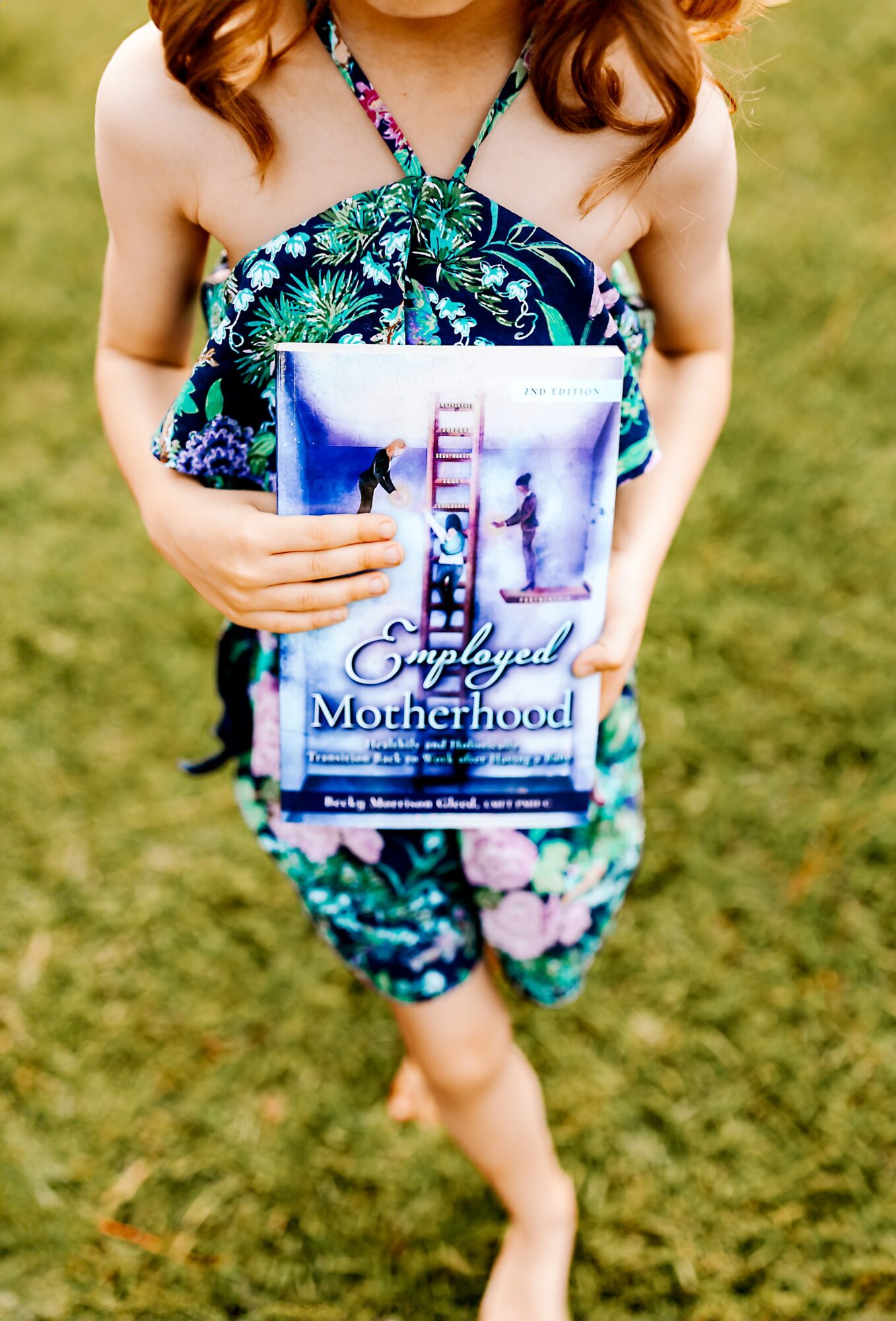
The workbook I announced in 2024, originally introduced as a project to broaden my impact beyond my office doors, has since been published as Employed Motherhood: Healthily and Holistically Transition Back to Work After Having a Baby. Since then, the series has expanded to include How to Healthily Transition to Motherhood (a workbook), Thankful for Motherhood (a gratitude journal), and A Second Brain for Momnesia (a practical journal) – each one designed to meet mothers wherever they are in the perinatal journey, from the fourth trimester through the return to work and beyond.
Media & Recognition
The mission keeps finding new audiences. Since 2024, I’ve been featured in Bold Journey Magazine, and I continue to contribute to publications, speak, and show up in policy conversations around perinatal and reproductive mental health.
What’s next?
The next chapter of Perinatal & Reproductive Wellness Group is about depth as much as it is about growth. I want to keep expanding our footprint into new states, but I want to do it deliberately – bringing on clinicians who are genuinely trained for this niche, not just credentialed for it, and using the Board Approved Clinical Supervisor role to build a real pipeline of perinatal specialists rather than relying on the handful of us who found our way here by accident.
The podcast and the book series are where I see a lot of room to keep building. Perinatal & Reproductive Perspectives is still young, and I want it to become a go-to resource, not just for parents, but for the clinicians, partners, and family members trying to understand what someone in the perinatal period is going through. On the page, I imagine the book series continuing to grow into new corners of the journey that don’t get enough attention yet, whether that’s pregnancy loss, infertility, or the return-to-work transition for families with more complex circumstances.
And beyond the practice itself, I want to keep showing up in the policy conversations that shape whether families can access this kind of care at all – insurance reimbursement, screening standards, and support that extends past the six-week postpartum check. The clinical gap that got me into this work in the first place hasn’t closed; it’s just gotten a little more visible. That’s the work I want Perinatal & Reproductive Wellness Group to keep doing – filling it, one family, one clinician, one policy conversation at a time.
Contact Info:
- Website: https://www.perinatalreproductivewellness.com
- Instagram: @employedmotherhood
- LinkedIn: https://linkedin.com/in/becky-morrison-gleed
- Other: Perinatal & Reproductive Perspectives