




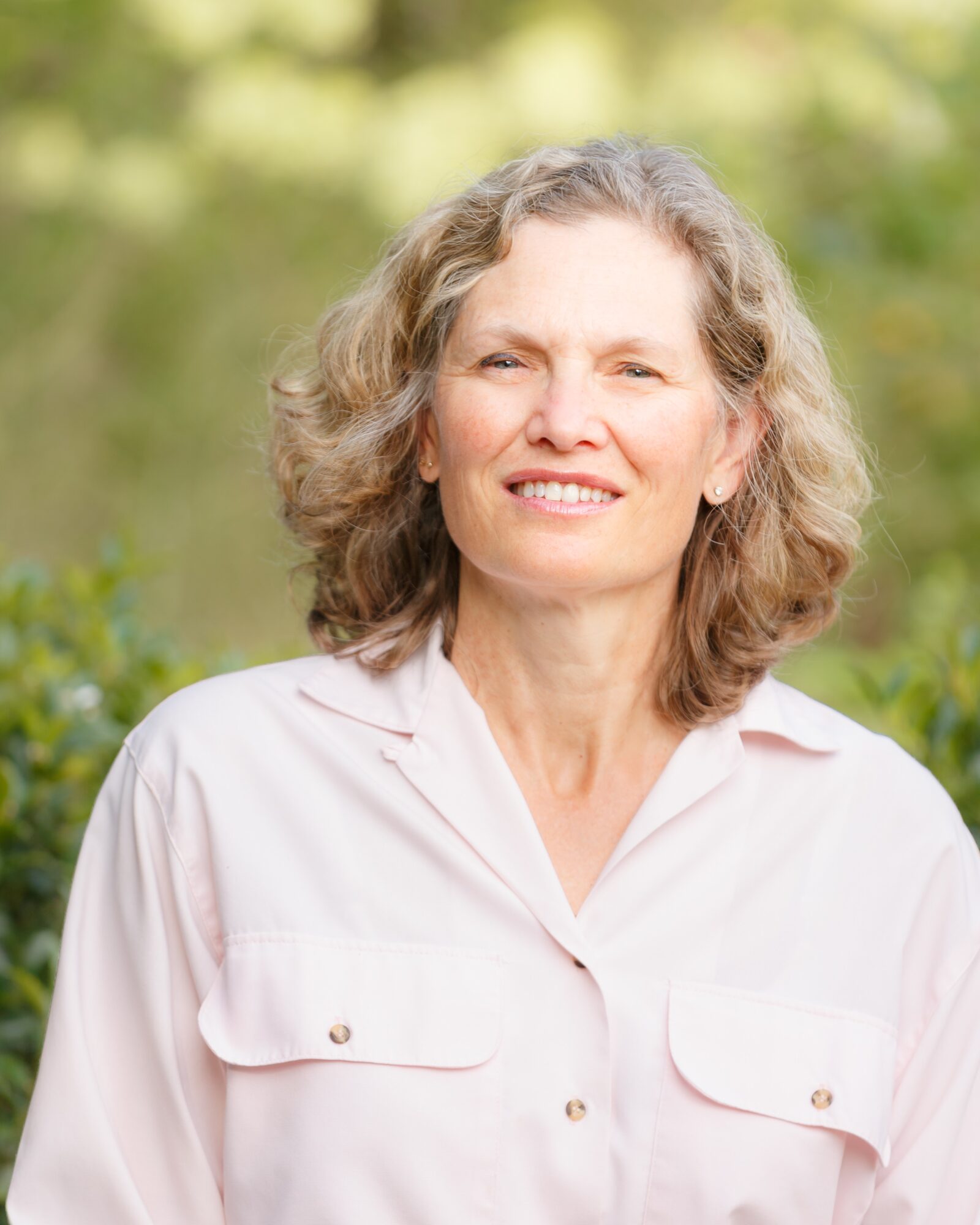
Today we’d like to introduce you to Jill Trischman-Marks.
Hi Jill, so excited to have you with us today. What can you tell us about your story?
Botanical Garden of the Piedmont is really a story that starts with one person’s idea that gained momentum through the local community. In 2008, Helen Flamini founded an all-volunteer nonprofit whose early mission was to build community awareness about the benefits of a public botanical garden. There was no site yet, just an idea and a lot of advocacy.
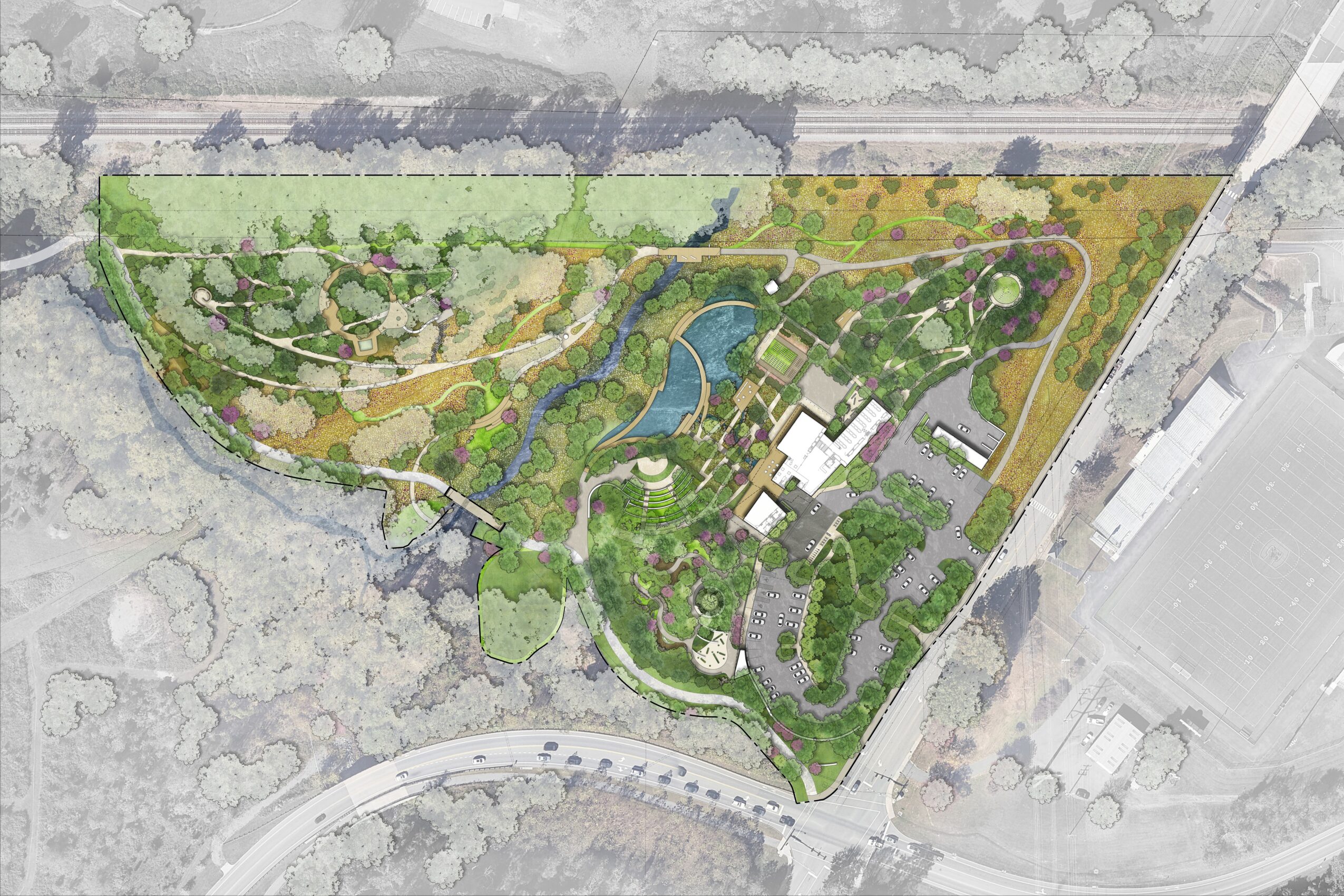
The city was redesigning McIntire Park to accommadate land lost to John Warner Parkway, and through a multi-year public feedback and planning process, the community decided that part of that park should become a botanical garden. In September 2015, the city and BGP’s board signed a Memorandum of Agreement designating 8.5 acres inside McIntire Park for the Garden and formalizing our responsibility to develop and manage it.
For several years after that, BGP remained entirely volunteer-run, focused on building the organization itself: raising community awareness, laying fundraising groundwork, and in 2017 issuing a request for proposals to find a landscape architecture team. In 2018, we brought on that team, Mikyoung Kim Design and Waterstreet Studio, and ran a five-month community input process to shape the master plan. That happened just a year after the Unite the Right rally, and it became clear people were hungry for a shared green space that belonged to everyone.
2019 turned out to be a pivotal year on every front. Our master plan won a national Honor Award from the American Society of Landscape Architects. I came on as the Garden’s first hire as Executive Director, and we began actively stewarding the land itself, which until then had been the city’s leaf dump and mulch pile. Volunteers enthusiastically went in and started clearing trash and invasive plants by hand.
From there, it’s been about turning that vision into reality: we expanded our footprint to nearly 15 acres through a land lease with the city in 2021, worked with the City and DEQ on the restoration of more than 800 feet of degraded stream, and built a fundraising engine, starting with a transformational $1.5 million gift in 2021, which was more than matched by our donors in six months.
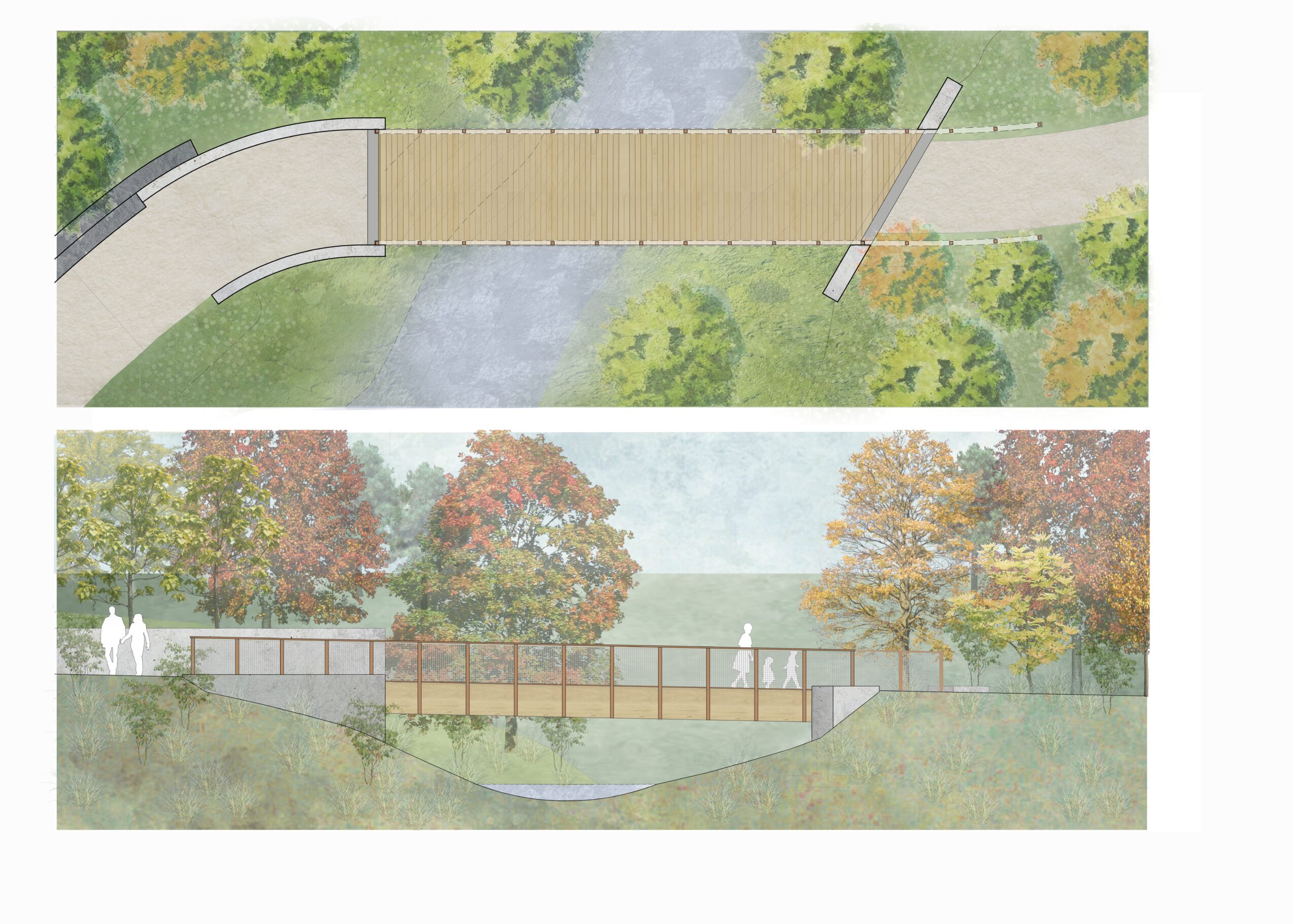
Through all of it, volunteers have been the backbone. Since 2017, almost 1,000 people have contributed over 43,000 hours to this Garden. And now, after years of design and planning, we’re at the moment the whole community has been waiting for: this fall we’re breaking ground on Phase I Construction, which includes the Garden Pavilion, Discovery Garden, and the bridge that ties the whole site together. What started as one person’s idea is finally becoming Charlottesville’s first public botanical garden for the entire community.
Can you talk to us a bit about the challenges and lessons you’ve learned along the way. Looking back would you say it’s been easy or smooth in retrospect?
No, it hasn’t been smooth, and I don’t think it could be, given the size of what we’re doing. Early on, I realized the only way to keep from being overwhelmed was to break the work into four prongs: developing our internal organization, stewarding the site, planning the future garden, and engaging the community through events and education. Each of those has come with its own version of struggle.
On the organizational side, we ran almost entirely on volunteers for a decade. We didn’t bring on our first paid help until 2017, and didn’t have our first full-time Executive Director until 2019. That meant building board structure, committees, and policies. For example, for our Finance Committee it meant developing everything from our gift acceptance to our naming guidelines, from the ground up.
Stewarding the site meant starting from the city’s old leaf dump and mulch pile, buried under trash and invasive plants like kudzu and multiflora rose. Volunteers went at it with hand tools and energy, a degraded stream was restored through a partnership with the City and DEQ, and we even negotiated a beautification lease with Norfolk Southern to clear invasive growth and trash along the railroad edge of the property.
Planning the garden has been its own marathon. We ran an RFP, chose a design team, spent five months gathering community input, and won a national design award for the resulting master plan, only to redo much of that plan a few years later when we added roughly six more acres to our footprint, which meant going back through city and county approvals all over again.
Engaging the community meant building real programs and trust before we’d even broken ground: free socially distanced nature programs during the pandemic, a range of children’s environmental education programs, a month-long art festival, all designed to show what this place could be before the buildings and finished gardens existed.
None of those four prongs has moved in a straight line, but working them side by side, rather than waiting for one to finish before starting the next, is really what’s gotten us to this point.
Alright, so let’s switch gears a bit and talk business. What should we know about your work?
My undergraduate degree is in human services, and I was a social worker for several years before I went to UVA to get my master’s degree in landscape architecture. I practiced landscape architecture in Central Virginia for nearly 30 years, and the projects I was involved in included Lewis Ginter Botanical Garden, the Thomas Jefferson Parkway, and Poplar Forest.
I served on the Botanical Garden of the Piedmont’s Board of Directors for several years before I was hired as the Garden’s first Executive Director in 2019. That same year, I retired my private practice to help build a public garden for the community I love.
What sets me apart, I think, is that I came into this role already fluent in the technical side, so I can sit in a room with our architects and engineers and understand exactly what they’re proposing, then turn around and explain that same vision to a donor or a city council member in plain language. I know my work as a social worker is the driving force behind my desire to embrace community fully throughout this process, to ensure the Garden truly serves the people who call this region home.
What I’m most proud of isn’t any single feature we’ll build, it’s that we’ve taken something that started as the founder’s idea and turned it into a fully designed, community-shaped project. Even before anything has come out of the ground, it’s already enhanced the environment and given this community real resources and comfort.
Let’s talk about our city – what do you love? What do you not love?
When my daughter was growing up, I realized that whatever she was interested in, whether it was academics, sports, the arts or recreation, there was an avenue for her to learn more about it, and that opportunity was always well developed and comprehensive. It made me proud that she grew up in a place with such a diversity of choices and opportunities.
If I’m honest about what’s harder about this area, it’s that it is growing so quickly, and that growth puts real pressure on things like housing costs and how much shared, free public space we have for people to just be outside together.
However, I can turn that on its head because another thing I love about Charlottesville is how much this community shows up for the things it cares about. That’s part of why this Garden matters so much to me: the community identified that it needed and wanted a public garden, and it’s located on public land in a place that’s easily accessible for the whole Central Virginia region.
Pricing:
- Most of our events are free, all are open to the Garden.
- The Garden is open every day, from sunrise to sunset. If the driveway gate is closed, park on Melbourne Road and enter the Garden on the mulched trail from the sidewalk.
- There is no charge for admission.
Contact Info:
- Website: https://piedmontgarden.org/
- Instagram: @botanicalgardenofthepiedmont
- Facebook: Botanical Garden of the Piedmont
- LinkedIn: Botanical Garden of the Piedmont