



Today we’d like to introduce you to Miguel Hobbs.
Hi Miguel, it’s an honor to have you on the platform. Thanks for taking the time to share your story with us – to start maybe you can share some of your backstory with our readers?
I was born in Spain to an American father and a Spanish mother. My dad was enlisted in the U.S. Air Force, so I grew up a military brat, moving around the U.S. and back to Spain. I finished high school in the St. Louis Metro East area, joined Army ROTC, and graduated from Southern Illinois University Edwardsville in 1988. In college I met my wife, and we have been married 40 years raising three great children along the way.
I served 27 years on active duty in staff and command assignments across the U.S., Hawaii, and Johnston Atoll. I have deployed to a peacekeeping mission to Kosovo, and combat tours to Afghanistan and twice to Iraq. On my last Iraq tour, I commanded an infantry brigade’s special troops battalion in northwest Baghdad. Leading the Soldiers of the 101st Airborne Division in combat was the highlight of my career.
I retired as a Colonel and continue to serve as a Department of Defense civilian. We’ve called Virginia home for more than 11 years.
Creativity was always part of my life, from painting and drawing as a hobby to sketching for my kids. After I left the uniform, I rediscovered art as a way to heal and to express parts of my experience that words can’t reach. That became UniqVet Art. As a disabled veteran, I use abstract painting to give form to memories and emotions from my military journey. It has helped me reclaim my identity beyond the uniform, and now I want to share that sense of purpose with fellow veterans and anyone looking for meaning through art.
Alright, so let’s dig a little deeper into the story – has it been an easy path overall and if not, what were the challenges you’ve had to overcome?
Not entirely a smooth road, and I wouldn’t trust a story that claimed it was.
The first challenge was internal. For 27 years, my job was to plan, control, and execute. Abstract painting asks for the opposite: you respond to what’s happening on the canvas, accept the unexpected, and sometimes let a painting go somewhere you never intended. Learning to trust that process took time, and it taught me as much about myself as about paint.
The second challenge is time. I still work full time in federal service, so the studio gets early mornings, evenings, and weekends. Every painting is planned around everything else.
The third is the business side, which nobody teaches you as an artist. I run UniqVet Art as the sole proprietor and the artist, so licensing, pricing, framing, labels, and finding venues are all on me.
On top of those challenges is life – all the things that happen to you whether at work and at home, trying to balance it all and stay connected with my family and friends. Today I am more deliberate in ensuring I am devoting time in the right place and time, especially with family.
And like any veteran, I’ve had to work through what service leaves behind. Painting has been one of the most honest ways I’ve found to do that.
Appreciate you sharing that. What else should we know about what you do?
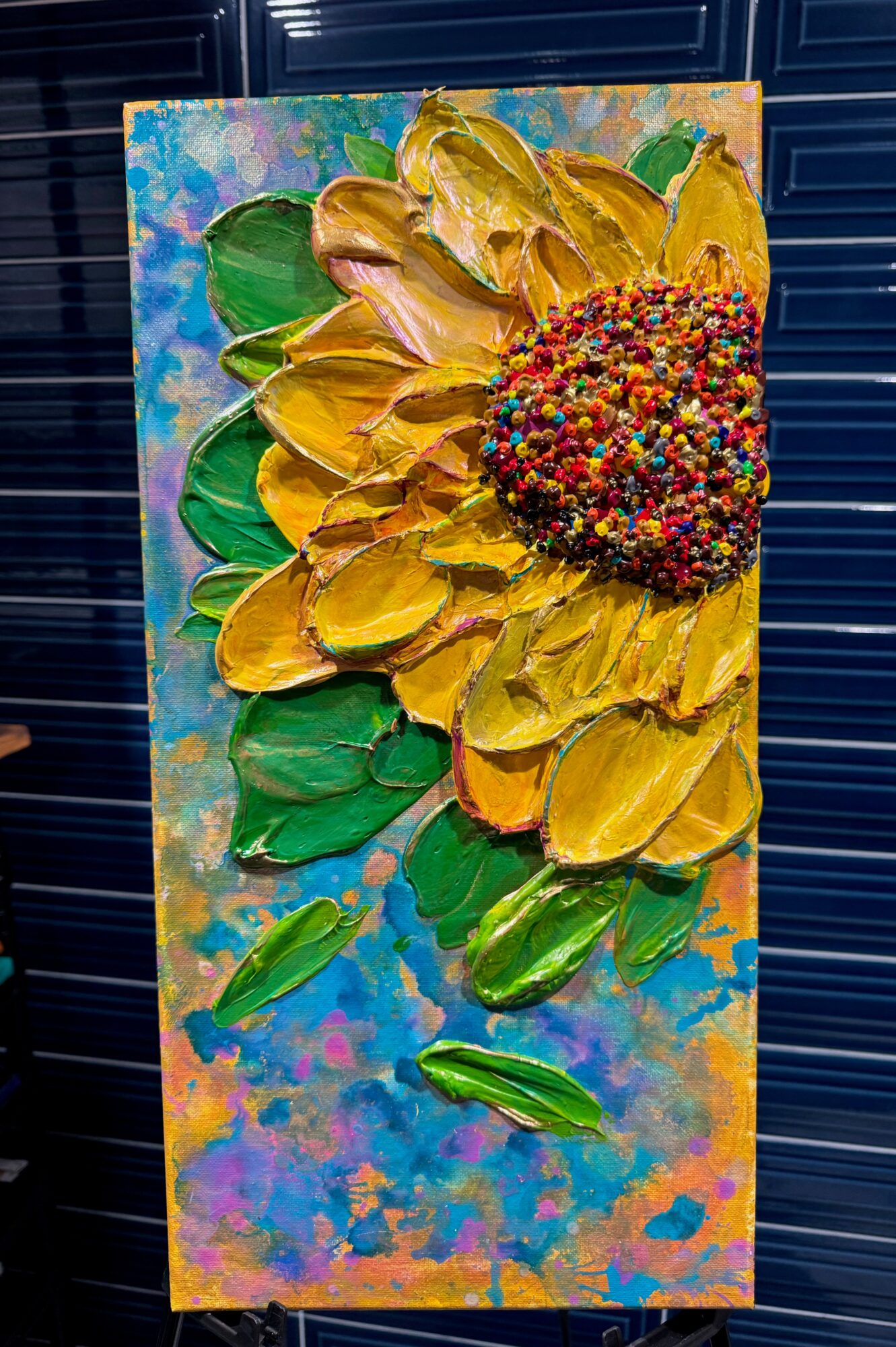
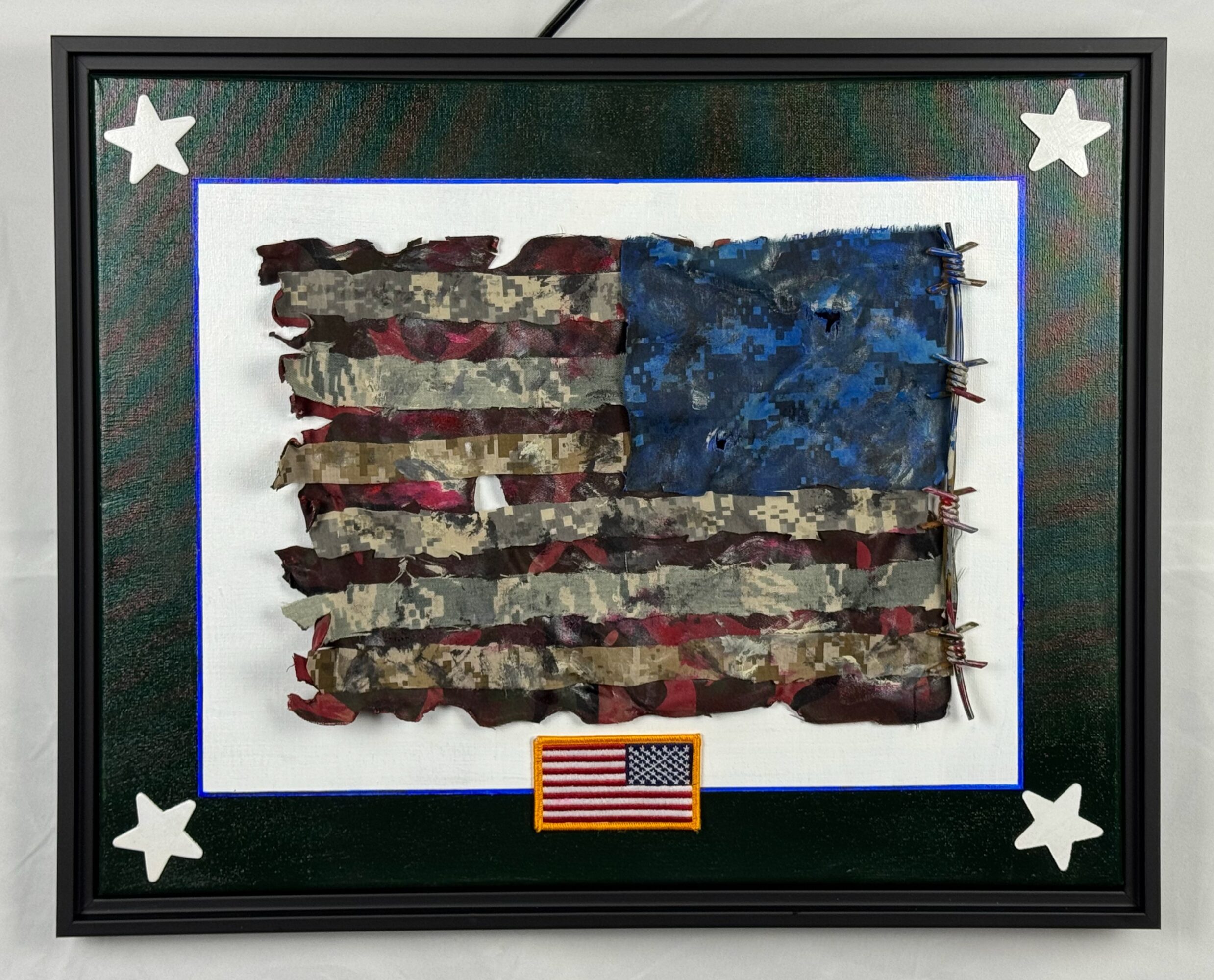
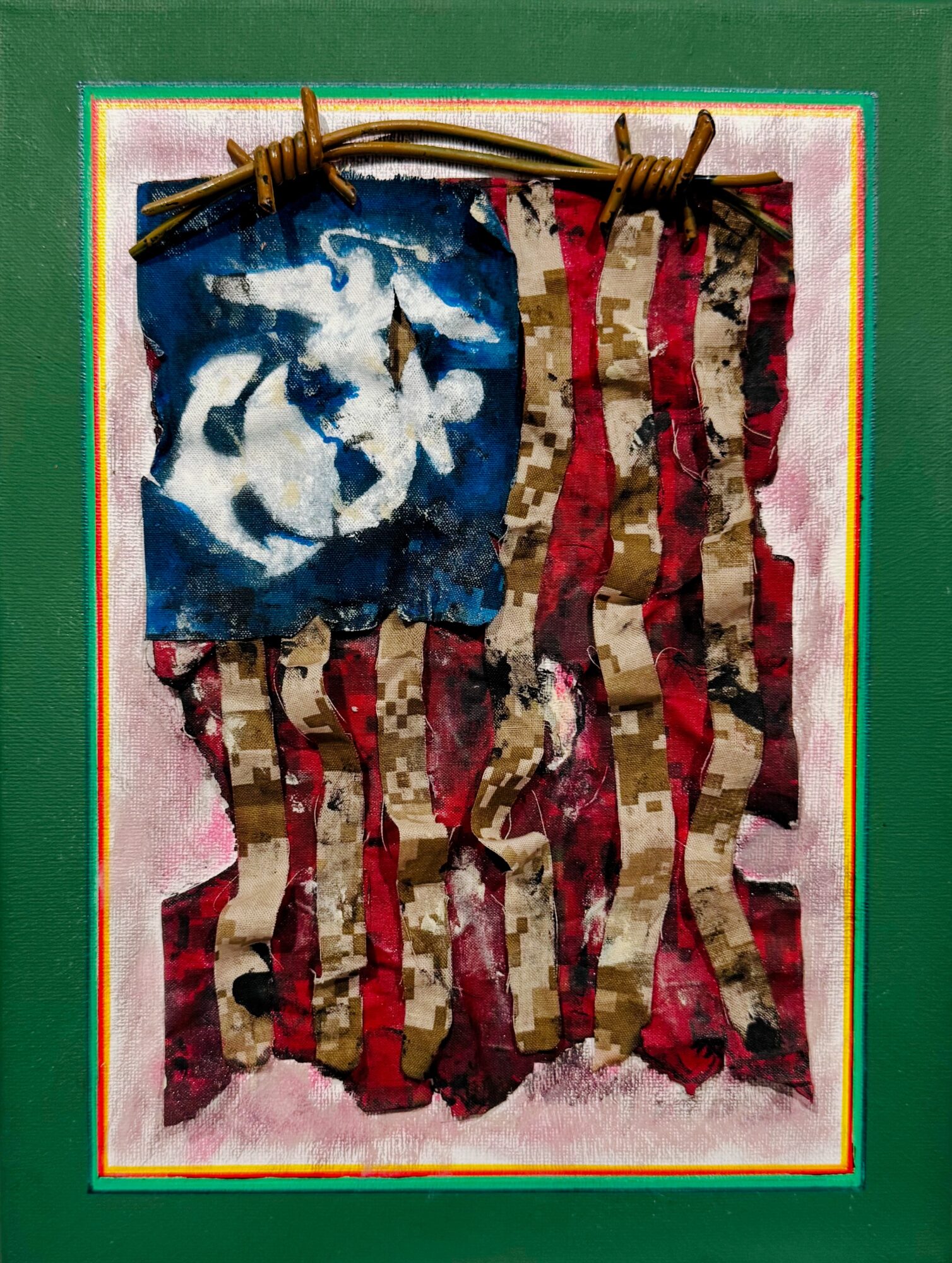
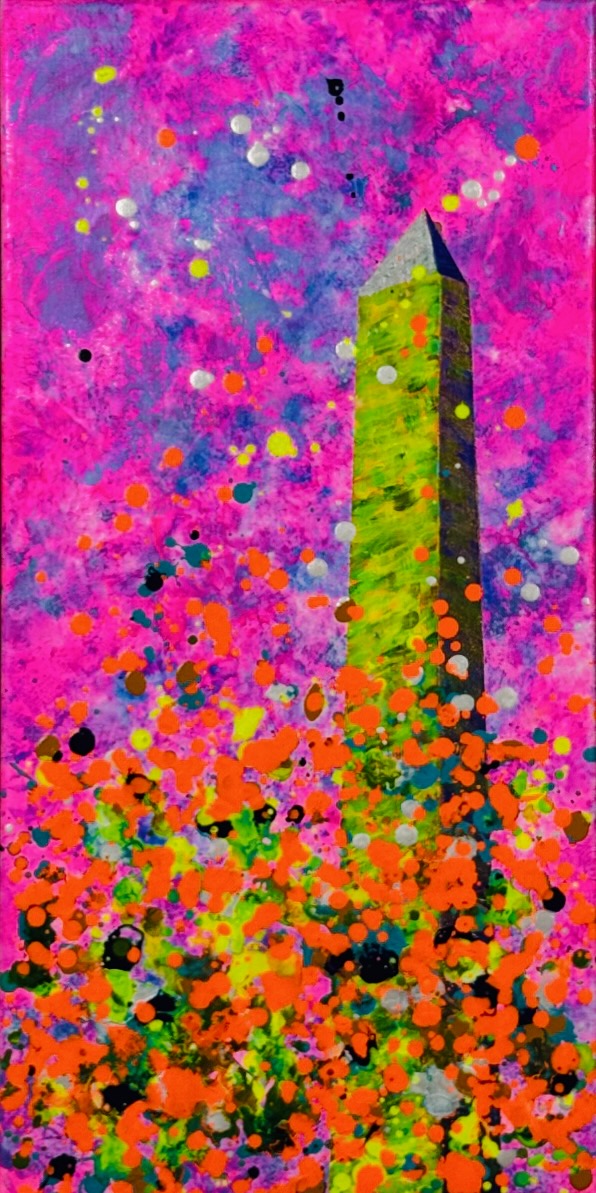
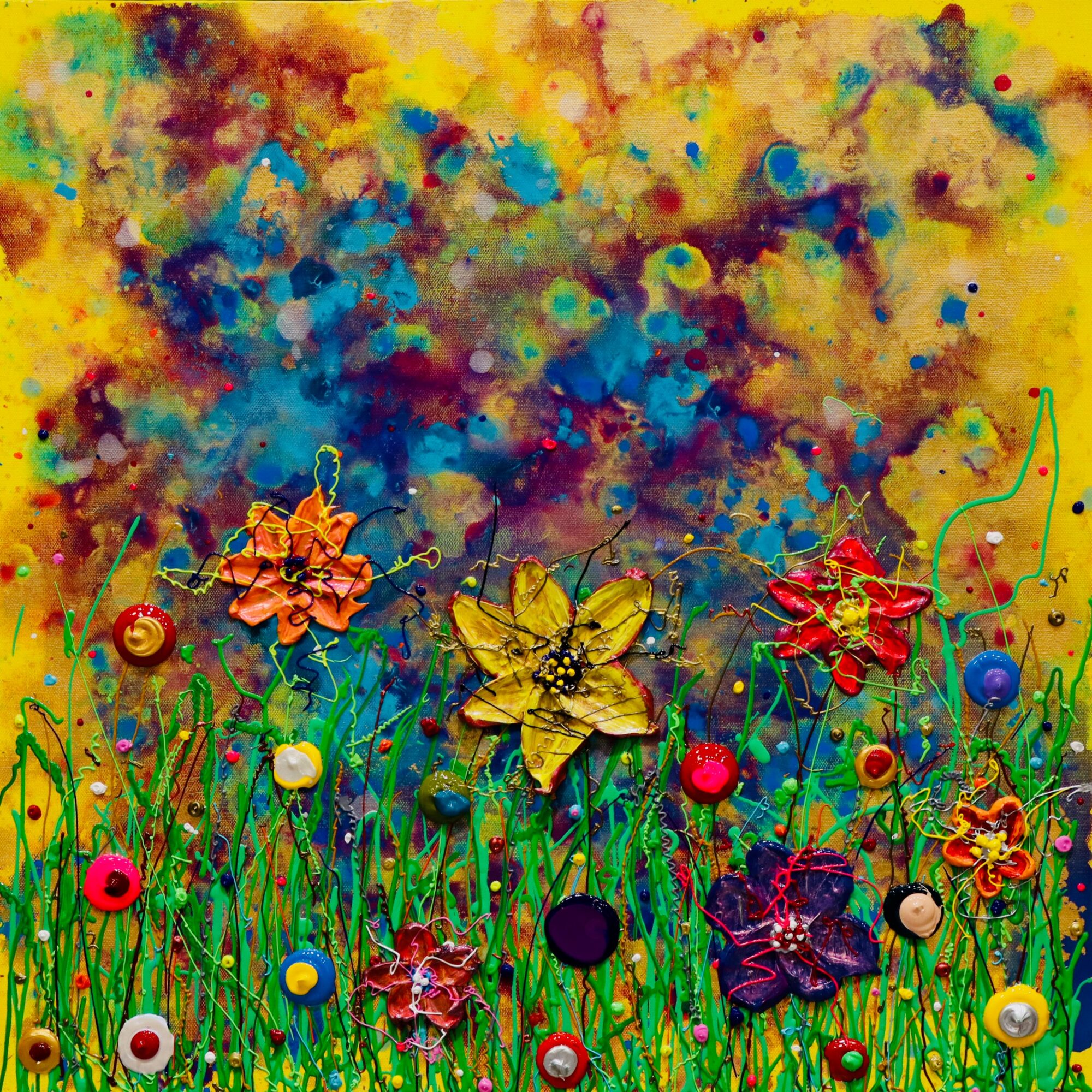
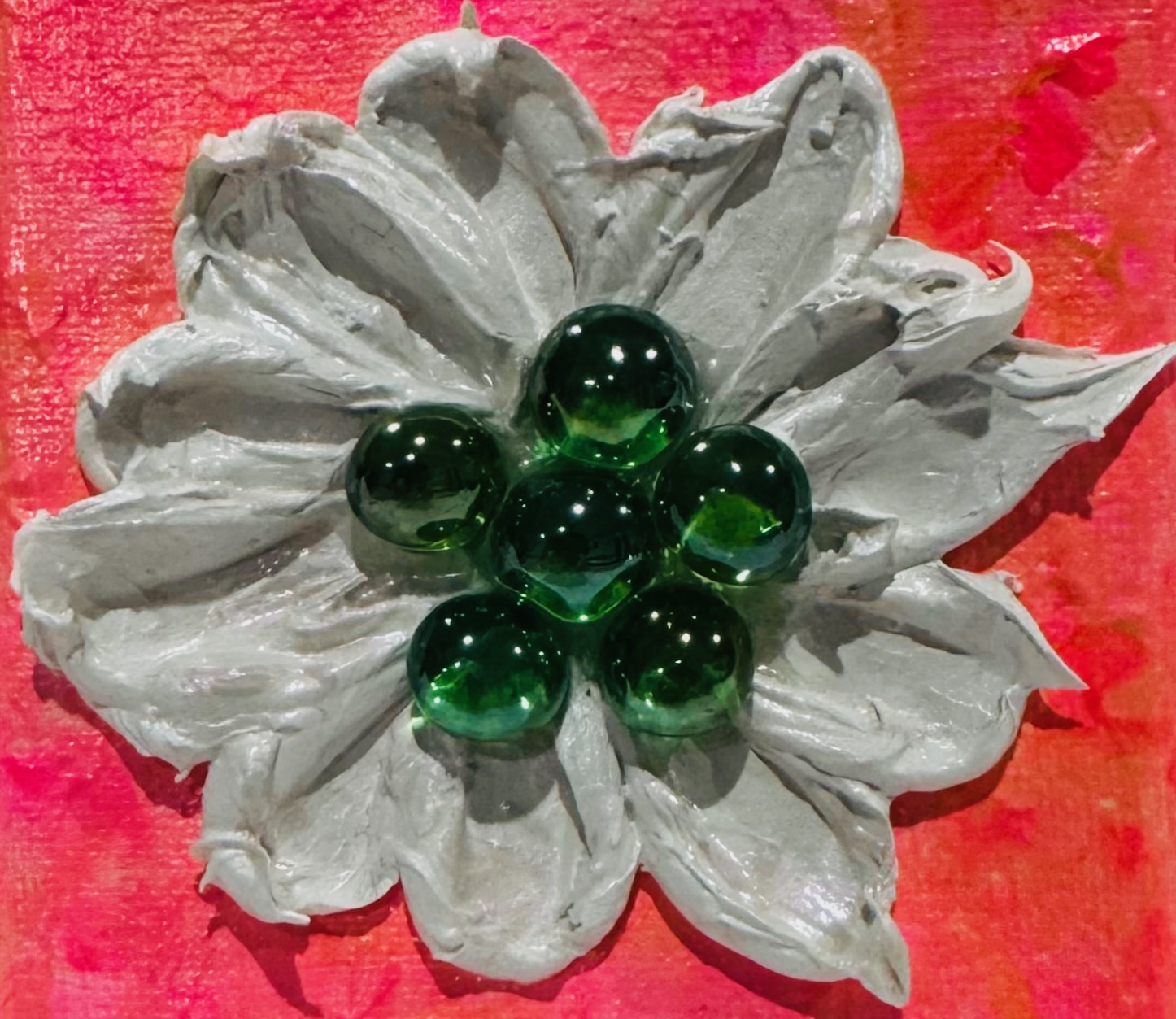
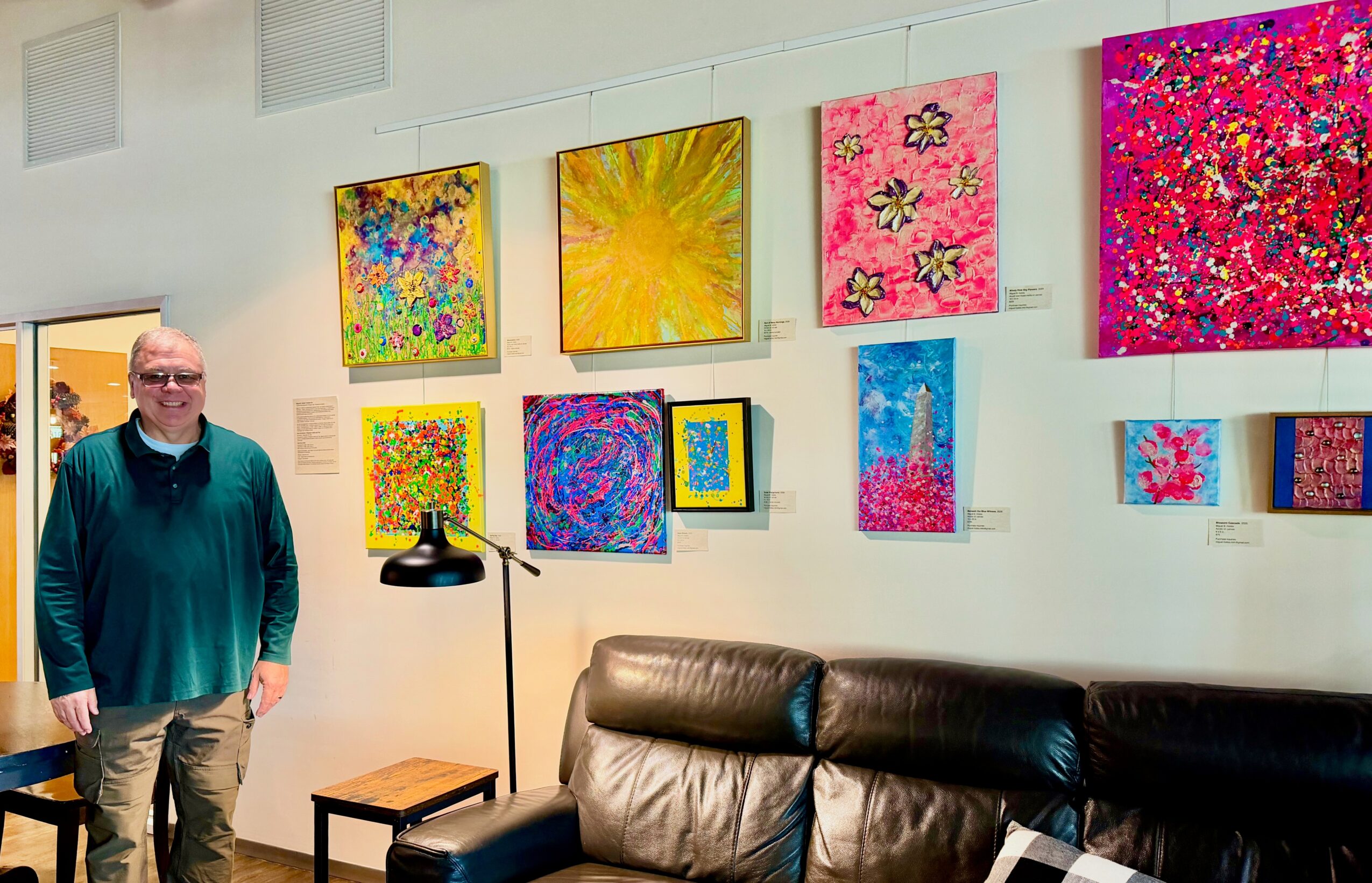
I create contemporary abstract paintings built from color, texture, motion, and intuitive mark-making. I work mostly in acrylics (regular, heavy-body, and fluid), often adding modeling paste, glass beads, and/or cloth for relief and gesture. Most pieces begin intuitively, then I make more deliberate choices as the layers build. Each layer records a decision, a change, or a memory.
My military service is the foundation of my work, but I don’t paint military scenes. Over the past year, I’ve spent a lot of time studying art and other artists, and I keep learning and growing with every canvas. The work explores the connection, disruption, hope, and endurance that remain after service, and I want viewers to find their own meaning in the movement and color.
Painting is also therapeutic for me. It has been great for my mental health and resilience, and I always come away from a session reinvigorated. That energy shows up in the work. I love creating bright, uplifting pieces that bring joy to others. Right now I’m exploring a few main ideas:
Threads of Service: I use uniform cloth from the Army, Navy, Air Force, and Marine Corps into the surface of the painting. Fabric that once identified a person or a unit becomes part of something new. It’s a way to honor service and sacrifice, and to show how individual stories are woven into a shared one.
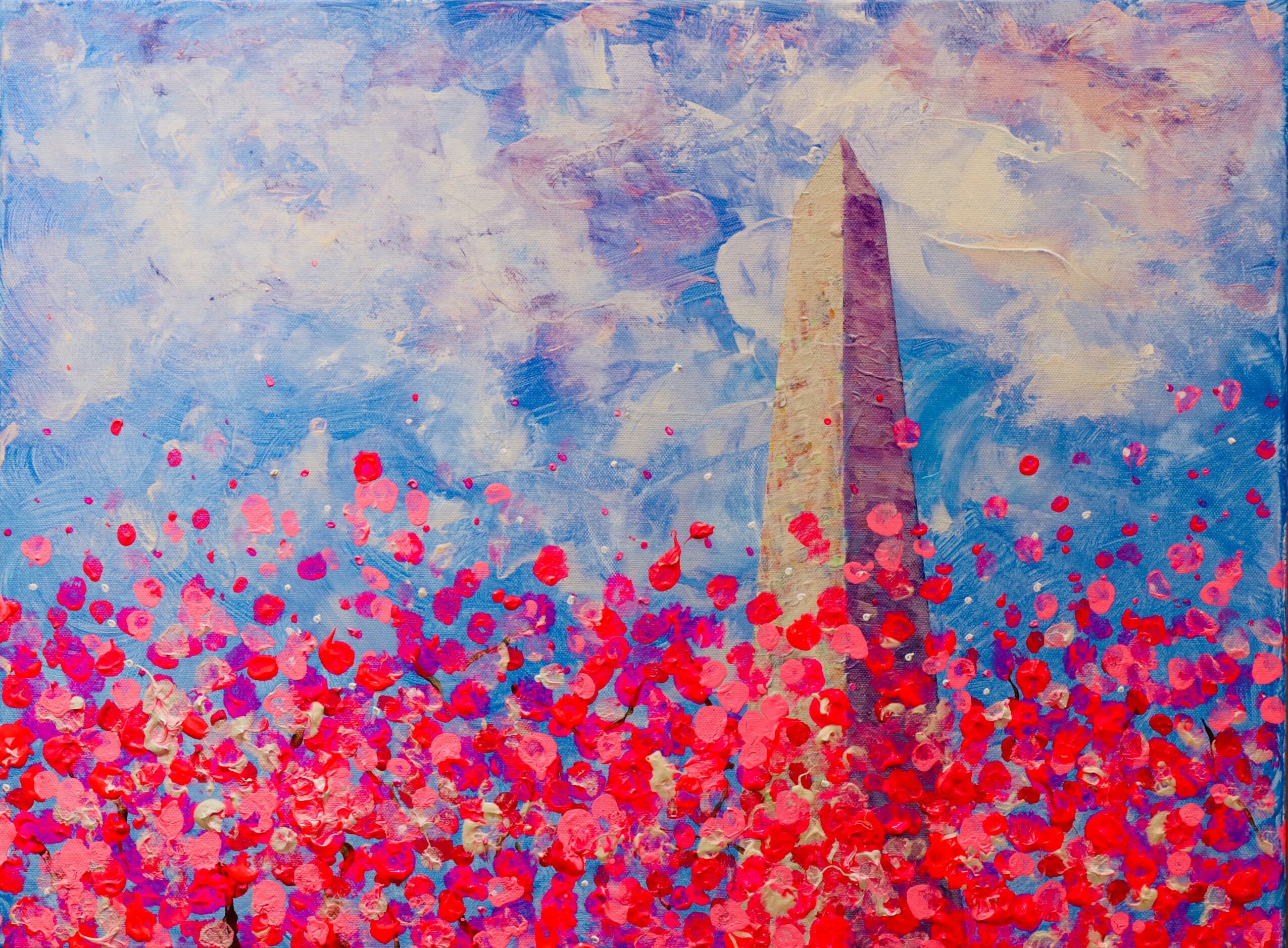
Monuments in Bloom: I take the familiar monuments of Washington, D.C., and reimagine them through vivid color and energy. Instead of stone and solemnity, they become living, growing forms. To me, they’re about how memory and meaning keep evolving long after something is built.
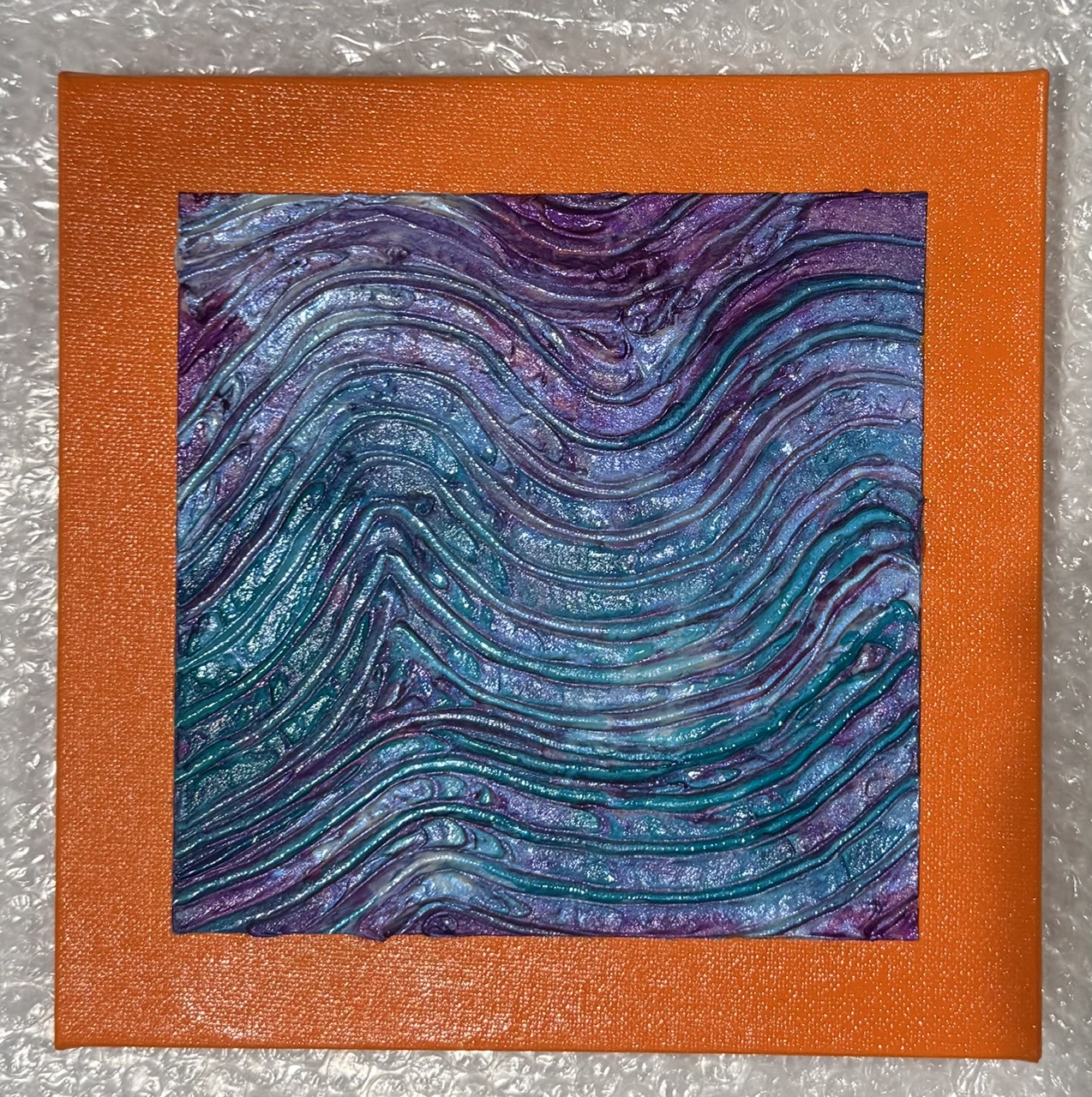
Becoming and transformation: Many of my standalone pieces are about change itself. Layers are built up, scraped back, and revealed again, just as people reshape their lives through transitions. Some lean toward energy and motion, others toward calm and light, but all of them are about growth.
What sets me apart is perspective. I came to the canvas after a full career of service and unique life experiences, and that is in every layer, even when it isn’t visible. I’m proudest when someone stands in front of a painting, smiles, and sees part of their own story or gives them joy.
I’m also proud to give back by donating original work to support the Special Operations Warrior Foundation and the families it serves. I have also volunteered once doing an art badge workshop, with Troop Leader Dana Crigger and Girl Scout Troop 54136 of the Nation’s Capital.
Networking and finding a mentor can have such a positive impact on one’s life and career. Any advice?
Mentorship has been part of my whole career, in the Army and in federal service, both as a mentor and as a mentee. One thing I learned early is that mentors aren’t always assigned. You must be willing to reach out, be ready to learn as much as you can, and stay open to the fact that it goes both ways. Some of the best mentoring I’ve experienced, whether guiding others or being guided, turned into learning from each other.
The art world works the same way. I’ve been fortunate that several fellow artists have taken the time to guide and encourage me. A special thank-you goes to Debra Wright of The Rogue Art Project. Her selfless support and encouragement have made a real difference, and it was her introduction that led to this interview.
My advice is to start by showing up. Go to gallery openings, art walks, live art events, and juried shows, and talk with the artists there. Most are generous with what they know if you ask sincere questions about their process or how they got started. I’ve also spent a lot of time over the past year studying other artists’ work. Not every mentor has to be someone you meet in person.
Put your work out there. Entering exhibitions and saying yes to opportunities, like my current solo show at Ridgetop Coffee & Tea in Sterling, Virginia, all leads to conversations you’d never have otherwise.
Be generous yourself. Donating work to causes I believe in, like the Special Operations Warrior Foundation or the Girl Scouts, and staying connected with the veteran community have opened more doors than any self-promotion. Networking works best when it’s about relationships, not transactions.
And always follow up. A simple thank-you or an invitation to your next event keeps a connection alive.
Contact Info:
- Website: https://uniqvet-art.com
- Instagram: @uniqvetart
- Facebook: https://www.facebook.com/uniqvetartd
- LinkedIn: https://linkedin.com/in/miguelbhobbs